Beyond the Discount: How BLUETTI''s ''World''s Smallest'' 3kWh Power Station Signals a New Era for Portable Energy
BLUETTI's launch of the Elite 300, touted as the world's smallest 3kWh power station, is more than just a product release with a steep 58% discount. This analysis explores the deeper market implications of this launch. We examine how the aggressive pricing and miniaturization push reflect a strategic move to capture the mainstream consumer market, moving beyond niche outdoor enthusiasts. The article investigates the underlying supply chain advancements enabling such compact high-capacity units and questions whether this signals a price war in the portable power sector. By situating the March 2026 launch within broader trends of energy democratization and urban preparedness, we uncover the long-term strategy behind making robust backup power a common household appliance.
Beyond the Discount: How BLUETTI's 'World's Smallest' 3kWh Power Station Signals a New Era for Portable Energy

Introduction: The Elite 300 Launch – A Price Point or a Paradigm Shift?
On March 11, 2026, BLUETTI announced the launch of its Elite 300 portable power station, marketing it as the world's smallest unit with a 3kWh capacity (Source 1: [Primary Data]). The launch was accompanied by a promotional offer of a 58% discount (Source 1: [Primary Data]). The immediate market narrative focuses on the product's compact dimensions and aggressive pricing. A deeper analysis, however, suggests this product introduction may represent a strategic inflection point for the portable energy storage sector. The central question is whether this launch is a temporary promotional tactic or a calculated move to dismantle the two primary barriers to mass-market adoption: physical bulk and high cost.

Deconstructing the 'World's Smallest' Claim: A Supply Chain Victory
The claim of being the "world's smallest" 3kWh power station is not merely a marketing slogan but a tangible indicator of underlying supply chain and engineering advancements. Packing 3072Wh of energy into a minimized footprint requires simultaneous progress across multiple component technologies.
The achievement likely hinges on three interconnected developments. First, increased energy density in lithium iron phosphate (LiFePO4) battery cells allows for more watt-hours per unit volume without compromising the chemistry's inherent safety and longevity. Second, more efficient and miniaturized battery management systems (BMS) and thermal management solutions reduce the space required for essential safety and performance circuitry. Third, advancements in high-frequency switching and magnetics have enabled the design of more compact, yet powerful, pure sine wave inverters capable of handling the station's output.
The long-term industry impact is significant. This miniaturization sets a new benchmark for power density. Competitors are now pressured to match or exceed this form factor for equivalent capacity, redirecting research and development priorities across the entire portable power supply chain. The technological precedent transforms consumer expectations, making bulkiness a competitive disadvantage.

The 58% Discount: Market Aggression or Cost Structure Revelation?
The promotional discount of 58% (Source 1: [Primary Data]) warrants scrutiny beyond its surface value as a launch incentive. Two primary hypotheses emerge. The first posits this as an aggressive market-capture strategy, using a flagship "hero" product to rapidly acquire market share and reset consumer price expectations for a 3kWh capacity tier. The second hypothesis suggests the discount may be enabled by a fundamental reduction in production costs, reflecting economies of scale, matured manufacturing processes for LiFePO4 cells, and optimized supply chain logistics.
Analysis of historical lithium battery cost curves indicates a consistent long-term trend of decreasing cost per kilowatt-hour. If the Elite 300's promotional price aligns with this underlying cost trend, it may not be an anomaly but a forward-looking price point. This would signal the beginning of a new, more competitive pricing regime in the portable power sector, moving high-capacity backup power from a premium niche into a broader consumer durable goods category. The strategy appears designed to make the 3kWh capacity class accessible, thereby expanding the total addressable market.
The New Target Audience: From Camping Trips to Kitchen Counters
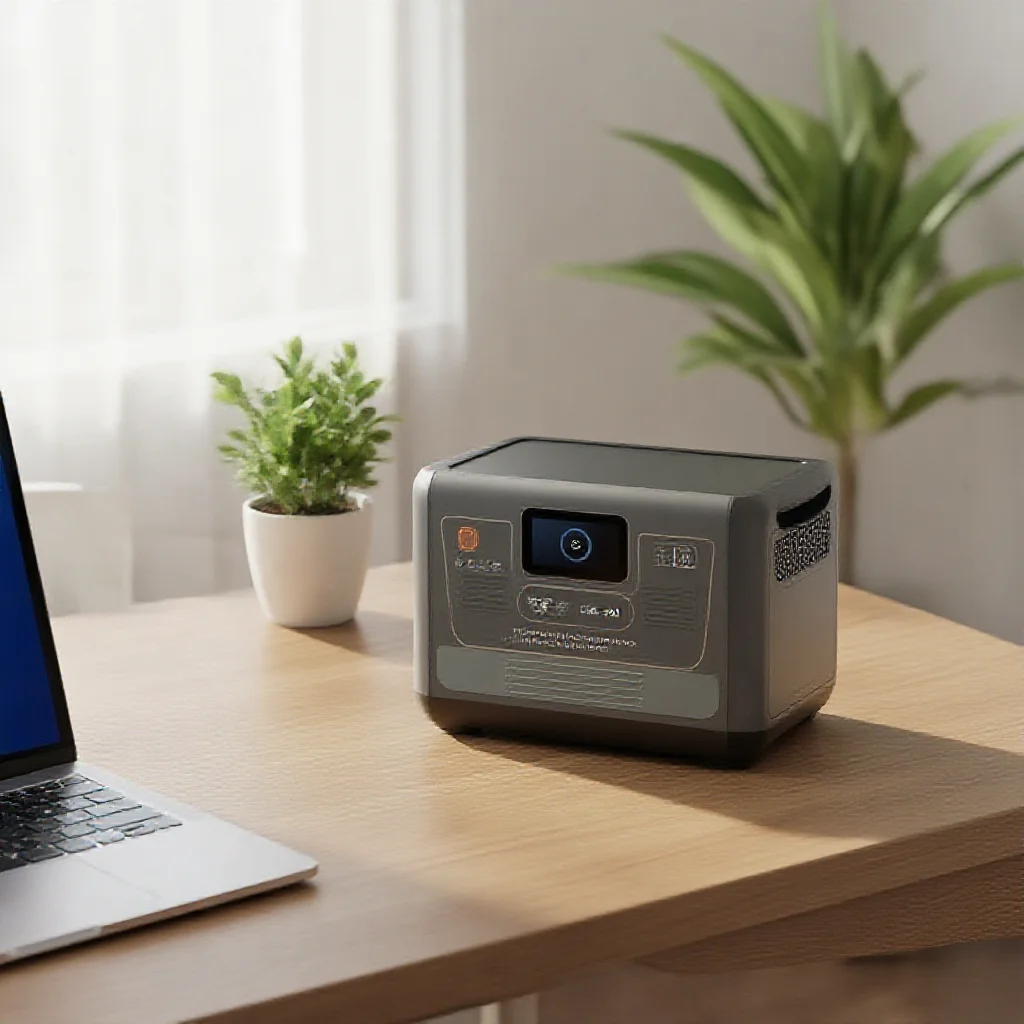
The Elite 300's defining characteristics—high capacity in a small form factor at a disruptive price—indicate a deliberate pivot in target audience. The product is no longer positioned solely for the outdoor recreation niche. Its design and promoted use cases align with the needs of urban and suburban households.
The use-case shifts from extended camping trips to short-duration home backup. The intended application becomes powering essential home infrastructure during grid outages: maintaining internet routers, charging medical devices, powering work laptops, and preserving refrigerator contents for several hours. This represents the "domestication" of portable power. The product is engineered to transition from a specialized tool to a common household appliance, stored in a closet or placed discreetly in a living space, ready for use.
This strategic redirection taps into broader socio-technical trends, including increased awareness of grid vulnerability, the rise of remote work, and a growing cultural movement toward energy self-sufficiency, or "energy democratization." The product serves as a bridge between the off-grid enthusiast and the mainstream consumer concerned with basic preparedness.
Conclusion: Implications for a Maturing Market
The launch of the BLUETTI Elite 300 is a multi-faceted market signal. The miniaturization of a 3kWh system demonstrates a maturation of core technologies, shifting competition from mere capacity claims to power density and integration. The aggressive pricing, whether tactical or cost-based, exerts downward pressure on the entire market's price floor for similar capacity.
The logical market prediction is an accelerated consolidation and segmentation. Established brands will be compelled to follow suit with compact, competitively priced units to maintain relevance. The market will likely bifurcate further, with one segment chasing ever-higher capacity and output for professional use, and another—exemplified by the Elite 300's strategy—optimizing for accessibility, aesthetics, and seamless integration into daily domestic life. This launch does not merely introduce a new product; it redefines the benchmark for what constitutes a mainstream, household-ready energy storage solution, accelerating the sector's evolution from a niche hobbyist market to a standard consumer electronics category.