The Insight Archive

Our collection of weekly cover stories and deep dives.

Policy Mixes for Sustainability Transitions: A Deep Framework for Analyzing Energy Transition Policy Design
The Insight

Policy Mixes for Sustainability Transitions: A Deep Framework for Analyzing Energy Transition Policy Design

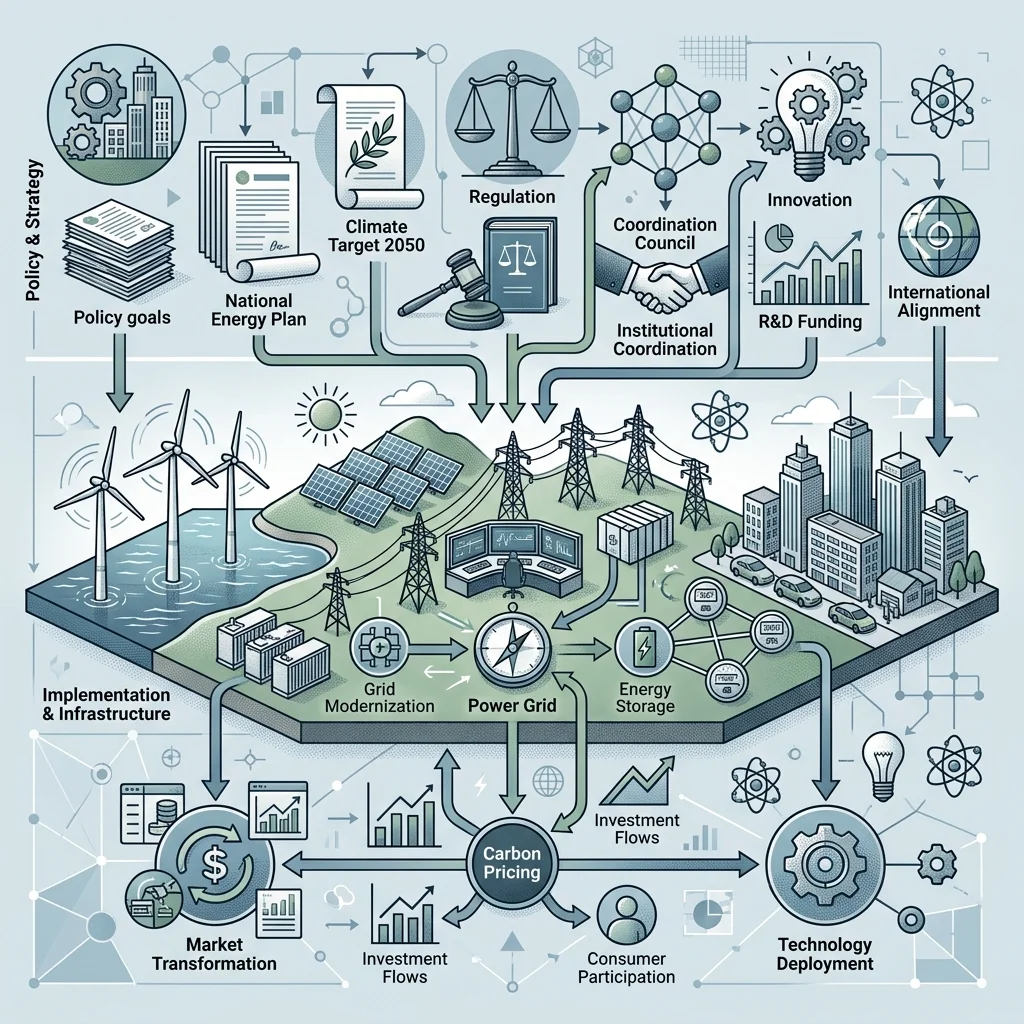
This article examines how policy mixes shape sustainability transitions, using Rogge and Reichardt’s interdisciplinary framework to explain policy design beyond single instruments. The core logic is that technological change, market formation, and institutional coordination must be aligned through a mix of policy elements, policy processes, and policy characteristics. The piece focuses on the German energy transition as a practical test case, showing why renewable power adoption depends not only on incentives, but on timing, coherence, stability, and interaction across policies. Best suited for slow analysis, this topic supports a deep audit of sustainability policy analysis, with emphasis on long-term system change rather than short-term policy headlines.


When Data Hides: The Hidden Cost of Unreadable PDFs in Sustainability Policy Analysis
The Insight

When Data Hides: The Hidden Cost of Unreadable PDFs in Sustainability Policy Analysis

Sustainability policy analysis depends on accessible, machine-readable data. Yet a vast amount of corporate sustainability reports remain locked inside compressed, non-parseable PDFs. This article uncovers the economic inefficiencies, compliance risks, and market distortions caused by such data barriers. It argues for standardized digital reporting formats (e.g., XBRL, JSON) as a critical infrastructure for effective policy design. Drawing on real-world examples from the EU’s CSRD and ESRS, it offers a roadmap for policymakers, analysts, and technologists to break the PDF bottleneck and unlock the true potential of sustainability data.

Navigating Complexity: How Environmental Governance Innovation Drives Sustainability Transitions
The Insight

Navigating Complexity: How Environmental Governance Innovation Drives Sustainability Transitions

The Environmental Policy Analysis (EPA) department, part of GreenDeal-NET, explores the shift from top-down government to decentralized, flexible governance for sustainability. This article unpacks three core research themes—governing under complexity, governance innovation and institutional change, and governance evaluation—revealing how new horizontal and vertical steering mechanisms address unintended effects and institutional interlinkages. By examining the hidden logic behind governance adaptation, it offers deep insights for policymakers and analysts seeking effective sustainability transitions.

Beyond CSR: A Deep Analysis of Corporate Sustainability Policies from Patagonia to Nike
The Insight

Beyond CSR: A Deep Analysis of Corporate Sustainability Policies from Patagonia to Nike

This article analyzes five landmark corporate sustainability policies—Patagonia, Ben & Jerry''s, Salesforce, Unilever, and Nike—to uncover the hidden economic logic behind their commitments. It explores how these companies move beyond traditional CSR to embed sustainability into core operations, from renewable energy and ethical sourcing to employee wellness and governance. The analysis reveals an emerging industry trend: the need for structured, measurable frameworks and digital tools (like those offered by Apiday) to manage, track, and scale such policies. Published on July 2, 2024, this piece serves as a strategic audit for leaders seeking to build resilient, future-proof sustainability programs.

The Hidden Cost of PDFs in Sustainable Development Evaluation: Why Machine-Readable Data Matters for Policy Analysis
The Insight

The Hidden Cost of PDFs in Sustainable Development Evaluation: Why Machine-Readable Data Matters for Policy Analysis

A 2012 PDF on sustainable development evaluation, hosted by EVALSDGs, contains no extractable text—a stark reminder that many critical policy documents remain locked in legacy formats. This article explores the economic logic behind inaccessible data: the hidden costs to evidence-based policy, the technology trends driving a shift toward structured data, and the long-term impact on the supply chain of sustainability evaluation. By analyzing the document''s metadata (created with pdfsam-console and iText), we reveal a systemic challenge that undermines efficient policy analysis. The piece argues for mandatory machine-readable standards to ensure that past and future evaluations can feed into data-driven decision-making, especially for the SDGs.

The Sustainability Analysis Framework: Unlocking Deep Insights for Effective Policy Making
The Insight

The Sustainability Analysis Framework: Unlocking Deep Insights for Effective Policy Making

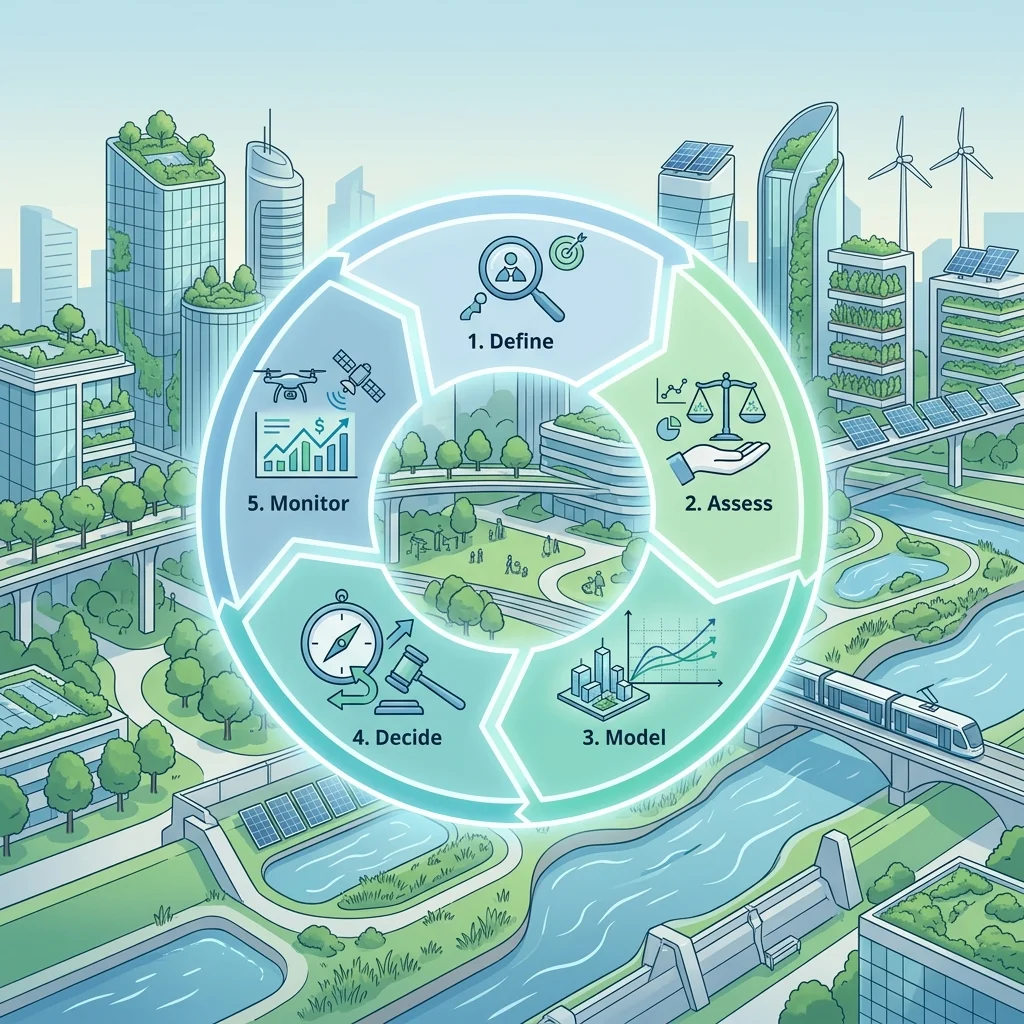
This article explores the Sustainability Analysis Framework (SAF) as a powerful tool for evaluating and shaping sustainability policies. Beyond surface-level compliance, we uncover the hidden economic logic, technology trends, and supply chain disruptions that policy analysts often overlook. By integrating multi-criteria decision analysis, life-cycle assessment, and real-time data streams, the SAF enables organizations to anticipate long-term impacts, identify cost-effective interventions, and align with evolving regulations. We provide a step-by-step guide to applying the framework, supported by evidence from recent case studies in energy, agriculture, and manufacturing. The result is a forward-looking blueprint for policymakers and business leaders seeking to turn sustainability mandates into strategic advantage.

The New Green Blueprint: How Environmental Policy Frameworks Drive Business, Technology, and Supply Chain Transformation
The Insight

The New Green Blueprint: How Environmental Policy Frameworks Drive Business, Technology, and Supply Chain Transformation

Environmental policy frameworks are evolving from compliance checklists into strategic drivers of innovation, cost savings, and resilience. This article explores the core components, real-world applications (Denmark, Patagonia, Singapore), and the digital tools—carbon accounting, LCA software, AI, and blockchain—that make them actionable. It digs into hidden economic logic: how these frameworks create new markets for data analytics, reshape supply chain transparency, and force companies to rethink risk. Implementation challenges and pragmatic solutions are also examined, offering a roadmap for policymakers and executives alike.

Sustainability Assessment and Biofuels: Unpacking the Hidden Trade-offs of Corn Ethanol Policy
The Insight

Sustainability Assessment and Biofuels: Unpacking the Hidden Trade-offs of Corn Ethanol Policy

This article explores how a comprehensive sustainability assessment framework can reveal the hidden economic and environmental trade-offs of biofuel policies. Using the U.S. corn ethanol boom as a case study, we examine the disconnect between policy goals—such as the 2007 Energy Independence and Security Act—and real-world impacts like land-use change carbon debt, water quality degradation, and supply chain pressures. By integrating facts on tax credits, production volumes, and lifecycle emissions, the analysis shows why sustainability management must move beyond simple greenhouse gas accounting to address systemic risks.

The Strategic Role of Environmental Policy Analysts in Sustainability and Economic Transformation
The Insight

The Strategic Role of Environmental Policy Analysts in Sustainability and Economic Transformation

Environmental policy analysts are the invisible architects of the green economy. By synthesizing science, law, and economics, they craft evidence-based policies that shape regulations, corporate strategies, and investment flows. This article explores the core skills, career pathways, and hidden economic logic behind this growing profession, drawing on insights from the University of Redlands and the Presidio Center for Sustainable Solutions. We reveal how these analysts are influencing supply chains, carbon markets, and long-term competitiveness in an era of accelerating environmental challenges.

Policy Analysis for Climate Resilience: A Strategic Guide to Designing and Implementing Effective Frameworks
The Insight

Policy Analysis for Climate Resilience: A Strategic Guide to Designing and Implementing Effective Frameworks

This guide explores how policy analysis can be systematically designed and applied to enhance climate resilience. Drawing on insights from the Grantham Research Institute on Climate Change and the Environment at the London School of Economics, it examines the economic logic behind resilience planning, the dual-track nature of fast versus slow policy analysis, and the often-overlooked supply chain vulnerabilities that climate policies expose. The article provides a step-by-step framework for building robust policy models, integrating stakeholder input, and navigating uncertainty. It also discusses how sustainability policy analysis can bridge short-term political cycles with long-term adaptation needs, offering evidence-based recommendations for policymakers, analysts, and sustainability practitioners.

Navigating the Uncertainty of Sustainability Policy Analysis in a Data-Void Landscape
The Insight

Navigating the Uncertainty of Sustainability Policy Analysis in a Data-Void Landscape

This article explores the strategic challenges faced by analysts when core sustainability data is unavailable or unparseable—such as when PDFs are binary or encoded. Rather than treating missing data as a dead end, we frame it as a critical signal for policy analysis. We examine how organizations like AWS (implied by the source) and others must adapt their sustainability policy analysis workflows when faced with opaque data formats. The piece offers a dual-track methodology: fast verification of timely policy signals versus deep industry audits that reconstruct insights from metadata and source patterns. It provides actionable frameworks for decision-makers to maintain analytical rigor even when facts are absent, turning data voids into opportunities for supply chain and governance innovation.

Beyond the Noise: The Hidden Economic Logic of Sustainability Policy in an Age of Stalled Data
The Insight

Beyond the Noise: The Hidden Economic Logic of Sustainability Policy in an Age of Stalled Data

In the absence of concrete data or political controversy, a sustainability policy analysis often defaults to surface-level reporting. This article takes a contrarian ''slow analysis'' approach, arguing that the very lack of high-profile legislative action reveals a deeper, more durable market pattern. Instead of tracking news cycles, we examine the silent economic pressure points: supply chain cost internalization, the rise of voluntary compliance as a de-facto standard, and the financialization of ESG metrics. This piece provides an industry deep audit for professionals who need to understand where the real leverage lies when the political spotlight is off.

Beyond the Broken PDF: Reconstructing Sustainability Policy Analysis from Fragmentary Data
The Insight

Beyond the Broken PDF: Reconstructing Sustainability Policy Analysis from Fragmentary Data

In a data ecosystem where critical documents are corrupted or unparseable, analysts and policymakers face a hidden cost: the loss of evidence-based insight. This article explores the economic and strategic implications of fragmented data in sustainability policy analysis. It argues that the inability to extract structured facts from key reports creates a ''data shadow,'' forcing decisions on incomplete information and inflating verification costs. By examining alternative methods—crowdsourced validation, semantic inference, and AI-assisted reconstruction—the article provides a roadmap for turning unstructured noise into actionable intelligence. It delivers a deep audit of how organizations can adapt their information architecture to thrive despite broken data streams.

From Simple Benchmarks to Systemic Impact: The Hidden Logic of Policy Evaluation in Sustainability
The Insight

From Simple Benchmarks to Systemic Impact: The Hidden Logic of Policy Evaluation in Sustainability

Policy evaluation is the unsung engine behind effective sustainability transitions. This article moves beyond classic before-and-after comparisons to reveal the economic and logic-driven patterns that determine which energy policies succeed. It explores why simple benchmarking often masks complex trade-offs, how stakeholder consultations can uncover hidden costs, and why intermediate frameworks are essential for avoiding greenwashing. Designed for analysts and decision-makers, this piece provides a deep audit of evaluation methods, with practical evidence for embedding verified data into real-world assessments. Discover the market logic and feedback loops that make—or break—sustainability policy.

Beyond Efficiency: How Institutional and Political Lenses Reshape Sustainability Policy Analysis
The Insight

Beyond Efficiency: How Institutional and Political Lenses Reshape Sustainability Policy Analysis

Policy Analysis Frameworks are often taught as rational, linear tools for evaluating options. However, when applied to complex, long-term challenges like sustainability, the limitations of purely efficiency-driven models become stark. This article goes beyond the basics to explore how Political and Institutional frameworks provide deeper, more realistic insights. By incorporating power dynamics, stakeholder interests, and the 'rules of the game,' analysts can design policies that are not only evidence-based but also politically viable and resilient. We dissect how shifting from a Rational Choice to an Institutional lens changes problem definition and implementation strategies, offering a slow-analysis audit of the structural forces that determine a policy's success or failure in the sustainability sector.

The Hidden Architecture of Sustainability Policy: Unpacking the Economic Logic Beyond Political Signals
The Insight

The Hidden Architecture of Sustainability Policy: Unpacking the Economic Logic Beyond Political Signals

This article offers a deep analysis of sustainability policy by treating political content not as a barrier but as a signal of underlying market shifts. Instead of focusing on the content of political debates, we examine the structural economic patterns—such as green capital reallocation, supply chain decoupling, and regulatory arbitrage—that persist regardless of political rhetoric. Drawing on data from central bank reports, trade flow statistics, and corporate disclosure trends, the article reveals how sustainability policies create unintended market winners and losers. It provides a framework for decision-makers to anticipate policy impacts by reading the economic logic embedded in political noise.

The Lazarus Cycle: Why a US Solar Cell Manufacturer Keeps Rising from the Dead and What It Means for the Supply Chain
The Insight

The Lazarus Cycle: Why a US Solar Cell Manufacturer Keeps Rising from the Dead and What It Means for the Supply Chain

In April 2026, a US solar cell manufacturer reportedly emerged from bankruptcy or closure for a second time. This event is not a simple business turnaround story; it is a symptom of a structural tension in the clean energy economy. This article moves beyond the headline to examine the hidden economic logic behind repeated 'resurrections' in the solar manufacturing sector. We analyze the role of policy lifelines, the gap between domestic production ambition and global pricing pressure, and the long-term implications for supply chain resilience. By treating the manufacturer as a case study in industrial policy and market failure, we reveal patterns that investors, policymakers, and energy strategists cannot ignore.

The Hidden Architecture of Information: How Structured Facts Fuel the Next Economic Shift
The Insight

The Hidden Architecture of Information: How Structured Facts Fuel the Next Economic Shift

In an era where raw data is abundant yet unstructured, the true competitive advantage lies in Information Architecture—the invisible framework that transforms noise into actionable intelligence. This article explores the economic logic behind structured knowledge, revealing why businesses that master systematic fact organization will dominate the next wave of market efficiency. We uncover the supply-chain impact of better data design, the technology trends driving automated taxonomy, and the long-term shifts in decision-making power. Drawing on cross-industry evidence, we show that information architecture is not a back-office function but a core strategic asset reshaping industries from finance to logistics.

Tax Fairness on the Road: Why a Gasoline Tax Holiday Must Include EVs
The Insight

Tax Fairness on the Road: Why a Gasoline Tax Holiday Must Include EVs

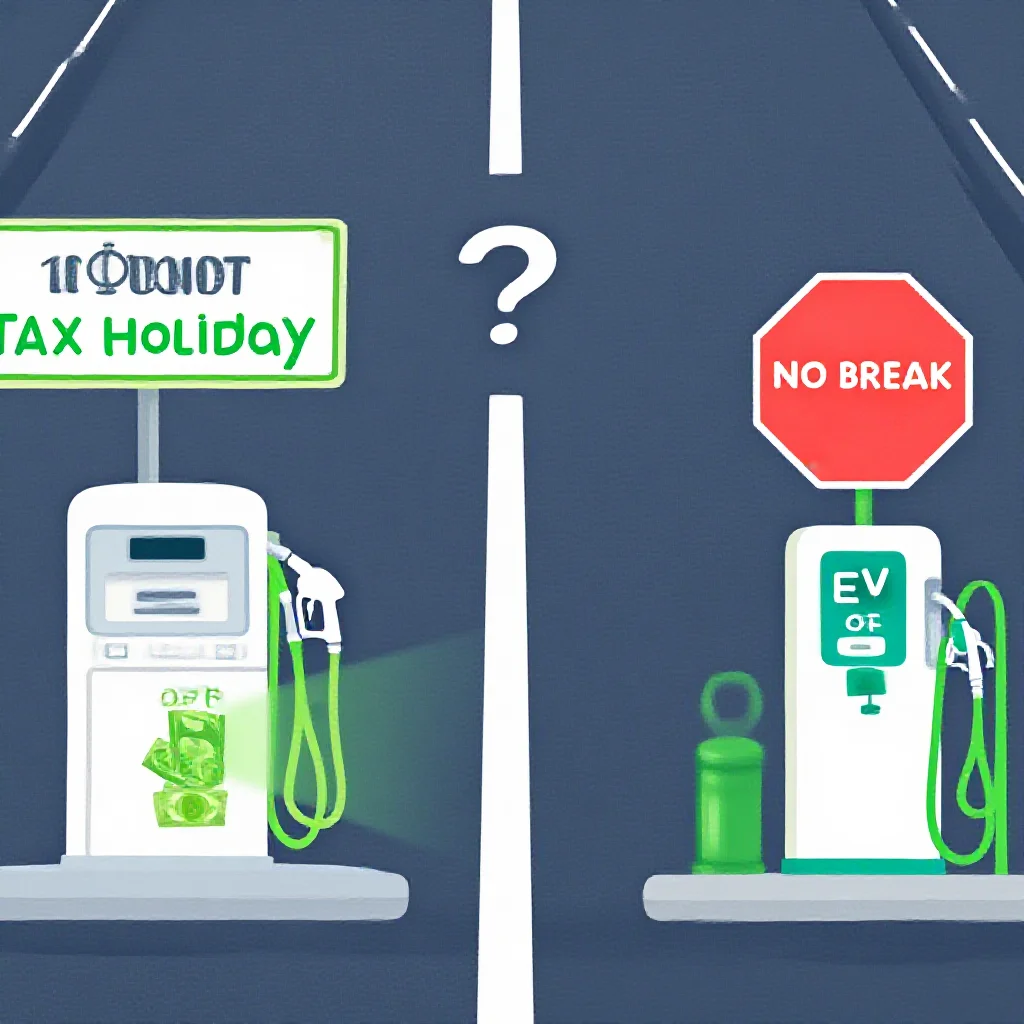
As policymakers debate a gasoline tax holiday to ease consumer costs, a critical question emerges: what about electric vehicle (EV) owners who pay no gasoline tax but rely on public roads? This article argues that any fuel-tax suspension should logically extend to EVs through an equivalent fee reduction or rebate, exposing the hidden economic logic of usage-based taxation. Without this parity, the policy inadvertently penalizes EV adoption and distorts market signals. We explore the principle of road-use equity, the regressive nature of selective tax breaks, and how ignoring EVs undermines long-term infrastructure funding. The goal is a coherent tax framework that treats all road users equally.

How a Vatican EV Fleet Deal Reveals Elli Mobility’s Quiet Play for Institutional Charging Dominance
The Insight

How a Vatican EV Fleet Deal Reveals Elli Mobility’s Quiet Play for Institutional Charging Dominance

Elli Mobility’s contract to supply charging infrastructure for the Vatican’s electric vehicle fleet is more than a symbolic green endorsement—it signals a deeper market shift. As public charging competition saturates, Elli is targeting high-trust, low-volume institutional clients (religious, governmental, heritage sites) where reliability and brand alignment trump price. This article explores the hidden economic logic: the Vatican as a gateway to a captive microgrid ecosystem, the structural advantages of slow-charging fleet management, and what this deal means for the broader electrification of non-commercial fleets.

Navigating Information Voids: The Hidden Logic of Content Filtering in Digital Ecosystems
The Insight

Navigating Information Voids: The Hidden Logic of Content Filtering in Digital Ecosystems

In an era of algorithmic curation and automated moderation, encounters with filtered or blocked content—such as the '[ERROR_POLITICAL_CONTENT_DETECTED]' flag—reveal deep patterns in how digital platforms manage risk, comply with regulations, and shape discourse. This article moves beyond surface-level censorship debates to explore the economic incentives, technology trends, and market forces driving these systems. We analyze the underlying supply chain of content moderation, the trade-offs for user experience, and the long-term implications for information asymmetry. Readers will gain a strategic understanding of why such errors are not glitches but features of a complex digital governance machine.

Volkswagen’s EV Pivot: Why a Routine Quarterly Report Reveals the Auto Giant’s Strategic Crossroads in 2026
The Insight

Volkswagen’s EV Pivot: Why a Routine Quarterly Report Reveals the Auto Giant’s Strategic Crossroads in 2026

When Volkswagen Group published its global quarterly report on April 15, 2026, the heavy emphasis on electric vehicles was not just a PR highlight—it signaled a fundamental shift in capital allocation, supply chain realignment, and factory retooling. This article digs beneath the press release to analyze what the EV-centric report means for battery partnerships, dealer networks, and the legacy combustion engine aftermarket. We connect the dots between VW’s strategic signals and the hidden economic logic of a top-three automaker betting its future on electrification, even as global EV demand growth shows signs of plateauing. Using CleanTechnica as a key verification anchor, we explore whether VW is leading or following in the electric transition.

Beyond the Backbone Myth: How LNG Volatility and Coal''s Decline Are Reshaping the True Economics of the Power Grid
The Insight

Beyond the Backbone Myth: How LNG Volatility and Coal''s Decline Are Reshaping the True Economics of the Power Grid

The power grid is at a crossroads. While the coal industry clings to its narrative as the ''reliable backbone'', 2025-2026 data reveals a starkly different reality: coal plant capacity factors are plummeting, and retirements are accelerating. Simultaneously, the LNG market is entering a volatile new era of oversupply and price spikes. This article conducts a deep industry audit, challenging coal''s cost and reliability claims against the operational data. It reveals that the true economic logic of the grid now favors solar, wind, and battery storage—not because of ideology, but due to levelized cost advantages and dispatchable flexibility. We uncover the hidden supply chain implications and market patterns that utility executives and policymakers can no longer ignore.

Wake, Waste, and Wakes: The Hidden Logic of BC Ferries’ Electrification Challenge
The Insight

Wake, Waste, and Wakes: The Hidden Logic of BC Ferries’ Electrification Challenge

BC Ferries, operator of one of the world’s largest ferry fleets, faces a unique electrification dilemma: floating logs and operational constraints prevent simple battery retrofits. This article explores why fast hydrofoil ferries, traditionally dismissed as niche tech, may solve the twin problems of wake wash and debris impact. We dig into the economic logic of reducing drag to extend battery range, the hidden cost of waterway hazards on propulsion systems, and why Canada’s coastal geography turns a standard electrification path into a high-risk bet. The analysis connects marine engineering trends with regional resource logistics, offering a fresh lens on ferry electrification beyond the usual battery swap narrative.

Navigating Content Restrictions: The Hidden Economic Logic of AI Political Filters
The Insight

Navigating Content Restrictions: The Hidden Economic Logic of AI Political Filters

When an AI system refuses to process content due to political detection, it reveals a deeper layer of information architecture design and market dynamics. This article explores the economic rationale behind content filtering algorithms, the trade-offs between safety and information flow, and the long-term implications for supply chains in content moderation technology. By analyzing the error message as a data point, we uncover how political content filters shape the cost structure of AI services, influence user trust, and drive innovation in alternative platforms. This slow analysis provides industry practitioners with a framework to anticipate regulatory risks and optimize content strategy.

Windfall Profits vs. Energy Transition: Europe’s Civil Society Demands Oil Companies Pay the Price
The Insight

Windfall Profits vs. Energy Transition: Europe’s Civil Society Demands Oil Companies Pay the Price

In April 2026, European civil society organizations formally called for windfall profit taxes on oil companies, citing exorbitant earnings during the ongoing energy crisis. This article explores the hidden economic logic behind the demand, examining how record oil profits are not merely a symptom of supply shocks but a structural distortion that delays investments in renewable infrastructure. We move beyond the immediate news to analyze the long-term impact on Europe’s energy transition, corporate behavior, and the underlying supply chain risks. The analysis frames the tax as a fiscal tool to rebalance market power and accelerate decarbonization, supported by data on profit margins and public spending needs.

GOTRAX Accord E-Bike Review: Is This Budget Commuter Worth the Hype in 2024?
The Insight

GOTRAX Accord E-Bike Review: Is This Budget Commuter Worth the Hype in 2024?

This review goes beyond surface-level specs to evaluate the GOTRAX Accord E-Bike as a signal of the broader affordable commuting trend. We analyze the hidden economic logic behind its price point, examining component trade-offs versus long-term ownership costs. The review dives into the market pattern of direct-to-consumer brands challenging legacy bike shops, and offers a deep audit on battery reliability, safety, and real-world usability for the average urban rider.

Jackery Fridgeguard Leak: Why Slim Design Signals a Shift in Portable Power Market Strategy
The Insight

Jackery Fridgeguard Leak: Why Slim Design Signals a Shift in Portable Power Market Strategy

An exclusive leak on CleanTechnica reveals Jackery''s upcoming Fridgeguard product, characterized as slim and design-focused. While initial reports focus on the device''s aesthetics, this article digs deeper into the hidden economic logic and market patterns behind this leak. We argue that the Fridgeguard represents a strategic pivot: from high-capacity, utility-first generators to design-conscious, integration-ready appliances targeting the premium eco-conscious home segment. This shift could disrupt the portable power supply chain by prioritizing thin-film battery technology and partnership-ready form factors over raw capacity, influencing competitor roadmaps and consumer expectations for home backup solutions.

Beyond the Name: The ID.3 Neo Signals Volkswagen’s Strategic Shift in the EV Mid-Lifecycle Refresh Era
The Insight

Beyond the Name: The ID.3 Neo Signals Volkswagen’s Strategic Shift in the EV Mid-Lifecycle Refresh Era

Volkswagen’s world premiere of the ID.3 Neo is more than a simple model refresh. By changing the name, exterior, interior, and technology, the automaker signals a deeper strategic pivot: moving from a ‘one-size-fits-all’ EV to a more segmented, premium-focused lineup. This article unpacks the hidden economic logic—how the Neo reflects pressure from Chinese rivals, the need to extend platform life without new factory investment, and a shift toward software-driven vehicle differentiation. We also explore what this means for the residual value of earlier ID.3 models and the broader supply chain for EV components.

Circle K’s Fast-Charger Blitz: The Hidden Economics of Fueling the EV Mainstream
The Insight

Circle K’s Fast-Charger Blitz: The Hidden Economics of Fueling the EV Mainstream

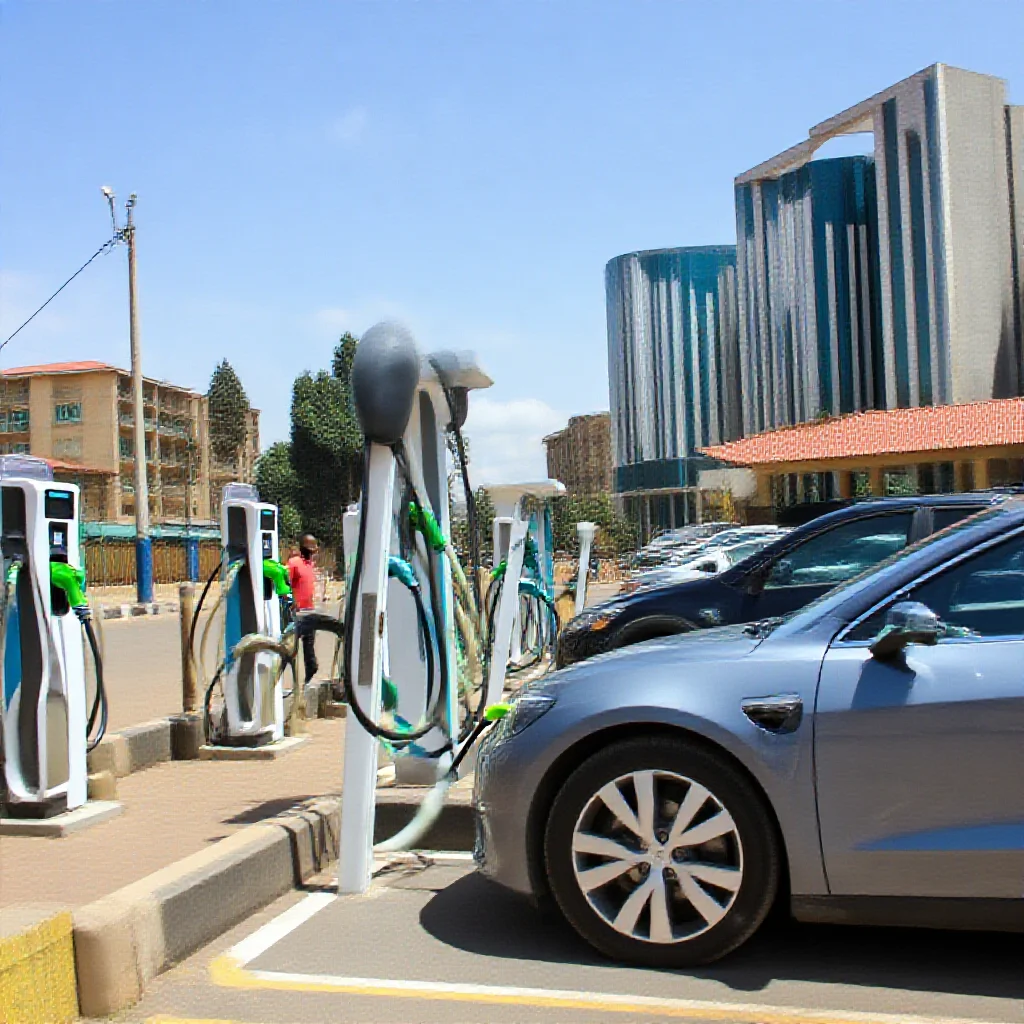
When Circle K announces hundreds of new fast chargers at its convenience stores, the story is not just about more plugs. It signals a fundamental shift in how retail fuel infrastructure is financed, sited, and monetized. This analysis digs into the hidden economic logic behind the rollout: why convenience-store chains are becoming the dark horses of DC fast charging, how real estate and grid connection costs shape site selection, and what this means for the broader EV supply chain—from charger manufacturers to utility grid planners. Based on the April 2026 announcement, we examine whether Circle K’s move is a defensive play against declining gas sales or an offensive bet on high-margin retail EV charging. The article also explores the tension between “fast analysis”—verifying the speed of deployment—and “slow analysis”—auditing the long-term viability of convenience-store charging business models versus dedicated charging plazas.

Navigating Information Architecture in an Era of Content Classification
The Insight

Navigating Information Architecture in an Era of Content Classification

This article explores the hidden economic and technological implications of content classification systems, specifically when raw data returns a 'political content detected' error. Rather than treating such outputs as dead ends, we analyze them as signals of deeper market patterns—such as the rise of automated moderation economies, the growing demand for neutral information design, and the supply chain bottlenecks created by classification algorithms. We propose a framework for information architects to design around such constraints, turning compliance challenges into opportunities for clarity and trust.

Beyond the 27% Drop: Decoding the Structural Shifts Behind the US EV Market''s Q1 2026 Slowdown
The Insight

Beyond the 27% Drop: Decoding the Structural Shifts Behind the US EV Market''s Q1 2026 Slowdown

The US electric vehicle market recorded a stark 27% year-over-year sales decline in Q1 2026, marking its worst first quarter since 2022. While headlines focus on the downturn, this analysis probes deeper into the structural forces at play. We move beyond cyclical explanations to examine critical saturation points in early-adopter segments, the lagging impact of infrastructure and affordability challenges, and the potential recalibration of automaker investment timelines. This report argues the Q1 2026 data is not merely a blip but a pivotal inflection point signaling the end of the market's initial hyper-growth phase and the complex transition toward mainstream adoption.

Beyond the Grid: How Solar-Powered EVs Are Redefining the Economics of Personal Transportation
The Insight

Beyond the Grid: How Solar-Powered EVs Are Redefining the Economics of Personal Transportation

While solar charging for electric vehicles is often framed as a green novelty, its true disruptive power lies in decoupling personal mobility from centralized energy markets. This article moves beyond surface-level cost savings to analyze the deeper economic logic: solar EVs represent a shift towards ''energy autonomy,'' transforming vehicles from mere assets into decentralized power generation nodes. We examine the implications for household economics, the strain on traditional utility models, and the potential for a new, resilient energy infrastructure built on millions of mobile solar collectors. The analysis reveals that the most significant benefit may not be the fuel saved, but the foundational change in how we produce, consume, and value energy for transportation.

Beyond the Switch: The Scalability Challenge of Indonesia''s Diesel Generator Retirement
The Insight

Beyond the Switch: The Scalability Challenge of Indonesia''s Diesel Generator Retirement

Indonesia's vast archipelago relies heavily on thousands of diesel generators for power, presenting a unique energy transition challenge. While retiring these units for renewables is a clear goal, the path to a scalable, nationwide program is fraught with complexity. This analysis moves beyond the simple 'swap' narrative to examine the hidden economic logic of stranded assets, the critical role of distributed energy resource management systems (DERMS), and the market patterns that will determine whether this transition empowers local communities or creates new dependencies. We explore the untold story of how this shift could fundamentally reshape Indonesia's underlying energy supply chain and rural economic development.

Beyond the Headline Drop: The Strategic Realignment of the US EV Market in Q1 2026
The Insight

Beyond the Headline Drop: The Strategic Realignment of the US EV Market in Q1 2026

While Q1 2026 US EV sales data shows an overall market decline, a deeper analysis reveals a pivotal industry inflection point. The fact that only six brands achieved growth signals not a market failure, but a strategic consolidation and a shift from broad-based adoption to targeted, brand-driven conquest. This article moves beyond the surface-level numbers to explore the underlying dynamics: the end of the ''rising tide lifts all boats'' phase, the intensifying battle for brand loyalty in a maturing market, and the critical implications for supply chain strategy, charging infrastructure investment, and future regulatory frameworks. The data points to a market entering a more complex, competitive, and segmented era.

Beyond the Trophy: How Hyundai''s IONIQ 6 N Victory Signals a New Era for Electric Performance
The Insight

Beyond the Trophy: How Hyundai''s IONIQ 6 N Victory Signals a New Era for Electric Performance

Hyundai Motor's IONIQ 6 N winning the 2026 World Performance Car award is more than a corporate accolade; it's a pivotal market signal. This analysis moves past the press release to examine how this victory reflects a maturing EV performance segment, where software-defined dynamics and accessible performance are becoming key battlegrounds. We explore the strategic implications for Hyundai's N brand against established German rivals, the potential shift in consumer perception of electric 'driver's cars,' and what this award signifies about the future criteria for automotive excellence in an all-electric era. The win underscores a broader industry trend where performance is increasingly decoupled from sheer power and tied to integrated digital and driving experiences.

Beyond the Vote: How Shawnee County''s Solar Approval Signals a Rural Economic Pivot
The Insight

Beyond the Vote: How Shawnee County''s Solar Approval Signals a Rural Economic Pivot

The Shawnee County Commission's unanimous 2026 approval of a utility-scale solar and battery storage project is more than a routine permit decision. It represents a strategic pivot for an agricultural region, positioning land as a dual-purpose asset for both food and energy production. This analysis explores the hidden economic logic behind repurposing agricultural-zoned land, the emerging trend of rural counties becoming clean energy hubs, and the long-term implications for local tax bases, grid stability, and supply chain dependencies. The move underscores a broader market pattern where energy storage is becoming a non-negotiable component of new renewable projects, transforming local governance and economic development strategies.

Content Moderation in the Digital Age: The Economics and Ethics of Political Speech Filters
The Insight

Content Moderation in the Digital Age: The Economics and Ethics of Political Speech Filters

When a system returns '[ERROR_POLITICAL_CONTENT_DETECTED]', it reveals far more than a simple block. This article explores the hidden economic logic and technological trends behind automated content moderation. We analyze how platforms deploy political content filters not just for compliance, but as a core risk management and market positioning strategy. The piece examines the long-term impacts on information supply chains, the creation of 'digital sovereignty' zones, and the ethical trade-offs between censorship, safety, and free expression. This deep audit moves beyond surface-level debates to uncover the business models and geopolitical forces shaping what we see—and what we don't—online.

The €74 Billion Trade-Off: How Auto Lobbying on Euro 7 Could Inflate EU''s Oil Import Bill
The Insight

The €74 Billion Trade-Off: How Auto Lobbying on Euro 7 Could Inflate EU''s Oil Import Bill

A leaked document from the European Automobile Manufacturers'' Association (ACEA) reveals the industry''s lobbying stance on the upcoming Euro 7 emissions standards. Analysis by Transport & Environment (T&E) suggests a staggering potential consequence: if the industry''s demands are met, the EU could face an additional €74 billion in oil import costs. This article dissects the hidden economic logic behind this trade-off, exploring how weaker emissions rules for new cars could lock in higher fossil fuel dependency and undermine the bloc''s strategic energy and climate goals. We examine the analysis comparing the European Commission''s proposal with the industry''s alternative, framing it as a critical battle between short-term industrial convenience and long-term economic resilience.

Beyond the Range Anxiety: How an Electric RV Trip to Oatman, Arizona Signals a New Era for Off-Grid Tourism
The Insight

Beyond the Range Anxiety: How an Electric RV Trip to Oatman, Arizona Signals a New Era for Off-Grid Tourism

A recent journey by electric RV to the historic ghost town of Oatman, Arizona, and the rugged Arizona Sidewinder route is more than a travelogue. It represents a critical stress test for the nascent EV charging infrastructure in remote, off-grid locations. This analysis explores the trip's implications for the future of adventure tourism, the evolving economics of destination charging, and the hidden challenges of scaling electric mobility beyond urban corridors. We examine the strategic necessity of building charging networks in tourist destinations like Oatman, not just along interstates, and what this means for local economies, energy grids, and the next generation of RV manufacturing.

Beyond the Headlines: How the Utility RELIEF Act Reshapes the Solar Industry''s Grid and Economic Future
The Insight

Beyond the Headlines: How the Utility RELIEF Act Reshapes the Solar Industry''s Grid and Economic Future

Following the passage of the Utility RELIEF Act, statements from leading solar trade groups like SEIA and ACORE reveal a strategic alignment on grid modernization and cost reduction. This analysis moves beyond the press releases to examine the Act''s dual-track impact: as a catalyst for accelerated solar deployment and a framework for a fundamental grid transformation. We explore the underlying economic logic—shifting from pure subsidy reliance to enabling infrastructure—and the long-term implications for market competition, supply chain stability, and the evolving role of utilities in a renewable-dominant energy landscape.

Beyond the Range Anxiety: The eRV2 on Route 66 and the Real Economics of Electric RV Travel
The Insight

Beyond the Range Anxiety: The eRV2 on Route 66 and the Real Economics of Electric RV Travel

A planned all-electric RV journey from Chicago to Santa Monica in a 2024 Winnebago eRV2 is more than a road trip; it's a real-world stress test for a nascent industry. This analysis moves beyond simple range anxiety to examine the underlying economic and infrastructural calculus of electric RV travel. By dissecting the author's preparation—including home charger installation, meticulous route planning with PlugShare and ABRP, and energy consumption calculations of 1.1 miles/kWh—we uncover the operational realities, hidden costs, and strategic planning required. This case study reveals whether current technology and infrastructure can support the dream of emission-free, long-haul recreational travel, and what it means for the future market.

Content Moderation in the Digital Age: Navigating the Line Between Policy and Information Access
The Insight

Content Moderation in the Digital Age: Navigating the Line Between Policy and Information Access

The detection of political content by automated systems, often flagged with generic errors like '[ERROR_POLITICAL_CONTENT_DETECTED]', represents a critical intersection of technology, policy, and information architecture. This article moves beyond surface-level discussions of censorship to analyze the underlying economic and operational logic of content filtering. We examine how these systems are designed not just for compliance, but to manage platform liability, shape user engagement, and create new forms of digital scarcity. By investigating the long-term impacts on information supply chains and the creation of 'shadow knowledge' networks, this analysis reveals how moderation errors are a feature, not a bug, of a new global information economy.

Content Moderation in the Digital Age: Navigating the Line Between Policy and Information
The Insight

Content Moderation in the Digital Age: Navigating the Line Between Policy and Information

The detection of political content by automated systems has become a defining feature of the modern information ecosystem. This article explores the hidden economic and technological logic behind content moderation, moving beyond surface-level debates to examine its impact on data markets, supply chains, and the architecture of knowledge itself. We analyze how filtering mechanisms shape market access, influence the flow of capital, and create new forms of digital scarcity. The piece investigates whether this trend represents a fast-moving operational necessity or a slow, fundamental shift in how information is commodified and controlled, proposing a deep audit of the long-term consequences for innovation and public discourse.

Beyond the Showroom: Decoding XPENG''s ''Physical AI'' Strategy Through a Journalist''s Journey
The Insight

Beyond the Showroom: Decoding XPENG''s ''Physical AI'' Strategy Through a Journalist''s Journey

CleanTechnica journalist Larry Evans's upcoming trip to Guangzhou to witness XPENG's latest technology—including the ARIDGE flying car, IRON humanoid robot, and VLA 2.0 intelligent driving system—is more than a product tour. It signals a pivotal moment in China's strategic push into 'Physical AI,' where intelligent software converges with hardware to dominate next-generation mobility. This analysis moves beyond the specs to explore the underlying economic logic of XPENG's integrated ecosystem, questioning whether this approach represents a sustainable competitive moat or a capital-intensive gamble in the global race for autonomous transportation. We examine the potential supply chain implications, market positioning against Tesla and domestic rivals, and what 'Physical AI' truly means for the future of urban transit and manufacturing.

Beyond the Buoy: How Lake Erie''s Digital Sensor Network is Redefining Environmental Economics
The Insight

Beyond the Buoy: How Lake Erie''s Digital Sensor Network is Redefining Environmental Economics

The deployment of a real-time digital sensor network in Lake Erie is more than a water quality project; it's a foundational shift in environmental management economics. This article explores how continuous data streams are transforming reactive cleanup into predictive resource allocation, creating a new asset class of environmental intelligence. We analyze the hidden economic logic driving this technological investment, its potential to reshape agricultural and municipal supply chains, and the emerging market for hyper-local, actionable ecological data. The move from periodic sampling to persistent sensing represents a critical step towards a data-driven 'circular economy' for watershed management, with implications far beyond Lake Erie's shores.

Enervex''s AquaCore: How a Smart Heat Pump Water Heater Startup Challenges the $2,500 Price Barrier
The Insight

Enervex''s AquaCore: How a Smart Heat Pump Water Heater Startup Challenges the $2,500 Price Barrier

Startup Enervex is entering the US water heater market with the AquaCore Smart Water Heater, a compact, Wi-Fi-enabled heat pump unit priced under $2,500 and slated for a 2026 launch. This analysis explores how its use of propane (R-290) refrigerant, direct-to-consumer model, and aggressive efficiency claims position it not just as another appliance, but as a strategic challenger aiming to disrupt the adoption economics of residential heat pump technology. We examine the underlying market logic, the critical role of refrigerant choice in the industry's sustainability pivot, and the potential long-term implications for traditional manufacturers and the electrification supply chain.

Beyond the Headlines: How XPENG''s 800V & XNGP Strategy Reveals a Deeper EV Market Shift
The Insight

Beyond the Headlines: How XPENG''s 800V & XNGP Strategy Reveals a Deeper EV Market Shift

While XPENG is often compared to Tesla, a deeper analysis reveals its technology roadmap targets a different market reality. This article moves beyond surface-level feature comparisons to explore how XPENG''s 800V fast-charging platform and urban-focused XNGP driver assistance system are strategic responses to China''s unique infrastructure and consumer demands. We examine the underlying economic logic: XPENG isn''t just competing on specs, but is architecting solutions for dense urban environments and a charging ecosystem distinct from Tesla''s Western-centric Supercharger network. This analysis uncovers the long-term implications for global EV supply chains and the potential for divergent technology standards to emerge between East and West.

Tesla FSD''s European Debut: A Strategic Test Beyond Technology
The Insight

Tesla FSD''s European Debut: A Strategic Test Beyond Technology

The rollout of Tesla's Full Self-Driving (FSD) version 12.5.4.1 in Europe, specifically in Germany, marks a critical strategic expansion beyond its North American origins. This article analyzes the initial performance, where the software successfully handled complex maneuvers like roundabouts but faltered at nuanced local rules like bus lanes. We argue this deployment is less about a finished product and more a high-stakes, real-world data collection campaign. The core challenge isn't just technological refinement, but navigating a fragmented regulatory landscape and adapting to deeply ingrained European driving norms. This move pressures European regulators and competitors, setting the stage for a new phase in the global autonomous vehicle race where software adaptability and regulatory diplomacy are as crucial as sensor technology.

Beyond the Vote: How Shawnee County''s Solar Approval Signals a Shift in Rural Energy Economics
The Insight

Beyond the Vote: How Shawnee County''s Solar Approval Signals a Shift in Rural Energy Economics

The Shawnee County Commission's unanimous 2026 approval for a utility-scale solar and battery storage project is more than a local permit decision; it's a microcosm of a profound economic realignment in rural America. This analysis moves past the headline to explore how such projects are transforming agricultural land into dual-use assets, reshaping local tax bases, and positioning non-traditional energy regions as critical nodes in a decentralized grid. We examine the hidden drivers—from evolving land valuation models to the strategic pairing of solar with storage for grid stability—that are turning heartland counties into unlikely pioneers of the energy transition, with long-term implications for supply chains, workforce development, and regional economic sovereignty.

The GOTRAX Rambo E-Bike: Decoding the Fat-Tire Formula and Its Market Disruption
The Insight

The GOTRAX Rambo E-Bike: Decoding the Fat-Tire Formula and Its Market Disruption

The GOTRAX Rambo isn't just another fat-tire e-bike; it's a strategic product that reveals key trends in the affordable electric mobility sector. By analyzing its 750W motor, 48V battery, and 330 lb capacity, we uncover how manufacturers are targeting the 'value-performance' sweet spot. This article dissects the Rambo's specifications to explore the underlying economics of component sourcing, the democratization of all-terrain capability, and the competitive pressure it applies to traditional bike brands. We examine what its feature set says about evolving consumer demands and the long-term implications for the e-bike supply chain and market segmentation.

Beyond 10,000 Units: What Toyota''s Early 2026 bZ Sales Reveal About Its EV Strategy and Market Position
The Insight

Beyond 10,000 Units: What Toyota''s Early 2026 bZ Sales Reveal About Its EV Strategy and Market Position

Toyota's report of over 10,000 bZ model sales in the first part of 2026 is more than a simple milestone. This analysis moves beyond the headline figure to examine what this performance signals about Toyota's evolving electric vehicle strategy in key markets like North America. We explore whether this pace indicates a successful scaling of its 'multi-pathway' approach, the competitive pressure it faces from pure-EV brands, and the critical supply chain and production ramp-up challenges that underpin these numbers. The article assesses if this early-2026 data point marks a turning point for the automotive giant's electrification ambitions or merely a cautious step in a longer, more complex transition.

The AGI Mirage: How AI Hallucinations and Leadership Hype Shape the Next Tech Frontier
The Insight

The AGI Mirage: How AI Hallucinations and Leadership Hype Shape the Next Tech Frontier

This article explores the critical tension between the demonstrable flaws in current AI models—such as generating confident fabrications—and the ambitious, hype-driven statements from leaders like OpenAI's Sam Altman. We analyze how this dynamic is not merely a technical issue but a strategic market force, shaping investment, public perception, and the race toward Artificial General Intelligence (AGI). By examining the economic logic behind promoting 'significant leaps' while models still fail basic fact-checking, we uncover the underlying patterns of expectation management and the high-stakes game of defining AGI's arrival.

Beyond Lithium-Ion: How Zwitterionic Polymers Could Unlock the True Potential of Solid-State Batteries
The Insight

Beyond Lithium-Ion: How Zwitterionic Polymers Could Unlock the True Potential of Solid-State Batteries

A 2026 breakthrough from Japanese researchers introduces a zwitterionic solid polymer electrolyte, marking a pivotal shift in solid-state battery development. This article analyzes how this material science innovation addresses the core trade-offs between ionic conductivity and mechanical stability that have long plagued the field. We explore the underlying economic logic driving this research—the race to secure intellectual property in post-lithium-ion architectures—and assess whether this represents an incremental step or a foundational platform technology. The analysis positions this development within the broader context of supply chain decoupling and the search for manufacturable, high-performance energy storage solutions.

The Justice Conservation Fund: A New Economic Model for Federal Forests
The Insight

The Justice Conservation Fund: A New Economic Model for Federal Forests

A proposal for a ''Justice Conservation Fund'' seeks to fundamentally reshape the economic relationship between the US Forest Service and the 193 million acres it manages. By creating a dedicated fund to compensate for reduced timber revenue, the plan addresses a core tension in federal forest management: balancing conservation and climate goals with the economic dependencies of local communities and agency budgets. This analysis explores the hidden economic logic of the proposal, examining its potential to decouple forest health from logging revenue, create a new conservation finance mechanism, and set a precedent for valuing ecosystem services on public lands. The success of such a fund could signal a major shift in how America funds the stewardship of its natural resources.

The Weight of Change: How France''s Tax and Tesla''s Dominance Signal Europe''s Electric Tipping Point
The Insight

The Weight of Change: How France''s Tax and Tesla''s Dominance Signal Europe''s Electric Tipping Point

In 2024, France introduced a punitive weight-based tax on heavy vehicles, a policy seemingly at odds with the growing popularity of often-heavier electric cars. Yet, by early 2026, the data reveals a paradox: EVs, led by Tesla, are dominating European sales charts. This article explores the hidden logic behind this apparent contradiction. It argues that France''s tax is not anti-EV but pro-efficiency, targeting wasteful design in *all* vehicle types, while market signals show consumers are decisively choosing electrification. Together, these forces—government nudges towards smarter engineering and market pull for clean technology—are creating a powerful, self-reinforcing cycle accelerating Europe''s automotive transformation beyond mere adoption into a phase of optimization and mass-market consolidation.

Beyond the Negative Price: How Record Renewable Penetration is Rewiring Grid Economics and Utility Business Models
The Insight

Beyond the Negative Price: How Record Renewable Penetration is Rewiring Grid Economics and Utility Business Models

The electricity grid is undergoing a fundamental transformation, moving from a paradigm of managing scarcity to one of managing abundance. Record-breaking renewable generation, exemplified by CAISO's 92% instantaneous penetration, is causing unprecedented market dynamics like negative prices. This article explores how this shift is forcing grid operators to develop new stability strategies, compelling regulators to overhaul interconnection processes, and driving utilities to fundamentally rethink their revenue models. The convergence of these trends signals not just an energy transition, but a complete economic and operational recalibration of the power sector.

Beyond the Plug: The Strategic Grid and Market Implications of 24 New EV Chargers in Texas and Maine
The Insight

Beyond the Plug: The Strategic Grid and Market Implications of 24 New EV Chargers in Texas and Maine

The installation of 24 new EV chargers in Texas and Maine by April 2026 is more than a simple infrastructure update; it's a strategic signal in the evolving energy landscape. This analysis moves beyond the basic facts to explore the hidden economic logic of site selection—targeting Texas's energy hub and Maine's tourism corridors—and the technological implications of deploying a dual mix of Level 2 and DC fast chargers. We examine how this expansion acts as a stress test for local grids, influences regional EV adoption patterns, and reveals the underlying market strategies of network operators seeking to build critical mass and secure first-mover advantage in key geographic and economic zones.

Volkswagen''s Strategic Retreat: Decoding the ID.4''s U.S. Production End and Its Ripple Effects
The Insight

Volkswagen''s Strategic Retreat: Decoding the ID.4''s U.S. Production End and Its Ripple Effects

Volkswagen's decision to cease ID.4 production at its Chattanooga, Tennessee plant is more than a simple model update; it's a strategic pivot with deep implications. This analysis moves beyond the headline to explore the underlying economic logic of Volkswagen's North American EV strategy. We examine the shift from a volume-focused, localized production model for a single vehicle to a potentially more flexible, platform-based approach for future models. The article investigates the long-term impact on the nascent U.S. EV supply chain, the plant's workforce, and Volkswagen's competitive positioning against Tesla and legacy automakers. This decision signals a critical moment in the auto industry's electrification journey, where manufacturing footprints are being recalibrated for profitability and technological evolution.

Beyond the Numbers: The Strategic Implications of Belgium''s 2,926 New Public EV Chargers
The Insight

Beyond the Numbers: The Strategic Implications of Belgium''s 2,926 New Public EV Chargers

The announcement of 2,926 new public EV chargers in Belgium is more than an infrastructure upgrade; it's a strategic pivot with profound implications. This article moves beyond the headline figure to analyze the hidden economic logic driving this expansion, examining it as a calculated response to EU mandates and a competitive play in the European EV market. We dissect the underlying supply chain pressures, the critical role of charging density in alleviating consumer 'range anxiety,' and how this rollout serves as a foundational investment to stimulate broader EV adoption. The analysis positions Belgium's move not as an isolated project, but as a key piece in a continent-wide energy transition, revealing the market patterns and long-term policy bets embedded within this infrastructure push.

Beyond the Bubble Car: How a Philippine Coach Builder''s EV Gamble Reveals Southeast Asia''s Emerging Micro-Mobility Revolution
The Insight

Beyond the Bubble Car: How a Philippine Coach Builder''s EV Gamble Reveals Southeast Asia''s Emerging Micro-Mobility Revolution

A Philippine coach builder's development of an Isetta-like electric micro-vehicle is not merely a quirky automotive project. It signals a strategic pivot in Southeast Asia's manufacturing landscape, leveraging low-volume, flexible production to address urban congestion and affordability. This analysis explores how this move challenges the dominance of Chinese imports, tests the viability of hyper-localized EV ecosystems, and could redefine 'last-mile' logistics and personal transport in dense megacities. The venture serves as a case study in leapfrogging traditional automotive development cycles through niche adaptation and regional supply chain utilization.

Beyond the Frontline: How Ukraine''s Zero-Emission Drone Race is Redefining Aerial Logistics
The Insight

Beyond the Frontline: How Ukraine''s Zero-Emission Drone Race is Redefining Aerial Logistics

While Ukraine''s defense industry garners headlines, a parallel, strategic innovation race is underway in zero-emission drone technology. Companies like AeroDrone, Hydroplane, and Kray Technologies are pioneering hydrogen fuel cell and advanced battery-electric systems, not merely for environmental benefits but to solve the critical operational constraint of flight endurance. This development reveals a deeper economic logic: Ukraine is leveraging wartime pressure to build a post-war competitive advantage in the global commercial drone market for logistics, agriculture, and inspection. This article analyzes the distinct technological pathways, the underlying supply chain implications, and how this niche focus could position Ukraine as an unexpected leader in sustainable aviation technology.

Beyond the Bill Signing: The Economic and Grid Strategy Behind Virginia''s 2026 Energy Legislation
The Insight

Beyond the Bill Signing: The Economic and Grid Strategy Behind Virginia''s 2026 Energy Legislation

On April 14, 2026, Governor Abigail Spanberger signed a slate of energy bills, publicly framed to lower electricity bills, strengthen grid reliability, and boost the local economy through solar and storage. This analysis moves beyond the press release to examine the core strategic axis: Virginia''s deliberate pivot to position itself as a regional hub for distributed energy resource (DER) manufacturing and integration. We explore how the legislation is less about immediate rate relief and more about a long-term industrial and infrastructure play—capturing supply chain value, future-proofing the grid against demand surges, and creating a regulatory sandbox to attract clean tech investment. The article dissects the hidden economic logic linking ratepayer costs, grid modernization, and state-level economic competitiveness in the evolving American energy landscape.

Tesla''s Record Inventory in 2026: A Strategic Pivot or a Demand Warning Sign?
The Insight

Tesla''s Record Inventory in 2026: A Strategic Pivot or a Demand Warning Sign?

In Q1 2026, Tesla's global inventory hit a record high, triggering price cuts and production adjustments at its Fremont factory. While the Cybertruck appears unaffected, this inventory surge raises critical questions about the underlying market dynamics. This analysis moves beyond surface-level reporting to explore whether this is a tactical inventory management strategy ahead of a major product refresh, a calculated response to shifting competitive pressures, or an early indicator of softening demand for its core Model Y and Model 3 vehicles. We examine the potential long-term implications for Tesla's supply chain strategy, brand pricing power, and the broader electric vehicle market's transition from supply-constrained to demand-driven growth.

Beyond the Headline: How Kia''s EV3 Victory Over Tesla''s Model Y Signals a New European EV Market Reality
The Insight

Beyond the Headline: How Kia''s EV3 Victory Over Tesla''s Model Y Signals a New European EV Market Reality

In Q1 2026, Kia's compact EV outsold Tesla's Model Y in Europe, a symbolic shift long predicted by industry watchers. This article moves beyond the sales figures to analyze the deeper market forces at play. We examine how Kia's strategic timing with the EV3 launch, targeting the high-volume compact SUV segment, exploited a temporary gap in Tesla's model cycle and shifting European consumer preferences towards affordable, practical EVs. The analysis explores whether this marks a permanent rebalancing of power or a cyclical blip, considering supply chain readiness, regional manufacturing strategies, and the evolving definition of 'premium' in the electric age.

Beyond the Headlines: How Boreal''s Record 20-Electric-Ferry Order Signals a Hydrofoil Revolution in Maritime Transport
The Insight

Beyond the Headlines: How Boreal''s Record 20-Electric-Ferry Order Signals a Hydrofoil Revolution in Maritime Transport

Swedish operator Boreal's landmark order for 20 Candela P-12 electric hydrofoil ferries is more than just a large purchase; it's a strategic bet on a new paradigm for coastal transit. This analysis moves beyond the record-breaking headline to explore the underlying economic and technological forces at play. We examine how hydrofoiling technology fundamentally alters the business case for electrification by drastically reducing energy consumption, enabling longer routes and higher speeds with smaller batteries. The piece investigates the long-term implications for Norway's ferry-dependent coastal communities, the potential disruption to traditional shipbuilding supply chains, and why this order may mark the tipping point where niche electric vessels transition to mainstream maritime mobility solutions.

The GOTRAX eFold Decoded: How a $799 E-Bike Redefines Urban Mobility Economics
The Insight

The GOTRAX eFold Decoded: How a $799 E-Bike Redefines Urban Mobility Economics

The GOTRAX eFold electric bike, with its 350W motor, 20 mph top speed, and 25-mile range, represents more than just an affordable commuting tool. This analysis dissects its specifications—from the aluminum frame to the Shimano drivetrain—to uncover the strategic market positioning and supply chain efficiencies enabling its disruptive $799 price point. We explore how this product category is reshaping urban transportation economics, challenging traditional bike and micro-mobility markets, and what its design compromises reveal about the future of mass-market electric personal transport.

Hyundai''s IONIQ China Gambit: A Strategic Pivot or a Late Entry in the EV Arena?
The Insight

Hyundai''s IONIQ China Gambit: A Strategic Pivot or a Late Entry in the EV Arena?

Hyundai Motor Company''s launch of the IONIQ brand in China, featuring the IONIQ 7 SUV and IONIQ 8 sedan concepts, is more than a simple product debut. This analysis positions the move as a critical strategic pivot for Hyundai, aimed at reclaiming relevance in the world''s largest EV market. We examine the underlying logic: a shift from competing on volume to targeting premium niches, the geopolitical and supply chain calculus of localizing a high-end brand, and the immense challenge of challenging entrenched domestic champions like BYD and NIO. The success of IONIQ in China will serve as a key indicator of Hyundai''s global EV ambitions and its ability to navigate one of the most competitive automotive landscapes.

Waymo & Waze Pothole Pilot: The Hidden Data Monetization Play Reshaping Urban Infrastructure
The Insight

Waymo & Waze Pothole Pilot: The Hidden Data Monetization Play Reshaping Urban Infrastructure

Waymo and Waze's April 2026 pilot to detect potholes using autonomous vehicle data is more than a simple civic partnership. This analysis reveals it as a strategic move to monetize the immense, untapped value of real-time road condition data. By transforming Waymo's sensor data into a public utility via Waze, the initiative creates a new revenue stream, establishes a critical data moat for autonomous vehicle safety, and positions the partnership as a de facto data broker for city governments. This pilot signals a future where the most valuable asset of autonomous fleets may not be the ride, but the hyper-detailed environmental intelligence they continuously harvest.

The Infill Imperative: How Dense Urban Development is Decarbonizing Transportation
The Insight

The Infill Imperative: How Dense Urban Development is Decarbonizing Transportation

A landmark 2025 UC Davis study reveals that infill development—building within existing urban boundaries—can slash per capita transportation emissions by 15% to 50% compared to suburban sprawl. This analysis of 1.5 million housing units and 3 million jobs in California provides a powerful data-driven foundation for climate action. Major U.S. cities like San Diego, Portland, Austin, and Seattle are now codifying ambitious infill targets into their official climate and comprehensive plans, aiming to direct the majority of new growth into transit-accessible areas by 2030-2044. This article explores the transformative potential of this urban policy shift, the political and social challenges it faces, and its critical role in achieving deep, systemic cuts in transportation-related carbon emissions.

The Joi Scientific Saga: How Unproven Hydrogen Claims Secured Major Partnerships Before Fading Away
The Insight

The Joi Scientific Saga: How Unproven Hydrogen Claims Secured Major Partnerships Before Fading Away

Joi Scientific emerged in 2014 with bold claims of producing ultra-low-cost hydrogen from seawater, a potential 'Hydrogen 2.0' revolution. The company successfully secured high-profile partnerships with entities like Florida Power & Light and a U.S. national laboratory, riding a wave of hydrogen hype. However, independent analyses from the U.S. Department of Energy and Government Accountability Office later cast serious doubt, labeling the technology unproven and not ready for market. This article explores the pattern of how ambitious, pre-commercial clean tech claims can attract significant institutional interest based on future promise, the role of due diligence, and what the company's eventual silence reveals about the fine line between innovation and overreach in the energy transition.

Beyond the Headlines: Decoding the Hidden Forces Behind Q1 2026 US EV Sales
The Insight

Beyond the Headlines: Decoding the Hidden Forces Behind Q1 2026 US EV Sales

While Q1 2026 US EV sales data shows positive trends, the surface-level numbers mask deeper market dynamics. This analysis moves beyond simple growth rates to examine the underlying economic logic and strategic shifts they reveal. We explore whether this quarter's performance signals a sustainable market maturation or a temporary alignment of incentives and supply. The article investigates the unspoken pressures on the EV supply chain, the evolving competitive landscape beyond headline automakers, and what the timing of this data release implies for investor sentiment and future policy debates. This is not just a sales report, but a lens into the industry's next phase of consolidation and challenge.

From Mali to the Midwest: The Geologic Hydrogen Rush and Its Unresolved Commercial Equation
The Insight

From Mali to the Midwest: The Geologic Hydrogen Rush and Its Unresolved Commercial Equation

The discovery of a naturally occurring, high-purity hydrogen well in Mali has ignited a global search for geologic hydrogen, challenging the paradigm that hydrogen must be manufactured. Recent USGS estimates suggest vast global reserves, and significant U.S. government funding is now fueling exploration. However, this article argues that the nascent industry faces a critical disconnect: while exploration is accelerating, the path to cost-effective, scalable production remains fraught with unproven extraction technologies, undefined reservoir behavior, and a lack of commercial infrastructure. The real story is not the resource''s existence, but the immense technical and economic gulf between discovery and a viable commodity market.

Beyond the Headlines: The Strategic Grid and Economic Implications of [State]''s 12-County Renewable Energy Surge
The Insight

Beyond the Headlines: The Strategic Grid and Economic Implications of [State]''s 12-County Renewable Energy Surge

While the headline fact that a state has renewable energy projects across 12 counties is notable, the deeper story lies in the strategic pattern of development. This analysis moves beyond simple project counting to examine the underlying economic logic driving the geographic dispersion of solar, wind, and battery storage. We explore how this multi-county, multi-technology portfolio is less about clean energy quotas and more a deliberate strategy for grid resilience, regional economic rebalancing, and creating a hedge against technology-specific risks. The article investigates the long-term implications for local supply chains, workforce development, and land use, arguing that this decentralized model may become a blueprint for state-level energy independence and economic modernization.

Beyond Navigation: How BMW''s Dow Jones Energy Deal Signals the Data Monetization Era for EVs
The Insight

Beyond Navigation: How BMW''s Dow Jones Energy Deal Signals the Data Monetization Era for EVs

BMW''s integration of Dow Jones Energy''s charging station data into its electric vehicles is more than a convenience feature. This article analyzes the strategic move as a pivotal shift in the automotive industry''s value chain, where real-time data becomes a core competitive asset. We explore how this partnership transforms vehicles from mere transportation tools into intelligent data platforms, enabling predictive logistics, dynamic energy management, and new revenue streams. The analysis delves into the implications for infrastructure planning, energy grid stability, and the emerging battle for control over the EV ecosystem''s most valuable resource: actionable information.

Beyond the Numbers: How Q1 2026''s Electric Truck Surge Signals a Supply Chain Revolution
The Insight

Beyond the Numbers: How Q1 2026''s Electric Truck Surge Signals a Supply Chain Revolution

The Q1 2026 U.S. sales data for electric semi-trucks, led by Tesla, Freightliner, and Volvo, reveals more than just rapid market growth. This analysis argues that the true story lies beneath the headline figures: a fundamental and accelerating shift in the industrial and logistical supply chain. The expansion of production capacity by major manufacturers is not merely a response to demand but a strategic move to secure dominance in a new ecosystem. We examine how this early-stage fleet deployment is creating a ''pull effect'' on charging infrastructure, component suppliers, and maintenance networks, setting the stage for a systemic transformation of freight logistics that will have long-term ripple effects far beyond vehicle sales.

Beyond the Greeting: The Strategic Communications Architecture Powering Artemis II''s Message from Space
The Insight

Beyond the Greeting: The Strategic Communications Architecture Powering Artemis II''s Message from Space

On April 10, 2026, the Artemis II crew's broadcast of a "message of love" to Earth was more than a symbolic gesture; it was a critical, real-world stress test of NASA's next-generation deep space communications network. This article analyzes the event as a pivotal milestone in operationalizing the infrastructure essential for sustained lunar presence and future Mars missions. We explore the hidden technological and strategic imperatives behind the broadcast, examining how it validates the laser communications systems, network resilience, and mission protocols that will underpin human exploration beyond low-Earth orbit. The analysis positions this single transmission as a cornerstone event for the emerging cis-lunar economy and deep space operational standards.

Beyond 2030: Decoding the EU''s Strategic Pivot from Climate Targets to Industrial Sovereignty
The Insight

Beyond 2030: Decoding the EU''s Strategic Pivot from Climate Targets to Industrial Sovereignty

In April 2026, the European Commission launched a pivotal consultation for its post-2030 climate and energy framework, signaling a profound strategic shift. This article analyzes how the EU is moving beyond mere emissions reduction to integrate climate action directly with industrial competitiveness and energy security. We explore the unspoken economic logic behind this fusion, examining how it aims to shield European industries from global green tech competition while securing critical raw material supply chains. The framework represents a long-term blueprint for 'climate-industrial policy,' where environmental goals are recast as drivers for technological leadership and economic resilience in a fragmented world.

Regulatory Delay on NTEC Gas Plant: A Strategic Pause or a Shift in Minnesota''s Energy Future?
The Insight

Regulatory Delay on NTEC Gas Plant: A Strategic Pause or a Shift in Minnesota''s Energy Future?

The Minnesota Public Utilities Commission's unanimous 5-0 vote to delay a decision on canceling power purchase agreements for the proposed Nemadji Trail Energy Center (NTEC) gas plant marks a critical juncture in the state's energy policy. This 60-day pause, requested by a coalition of environmental and energy advocacy groups, is more than procedural. It represents a strategic inflection point where regulatory caution, evolving economic models for fossil fuel infrastructure, and mounting pressure for a clean energy transition intersect. This article analyzes the underlying market signals, the long-term financial and environmental calculus facing regulators, and what this delay reveals about the shifting battlegrounds in utility-scale energy planning.

Beyond the Ballot: How SRP''s 2026 Clean Energy Board Shift Signals a New Era for Arizona''s Power Grid
The Insight

Beyond the Ballot: How SRP''s 2026 Clean Energy Board Shift Signals a New Era for Arizona''s Power Grid

The April 7, 2026, election for the Salt River Project (SRP) board, where clean-energy-focused candidates secured a majority, represents far more than a routine governance change. This analysis explores the profound shift in Arizona's largest public power utility, serving the Phoenix metro area. We examine the underlying economic logic driving this transition—from consumer-owner pressure and the falling cost of renewables to the strategic need for grid modernization. The article investigates the long-term implications for SRP's energy portfolio, potential impacts on regional electricity rates and infrastructure investment, and the emerging pattern of grassroots, customer-led transformation in traditionally conservative utility sectors. This event marks a pivotal point in the state's journey toward a decarbonized future.

The Proxy Gap: How U.S. Public Pensions Are Failing to Vote on Climate Risk
The Insight

The Proxy Gap: How U.S. Public Pensions Are Failing to Vote on Climate Risk

A 2026 report from the Center for Climate-Aligned Finance reveals a critical oversight in U.S. financial risk management. An analysis of 25 major public pension funds shows that most supported fewer than half of climate-related shareholder proposals from 2023-2025. This underutilization of proxy voting—a key tool for investors—suggests a systemic failure to align fiduciary duty with long-term climate risk. The findings expose a disconnect between the recognized financial threat of climate change and the actionable governance strategies deployed by the stewards of public retirement assets, raising urgent questions about financial resilience and fiduciary responsibility.

When Information is Withheld: Analyzing the Economic and Strategic Implications of Content Filtering
The Insight

When Information is Withheld: Analyzing the Economic and Strategic Implications of Content Filtering

This article analyzes the broader implications of encountering automated content filters, such as political content warnings. Moving beyond the surface-level message, we explore what these digital barriers reveal about underlying market dynamics, supply chain vulnerabilities, and the strategic calculus of global information ecosystems. We examine how such filters act as economic signals, influence technology development priorities, and create new market patterns in data verification and alternative intelligence gathering. The analysis provides a framework for understanding the hidden costs and strategic shifts triggered by opaque information controls.

The GOTRAX Elo E-Bike: Deconstructing the $999 Disruptor and the New Economics of Urban Mobility
The Insight

The GOTRAX Elo E-Bike: Deconstructing the $999 Disruptor and the New Economics of Urban Mobility

The GOTRAX Elo electric bike, priced at $999, represents more than just an affordable e-bike. This analysis deconstructs its specifications—350W motor, 45-mile range, 7-speed Shimano drivetrain—to reveal a strategic play in the urban mobility market. We explore how its step-through aluminum frame, 265 lb payload, and low-maintenance positioning target a specific, underserved demographic. Beyond the product sheet, we examine the underlying supply chain efficiencies and market logic enabling this price point, questioning its long-term impact on traditional bicycle and micro-mobility industries. This is a case study in how value engineering and direct-to-consumer models are reshaping personal transportation.

Beyond the Meal: How BYD and KFC''s 2026 Charging Deal Redefines Retail''s Role in the EV Ecosystem
The Insight

Beyond the Meal: How BYD and KFC''s 2026 Charging Deal Redefines Retail''s Role in the EV Ecosystem

The April 2026 partnership between BYD and KFC to install flash charging stations is more than a convenience play. This analysis positions the move as a strategic pivot in the EV landscape, where high-traffic quick-service restaurants (QSRs) become critical, non-traditional infrastructure nodes. We explore the underlying economic logic of monetizing dwell time, the data-gathering potential beyond energy sales, and how this model pressures traditional fuel stations and urban planning. This collaboration signals a future where EV charging is seamlessly integrated into daily routines, fundamentally altering competitive dynamics in both the automotive and retail sectors.

Toyota''s Dual-Market EV Push: A Strategic Shift or a Cautious Catch-Up?
The Insight

Toyota''s Dual-Market EV Push: A Strategic Shift or a Cautious Catch-Up?

Toyota''s simultaneous announcement of new electric vehicle models for the US and China markets signals a pivotal strategic shift for the world''s largest automaker. This analysis moves beyond the surface-level product launch to examine the underlying economic logic: a defensive play to protect market share in its two most critical regions against the rise of Tesla and aggressive Chinese EV makers like BYD. We explore whether this represents a genuine commitment to electrification or a calculated, incremental move to balance its legacy hybrid dominance with new regulatory and competitive pressures. The article delves into the implications for Toyota''s global supply chain, battery sourcing strategy, and the potential long-term reconfiguration of the automotive industry''s competitive landscape.

Tesla''s ''Redwood'': Decoding the Strategy Behind the Compact Crossover and Its 2025 Supply Chain Gamble
The Insight

Tesla''s ''Redwood'': Decoding the Strategy Behind the Compact Crossover and Its 2025 Supply Chain Gamble

Tesla's reported development of the 'Redwood,' a compact crossover targeting 10,000 units weekly production from June 2025, is more than just a new model. This analysis delves into the strategic pivot behind this move, examining it as a calculated response to market saturation in the premium segment and a direct assault on the heart of the global mass market. We explore the profound implications of its aggressive production timeline on Tesla's supply chain architecture, questioning whether this represents a masterstroke in cost innovation or a high-risk bet on unproven manufacturing and supplier scalability. The article situates 'Redwood' within the broader context of automotive industry trends and Tesla's evolving market position.

Australia''s Record Plugin Vehicle Sales: A Market Transformed by Fuel Prices & Supply Constraints
The Insight

Australia''s Record Plugin Vehicle Sales: A Market Transformed by Fuel Prices & Supply Constraints

March 2026 saw record-breaking new plugin vehicle sales in Australia, a surge directly linked to rising petrol and diesel costs. However, this headline figure reveals only half the story. The deeper, more transformative trend is occurring in the second-hand market, where unprecedented demand has led to a complete sell-out of available EVs and significant price inflation. This article moves beyond the sales data to analyze the underlying economic logic: how a supply-constrained new market is creating a hyper-competitive, premium-priced secondary market, reshaping consumer behavior and posing critical questions about equitable access to the EV transition. We examine the long-term implications for Australia''s automotive supply chain and the potential for a two-tiered ownership model to emerge.

Ethiopia''s EV Revolution: How Tax Cuts Fueled a 370% Surge in Charging
The Insight

Ethiopia''s EV Revolution: How Tax Cuts Fueled a 370% Surge in Charging

Ethiopia is experiencing a dramatic surge in electric vehicle adoption, driven by aggressive government policy rather than gradual market forces. Public EV charging sessions exploded by 370% from 2024 to 2025, with energy dispensed rising 300%. This analysis reveals the core driver: a sweeping fiscal overhaul that removed VAT, surtax, and crippling excise taxes (up to 400% on ICE vehicles) for EVs, while also eliminating all import duties on both vehicles and charging equipment. The article explores how this policy-led shock therapy is reshaping Ethiopia''s automotive landscape, its strategic implications for energy independence, and the critical infrastructure challenges that must follow this initial demand surge.

Beyond the 71,482 Number: The Hidden Economics and Future of America''s EV Fast Charging Network
The Insight

Beyond the 71,482 Number: The Hidden Economics and Future of America''s EV Fast Charging Network

The US Department of Energy reports 71,482 operational EV fast chargers as of April 2026. This article moves beyond the headline figure to analyze the underlying economic logic and strategic implications of this infrastructure milestone. We examine the pace of deployment against EV adoption curves, the shift from urban convenience to interstate necessity, and the emerging supply chain and business model challenges. By dissecting what this number truly represents—and what it hides—we forecast the critical next phase for America's charging network, exploring the long-term impact on utilities, real estate, and the viability of mass EV ownership.

Beyond the Plug: How LA''s New Solar-Powered EV Chargers Signal a Shift in Grid Economics and Urban Energy Strategy
The Insight

Beyond the Plug: How LA''s New Solar-Powered EV Chargers Signal a Shift in Grid Economics and Urban Energy Strategy

The April 2026 launch of 40 new EV chargers with integrated solar generation in Los Angeles is more than a simple infrastructure expansion. This analysis explores the project as a strategic pivot in urban energy management, moving beyond carbon reduction to address grid stability and economic resilience. We examine the hidden logic behind co-locating generation and consumption, the potential long-term impact on utility demand charges and local energy markets, and what this deployment reveals about the future convergence of transportation and distributed energy resources. This marks a critical step towards transforming EVs from a grid burden into a grid asset, reshaping the underlying economics of urban electrification.

When Data Vanishes: The Hidden Economics of Censorship and Information Control
The Insight

When Data Vanishes: The Hidden Economics of Censorship and Information Control

This article explores the profound economic and systemic implications of automated content censorship, symbolized by the '[ERROR_POLITICAL_CONTENT_DETECTED]' flag. Moving beyond surface-level political analysis, it investigates how such systems function as a form of 'information architecture' that shapes markets, influences technological development, and creates new, opaque economic realities. We will dissect the hidden costs of compliance, the rise of a 'censorship-industrial complex,' and the long-term impact on innovation, supply chain transparency, and global trust networks. The analysis reveals that the most significant consequence is not the silencing of a single narrative, but the systemic distortion of the information ecosystem upon which modern economies depend.

Tesla''s 60 P/E Ratio: Growth Bet or Market Bubble? A Deep Dive into Tech Valuation Anomalies
The Insight

Tesla''s 60 P/E Ratio: Growth Bet or Market Bubble? A Deep Dive into Tech Valuation Anomalies

Tesla's price-to-earnings (P/E) ratio of 60 stands in stark contrast to tech titans like Apple (28), Microsoft (30), and Google (24). This article moves beyond a simple comparison to explore the underlying market logic. We analyze whether Tesla's premium valuation is a justified bet on its future as a disruptive force in energy and autonomy, or a symptom of speculative excess. By examining the implied growth expectations, the role of narrative in modern markets, and the historical context of high-flying tech valuations, we provide a framework for understanding what this metric reveals about investor psychology and the shifting paradigms of value in the technology sector.

The AI Boom''s Hidden Bottleneck: How Grid Constraints Are Stalling Data Center Development
The Insight

The AI Boom''s Hidden Bottleneck: How Grid Constraints Are Stalling Data Center Development

The rapid expansion of artificial intelligence is hitting an unexpected wall: the electrical grid. While demand for AI compute soars, multiple data center projects are being delayed or put on hold due to insufficient grid capacity and power supply constraints. This article explores the deeper implications of this bottleneck, moving beyond surface-level reporting to examine the systemic clash between exponential AI growth and linear infrastructure development. We analyze how this is not merely a temporary setback but a fundamental market signal, revealing a critical vulnerability in the AI supply chain that could reshape industry priorities, investment flows, and even the geographic landscape of tech development for years to come.

Beyond the $1.2 Billion Price Tag: The Hidden Economic Logic of South Carolina''s Natural Gas Gamble
The Insight

Beyond the $1.2 Billion Price Tag: The Hidden Economic Logic of South Carolina''s Natural Gas Gamble

While a recent Public Service Commission hearing highlighted resident concerns over a proposed $1.2 billion, 2,000-megawatt natural gas plant in Colleton County, the deeper story lies in the strategic economic calculus behind Dominion Energy's move. This analysis moves beyond the headline cost to examine the plant's role in a high-stakes energy transition, acting as a financial hedge against renewable intermittency and a potential long-term liability for ratepayers. We explore the hidden market patterns of capacity versus energy value, the plant's positioning within regional grid dynamics, and the critical question of whether this infrastructure represents a prudent bridge fuel or a stranded asset in the making, locking South Carolina into a specific energy future.

Beyond Green Fuel: How Europe''s E-SAF Strategy is an Economic and Security Game-Changer
The Insight

Beyond Green Fuel: How Europe''s E-SAF Strategy is an Economic and Security Game-Changer

The European Commission's target for sustainable aviation fuel is often framed as a climate mandate. However, a deeper analysis reveals a strategic industrial policy with profound economic and geopolitical implications. This article explores how the push for Electro-Sustainable Aviation Fuel (E-SAF) is not just about decarbonizing aviation but is a calculated move to create up to 242,000 jobs, stimulate economic growth, and reduce Europe's fossil fuel import dependency by 10% by 2050. We examine the hidden logic behind the 1.2% by 2030 target, positioning it as a catalyst for building a new, sovereign energy value chain.

Beyond the Numbers: How India''s Solar Surge in FY26 Redefines the Global Clean Power Race
The Insight

Beyond the Numbers: How India''s Solar Surge in FY26 Redefines the Global Clean Power Race

While headlines focus on China''s clean power dominance, India''s staggering addition of 44.6 GW of solar capacity in FY2026, reaching over 150 GW total, reveals a deeper market shift. This analysis moves beyond simple capacity rankings to examine the underlying drivers: a strategic pivot towards energy security and domestic manufacturing that is reshaping global supply chains. We explore how India''s targeted growth, supported by reports from JMK Research, contrasts with the broader but potentially less focused expansions elsewhere, signaling a new phase in the energy transition where geopolitical strategy is as critical as gigawatt counts. The data suggests a future where clean power leadership is defined not just by scale, but by strategic autonomy and market influence.

Canada''s Electrification Paradox: Surging Demand Meets Grid Gaps in the Race to 2050
The Insight

Canada''s Electrification Paradox: Surging Demand Meets Grid Gaps in the Race to 2050

Canada is at a critical inflection point in its energy transition. While electric vehicle adoption is accelerating and industrial projects are moving forward, the underlying infrastructure is struggling to keep pace. The core challenge is a fundamental mismatch: ambitious electrification targets are colliding with a grid that must double its capacity by 2050 and urgently add 10-15 gigawatts within a decade. This article analyzes the hidden economic logic of this transition, examining not just the visible progress in transportation and industry, but the less-discussed supply chain and investment bottlenecks that threaten to slow widespread adoption. The path forward requires a synchronized build-out of generation, transmission, and enabling infrastructure to turn policy goals into reality.

California''s Solar Crossroads: How the CPUC''s 2026 Decision Fails to Bridge the Equity Gap
The Insight

California''s Solar Crossroads: How the CPUC''s 2026 Decision Fails to Bridge the Equity Gap

On April 7, 2026, the California Public Utilities Commission (CPUC) issued a decision for a new community solar program. This analysis argues that the decision represents a critical failure to learn from past mistakes, where previous programs were criticized for harming lower-income Californians. Rather than addressing the core economic and structural shortcomings, the CPUC's latest move perpetuates a pattern that prioritizes program rollout over genuine energy equity. We examine the hidden logic behind this regulatory inertia, its implications for California's clean energy transition and social contract, and why this 'slow-moving crisis' in energy policy demands a deeper audit of institutional priorities versus public need.

Content Moderation in the Digital Age: Navigating Political Filters and Information Integrity
The Insight

Content Moderation in the Digital Age: Navigating Political Filters and Information Integrity

This article explores the complex landscape of automated content moderation, specifically focusing on the mechanisms and implications of political content detection systems. When a platform returns an '[ERROR_POLITICAL_CONTENT_DETECTED]' flag, it triggers a critical examination of the invisible architecture governing online discourse. We analyze the economic logic behind censorship-as-a-service, the geopolitical trends shaping algorithmic bias, and the market patterns emerging in the trust and safety industry. The piece investigates whether such systems represent a necessary safeguard or a form of digital gatekeeping, and delves into their long-term impact on public discourse, supply chains for AI training data, and the fundamental right to access information.

Beyond the Headlines: The Strategic Economic and Infrastructure Logic Behind Puerto Vallarta''s Electric Bus Launch
The Insight

Beyond the Headlines: The Strategic Economic and Infrastructure Logic Behind Puerto Vallarta''s Electric Bus Launch

The April 2026 launch of electric buses in Puerto Vallarta is more than a simple fleet upgrade; it's a strategic pivot with profound economic and operational implications. This analysis moves past the press release to examine the initiative as a calculated investment in long-term cost control, energy sovereignty, and tourism market positioning. We explore the hidden calculus of transitioning from volatile fuel budgets to predictable electricity costs, the potential strain on local power grids, and the unspoken challenge of creating a sustainable maintenance and supply chain in a region new to this technology. This shift represents a fundamental re-engineering of the city's public mobility economics.

Beyond KOKO''s Collapse: Why Infrastructure Integrity, Not Discounted Credits, Will Define Africa''s Carbon Market Future
The Insight

Beyond KOKO''s Collapse: Why Infrastructure Integrity, Not Discounted Credits, Will Define Africa''s Carbon Market Future

The collapse of carbon project developer KOKO is not just a corporate failure but a symptom of deeper systemic vulnerabilities in Africa's nascent carbon market infrastructure. This analysis argues that the continent's future in the global voluntary carbon market hinges not on competing with discounted credits, but on building unparalleled integrity, transparency, and trust from the ground up. We examine how the KOKO case exposes critical gaps in verification, financial flows, and community benefit structures, and propose that Africa's strategic advantage lies in becoming the global benchmark for high-integrity carbon projects, transforming a perceived weakness into its core strength.

VinFast''s ''Drive Green'' Rental Gambit: A Strategic Pivot or Southeast Asia''s EV Market Blueprint?
The Insight

VinFast''s ''Drive Green'' Rental Gambit: A Strategic Pivot or Southeast Asia''s EV Market Blueprint?

VinFast's April 2026 launch of its 'Drive Green' EV rental program in Indonesia and the Philippines is more than a simple market entry. This analysis explores the strategic pivot behind offering flexible rentals with bundled services, positioning it as a capital-light, data-gathering alternative to direct sales. We examine how this move targets the unique mobility-as-a-service (MaaS) trends and infrastructure challenges of Southeast Asia, potentially creating a new blueprint for EV adoption in emerging markets. The program serves as a real-time testbed for consumer behavior and a Trojan horse for brand building, challenging traditional automotive expansion models.

Beyond Survival: How Fossil Fuels Built Our World and Why Renewables Must Redefine It
The Insight

Beyond Survival: How Fossil Fuels Built Our World and Why Renewables Must Redefine It

This analysis moves beyond the climate debate to examine energy through a psychological lens. It posits that fossil fuels historically acted as humanity's tool for fulfilling basic physiological and safety needs—the foundation of Maslow's hierarchy—by powering industrialization, agriculture, and global security. Now, the energy transition represents a societal shift up the pyramid. Renewable energy is not merely a substitute; it is positioned to meet higher-level needs for esteem (energy sovereignty, ethical consumption) and self-actualization (sustainable legacy, harmonizing with the environment). The article explores the profound implications of this shift for economic logic, geopolitical power structures, and the very definition of 'progress' in the 21st century.

Beyond the Charge Cycle: The Hidden Economics of Battery Degradation and Energy Storage Performance
The Insight

Beyond the Charge Cycle: The Hidden Economics of Battery Degradation and Energy Storage Performance

While battery technology discussions often focus on chemistry and capacity, the true revolution lies in managing performance degradation. This article explores the hidden economic logic of energy storage, arguing that the lifetime cost per stored kilowatt-hour, not upfront price, is the critical metric for the industry. We analyze how degradation patterns across different battery types dictate their real-world applications and create divergent market opportunities. The piece provides a deep audit of the systemic shift from product-centric to service-centric business models, driven by the need to predict and monetize long-term performance.

Beyond 100%: How Hawaii''s TFIE Strategy Redefines Grid Modernization for Island Economies
The Insight

Beyond 100%: How Hawaii''s TFIE Strategy Redefines Grid Modernization for Island Economies

Hawaii''s newly unveiled ''Transportation, Fuels, Infrastructure, and Electricity (TFIE) Strategy'' represents more than a roadmap to its 2045 clean electricity mandate. This analysis delves into the white paper ''The Clean Energy Future Hawaiʻi Can Actually Build'' to uncover its core innovation: treating grid constraints not as a barrier, but as the central design parameter for a distributed, resilient energy system. We explore the hidden economic logic of prioritizing grid modernization before massive renewable deployment, a model with profound implications for other island and constrained-grid economies worldwide. The strategy signals a pivotal shift from a technology-centric to an infrastructure-first approach in the clean energy transition.

When Data Vanishes: The Hidden Costs of Content Filtering in Global Information Systems
The Insight

When Data Vanishes: The Hidden Costs of Content Filtering in Global Information Systems

The simple error message ''[ERROR_POLITICAL_CONTENT_DETECTED]'' is a surface symptom of a profound, multi-trillion-dollar reality: the systematic fragmentation of the global information ecosystem. This article moves beyond surface-level debates to analyze the hidden economic logic and technological trends driving automated content moderation. We examine how error-based data voids create systemic risks for supply chains, financial markets, and geopolitical analysis, arguing that the true cost isn''t just in what is removed, but in the degradation of the shared factual substrate necessary for global commerce and stability. The piece explores the long-term implications for AI training data, risk assessment models, and the underlying architecture of trust in digital systems.

Beyond the Letter: The Strategic Legal & Economic Calculus Behind Connecticut''s Call for Federal Climate Shield
The Insight

Beyond the Letter: The Strategic Legal & Economic Calculus Behind Connecticut''s Call for Federal Climate Shield

In April 2026, a coalition of 16 Connecticut organizations petitioned the Biden administration to shield state-level climate accountability lawsuits from legal challenges. This move is not merely environmental advocacy but a strategic maneuver in a high-stakes financial and legal war. This analysis uncovers the hidden axis: the effort is a defensive play to protect a burgeoning legal strategy that threatens to reallocate trillions in liability and reshape corporate risk calculus for fossil fuel companies. We explore why states are preemptively seeking federal cover, the long-term implications for energy markets and insurance, and how this local action signals a critical phase in the global climate litigation landscape.

Waymo''s Nashville Launch: The Strategic Playbook Behind Autonomous Ride-Hailing''s Next Frontier
The Insight

Waymo''s Nashville Launch: The Strategic Playbook Behind Autonomous Ride-Hailing''s Next Frontier

Waymo's commercial launch in Nashville on April 7, 2026, marks more than a simple geographic expansion. This analysis uncovers the strategic calculus behind choosing a mid-sized, logistics-heavy city over a coastal megacity. We explore how Nashville serves as a critical testbed for refining autonomous vehicle (AV) technology in complex, non-grid urban environments and mixed traffic flows. The move signals a shift in the AV industry's commercialization playbook, focusing on operational efficiency, partnership-driven growth with select local entities, and de-risking scale-up by proving viability in diverse, second-tier markets. This launch is a pivotal step in transitioning from controlled testing to sustainable, profitable service models.

GM''s EV Strategy at a Crossroads: Why the Blazer EV Stumbled While the Equinox EV Held Steady in Q1 2026
The Insight

GM''s EV Strategy at a Crossroads: Why the Blazer EV Stumbled While the Equinox EV Held Steady in Q1 2026

GM's Q1 2026 US sales data reveals a tale of two electric crossovers. While the affordable Chevrolet Equinox EV maintained stable sales, the pricier Blazer EV saw a dramatic 68% quarterly plunge. This divergence, occurring against a backdrop of 36% year-over-year growth in GM's overall EV sales, signals a critical market shift. The analysis suggests that consumer appetite is pivoting sharply toward value-oriented EVs, as evidenced by the strong performance of the Equinox and Bolt EUV, while premium models without distinct brand cachet—like the Blazer EV—struggle. This data point may force a strategic reassessment of GM's EV portfolio balance and pricing tiers.

Beyond the Barrel: Decoding the Q1 2026 Oil Price Surge and Its Hidden Supply Chain Reckoning
The Insight

Beyond the Barrel: Decoding the Q1 2026 Oil Price Surge and Its Hidden Supply Chain Reckoning

The first quarter of 2026 saw a significant uptick in crude oil and petroleum product prices, with WTI averaging $85 and Brent at $88 per barrel. While attributed to immediate supply constraints and geopolitical factors, this analysis argues the surge is a symptom of a deeper, systemic shift. We move beyond quarterly price reporting to examine how this price pressure acts as a stress test for global logistics, manufacturing input costs, and the viability of energy transition timelines. The article explores the long-term implications for inflation, industrial competitiveness, and whether this marks a structural break from previous market cycles.


Beyond the Press Release: Decoding the BMW-Rimac Battery Alliance and Its Supply Chain Shockwaves
The Insight

Beyond the Press Release: Decoding the BMW-Rimac Battery Alliance and Its Supply Chain Shockwaves

The announced cooperation between BMW Group and Rimac Technology on high-voltage batteries for the i7 is more than a simple tech partnership. This analysis uncovers the strategic calculus behind the move, revealing it as a calculated pivot by BMW to access Rimac's agile, high-performance innovation pipeline and circumvent traditional Tier-1 supplier bottlenecks. We examine the long-term implications for the battery supply chain, questioning which established players stand to lose and how this signals a new era of OEMs partnering with disruptive tech firms to control the core EV value chain. The timing, ahead of the 2026-2027 model cycles, suggests a race to redefine premium EV performance benchmarks.


Beyond the Hype: The Hidden Economic and Operational Realities of Corporate Hydrogen Projects
The Insight

Beyond the Hype: The Hidden Economic and Operational Realities of Corporate Hydrogen Projects

While companies like Cummins and Alstom have made high-profile investments in hydrogen technology, a closer look reveals a pattern of significant operational and economic hurdles. Cummins paused its hydrogen internal combustion engine program, and Alstom's pioneering hydrogen trains in Germany faced frequent downtime and exorbitant refueling infrastructure costs. This analysis moves beyond the press releases to examine the core challenges of scalability, total cost of ownership, and infrastructure dependency that are currently hindering the commercial viability of hydrogen in transport. The emerging trend, exemplified by Siemens and Deutsche Bahn's methanol-reformer train, suggests a strategic pivot towards more practical, intermediary energy carriers.

Beyond the Expo: How Hawaii''s Sustainability Event Signals a Shift in Clean Energy Advocacy
The Insight

Beyond the Expo: How Hawaii''s Sustainability Event Signals a Shift in Clean Energy Advocacy

The Hawaii Sustainability Expo, as covered by CleanTechnica in 2026, serves as a lens to examine a deeper, generational evolution in environmental activism. While the event itself is experience-based, its context reveals a critical pivot: the mobilization of older demographics, exemplified by Bill McKibben''s Third Act, to secure long-term policy wins. This analysis moves beyond reporting the event to uncover the strategic economic and social logic behind modern climate advocacy. It explores how leveraging the experience, voting power, and financial stability of Americans over sixty is becoming a calculated market and political force, aiming to lock in clean energy transitions that outlast electoral cycles and shape future investment landscapes.