Beyond the Charge Cycle: The Hidden Economics of Battery Degradation and Energy Storage Performance
While battery technology discussions often focus on chemistry and capacity, the true revolution lies in managing performance degradation. This article explores the hidden economic logic of energy storage, arguing that the lifetime cost per stored kilowatt-hour, not upfront price, is the critical metric for the industry. We analyze how degradation patterns across different battery types dictate their real-world applications and create divergent market opportunities. The piece provides a deep audit of the systemic shift from product-centric to service-centric business models, driven by the need to predict and monetize long-term performance.
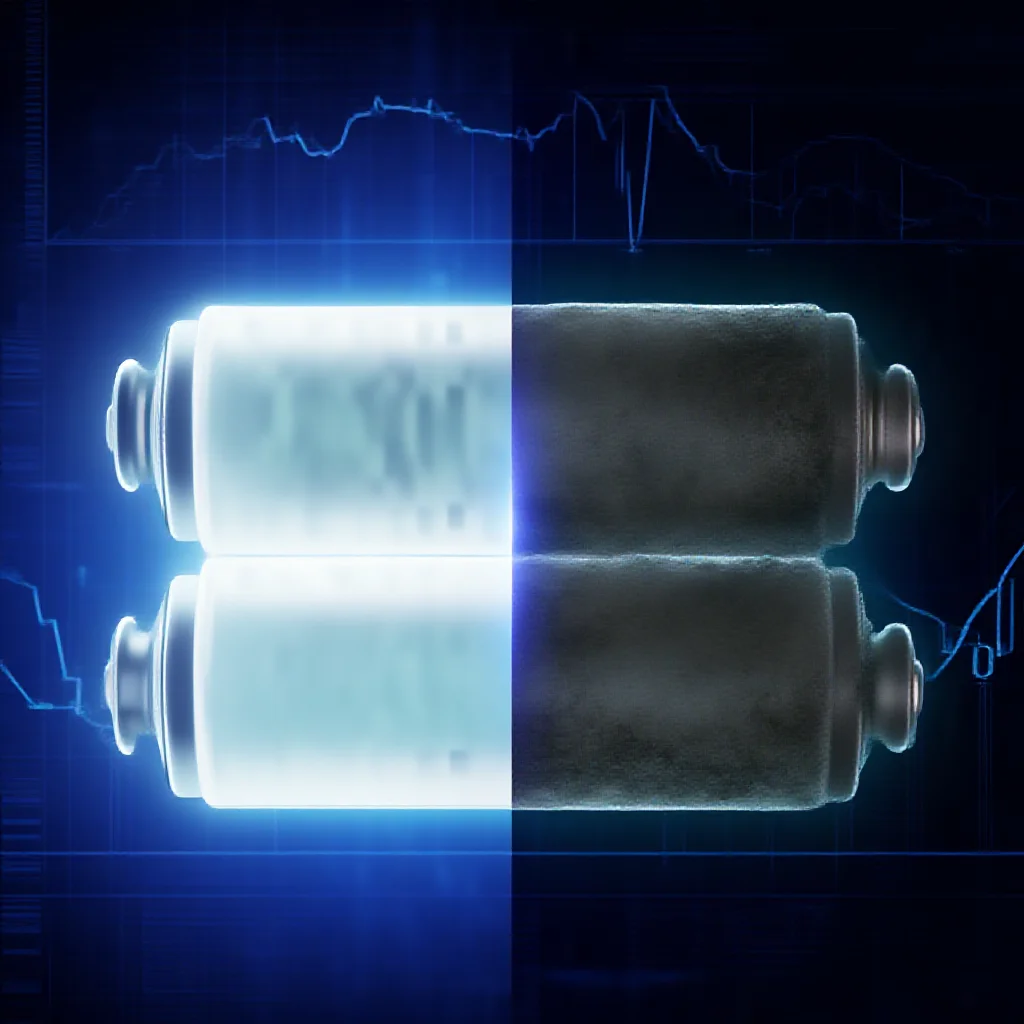
Beyond the Charge Cycle: The Hidden Economics of Battery Degradation and Energy Storage Performance
Introduction: The Real Metric - Cost Per Kilowatt-Hour Over Lifetime
The dominant narrative in energy storage focuses on upfront capital cost and instantaneous energy density. This perspective is incomplete. The critical economic driver for grid-scale and commercial storage is the Levelized Cost of Storage (LCOS), a metric that amortizes all costs over the system's operational life and total energy throughput. Degradation—the irreversible loss of a battery's capacity and power capability—is the primary variable determining LCOS and, consequently, investment viability. A battery's value is not defined by its initial state, but by the predictable, managed decline of its performance over thousands of cycles. The industry's pivot is from evaluating a product's specifications to underwriting a long-term service.
The Degradation Divide: How Chemistry Dictates Application
Different electrochemical systems exhibit fundamentally distinct degradation profiles, which directly dictate their optimal applications.
Lithium-ion batteries, particularly Nickel Manganese Cobalt (NMC) variants, often show a shaped decline: relatively stable performance followed by a more rapid fade after a knee point. Lithium Iron Phosphate (LFP) chemistry typically demonstrates a more linear, gradual degradation. In contrast, flow batteries, such as Vanadium Redox, exhibit minimal cycle-based degradation, with capacity fade primarily linked to calendar life and electrolyte cross-contamination.
This creates a clear market divide. High-cycle, shallow-depth applications, like frequency regulation, favor chemistries like LFP, where the total lifetime energy throughput before reaching an 80% capacity threshold is maximized. The long-duration storage market, requiring daily deep discharges over 20+ years, will be economically captured by technologies with the lowest degradation per cycle, even at higher upfront cost. The degradation curve is the business plan.
The Performance Paradox: System Intelligence vs. Cell Chemistry
The most significant near-term gains in battery lifetime and economic performance are now emerging from software and system design, not fundamental cell chemistry. Advanced Battery Management Systems (BMS) do more than monitor voltage; they implement sophisticated algorithms to mitigate stress factors like lithium plating, solid-electrolyte interphase growth, and mechanical strain.
Precise thermal management systems maintain optimal temperature windows, drastically reducing calendar aging. The frontier lies in predictive digital twins—high-fidelity software models of physical assets fed with real-time operational data. These models, increasingly augmented by machine learning, enable proactive lifespan management, predicting remaining useful life and optimizing charge/discharge strategies to minimize degradation for a given application. The intelligence surrounding the cell is becoming as valuable as the cell itself.
Evidence & Verification: Sourcing the Degradation Data
Theoretical degradation models require validation against field data. Long-term studies from research institutions provide foundational benchmarks. The National Renewable Energy Laboratory (NREL) has published extensive performance data on grid storage, analyzing capacity fade under various cycling regimes (Source 1: [Primary Data, NREL Public Datasets]). Similarly, the Fraunhofer Institute conducts accelerated aging tests and real-world monitoring to quantify degradation mechanisms.
Industry consortia like the Energy Storage Association curate white papers establishing performance and lifetime benchmarks. Analysis of public performance data from operational grid-scale projects, such as the Hornsdale Power Reserve in South Australia, reveals how real-world cycling and climate conditions accelerate or mitigate modeled degradation rates. This empirical verification is essential for accurate financial modeling and risk assessment.
The Supply Chain Ripple Effect: From Mining to Second Life
The economic logic of degradation sends ripples through the entire global supply chain. Raw material demand for lithium, cobalt, nickel, and vanadium is not solely a function of annual gigawatt-hour installations, but of the degradation-driven replacement rate over decades. A technology with a 10-year lifespan to 80% capacity creates twice the raw material demand over a 20-year period compared to a technology with a 20-year lifespan, for the same annual service output.
Predictable degradation curves create the business case for secondary markets. As batteries degrade below the required performance threshold for primary use (e.g., electric vehicles or grid frequency control), they enter a second-life phase for less demanding applications, such as stationary backup power. This repurposing extends the asset's revenue-generating life and delays recycling. Ultimately, a battery's designed degradation profile informs the economics of its end-of-life recycling, determining the recoverable value of its constituent materials.
Conclusion: The Service-Centric Future of Energy Storage
The energy storage industry is undergoing a systemic shift from a product-centric to a service-centric model. The asset sold is not merely a container of energy but a guaranteed performance trajectory over time. This transition is underpinned by the rigorous auditing of degradation. Financial products like warranties, performance guarantees, and capacity contracts are directly derived from degradation models.
Future market growth will be segmented not by chemistry alone, but by degradation-characterized service classes: high-cycle resilience, long-duration endurance, and second-life viability. The companies that will dominate will be those that master the hidden economics of performance fade, transforming an inevitable physical process into a predictable, managed, and monetized variable. The true revolution in energy storage is not in holding a charge, but in profitably losing it, cycle by calculated cycle.