Beyond the Headline: How Kia''s EV3 Victory Over Tesla''s Model Y Signals a New European EV Market Reality
In Q1 2026, Kia's compact EV outsold Tesla's Model Y in Europe, a symbolic shift long predicted by industry watchers. This article moves beyond the sales figures to analyze the deeper market forces at play. We examine how Kia's strategic timing with the EV3 launch, targeting the high-volume compact SUV segment, exploited a temporary gap in Tesla's model cycle and shifting European consumer preferences towards affordable, practical EVs. The analysis explores whether this marks a permanent rebalancing of power or a cyclical blip, considering supply chain readiness, regional manufacturing strategies, and the evolving definition of 'premium' in the electric age.
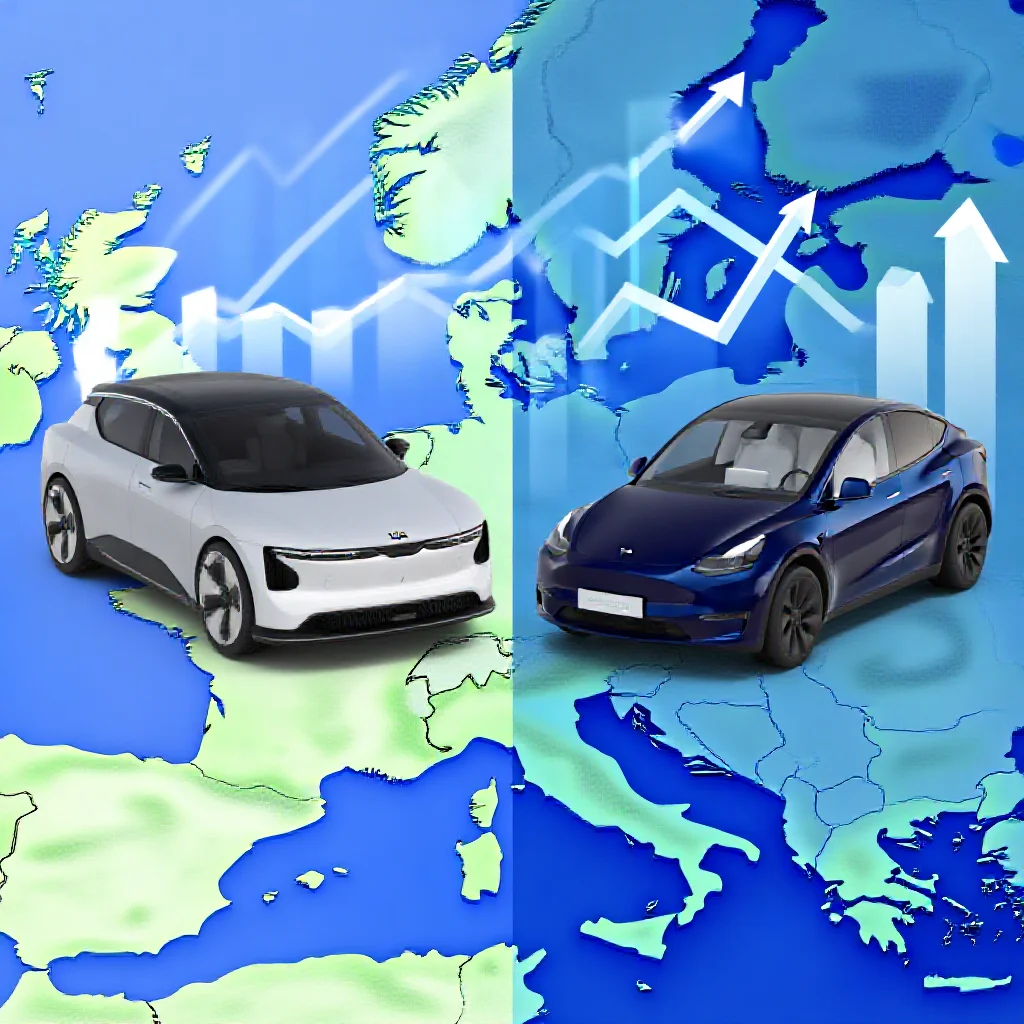
Beyond the Headline: How Kia's EV3 Victory Over Tesla's Model Y Signals a New European EV Market Reality
The Symbolic Tipping Point: Decoding the Q1 2026 Sales Data
The European electric vehicle market recorded a symbolic shift in the first quarter of 2026. During this period, Kia sold 23,481 units of its compact electric vehicles in Europe, surpassing the 21,036 units of the Tesla Model Y sold in the same region (Source 1: [Primary Data]). This numerical reality represents a significant benchmark, marking the first time a dedicated compact EV from a legacy automaker has outsold Tesla's dominant Model Y in a quarterly sales period. The key agent in this shift is the Kia EV3, a compact electric SUV that entered the European market in the second half of 2025 (Source 1: [Primary Data]). Its launch timing positioned it to capitalize on the critical Q1 sales period, making this specific model matchup a focal point for industry analysis.
![An infographic comparing the Q1 2026 sales figures (23,481 vs 21,036) with icons of the Kia EV3 and Tesla Model Y.]
Strategy vs. Cycle: Kia's Calculated Gambit and Tesla's Vulnerable Moment
This sales outcome is not a random occurrence but the result of intersecting strategic timing and product-market fit. Kia's launch of the EV3 targeted Europe's core automotive buying segment: the compact SUV. This form factor aligns with established regional preferences for smaller, more maneuverable vehicles suited to urban environments. In contrast, Tesla's European portfolio has historically relied heavily on the Model Y, a midsize crossover. This created a vulnerability, particularly as the Model Y approached a mature phase in its model cycle without a significant update or a smaller, Europe-focused variant.
The dynamic illustrates an evolution of the "first-mover advantage." Latecomers like Kia have been able to observe Tesla's scaling challenges and specific consumer feedback regarding vehicle size, interior quality, and service network density. The EV3's development incorporated these learnings, offering a product designed with European consumer pragmatism in mind, entering the market as Tesla faced a potential cyclical lull.
![A timeline graphic showing the European launch dates of the Kia EV3 (H2 2025) and Tesla Model Y, relative to the Q1 2026 sales period.]
The Deep Shift: Underlying Market Forces Beyond Brand Loyalty
The sales figures reflect deeper, structural shifts within the European EV market. The primary driver is the affordability imperative. With rising energy costs and broader economic pressures, total cost of ownership has moved to the forefront of purchase decisions. Vehicles in the compact segment, like the EV3, typically command a lower entry price and operating cost than those in the midsize premium segment occupied by the Model Y.
Furthermore, the market is experiencing a shift from early-adopter saturation to mass-market growth. The high-volume compact segment represents the largest potential for growth, whereas the premium midsize crossover segment is becoming increasingly crowded and competitive. Supply chain maturation also plays a critical role. Legacy automakers like Kia have accelerated the localization of battery and assembly capacity within Europe, improving production consistency and reducing logistical vulnerabilities. This stands in contrast to models reliant on imports from outside the region, which can be susceptible to shipping delays and tariff uncertainties.
![A conceptual image showing a puzzle piece labeled 'Affordability' fitting into a European map, alongside icons for a charging plug and a factory.]
Verification and Context: Scrutinizing the Data's Foundation
Any analysis of this shift requires scrutiny of the underlying data. The core sales figures require verification through official European automotive associations, such as the European Automobile Manufacturers' Association (ACEA) or data firms like JATO Dynamics, as well as corporate quarterly reports. The classification of "compact EV" is also crucial; in this context, it refers specifically to the Kia EV3 as a compact electric SUV, ensuring an accurate comparison against the Tesla Model Y, classified as a midsize crossover (Source 1: [Primary Data]).
A critical temporal caveat must be emphasized. A single quarterly sales victory does not, in itself, define a long-term trend. Market dynamics are subject to product refreshes, pricing adjustments, and supply chain fluctuations. This data point is a snapshot, significant for its symbolic value but not yet conclusive evidence of a permanent reversal.
![A stylized, transparent overlay of a magnifying glass over a spreadsheet with sales numbers, symbolizing data verification.]
Future Implications: A Blip or a New Paradigm for Europe's EV Race?
The central question is whether Q1 2026 represents a temporary anomaly or a harbinger of a new market paradigm. Two scenarios emerge. The first posits this as a cyclical blip, a temporary win for Kia that will be reversed by a refreshed Tesla Model Y, a future price adjustment, or the introduction of a Tesla compact model tailored for Europe. Tesla's brand strength and Supercharger network remain powerful assets.
The second scenario suggests a more permanent rebalancing. It argues that the European market's unique characteristics—preference for compact vehicles, intense focus on affordability, and stringent regulatory pressures—inherently favor automakers with diversified, region-specific lineups and deep manufacturing footprints. In this view, the success of the EV3 signals that the definition of "premium" in the electric age is expanding beyond performance and technology to include fit-for-purpose design, value, and localized ownership experience. The most probable outcome lies between these extremes: a more fragmented and competitive market where no single player dominates all segments, and success is determined by precise execution against regional demands rather than global one-size-fits-all strategies.