Beyond 100%: How Hawaii''s TFIE Strategy Redefines Grid Modernization for Island Economies
Hawaii''s newly unveiled ''Transportation, Fuels, Infrastructure, and Electricity (TFIE) Strategy'' represents more than a roadmap to its 2045 clean electricity mandate. This analysis delves into the white paper ''The Clean Energy Future Hawaiʻi Can Actually Build'' to uncover its core innovation: treating grid constraints not as a barrier, but as the central design parameter for a distributed, resilient energy system. We explore the hidden economic logic of prioritizing grid modernization before massive renewable deployment, a model with profound implications for other island and constrained-grid economies worldwide. The strategy signals a pivotal shift from a technology-centric to an infrastructure-first approach in the clean energy transition.
Beyond 100%: How Hawaii's TFIE Strategy Redefines Grid Modernization for Island Economies

Introduction: The Pragmatic Blueprint - Why Hawaii's Plan is Different
A white paper published on April 8, 2026, titled **'The Clean Energy Future Hawaiʻi Can Actually Build'**, presents a foundational shift in energy transition planning. Developed by the Hawaiʻi State Energy Office, the document moves beyond aspirational renewable energy targets to articulate a buildable pathway centered on systemic constraints. The core thesis is pragmatic: a successful transition to 100% clean electricity by 2045 is not determined solely by the availability of solar or wind technology, but by the capacity of the physical grid to integrate and manage these resources.
This contrasts with typical top-down plans that prioritize generation capacity additions. The Transportation, Fuels, Infrastructure, and Electricity (TFIE) Strategy embedded within the white paper treats existing grid limitations as the primary design parameter. The central analytical question becomes: How does inverting the traditional planning sequence—addressing grid constraints before massive renewable deployment—fundamentally alter the project's economics, risk profile, and realistic timeline?

Deconstructing the TFIE Strategy: Infrastructure as the Foundation, Not an Afterthought
The TFIE Strategy’s innovation lies in its bundled, nexus approach. By explicitly linking Transportation, Fuels, Infrastructure, and Electricity, the plan acknowledges their interdependence. Electric vehicle adoption impacts grid load; renewable hydrogen production for hard-to-electrify sectors interacts with electricity demand profiles. This systemic view prevents siloed solutions that create new bottlenecks.
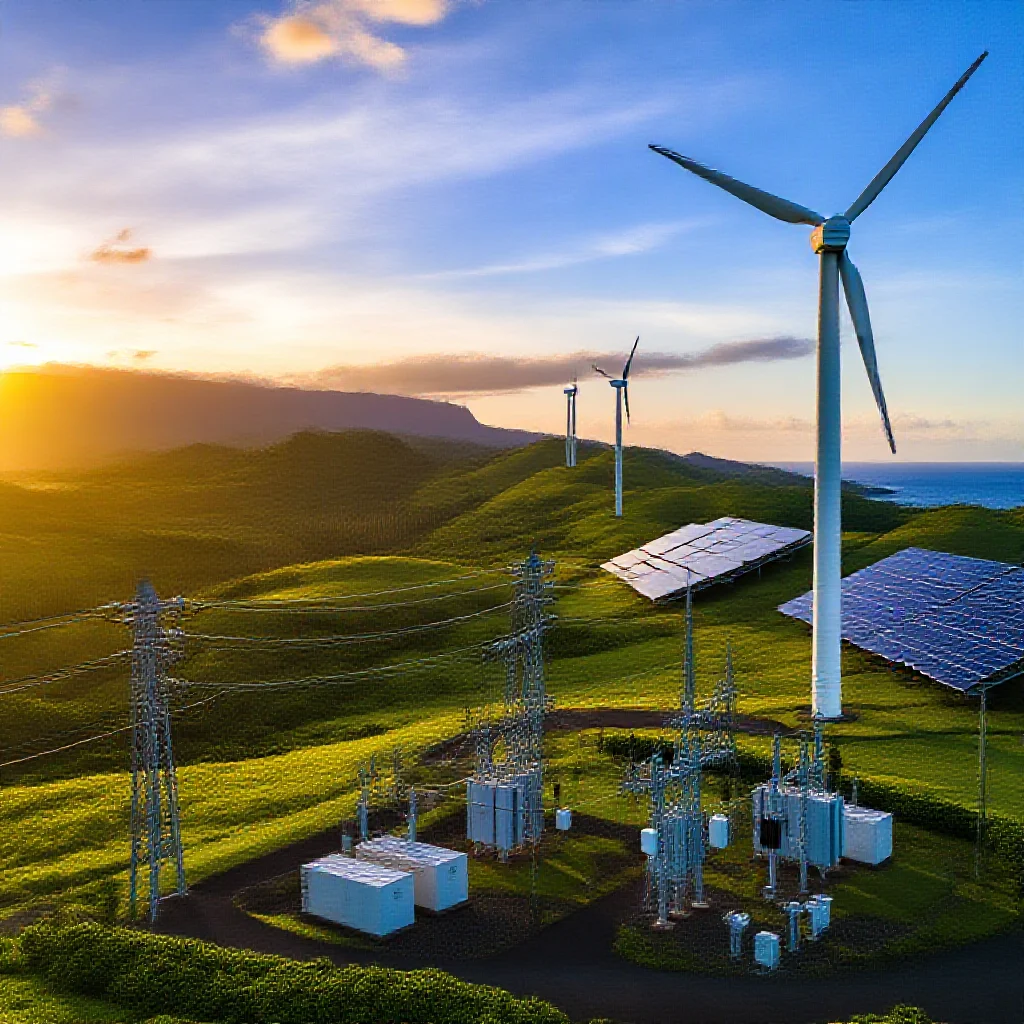
The strategy’s most significant departure is its emphasis on grid modernization as the enabling platform for Distributed Energy Resources (DERs). The white paper identifies that Hawaii’s existing grid, designed for one-way power flow from centralized plants, is a primary bottleneck to further renewable penetration. The plan advocates for a "grid-first" investment philosophy. This involves strategic upgrades to distribution and transmission infrastructure, deployment of advanced grid-edge technologies like smart inverters and advanced metering, and enhanced grid management software before incentivizing a new wave of standalone generation.
This represents a calculated shift from a "generation-first" model. The latter often leads to curtailment of renewable output when the grid is congested, destroying economic value and stalling investor confidence. The TFIE framework posits that without a modernized grid capable of bidirectional power flow, dynamic voltage management, and real-time visibility, additional renewable assets cannot be effectively or economically absorbed.

The Hidden Economic Logic: Constraint-Driven Innovation and Investment
The economic rationale of the TFIE Strategy is rooted in treating grid constraints not as mere technical hurdles but as critical market signals. These signals dictate the most cost-effective sequence of capital investment. Deploying renewable generation into a constrained system has diminishing returns and increases integration costs. Conversely, upfront investment in grid modernization lowers the long-term levelized cost of energy for all subsequent renewable projects by reducing curtailment and avoiding emergency upgrade costs.
This approach systematically de-risks private investment. By first ensuring the grid has the capacity and intelligence to absorb new generation, the strategy reduces the regulatory and operational uncertainty that plagues renewable developers. A predictable interconnection process and guaranteed offtake potential improve project bankability. (Source 1: [Primary Data]: 'The Clean Energy Future Hawaiʻi Can Actually Build', Hawaiʻi State Energy Office, April 2026).
Furthermore, this constraint-driven model reshapes supply chain and technology priorities. It creates a near-term market for grid modernization technologies—advanced power electronics, grid-forming inverters, distributed energy management systems, and short-duration storage—alongside generation hardware. This incentivizes innovation in grid integration and control software, areas crucial for the global transition, rather than focusing solely on driving down the cost per watt of solar panels.
A Model for Constrained Grids: Implications Beyond Hawaii
Island economies serve as hyper-relevant test beds for the global energy transition. They are isolated systems with limited interconnection, high fossil fuel costs, and often acute vulnerability to climate change. Hawaii’ experience with grid saturation from rooftop solar provides a leading-edge case study in DER integration challenges. The TFIE Strategy, therefore, offers a validated template for other island nations and remote communities from the Caribbean to the Pacific.
The implications extend to any region facing grid congestion, limited transmission build-out, or low interconnection capacity. Portions of the mainland United States, Europe, and Asia experiencing renewable curtailment due to a lack of "wire" capacity can extract principles from the Hawaii model. The core principle—that infrastructure readiness dictates the feasible pace and pattern of generation deployment—is universally applicable.
The "Hawaii Model" is likely to influence regulatory frameworks and utility integrated resource planning. It provides a technical and economic justification for front-loading grid investments, a move often difficult to justify under traditional rate-making structures focused on near-term cost minimization. As more jurisdictions approach high renewable penetration, the TFIE Strategy’s infrastructure-first, constraint-driven planning will be analyzed as a potential standard for maintaining grid reliability and optimizing total system cost during deep decarbonization.