energy transition

Articles tagged “energy transition

20 articles found

Policy Mixes for Sustainability Transitions: A Deep Framework for Analyzing Energy Transition Policy Design
The Insight

Policy Mixes for Sustainability Transitions: A Deep Framework for Analyzing Energy Transition Policy Design

This article examines how policy mixes shape sustainability transitions, using Rogge and Reichardt’s interdisciplinary framework to explain policy design beyond single instruments. The core logic is that technological change, market formation, and institutional coordination must be aligned through a mix of policy elements, policy processes, and policy characteristics. The piece focuses on the German energy transition as a practical test case, showing why renewable power adoption depends not only on incentives, but on timing, coherence, stability, and interaction across policies. Best suited for slow analysis, this topic supports a deep audit of sustainability policy analysis, with emphasis on long-term system change rather than short-term policy headlines.
Renewable Energy Markets in 2025: Investment Boom, Grid Bottlenecks, and the Race to 2030
Power Energy

Renewable Energy Markets in 2025: Investment Boom, Grid Bottlenecks, and the Race to 2030

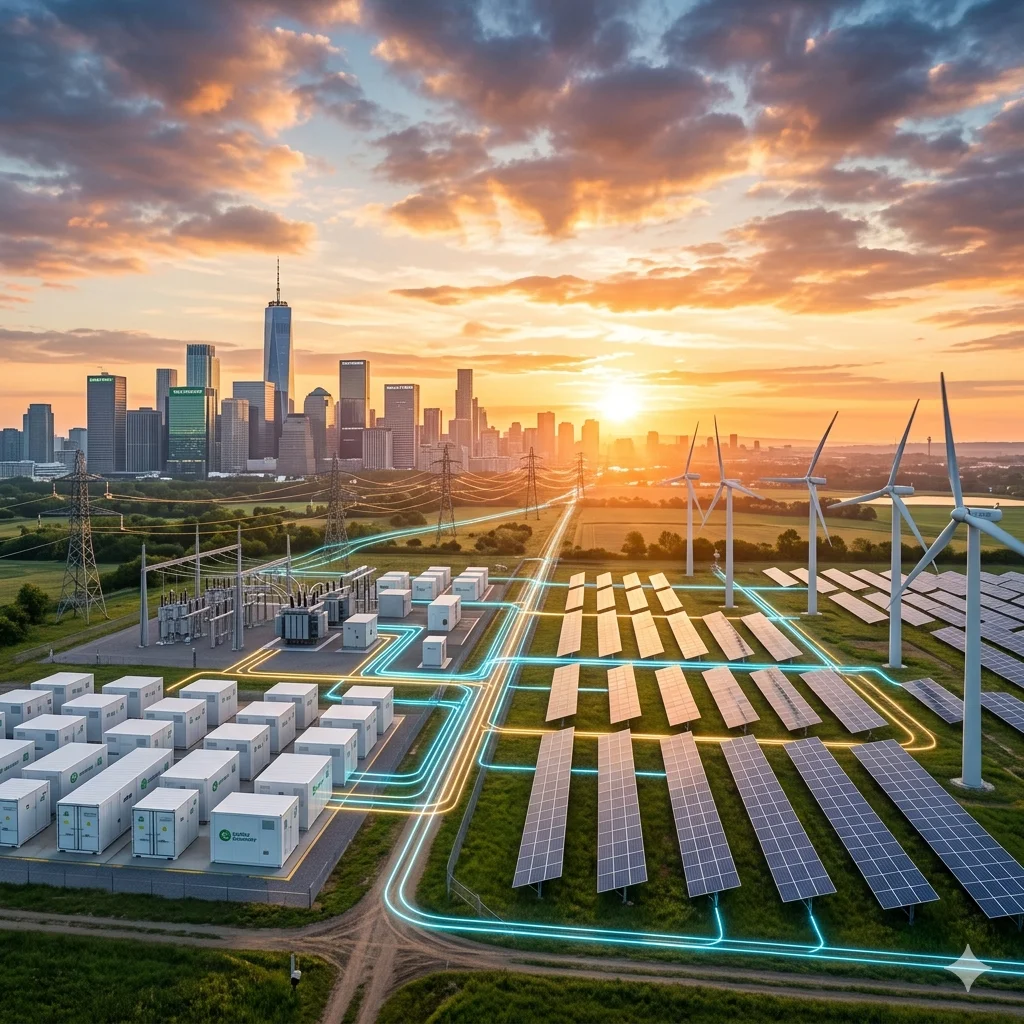
Renewable energy is no longer a niche transition story—it is a large-scale market reshaping electricity supply, capital flows, and industrial supply chains. Nearly 30% of global electricity now comes from renewables, up from 20% in 2011, while clean energy investment hit $2.1 trillion in 2024. Yet the market is not scaling smoothly: supply chain imbalances, permitting delays, aging grids, and policy uncertainty are becoming the main constraints on growth. This article will examine the hidden economic logic behind the renewables boom, including why solar and wind are winning on cost, where bottlenecks are shifting from generation to infrastructure, and how the race to 2030 may determine whether net-zero goals remain credible.

Renewable Energy Markets: The Hidden Supply Chain Logic Shaping the Next Growth Cycle
Power Energy

Renewable Energy Markets: The Hidden Supply Chain Logic Shaping the Next Growth Cycle

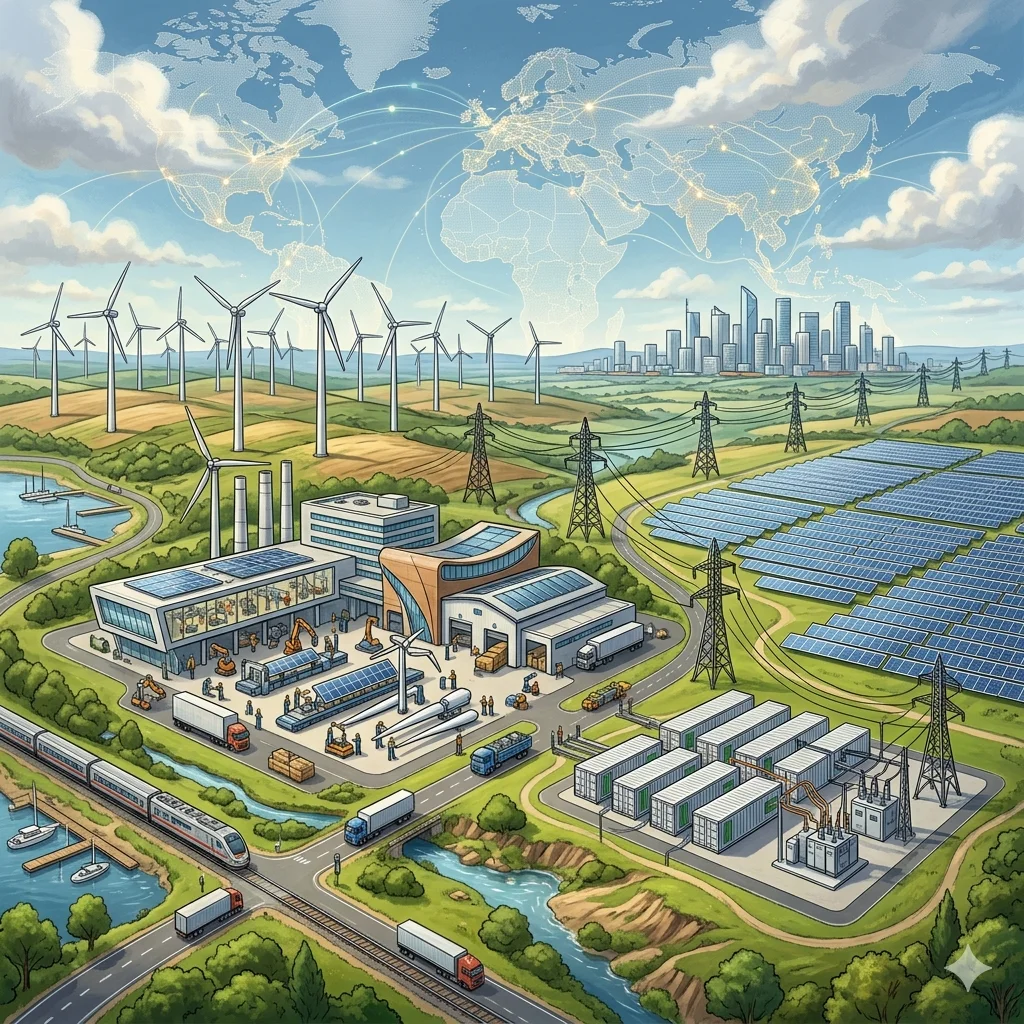
This article will frame renewable energy markets through the deeper economic and supply-chain logic behind pricing, deployment, and industrial scaling. Rather than focusing only on short-term policy headlines, it will examine how manufacturing bottlenecks, critical minerals, grid infrastructure, financing conditions, and technology learning curves determine market outcomes. The piece is best suited to a slow-analysis approach, since the most valuable insight comes from tracing durable industry patterns instead of reacting to temporary news flow. Verification will be embedded where claims about capacity, costs, and market shares are discussed, using credible industry and government sources to separate structural trends from cyclical noise.

Beyond the Pioneers: Decoding the $2.3 Trillion Market Logic of the 2026 BNEF Award Winners
Power Energy

Beyond the Pioneers: Decoding the $2.3 Trillion Market Logic of the 2026 BNEF Award Winners

The announcement of the 2026 BNEF Pioneers award winners is more than a startup showcase; it's a strategic map of a $2.3 trillion energy transition market. This analysis moves beyond listing the twelve winning startups to uncover the underlying economic logic and sectoral convergence driving their selection. We examine how their work across energy, industry, transport, and buildings signals a shift from siloed solutions to integrated, systemic innovation. By exploring the hidden patterns in this cohort, we reveal the critical market gaps being filled and the emerging business models poised to capitalize on the largest economic transformation of our time.

Beyond the Headline: The Strategic Calculus Behind a Nuclear Startup''s South Carolina Gambit
Power Energy

Beyond the Headline: The Strategic Calculus Behind a Nuclear Startup''s South Carolina Gambit

A nuclear startup''s announcement to build a new reactor in South Carolina is more than a simple project launch; it''s a strategic move in a high-stakes energy transition. This analysis goes beyond the press release to explore the hidden drivers: the state''s unique regulatory and political landscape for nuclear energy, the startup''s likely reliance on advanced, modular technologies to mitigate financial risk, and the broader signal this sends about private capital betting on nuclear to meet soaring baseload demand. We examine why South Carolina, despite past project failures, remains a target and what this plan reveals about the evolving economics of new nuclear in an era of AI-driven power demand and decarbonization pressures.

Beyond Targets: Why RBC and Scotiabank''s Retreat on Oil & Gas Emissions Signals a Deeper Financial Shift
Power Energy

Beyond Targets: Why RBC and Scotiabank''s Retreat on Oil & Gas Emissions Signals a Deeper Financial Shift

In April 2026, RBC and Scotiabank removed specific emissions reduction targets from their oil and gas lending portfolios, a move first reported by Bloomberg. This is not merely a policy adjustment but a strategic pivot revealing the complex pressures on global finance. The decision underscores a retreat from explicit, sector-specific climate commitments in favor of more flexible, portfolio-wide approaches. It highlights the tension between regulatory pressures, investor demands for climate action, and the pragmatic realities of financing a critical national industry. This analysis explores the hidden economic logic behind the shift, examining its implications for Canada's energy transition, financial risk management, and the evolving narrative of sustainable finance.

The 2026 Cliff: How the Looming Tax Credit Expiration is Reshaping America''s Clean Energy Landscape
Power Energy

The 2026 Cliff: How the Looming Tax Credit Expiration is Reshaping America''s Clean Energy Landscape

A quiet but urgent race is underway across the United States as states and developers scramble to lock in federal clean energy tax credits before their scheduled expiration at the end of 2026. This article analyzes the profound market distortion this deadline is creating, accelerating project timelines while potentially setting the stage for a post-2026 investment cliff. We explore the hidden economic logic behind the rush, the strategic calculations of state governments and private capital, and the long-term implications for supply chains, labor markets, and the nation's decarbonization goals. The impending expiration is not just a policy sunset; it's a powerful force reshaping project portfolios and investment strategies years in advance.

Enfield''s Geothermal Gamble: How a $2.5M DOE Grant Could Blueprint Energy Transition for Small-Town America
Esg Assets

Enfield''s Geothermal Gamble: How a $2.5M DOE Grant Could Blueprint Energy Transition for Small-Town America

The small town of Enfield, North Carolina, is embarking on a pioneering project to build a geothermal heating and cooling network for its downtown core, funded by a $2.5 million U.S. Department of Energy planning grant. This initiative represents more than just local infrastructure; it's a test case for deploying scalable, clean thermal energy in rural and underserved communities often overlooked in the energy transition. By partnering with clean energy nonprofit BlocPower to design a network connecting 20-40 buildings with water-source heat pumps, Enfield is exploring an economic development model that could reduce energy burdens, increase resilience, and provide a replicable template for other small towns across the United States. The project's early planning phase will be crucial in determining its financial and technical viability as a blueprint for distributed, community-scale geothermal.

Beyond the Vote: How Shawnee County''s Solar Approval Signals a Shift in Rural Energy Economics
The Insight

Beyond the Vote: How Shawnee County''s Solar Approval Signals a Shift in Rural Energy Economics

The Shawnee County Commission's unanimous 2026 approval for a utility-scale solar and battery storage project is more than a local permit decision; it's a microcosm of a profound economic realignment in rural America. This analysis moves past the headline to explore how such projects are transforming agricultural land into dual-use assets, reshaping local tax bases, and positioning non-traditional energy regions as critical nodes in a decentralized grid. We examine the hidden drivers—from evolving land valuation models to the strategic pairing of solar with storage for grid stability—that are turning heartland counties into unlikely pioneers of the energy transition, with long-term implications for supply chains, workforce development, and regional economic sovereignty.

Beyond the Negative Price: How Record Renewable Penetration is Rewiring Grid Economics and Utility Business Models
The Insight

Beyond the Negative Price: How Record Renewable Penetration is Rewiring Grid Economics and Utility Business Models

The electricity grid is undergoing a fundamental transformation, moving from a paradigm of managing scarcity to one of managing abundance. Record-breaking renewable generation, exemplified by CAISO's 92% instantaneous penetration, is causing unprecedented market dynamics like negative prices. This article explores how this shift is forcing grid operators to develop new stability strategies, compelling regulators to overhaul interconnection processes, and driving utilities to fundamentally rethink their revenue models. The convergence of these trends signals not just an energy transition, but a complete economic and operational recalibration of the power sector.

COP31''s Pacific-Turkish Nexus: How Host Strategy and Energy Realities Will Shape the 2026 Climate Agenda
Tech Frontier

COP31''s Pacific-Turkish Nexus: How Host Strategy and Energy Realities Will Shape the 2026 Climate Agenda

The preparations for COP31 in 2026 reveal a strategic dual-host model: Pacific Island nations (Fiji and Tuvalu) hosting pre-meetings to foreground climate vulnerability, and Turkey hosting the main summit, signaling a bridge to emerging economies. This analysis uncovers the underlying power dynamics, where Australia''s negotiated authority and Germany''s energy transition data serve as critical benchmarks. We explore how this structure aims to build consensus between developed and developing nations, using electrification as a unifying track, while the appointed youth champion symbolizes the long-term accountability the summit seeks to establish beyond mere diplomatic dialogue.

Beyond the Numbers: How India''s Renewable Energy Surge Redefines Global Market Dynamics
Tech Frontier

Beyond the Numbers: How India''s Renewable Energy Surge Redefines Global Market Dynamics

India's ascent to become the world's third-largest renewable energy market, overtaking Brazil, is more than a statistical milestone. This analysis delves into the underlying economic and strategic drivers behind India's rapid capacity growth, which outpaces its competitors despite a slightly lower absolute capacity. We explore the implications of this shift for global supply chains, investment flows, and geopolitical energy alliances, questioning whether current capacity metrics fully capture a nation's true influence in the accelerating energy transition. The article positions India's growth not as an isolated event but as a pivotal moment signaling a broader reconfiguration of global renewable energy leadership.

From Mali to the Midwest: The Geologic Hydrogen Rush and Its Unresolved Commercial Equation
The Insight

From Mali to the Midwest: The Geologic Hydrogen Rush and Its Unresolved Commercial Equation

The discovery of a naturally occurring, high-purity hydrogen well in Mali has ignited a global search for geologic hydrogen, challenging the paradigm that hydrogen must be manufactured. Recent USGS estimates suggest vast global reserves, and significant U.S. government funding is now fueling exploration. However, this article argues that the nascent industry faces a critical disconnect: while exploration is accelerating, the path to cost-effective, scalable production remains fraught with unproven extraction technologies, undefined reservoir behavior, and a lack of commercial infrastructure. The real story is not the resource''s existence, but the immense technical and economic gulf between discovery and a viable commodity market.

Beyond the Headline: The Hidden Supply Chain and Market Shifts Behind America''s Renewable Energy Milestone
Esg Assets

Beyond the Headline: The Hidden Supply Chain and Market Shifts Behind America''s Renewable Energy Milestone

In March 2026, U.S. renewable energy generation officially surpassed natural gas for the first full month on record, according to the Energy Information Administration (EIA). While this marks a symbolic tipping point, the deeper story lies in the underlying economic and industrial shifts that made it possible. This analysis moves beyond the celebratory headline to examine the critical, often-overlooked factors: the strategic vulnerabilities and dependencies within the renewable supply chain, the evolving role of natural gas as a flexible partner rather than a displaced competitor, and the market signals this sends for future infrastructure investment. We explore whether this is a fleeting anomaly or the start of a durable new market pattern.

Beyond Survival: How Fossil Fuels Built Our World and Why Renewables Must Redefine It
The Insight

Beyond Survival: How Fossil Fuels Built Our World and Why Renewables Must Redefine It

This analysis moves beyond the climate debate to examine energy through a psychological lens. It posits that fossil fuels historically acted as humanity's tool for fulfilling basic physiological and safety needs—the foundation of Maslow's hierarchy—by powering industrialization, agriculture, and global security. Now, the energy transition represents a societal shift up the pyramid. Renewable energy is not merely a substitute; it is positioned to meet higher-level needs for esteem (energy sovereignty, ethical consumption) and self-actualization (sustainable legacy, harmonizing with the environment). The article explores the profound implications of this shift for economic logic, geopolitical power structures, and the very definition of 'progress' in the 21st century.

Beyond 100%: How Hawaii''s TFIE Strategy Redefines Grid Modernization for Island Economies
The Insight

Beyond 100%: How Hawaii''s TFIE Strategy Redefines Grid Modernization for Island Economies

Hawaii''s newly unveiled ''Transportation, Fuels, Infrastructure, and Electricity (TFIE) Strategy'' represents more than a roadmap to its 2045 clean electricity mandate. This analysis delves into the white paper ''The Clean Energy Future Hawaiʻi Can Actually Build'' to uncover its core innovation: treating grid constraints not as a barrier, but as the central design parameter for a distributed, resilient energy system. We explore the hidden economic logic of prioritizing grid modernization before massive renewable deployment, a model with profound implications for other island and constrained-grid economies worldwide. The strategy signals a pivotal shift from a technology-centric to an infrastructure-first approach in the clean energy transition.

Beyond the €240M: Decoding EDF''s Strategic Bet on Electrified Heat and Transport
Power Energy

Beyond the €240M: Decoding EDF''s Strategic Bet on Electrified Heat and Transport

EDF''s €240 million pledge for heat pumps and electric trucks is more than a simple subsidy; it''s a strategic pivot to secure its future in a decarbonizing energy market. This analysis uncovers the dual logic behind the investment: defending its core electricity demand against gas competition in heating, while proactively cultivating a new, massive load segment in commercial transport. We explore how this move positions EDF not just as an energy supplier, but as a system integrator for the electrified economy, analyzing the long-term implications for supply chains, grid dynamics, and the competitive landscape of European utilities.

Beyond the Headline: The Five-Year Solar Dominance and What It Reveals About America''s Energy Transformation
E Mobility

Beyond the Headline: The Five-Year Solar Dominance and What It Reveals About America''s Energy Transformation

For the fifth consecutive year, solar power has been the leading source of new electricity generating capacity in the United States, with 2025 adding a total of 43 GW. This milestone is more than a statistic; it signals a fundamental and sustained shift in the nation's energy architecture. This analysis moves beyond the annual rankings to explore the underlying drivers—from policy maturation and plummeting technology costs to evolving grid economics—that have cemented solar's primacy. We examine what this five-year streak reveals about the durability of the transition, the emerging challenges for grid integration, and the long-term implications for fossil fuel assets and the domestic manufacturing supply chain.

The Geopolitical Chessboard of Critical Metals: Power, Scarcity, and the $1 Trillion Energy Transition
Power Energy

The Geopolitical Chessboard of Critical Metals: Power, Scarcity, and the $1 Trillion Energy Transition

The global shift to clean energy is fueling an unprecedented demand surge for critical metals like lithium, cobalt, and rare earths, projected to grow 500% by 2050. This article reveals how this demand is reshaping global power dynamics, exposing the vulnerabilities of hyper-concentrated supply chains dominated by a few nations. We analyze the strategic moves by the U.S. and EU to secure supplies, and explore the deeper economic logic: the energy transition is not just a technological shift but a massive reallocation of resource power, creating new dependencies and geopolitical flashpoints that will define the next century.

Beyond the Headline: How a ''Historic'' Oil Supply Disruption Could Reshape Global Energy Markets
Power Energy

Beyond the Headline: How a ''Historic'' Oil Supply Disruption Could Reshape Global Energy Markets

While the immediate price shock of a historic oil supply disruption captures headlines, the deeper story lies in its potential to accelerate structural shifts in the global energy landscape. This analysis moves beyond short-term volatility to examine how such an event could act as a catalyst, forcing a re-evaluation of energy security doctrines, accelerating the energy transition, and permanently altering trade flows and investment patterns. We explore the hidden economic logic behind market reshaping, questioning whether this disruption marks a definitive inflection point towards a more fragmented and diversified energy future.