Beyond the Vote: How Shawnee County''s Solar Approval Signals a Shift in Rural Energy Economics
The Shawnee County Commission's unanimous 2026 approval for a utility-scale solar and battery storage project is more than a local permit decision; it's a microcosm of a profound economic realignment in rural America. This analysis moves past the headline to explore how such projects are transforming agricultural land into dual-use assets, reshaping local tax bases, and positioning non-traditional energy regions as critical nodes in a decentralized grid. We examine the hidden drivers—from evolving land valuation models to the strategic pairing of solar with storage for grid stability—that are turning heartland counties into unlikely pioneers of the energy transition, with long-term implications for supply chains, workforce development, and regional economic sovereignty.
Beyond the Vote: How Shawnee County's Solar Approval Signals a Shift in Rural Energy Economics

The Unanimous Vote: A Surface Decision with Deep Currents
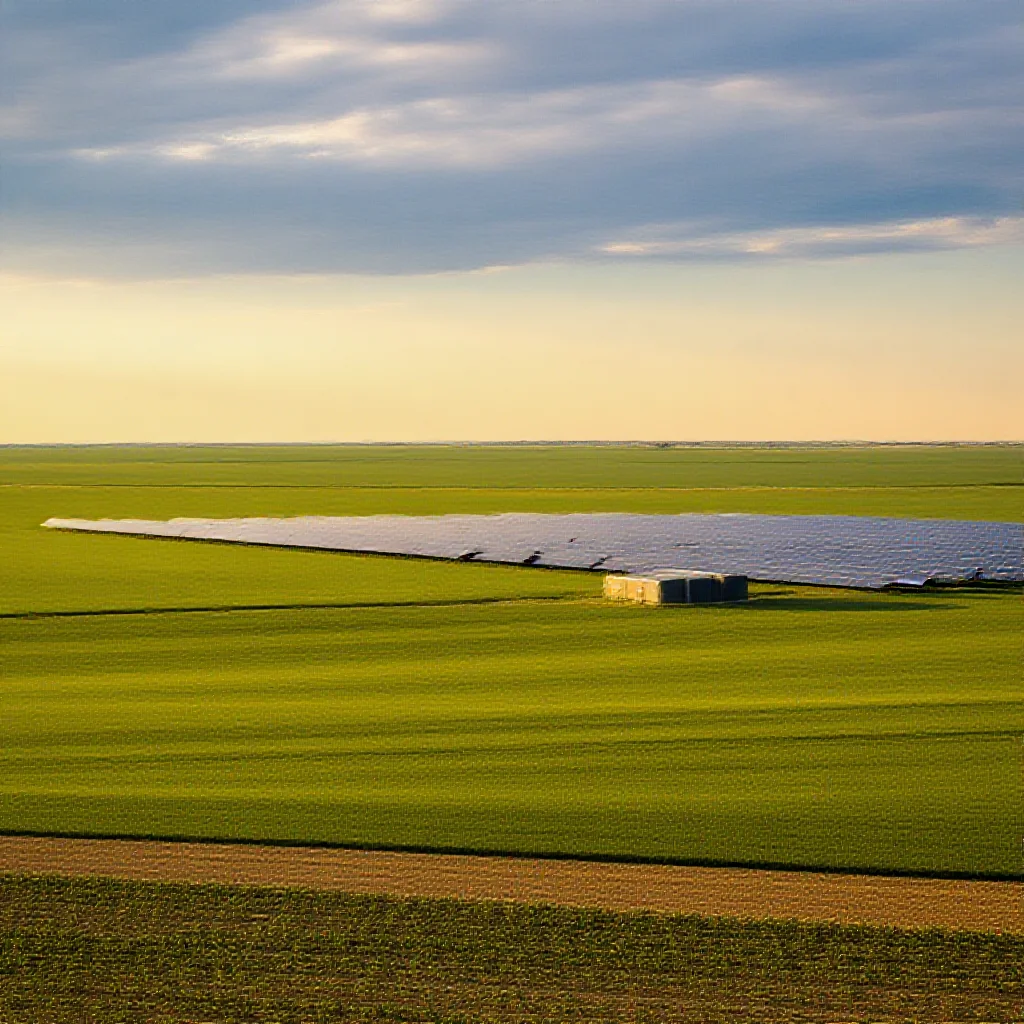
On April 13, 2026, the Shawnee County Commission voted 3-0 to approve a conditional use permit for a utility-scale solar and battery energy storage system (Source 1: [Primary Data]). This procedural decision, documented in county records, represents a legal gateway transforming a conceptual energy project into a tangible asset with defined operational parameters. The absence of dissent in the vote indicates a broad local consensus, a notable development in a region historically defined by traditional agriculture and fossil fuel extraction. This approval, positioned in the mid-2020s, coincides with a documented acceleration of utility-scale solar adoption across the Midwest, moving these projects from perceived anomalies to standardized components of regional infrastructure planning.

The Hidden Economic Logic: From Crop Yields to Electron Yields
The commission’s action is a surface indicator of a deeper economic recalculation. The primary driver is land-use revaluation. For landowners, the economic calculus involves comparing the long-term, fixed revenue from a solar land lease against the volatile income streams from traditional crops or livestock, which are subject to commodity price swings and climatic variability. This transforms agricultural parcels into dual-use financial assets.
Concurrently, the project initiates a tax base transformation. Utility-scale solar installations, depending on state and local policy frameworks, generate new forms of municipal revenue through Payments in Lieu of Taxes (PILOTs) or direct property taxes on the improved land value. This revenue can fund county services, schools, and infrastructure without directly increasing the tax burden on residential taxpayers. The county’s identification of this project as part of a "broader energy transition plan" (Source 1: [Primary Data]) signals a strategic intent for economic diversification, reducing over-reliance on a single sector and insulating the local economy from sector-specific downturns.

The Technology Imperative: Why Storage is Non-Negotiable
The explicit pairing of solar generation with battery energy storage is a critical technical and economic feature. It moves the project beyond addressing renewable intermittency. Co-located storage allows the facility to provide essential grid services such as frequency regulation and capacity, thereby maximizing its revenue potential and easing its integration into the regional grid managed by utilities like Evergy. This capability enhances the project's value proposition beyond simple energy generation.
The "utility-scale" designation is a key distinction from distributed rooftop solar. It indicates the project’s role in bulk power generation, capable of contributing meaningfully to regional grid stability and meeting the capacity demands of population centers. The commission’s approval serves as an implicit validation of the technological maturity and proven cost-decline curves of both photovoltaic and grid-scale lithium-ion battery storage systems, a trend extensively documented in reports from the National Renewable Energy Laboratory (NREL) and the U.S. Department of Energy.

The Unseen Entry Point: Long-Term Impact on Underlying Supply Chains
The approval establishes a new, long-term industrial node in Shawnee County, with ripple effects across supply and service chains. While major hardware components like photovoltaic modules and battery racks may be manufactured elsewhere, the project creates sustained local demand for specialized services. This includes civil engineering, construction, ongoing security, and specialized operations and maintenance (O&M) crews, potentially fostering new vocational training pathways and business opportunities within the county.
Furthermore, the project’s output alters local energy economics. By generating power within the county, it can reduce regional dependence on imported electricity from distant power plants, effectively localizing a portion of the energy supply chain. This enhances regional economic sovereignty and insulates the area from broader transmission grid vulnerabilities or price spikes in external energy markets.
Neutral Market and Industry Predictions
The Shawnee County decision is a microcosm of a wider trend. Analysis indicates that rural counties in the Great Plains and Midwest will increasingly view renewable energy infrastructure as a tool for strategic economic development, not merely environmental compliance. The convergence of proven technology, favorable land economics, and the need for grid modernization creates a durable investment thesis.
Market projections suggest that the integration of storage will become a standard requirement for utility-scale solar projects seeking interconnection approvals, driven by utility demand for dispatchable capacity. The long-term implication is the gradual emergence of non-traditional energy regions—counties without wind, sun, or fossil fuel resources—as critical nodes in a more decentralized and resilient national grid, fundamentally altering the historical geography of American power generation.