Enfield''s Geothermal Gamble: How a $2.5M DOE Grant Could Blueprint Energy Transition for Small-Town America
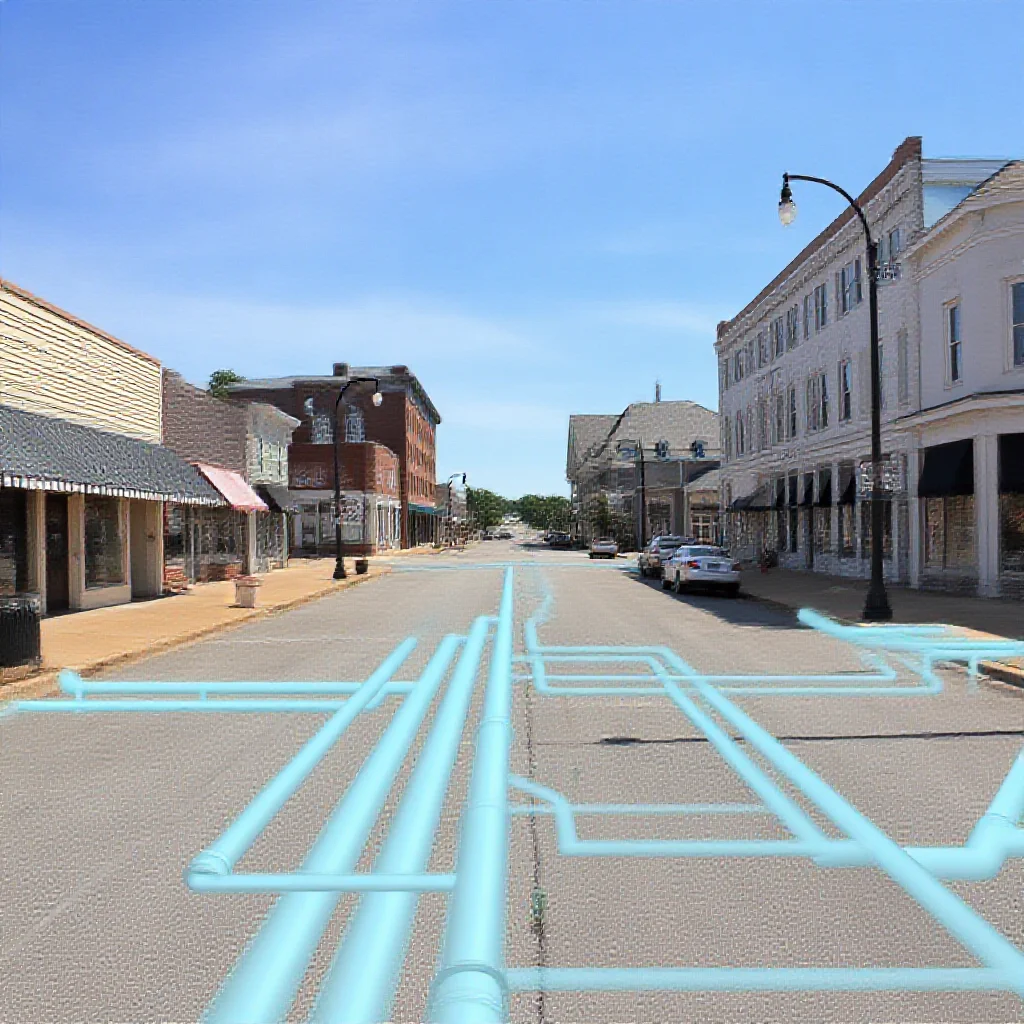
The small town of Enfield, North Carolina, is embarking on a pioneering project to build a geothermal heating and cooling network for its downtown core, funded by a $2.5 million U.S. Department of Energy planning grant. This initiative represents more than just local infrastructure; it's a test case for deploying scalable, clean thermal energy in rural and underserved communities often overlooked in the energy transition. By partnering with clean energy nonprofit BlocPower to design a network connecting 20-40 buildings with water-source heat pumps, Enfield is exploring an economic development model that could reduce energy burdens, increase resilience, and provide a replicable template for other small towns across the United States. The project's early planning phase will be crucial in determining its financial and technical viability as a blueprint for distributed, community-scale geothermal.
Enfield's Geothermal Gamble: How a $2.5M DOE Grant Could Blueprint Energy Transition for Small-Town America
**Opening Summary** The municipality of Enfield, North Carolina, is utilizing a $2.5 million federal grant to design a geothermal thermal energy network for its downtown core. Awarded by the U.S. Department of Energy (DOE) in October 2023, the funding supports a planning and design phase for a system intended to connect 20 to 40 buildings via underground pipes and water-source heat pumps (Source 1: [Primary Data]). The project is a collaboration between the town and the clean energy nonprofit BlocPower. This initiative positions Enfield not merely as a grant recipient, but as a test case for a decentralized model of thermal decarbonization applicable to underserved rural and small-town markets.
Beyond the Headline: Enfield as a Prototype for the Underserved Energy Market The strategic significance of the Enfield project resides in its addressable market and operational model. The core economic logic is not megawatt-scale electricity generation, but the validation of a capital-light, community-scale template for thermal load management. This model targets communities where large-scale renewable farms or comprehensive grid modernization are economically or logistically non-viable.
The project is a product of deliberate federal experimentation. The grant originates from the DOE’s Geothermal Technologies Office, reflecting a policy shift to explore non-traditional geothermal applications. The selection of Enfield, a town with a population under 2,500, indicates a focus on proving feasibility in a demographic and infrastructural context representative of thousands of similar American communities.
This initiative challenges a predominant top-down energy transition narrative. By partnering with BlocPower, a nonprofit specializing in decarbonizing underserved communities, the model integrates equitable access, community engagement, and innovative financing as foundational components rather than ancillary considerations. The planning grant structure itself is analytical; immediate impact verification is premature. The value lies in developing a replicable blueprint that could unlock a massive, overlooked market characterized by aging building stock and high relative energy burdens.
Deconstructing the Model: The Technology and Partnership Blueprint The technical design centers on a networked system of water-source heat pumps. This contrasts with individual building geothermal boreholes. The networked approach leverages shared underground water-loop infrastructure, which has the potential to lower per-building capital cost and centralize maintenance—a critical factor for implementation in a dense downtown setting with multiple property owners.
The involvement of BlocPower is a critical variable. The organization’s mandate focuses on underserved communities, suggesting the project design will prioritize mechanisms for equitable customer uptake and resilience benefits. Their role likely extends beyond engineering to encompass community trust-building, aggregated financing structures, and workforce development, addressing common failure points for clean energy projects in similar locales.
The scale of 20-40 buildings represents a strategic minimum viable product. It is sufficiently large to demonstrate the network effects and efficiency gains of a shared thermal system, yet small enough to manage technical and financial risk for a first-of-its-kind deployment in a small town. This scale allows for the collection of granular performance and economic data without the complexity of a city-wide rollout.
Financial and Replicability Audit: The Grant as a De-risking Instrument The $2.5 million DOE grant (Source 1: [Primary Data]) functions exclusively as de-risking capital for the planning phase. It covers feasibility studies, technical design, permitting analysis, and community outreach, thereby absorbing the upfront costs that typically deter small municipalities from pursuing innovative infrastructure projects. This public capital is intended to catalyze subsequent private investment for construction.
The ultimate financial viability hinges on the planning outcomes. Key determinants will be the finalized cost-per-building for connection and conversion, the projected operating costs versus incumbent fuels (often propane or electric resistance heating in rural areas), and the structure of customer rates or tariffs. The model’s replicability will be measured by its ability to achieve a positive return on investment without perpetual public subsidy.
For replication, the project must generate a standardized package: a technical design handbook, a municipal governance framework, a financing playbook, and quantified operating data. Success in Enfield would provide a proven template that other towns could adopt, potentially attracting specialized development firms to the small-town geothermal network sector.
Neutral Forecast: Implications and Observational Metrics The Enfield project is a leading indicator for a potential niche market expansion. If the planning phase concludes successfully, it is probable that similar DOE grants will be allocated to other small municipalities, creating a cohort of pilot projects. The technology providers for heat pumps and underground thermal piping will monitor this case for product adaptation opportunities.
The primary risk is the valley between planning and construction. A successful design does not guarantee financed implementation. Observational metrics for the next 18-24 months include: the completion of a definitive feasibility study, the securing of construction financing, and the execution of binding connection agreements with a critical mass of downtown building owners.
The long-term industry implication is the formalization of a new asset class: community-scale thermal networks. This could attract impact investors and infrastructure funds seeking distributed, resilient energy assets. Conversely, if the Enfield project fails to advance beyond planning, it will signal persistent, unresolved barriers—likely financial aggregation or stakeholder coordination—that preclude small-town participation in the geothermal energy transition. The project thus serves as a live audit of both technological potential and systemic implementation capacity.