The 2026 Cliff: How the Looming Tax Credit Expiration is Reshaping America''s Clean Energy Landscape
A quiet but urgent race is underway across the United States as states and developers scramble to lock in federal clean energy tax credits before their scheduled expiration at the end of 2026. This article analyzes the profound market distortion this deadline is creating, accelerating project timelines while potentially setting the stage for a post-2026 investment cliff. We explore the hidden economic logic behind the rush, the strategic calculations of state governments and private capital, and the long-term implications for supply chains, labor markets, and the nation's decarbonization goals. The impending expiration is not just a policy sunset; it's a powerful force reshaping project portfolios and investment strategies years in advance.
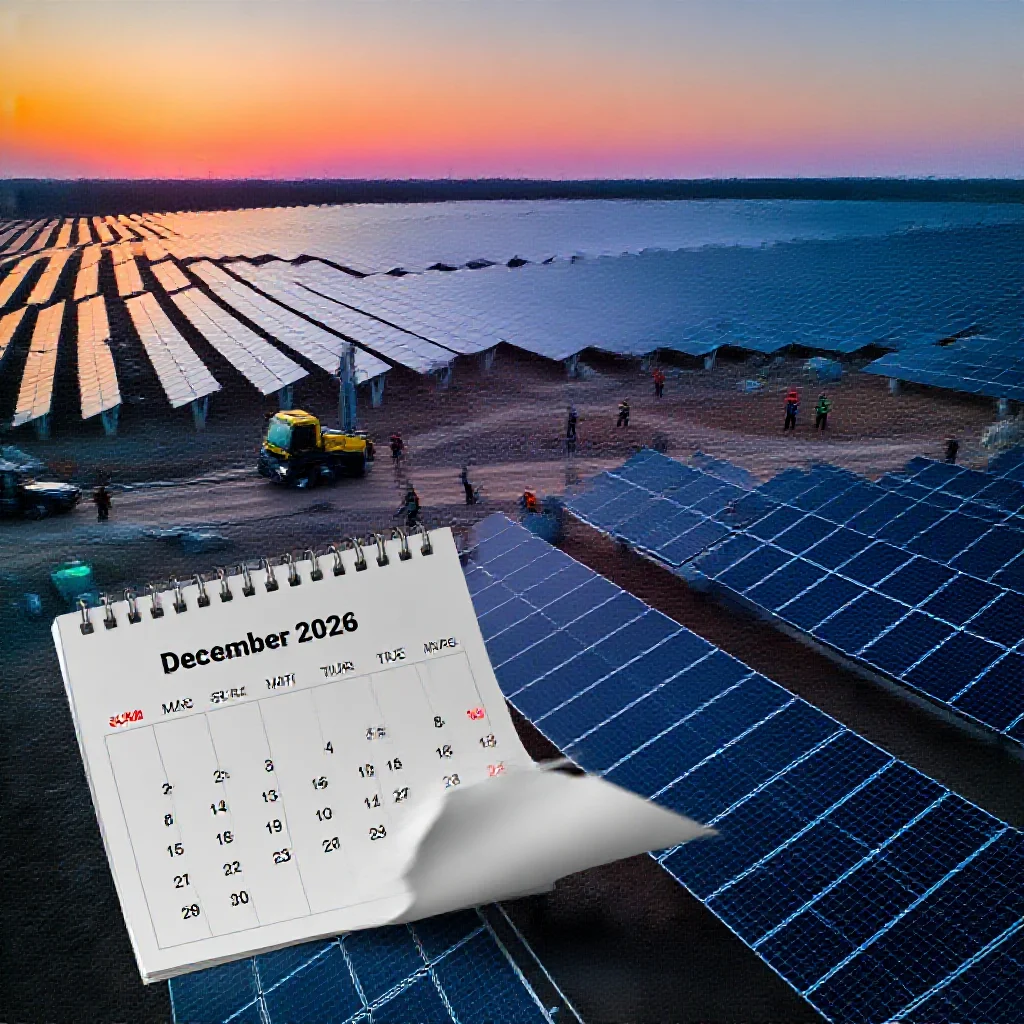
The 2026 Cliff: How the Looming Tax Credit Expiration is Reshaping America's Clean Energy Landscape
Introduction: The Ticking Clock on Clean Energy Ambitions
A national building spree is underway, driven by a quiet consensus among developers, financiers, and state policymakers. The catalyst is a definitive deadline: the scheduled expiration of the current federal clean energy investment tax credit (ITC) structure at the end of 2026. For project economics, this expiration represents a potential increase of 15-30% in after-tax development costs, fundamentally altering return thresholds. The 2026 deadline is not merely a policy sunset; it is functioning as a powerful market accelerant, compressing multi-year development cycles and simultaneously introducing a significant source of long-term market risk.
The Hidden Economic Logic: More Than Just a Deadline
The prevailing investment mentality is unequivocally "use-it-or-lose-it." Finite timelines compress due diligence and decision cycles, prioritizing projects with secured interconnection rights, permits, and land leases. This reshuffles the capital stack, as developers rush to secure financing and execute Power Purchase Agreements (PPAs) within the incentive window, with terms increasingly benchmarked against a post-2026 cost baseline.
Geographically, the deadline creates temporary winners and losers. States with pre-permitted development zones, streamlined regulatory processes, and proactive grid upgrade planning are gaining a disproportionate share of near-term investment. These jurisdictions offer the path of least resistance for projects that must achieve commercial operation by the deadline, creating a clustered, non-uniform acceleration of national capacity additions.
Dual-Track Analysis: A Short-Term Sprint vs. A Long-Term Strategy Gap
**Fast Analysis (The Sprint):** Empirical data confirms the acceleration. The volume of new generation capacity in interconnection queues, predominantly solar, wind, and storage, has reached record levels. (Source 1: Lawrence Berkeley National Lab's "Queued Up" series). A significant portion of these projects list targeted commercial operation dates no later than 2026. Similarly, Federal Energy Regulatory Commission (FERC) data on planned capacity additions shows a pronounced peak in the 2025-2026 window, directly correlating with the incentive timeline.
**Slow Analysis (The Cliff):** This surge precedes a period of high policy uncertainty. Absent a clear legislative extension or replacement, the primary economic driver for utility-scale projects diminishes post-2026. This risks a severe investment slowdown, potentially triggering a boom-bust cycle. The consequences extend beyond project pipelines to manufacturing and labor. Supply chains scaled to meet peak 2026 demand may face abrupt underutilization, and a specialized workforce assembled for the sprint may disperse, increasing costs and delays for projects developed later.
The Deep Entry Point: Supply Chain Strains and the 'Pull-Forward' Effect
The 2026 deadline exerts pressure beyond project timelines, stressing the underlying clean energy supply chain. Demand surges for solar modules, wind turbine components, and critical balance-of-system equipment like transformers. Concurrently, competition for skilled construction labor and engineering resources intensifies, driving up near-term costs.
This raises the critical "pull-forward" dilemma. Analysis must distinguish whether the current project surge represents purely additive growth or the acceleration of projects originally slated for 2027-2030. If the latter dominates, the current boom may cannibalize the future project pipeline, creating a valley of development activity immediately following the deadline. For equipment manufacturers, this presents a strategic risk: expanding production capacity to meet 2026 demand could result in stranded assets if demand contracts sharply thereafter.
Neutral Market and Industry Predictions
The market trajectory is bifurcated. In the near term, the pre-2026 period will see a maximum viable project push, characterized by elevated equipment prices and labor rates. Projects with the highest degree of development completion will be prioritized.
Post-2026 outcomes are contingent on three variables: the cost trajectory of clean energy technologies absent federal incentives, the posture of state-level renewable portfolio standards, and the evolution of corporate decarbonization commitments. If technology costs continue their historical decline, they may partially offset the incentive loss. However, the interim period will likely feature a contraction in project financials, a consolidation of developers, and a strategic shift toward markets with the strongest sub-national policy support or the most favorable inherent resource quality. The long-term national decarbonization rate will be influenced by the depth and duration of any investment valley that follows the 2026 cliff.