The GOTRAX eFold Decoded: How a $799 E-Bike Redefines Urban Mobility Economics
The GOTRAX eFold electric bike, with its 350W motor, 20 mph top speed, and 25-mile range, represents more than just an affordable commuting tool. This analysis dissects its specifications—from the aluminum frame to the Shimano drivetrain—to uncover the strategic market positioning and supply chain efficiencies enabling its disruptive $799 price point. We explore how this product category is reshaping urban transportation economics, challenging traditional bike and micro-mobility markets, and what its design compromises reveal about the future of mass-market electric personal transport.
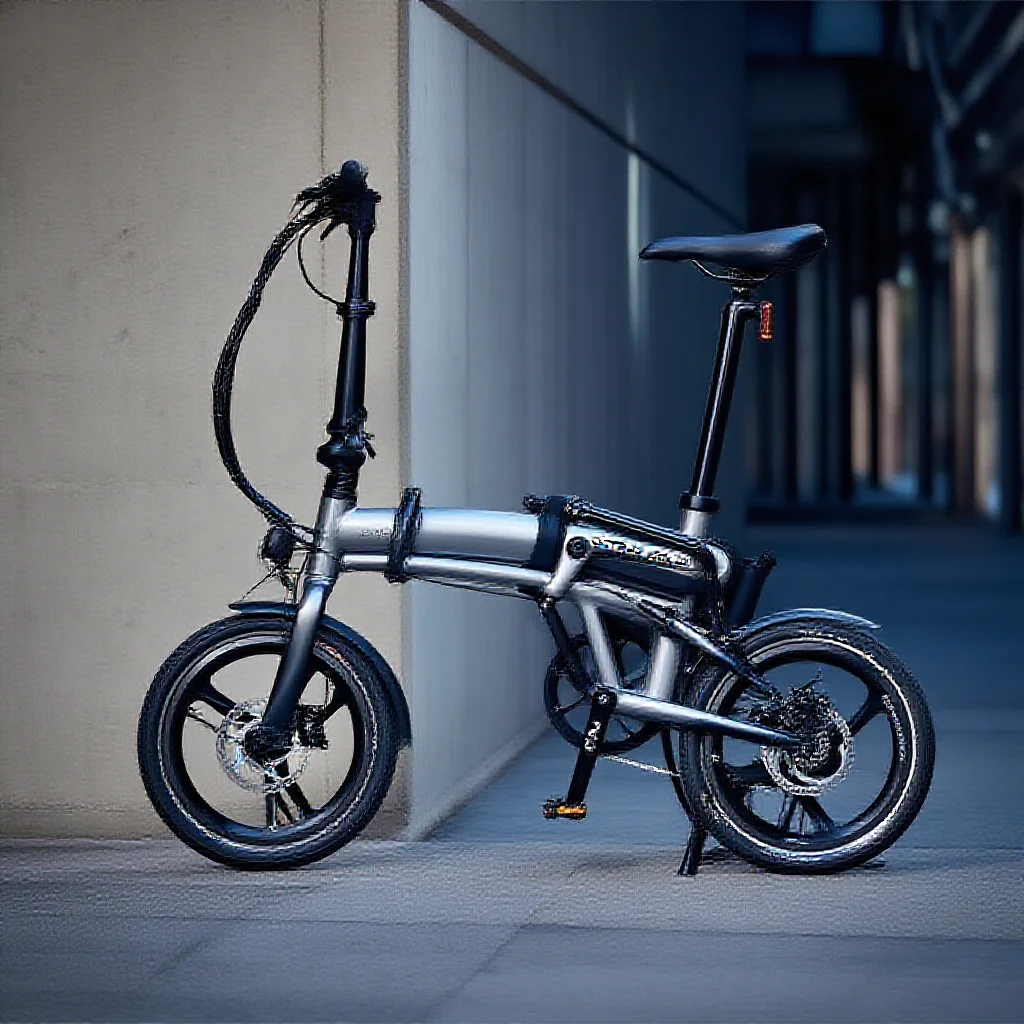
The GOTRAX eFold Decoded: How a $799 E-Bike Redefines Urban Mobility Economics
A new price benchmark has been established in the electric personal transportation market. The GOTRAX eFold electric bike, with a manufacturer-stated price of $799, integrates a folding aluminum frame, a 350W motor, a 25-mile range, and a 20 mph top speed (Source 1: [Primary Data]). This analysis deconstructs its specification sheet as a strategic document, examining the supply chain efficiencies and market positioning that enable its disruptive cost. The product’s design choices reveal a calculated blueprint for mass adoption, challenging incumbent transportation economics.
Deconstructing the $799 Disruption: Specs as a Strategic Blueprint
The core technical specifications of the GOTRAX eFold define its target user and economic model. The 350W motor and 20 mph top speed represent a deliberate calibration to urban commuting needs, balancing regulatory compliance in many jurisdictions with sufficient power for moderate inclines. The 25-mile per-charge range (Source 1: [Primary Data]) creates a specific use case: short-to-medium urban trips, effectively covering the majority of daily commutes without the cost burden of a larger battery.
The 46 lb weight (Source 1: [Primary Data]) illustrates a critical compromise. While the aluminum alloy frame provides necessary durability, the total weight indicates a focus on cost containment over premium lightweight materials. This positions the bike as a "portable" rather than "carryable" solution, suitable for apartment storage and mixed-mode transit, but not for extended manual transport.
Component selection further reveals the strategy. The inclusion of a 7-speed Shimano drivetrain (Source 1: [Primary Data]) provides recognized brand reliability in a critical subsystem, while the use of mechanical disc brakes, as opposed to hydraulic, indicates a clear cost-saving measure. This combination signals a prioritization of targeted, maintainable reliability over high-performance specifications, ensuring core functionality at minimum bill-of-materials expense.
Beyond the Fold: The Hidden Supply Chain and Market Logic
The product's market impact is rooted in supply chain and logistical efficiencies not visible in the feature list. The removable battery is a keystone component in this model. Its range-limiting capacity is a direct cost-saving measure, as the battery pack is the single most expensive part of an electric bicycle. Removability simplifies logistics, reduces shipping costs due to hazardous material regulations, and streamlines after-sales service and potential third-party replacement markets.
The specification of generic mechanical disc brakes and standard 20-inch wheels (Source 1: [Primary Data]) maps to a highly optimized, volume-driven supply chain. These are commodity components in the global bicycle manufacturing ecosystem, allowing GOTRAX to leverage existing mass-production channels and avoid the cost premiums associated with proprietary or high-performance parts. This component strategy minimizes procurement complexity and cost.
This positioning allows the eFold to occupy a previously sparsely populated niche. It is priced significantly below premium folding e-bikes from brands like Brompton or Tern, while offering a owned, durable alternative to the ubiquitous but often degraded shared micro-mobility scooters and bicycles. The product effectively creates a new category: the personally owned, ultra-affordable, electric last-mile vehicle.
The eFold's True Competitor Isn't Another Bike
The most significant disruption caused by the $799 eFold is its substitution effect on broader urban transportation budgets. A total cost of ownership analysis reveals its competitive landscape. The one-time purchase price compares to approximately 10-16 months of an unlimited public transit pass in a major U.S. city, or 4-6 months of moderate ride-share usage for similar short trips. Against private car ownership, the economics for urban errands and commuting become starkly favorable when factoring in fuel, insurance, parking, and depreciation.
The specifications embody the "good enough" principle in technology commercialization. The eFold meets a critical threshold of performance—adequate speed, sufficient range, acceptable durability—for a large segment of urban commuters, at approximately half the price of many entry-level e-bikes. This sufficiency, rather than excellence, is the driver of mass-market adoption.
The long-term implication is pressure on multiple industries. Traditional bicycle manufacturers may be compelled to accelerate electrification of their entry-level models or risk ceding the affordable segment. Public transit agencies may see the product as a complement for first/last-mile connections, but also as a potential competitor for short-haul trips. The success of this model could also fragment the low-end e-bike market, leading to volatility as competitors race to match or undercut the price point, potentially at the expense of component quality or retailer margins.
Verification and Context: Reading Between the Specification Lines
The stated specifications require contextual analysis against real-world conditions and industry norms. The 25-mile range claim (Source 1: [Primary Data]) is a maximum figure, highly dependent on rider weight, terrain, assist level usage, and ambient temperature. Industry standard range testing often uses a specific rider weight and flat terrain; urban stop-and-go traffic and hills will reduce actual range. This is a common industry practice, not unique to this product, but essential for realistic user expectations.
The material choice of aluminum alloy for the frame (Source 1: [Primary Data]) is verifiable as the industry standard for mid-range and entry-level bicycles due to its favorable strength-to-weight ratio and manufacturability. The use of mechanical disc brakes provides a verifiable maintenance and safety advantage over traditional rim brakes in wet conditions, though with less modulation and greater hand effort required than hydraulic systems. These choices are consistent with the product's price-driven design philosophy.
Market analysis indicates the GOTRAX eFold is a symptom of a maturing e-bike supply chain and aggressive direct-to-consumer sales models. Its existence is predicated on high-volume Asian manufacturing, efficient global logistics for semi-assembled goods, and digital marketing that bypasses traditional brick-and-mortar retail markups. The product is less an innovation in bicycle engineering and more an innovation in cost-optimized product specification and distribution for a specific market segment.
Conclusion: A New Economic Equation for Urban Transport
The GOTRAX eFold represents a pivotal development in personal electric mobility. Its significance lies not in any single technological breakthrough, but in the systemic integration of adequate components at a previously unattainable price point. The product redefines the economic equation for short-distance urban travel, positioning the privately owned e-bike as a fiscally rational alternative to recurring transportation subscriptions and car dependency for a defined set of trips.
The future trajectory suggested by this model points toward increased commoditization of core e-bike systems like motors and battery packs, further price pressure in the under-$1,000 segment, and a potential acceleration in the electrification of urban transport. The primary risk associated with this trend is a compression of quality and safety margins as cost competition intensifies. However, the GOTRAX eFold establishes that for a substantial portion of the urban mobility market, the threshold of acceptable performance has been met, and the new competitive battlefield is overwhelmingly economic.