Beyond the Greeting: The Strategic Communications Architecture Powering Artemis II''s Message from Space
On April 10, 2026, the Artemis II crew's broadcast of a "message of love" to Earth was more than a symbolic gesture; it was a critical, real-world stress test of NASA's next-generation deep space communications network. This article analyzes the event as a pivotal milestone in operationalizing the infrastructure essential for sustained lunar presence and future Mars missions. We explore the hidden technological and strategic imperatives behind the broadcast, examining how it validates the laser communications systems, network resilience, and mission protocols that will underpin human exploration beyond low-Earth orbit. The analysis positions this single transmission as a cornerstone event for the emerging cis-lunar economy and deep space operational standards.
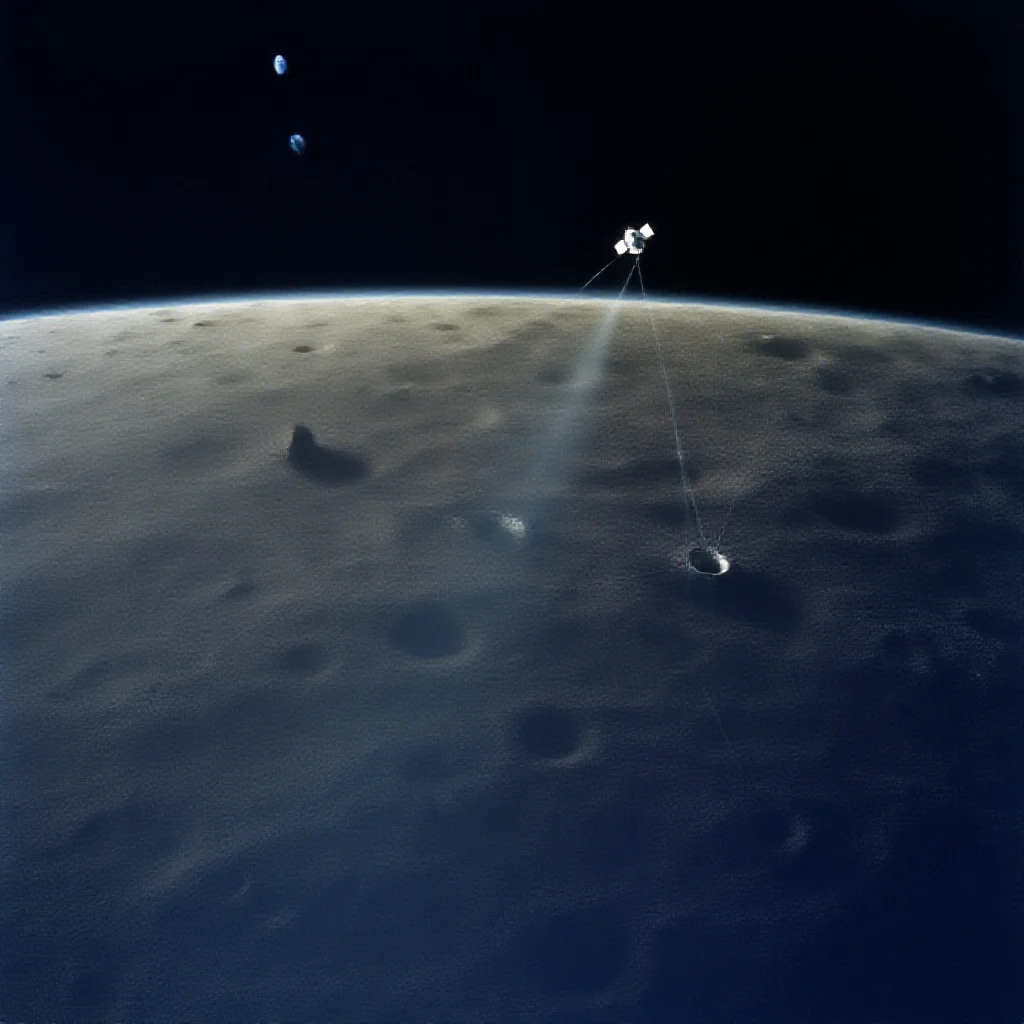
Beyond the Greeting: The Strategic Communications Architecture Powering Artemis II's Message from Space
**Summary:** On April 10, 2026, the Artemis II crew's broadcast of a "message of love" to Earth was more than a symbolic gesture; it was a critical, real-world stress test of NASA's next-generation deep space communications network. This article analyzes the event as a pivotal milestone in operationalizing the infrastructure essential for sustained lunar presence and future Mars missions.
The Signal Heard Round the World: More Than a Greeting
On April 10, 2026, the Artemis II crew transmitted a message to Earth, described as a message of love (Source 1: [Primary Data]). This event was the first live, high-bandwidth audio and video feed from a crewed spacecraft in lunar space since the Apollo era. The transmission's primary operational objective was the validation of the end-to-end Deep Space Network (DSN) and nascent lunar communications infrastructure under crewed mission conditions. The broadcast functioned as a planned systems verification event, with its public relations value being a secondary benefit. This framing shifts the analysis from a symbolic gesture to a critical technical procedure.
The Invisible Architecture: Testing the Lifeline to Deep Space
The successful reception of the message validated multiple layers of emerging space communications architecture. The test exercised the Orion spacecraft's integrated communication system, which utilizes both traditional radio frequency (S-band) and experimental optical, or laser, communication capabilities. Laser communications offer significantly higher data rates, a necessity for future high-definition video and voluminous scientific data.
The broadcast required seamless handoffs between the globally distributed antennas of the Deep Space Network—in Goldstone, Canberra, and Madrid—and likely involved coordination with new cis-lunar assets. The simple audio message served as a low-risk, high-value test for the complex protocols managing bandwidth allocation, signal latency, and network redundancy. These protocols are foundational for transmitting vital spacecraft telemetry, crew health data, and operational commands.
The Strategic Imperative: Why Reliable Comms Are the Foundation of a Lunar Economy
The technical success of the April 10, 2026 transmission transitions the capability from an operational check to an economic enabler. Reliable, high-bandwidth communication is the non-negotiable foundation for any sustained economic activity beyond Earth orbit. This validation event directly impacts investor and stakeholder confidence in proposed lunar ventures, including in-situ resource utilization, commercial research, and tourism.
Furthermore, the Artemis II broadcast begins to establish de facto technical and operational standards for all future commercial and international lunar activities. Mission profiles, data formats, and network interoperability protocols validated by NASA will likely become benchmark requirements. This standardization creates market predictability.
A supply chain ripple effect is anticipated. The demand for space-hardened communication components, commercial ground station services, encryption software, and network management systems will increase. This growth signals expansion opportunities for aerospace subcontractors and technology firms specializing in resilient telecommunications.
Evidence of a New Paradigm: From Symbolic Act to Systems Benchmark
The Artemis II message transmission provides a concrete data point for assessing the readiness of deep space infrastructure. Its success is a prerequisite for the more complex operations planned for Artemis III and the sustained presence of the Lunar Gateway. The event demonstrated that the foundational layer of deep space operations—continuous, high-fidelity communication—is transitioning from theoretical design to operational reality.
The analysis concludes that the broadcast was a cornerstone event for the emerging cis-lunar economy. It served as the first integrated test of the communications backbone required for distributed lunar operations, setting a performance benchmark against which all subsequent commercial and governmental missions will be measured. The strategic value of the transmission resides not in its content, but in its flawless technical execution.