Beyond the Meal: How BYD and KFC''s 2026 Charging Deal Redefines Retail''s Role in the EV Ecosystem
The April 2026 partnership between BYD and KFC to install flash charging stations is more than a convenience play. This analysis positions the move as a strategic pivot in the EV landscape, where high-traffic quick-service restaurants (QSRs) become critical, non-traditional infrastructure nodes. We explore the underlying economic logic of monetizing dwell time, the data-gathering potential beyond energy sales, and how this model pressures traditional fuel stations and urban planning. This collaboration signals a future where EV charging is seamlessly integrated into daily routines, fundamentally altering competitive dynamics in both the automotive and retail sectors.
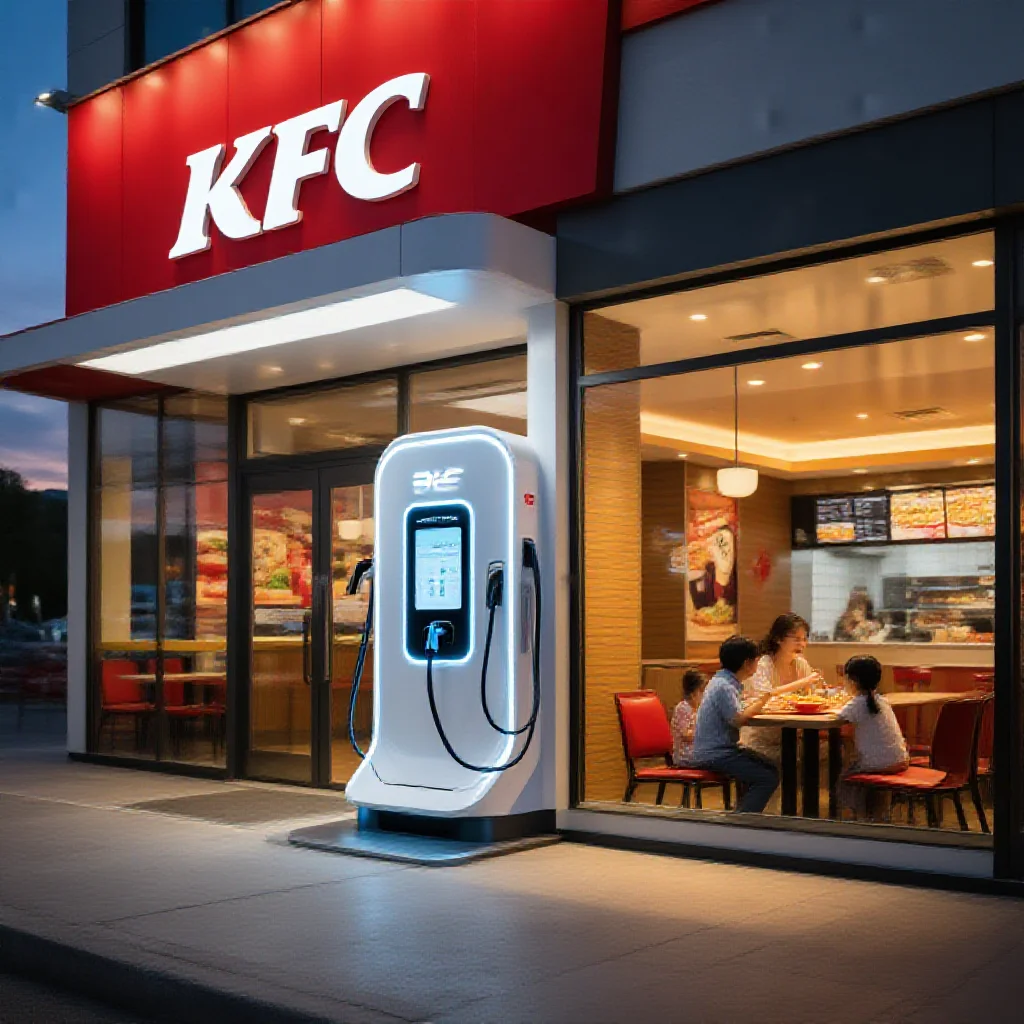
Beyond the Meal: How BYD and KFC's 2026 Charging Deal Redefines Retail's Role in the EV Ecosystem
**Summary:** The April 2026 partnership between BYD and KFC to install flash charging stations is more than a convenience play. This analysis positions the move as a strategic pivot in the EV landscape, where high-traffic quick-service restaurants (QSRs) become critical, non-traditional infrastructure nodes. We explore the underlying economic logic of monetizing dwell time, the data-gathering potential beyond energy sales, and how this model pressures traditional fuel stations and urban planning.

The Announcement: More Than a Press Release
On April 9, 2026, BYD and KFC announced a partnership to deploy BYD’s flash charging stations at KFC restaurant locations (Source 1: [Primary Data]). This announcement occurred within a specific global context: electric vehicle (EV) adoption rates were accelerating, while public charging infrastructure development lagged, particularly in high-speed, convenient urban and suburban nodes. The collaboration pairs two entities with complementary strategic assets. BYD operates with deep vertical integration, controlling battery production, vehicle manufacturing, and energy storage solutions. KFC provides a massive, globally distributed network of properties characterized by predictable, time-bound customer foot traffic. The initial framing of the partnership as a customer convenience feature undersells its structural implications. The core proposition is the repurposing of existing commercial real estate to serve a new energy economy, transforming parking lots into distributed energy service points.

The Hidden Economic Logic: Monetizing Minutes, Not Just Megawatts
The fundamental economic innovation of this partnership is not the sale of electricity, but the systematic monetization of captive dwell time. For the average consumer, the primary barrier to EV adoption remains "range anxiety," which is often a function of time anxiety—the concern over losing productive time to recharge. Flash charging technology, which can deliver a significant charge in approximately 15-20 minutes, directly aligns with the typical duration of a quick-service restaurant meal. This alignment transforms a necessary stop (charging) into a dual-purpose errand (charging and dining), thereby increasing the utility of the customer's time.
For KFC, the charging station ceases to be a mere amenity and becomes a powerful traffic driver. It provides a compelling reason for EV owners to choose KFC over a competitor, directly increasing store visitation and potential basket size. The revenue model likely extends beyond a simple split of charging fees. The greater value may reside in the incremental food sales and the data generated. Each charging session creates a timestamped data point linking vehicle type, location, duration, and energy consumption to a retail transaction, enabling granular analysis of consumer behavior patterns.

A Slow Analysis: Reshaping Two Industries
This collaboration initiates a slow-burning transformation across the quick-service restaurant (QSR) and automotive energy sectors.
For QSRs, the model suggests a transition from food retailer to essential service hub. Location strategy, historically driven by traffic patterns and demographics, must now incorporate electrical grid capacity and parking lot configuration as primary variables. Franchise value becomes tied not only to sales per square foot but also to energy throughput per parking space. This provides early-adopting chains like KFC with a tangible competitive moat in site selection and customer loyalty.
For the automotive and energy sector, BYD’s move represents a strategic expansion to control the customer touchpoint beyond the vehicle sale. By embedding its charging technology in high-frequency destinations, BYD secures brand visibility and customer loyalty while gathering proprietary usage data. This vertically integrated approach challenges pure-play charging network operators, who lack the inherent destination draw of a major retailer.
The long-term competitive pressure on traditional fuel stations intensifies. Their historical monopoly on vehicular energy is eroded by a competitor offering a combined value proposition of food, convenience, and speed. The question for fuel stations becomes whether they can adapt their real estate to offer comparable or superior destination experiences.

The Unseen Entry Point: Data, Grid Dynamics, and Supply Chain Ripples
Beyond retail and automotive dynamics, the partnership establishes a massive, distributed network for energy data collection. The aggregated data from thousands of charging sessions can inform local grid load management, predicting demand spikes based on time of day and location. This data asset could form the basis for future partnerships with utility companies for demand response programs, where charging speeds could be dynamically adjusted to stabilize the grid, potentially creating a new revenue stream.
The supply chain for commercial real estate will experience ripple effects. Electrical service capacity will rise as a critical priority in site development and valuation, potentially surpassing traditional metrics like corner visibility. Studies on "destination charging" efficacy, such as the 2024 International Council on Clean Transportation report noting a 34% higher utilization rate for chargers at retail destinations versus standalone stations, validate the strategic logic of this integration (Source 2: [Secondary Research]). This evidence suggests that embedding charging into routine stops is more effective than building dedicated charging corridors.

The Future Landscape: Predictions and Implications
The BYD-KFC model is a template likely to trigger rapid replication. Other QSR chains and retailers with large physical footprints will seek similar partnerships with automakers or charging providers. This will accelerate the normalization of EV charging as a seamless component of daily life, fundamentally altering competitive dynamics.
Urban and suburban planning must adapt. Zoning and development incentives may shift to favor mixed-use corridors that combine energy, retail, and services. The definition of "critical infrastructure" will expand to include the parking lots of restaurants, shopping centers, and cinemas.
The ultimate implication is the dissolution of the standalone "refueling stop" as a distinct trip purpose. Energy replenishment will become a secondary activity embedded within primary activities like dining, shopping, or working. This integration represents the most significant step toward making EV ownership functionally indistinguishable from, and more convenient than, operating a fossil-fuel vehicle. The partnership announced on April 9, 2026, is therefore not merely an installation of hardware; it is a blueprint for the next phase of electrified mobility.