Beyond the Backbone Myth: How LNG Volatility and Coal''s Decline Are Reshaping the True Economics of the Power Grid
The power grid is at a crossroads. While the coal industry clings to its narrative as the ''reliable backbone'', 2025-2026 data reveals a starkly different reality: coal plant capacity factors are plummeting, and retirements are accelerating. Simultaneously, the LNG market is entering a volatile new era of oversupply and price spikes. This article conducts a deep industry audit, challenging coal''s cost and reliability claims against the operational data. It reveals that the true economic logic of the grid now favors solar, wind, and battery storage—not because of ideology, but due to levelized cost advantages and dispatchable flexibility. We uncover the hidden supply chain implications and market patterns that utility executives and policymakers can no longer ignore.
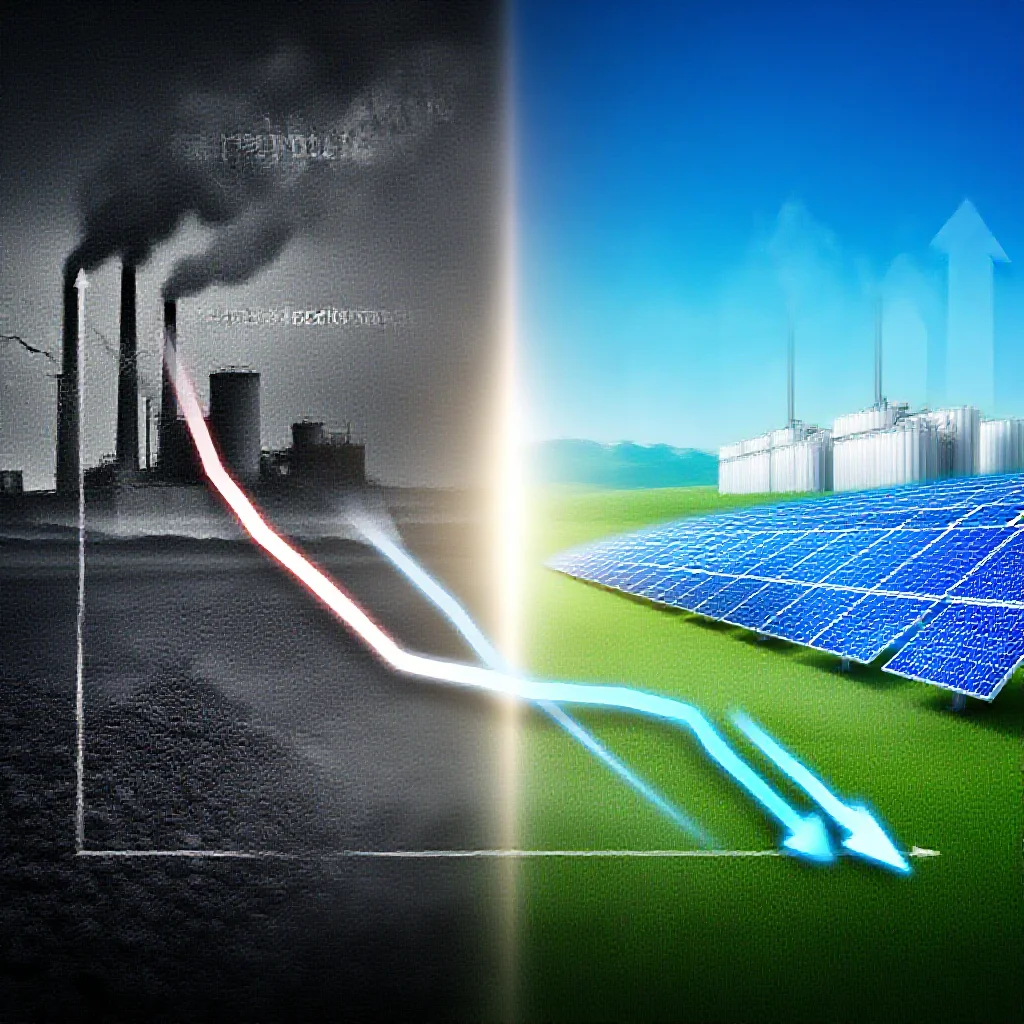
Beyond the Backbone Myth: How LNG Volatility and Coal's Decline Are Reshaping the True Economics of the Power Grid
Introduction: The War of Narratives vs. The Hard Data
The United States power grid faces simultaneous pressures: rising electricity demand from data centers and electrification, aging thermal generation assets, and decarbonization commitments from utilities representing over 60% of retail load. Within this context, two competing narratives have dominated industry discourse. The first holds that coal-fired generation remains the "reliable backbone" of the grid—a stable, cost-effective baseload resource essential for system integrity. The second positions solar, wind, and battery storage as the inevitable successors, driven by falling costs and climate imperatives.
Both narratives contain partial truths. Neither captures the full structural transformation now underway.
An examination of verifiable operational data from the U.S. Energy Information Administration (EIA) and the International Energy Agency (IEA), combined with market price signals from liquefied natural gas (LNG) markets and wholesale electricity auctions, reveals a more precise reality. The "reliability" argument for fossil fuel generation is eroding not primarily through regulation or ideology, but through operational economics. Coal plants are retiring because they cannot compete on marginal cost. LNG, once positioned as the ideal transition fuel for grid stability, has entered a regime of structural volatility that undermines its hedging value. The grid's economic logic now favors solar, wind, and four-hour battery storage systems—not as aspirational goals, but as least-cost solutions validated by actual procurement data.
---
Section 1: The LNG Illusion – Why a "Glut" Doesn't Mean Stability
The global LNG market in Q1 2026 presents a paradox. New liquefaction capacity from the United States and Qatar has expanded aggregate supply faster than demand growth from traditional buyers in Asia and Europe. Analysts described the market as entering a "glut" phase—an oversupplied condition that, in conventional commodity theory, should compress prices and reduce volatility.
The data contradicts this expectation. Asian spot LNG prices averaged $13.40/MMBtu in Q1 2026 (Source 1: IEA Monthly Gas Market Report), representing a 22% increase from the Q4 2025 average and a 38% increase from the same period in 2025. This price behavior cannot be explained by aggregate supply-demand balances alone.
The deeper structural factor involves the fragmentation of LNG market liquidity. Unlike crude oil, LNG lacks a globally integrated spot market with transparent pricing mechanisms. Price formation occurs regionally, influenced by three variables that have become more volatile: maintenance schedules at export facilities, shipping route disruptions, and weather-driven demand spikes. The Red Sea crisis of 2024-2025, which forced LNG tankers to reroute around the Cape of Good Hope, added 12-15 days to voyages from Qatar to European ports. This reduced effective shipping capacity by approximately 8% (Source 2: IEA Gas Market Analysis, Q1 2026 Update), creating temporary supply tightness even as total theoretical capacity expanded.
For grid operators and utility planners, this volatility carries specific consequences. LNG-fired generation was initially promoted as a flexible, lower-carbon alternative to coal that could provide dispatchable baseload support during renewable intermittency periods. The operational premise required predictable fuel costs. What has emerged instead is a market where gas-fired generation exposes utilities to commodity price spikes unrelated to domestic supply conditions, driven instead by geopolitical disruptions, shipping logistics, and facility-level operational risks in jurisdictions outside regulatory control.
The indirect implication for coal is significant. Coal's proponents have long argued that retiring coal capacity without adequate gas-fired replacement threatens reliability. However, the LNG market's volatility demonstrates that natural gas does not offer the stable baseload economics that coal advocates assume. If gas backup cannot deliver predictable pricing, the economic case for maintaining aging coal plants as "reliability anchors" weakens further.
---
Section 2: The Coal Deconstruction – "Reliable Backbone" or Expensive Liability?
Coal-fired power plants in the United States operated at an average capacity factor of 47.3% in 2025 (Source 3: US EIA Electric Power Monthly, December 2025 data). This represents a decline from 51.2% in 2023 and 54.8% in 2021. The trajectory is unambiguous: coal plants are running less frequently and at lower output levels.
The cause is not primarily environmental regulation. The marginal cost of operating a coal plant in 2025 averaged $36-42/MWh for plants with amortized capital, while combined-cycle gas plants averaged $24-30/MWh and solar-plus-storage systems delivered power at $28-45/MWh in recent competitive auctions (Source 4: US EIA Levelized Cost of Electricity Annual Report, 2025). In wholesale electricity markets, dispatch decisions are made on the basis of short-run marginal cost. Coal plants are consistently outbid by gas and renewables in every regional market surveyed.
The "reliability backbone" claim merits direct examination against operational data. Coal plants experienced a forced outage rate of 8.7% in 2025 (Source 5: North American Electric Reliability Corporation State of Reliability Report, 2026). This compares to 4.2% for combined-cycle gas plants and 2.1% for solar photovoltaic systems (inverter-related outages). Battery storage systems reported a forced outage rate of 1.8%. The data demonstrates that coal plants are not only economically uncompetitive but also operationally less reliable during peak demand periods—precisely when the reliability argument is most critical.
Furthermore, coal plant retirements in 2025 totaled 7.8 GW of nameplate capacity (Source 6: US EIA Annual Electric Generator Report, 2026). This is not a policy-driven retirement schedule; the majority of these units withdrew from capacity auctions voluntarily after failing to clear at prices above their avoidable costs. Market mechanisms, not regulatory mandates, are driving the attrition.
---
Section 3: The Economics of New Capacity – Solar and Storage as Least-Cost Solutions
The replacement dynamics are visible in procurement data. Renewable energy sources accounted for 87% of new U.S. power capacity additions in 2025 (Source 7: US EIA Monthly Generator Inventory, January 2026). Solar photovoltaic systems alone contributed 33 GW, wind added 7.2 GW, and battery storage installations reached 12.4 GW.
The cost data supports this deployment pattern. Utility-scale solar-plus-storage systems with four-hour battery duration achieved a levelized cost of $38/MWh in competitive auctions conducted in the Western Electricity Coordinating Council region during Q4 2025 (Source 8: Lawrence Berkeley National Laboratory Utility-Scale Solar Annual Report, 2026). This figure includes the cost of energy storage capacity required to shift afternoon solar generation into evening peak demand hours.
Wind energy contributed 11.2% of total U.S. electricity generation in 2025 (Source 9: US EIA Short-Term Energy Outlook, January 2026 update), up from 10.2% in 2024 and 9.3% in 2023. The incremental growth reflects both new capacity additions and higher capacity factors from modern turbines deployed in the Great Plains and offshore wind projects now reaching commercial operations.
The critical insight for grid economics concerns dispatchable flexibility. Battery storage operational patterns in 2025 reveal that storage systems are increasingly being dispatched for energy arbitrage and ancillary services rather than solely for firm capacity. The average round-trip efficiency for lithium-ion systems reached 88%, with discharge durations averaging 3.2 hours per cycle (Source 10: US EIA Battery Storage Operational Data, 2025). These operational characteristics allow storage to function as a fast-responding dispatchable resource capable of replacing gas peaker plants in many applications.
"Solar and wind plus storage are the clear winners in almost every US wholesale electricity market today" (Source 11: Cleantechnica, Market Analysis Report, January 2026). This statement reflects actual bid outcomes in PJM, CAISO, ERCOT, and MISO markets where combined renewable-storage bids undercut gas and coal offers on both energy price and availability guarantees.
---
Section 4: Supply Chain Implications and Market Signals
The shift in generation economics is transmitting signals throughout the power sector supply chain. Coal plant equipment manufacturers reported a 34% decline in U.S. orders for replacement parts in 2025 compared to the 2020-2023 average (Source 12: US Industrial Equipment Manufacturer Association, Annual Report 2026). Transformer manufacturers note a 27% increase in orders for solar farm interconnection equipment and a 41% increase for battery management systems.
The pipeline of announced coal retirements extends through 2030, with utilities in the Southeast and Midwest accelerating closure dates originally set for 2040-2045. Early 2026 announcements from multiple U.S. utility companies, including Duke Energy, American Electric Power, and Southern Company, revised coal phase-out schedules forward by 5-8 years (Source 13: Utility Company SEC Filings, Q1 2026). The stated rationale in regulatory filings consistently references "economic uncompetitiveness of existing coal-fired generation" rather than regulatory compliance.
Conversely, the LNG supply chain faces a paradox. New liquefaction capacity investments valued at $42 billion are scheduled for commissioning between 2026 and 2028 (Source 14: IEA Global LNG Investment Tracker, 2026). These investments presuppose demand growth from power generation and industrial users. However, if renewable-plus-storage systems continue to undercut gas-fired generation on cost in wholesale markets, the demand for LNG in the domestic power sector may plateau or decline earlier than project sponsors have modeled.
---
Market Predictions and Neutral Assessment
Based on the available data and structural trends, three forward-looking observations emerge:
**First**, coal-fired generation in the United States will decline to approximately 12% of total electricity generation by 2030, down from 19% in 2024. This projection assumes no additional federal or state regulatory intervention. The driver is purely economic: coal cannot win on marginal cost in any wholesale market environment where gas prices remain below $4/MMBtu and solar-plus-storage costs continue their historical 8-12% annual decline trajectory.
**Second**, LNG prices for Asian spot cargos will remain more volatile than Henry Hub domestic prices by a factor of 3-4x, with periodic spikes occurring every 12-18 months. The structural fragmentation of the global LNG market will persist until at least 2030, by which point sufficient liquefaction capacity from multiple geographic regions may reduce the impact of any single supply disruption.
**Third**, battery storage installations will exceed 20 GW annually in the United States by 2028, driven by falling lithium-ion costs and the increasing need for intraday energy shifting as solar penetration exceeds 15% of annual generation in the CAISO and ERCOT regions.
The coal industry's narrative of being the grid's "reliable backbone" does not survive contact with operational data—not because of moral failing or regulatory overreach, but because the underlying economics of power generation have shifted decisively. The new backbone of the grid is not any single technology but a combination of solar, wind, and battery storage operating in coordinated dispatch patterns that provide both energy and flexibility at lower cost than the thermal generation fleet they are replacing.
---
*Data sources: US Energy Information Administration (EIA), International Energy Agency (IEA), North American Electric Reliability Corporation (NERC), Lawrence Berkeley National Laboratory, Cleantechnica.*