Beyond the Numbers: How Q1 2026''s Electric Truck Surge Signals a Supply Chain Revolution
The Q1 2026 U.S. sales data for electric semi-trucks, led by Tesla, Freightliner, and Volvo, reveals more than just rapid market growth. This analysis argues that the true story lies beneath the headline figures: a fundamental and accelerating shift in the industrial and logistical supply chain. The expansion of production capacity by major manufacturers is not merely a response to demand but a strategic move to secure dominance in a new ecosystem. We examine how this early-stage fleet deployment is creating a ''pull effect'' on charging infrastructure, component suppliers, and maintenance networks, setting the stage for a systemic transformation of freight logistics that will have long-term ripple effects far beyond vehicle sales.
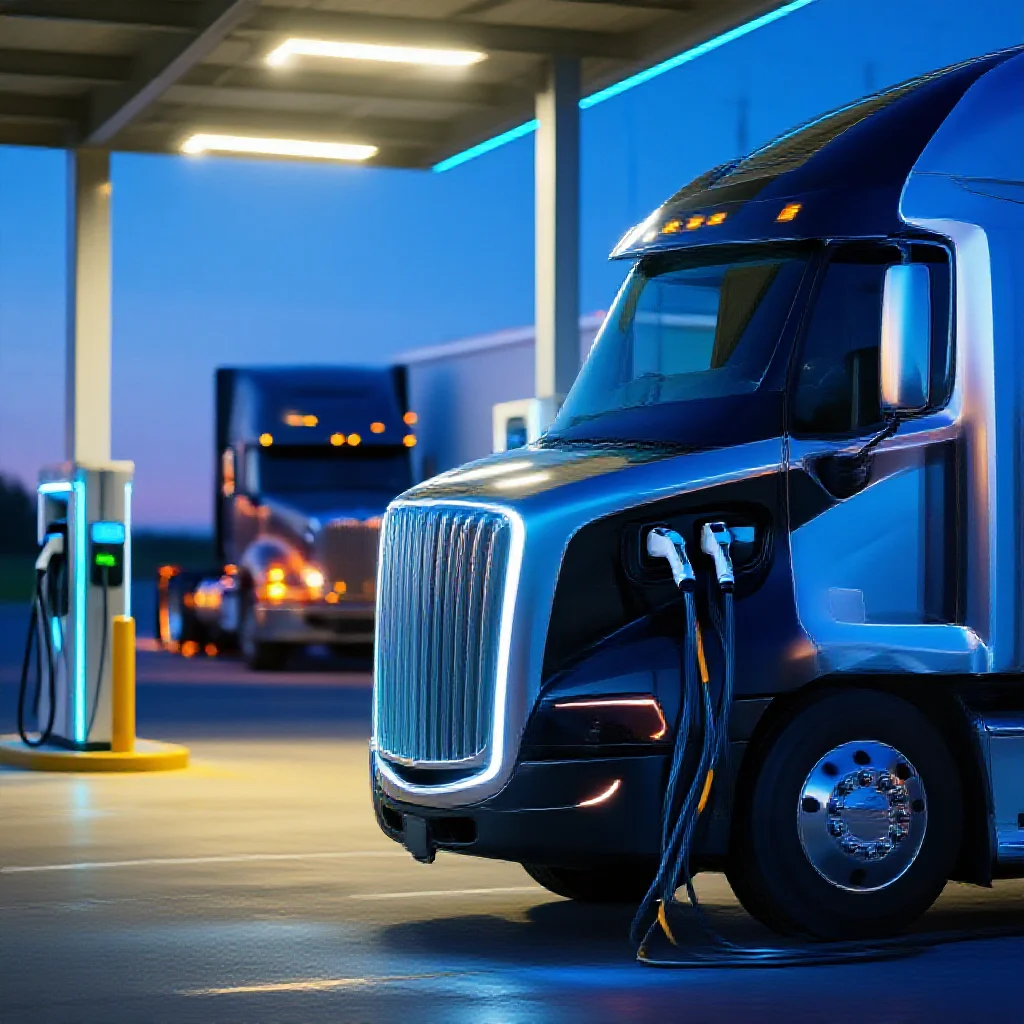
Beyond the Numbers: How Q1 2026's Electric Truck Surge Signals a Supply Chain Revolution
The Surface Data: Decoding Q1 2026's Electric Truck Sales Boom
The first quarter of 2026 delivered a definitive quantitative signal for the U.S. freight sector. A total of 1,200 electric semi-trucks were sold in the United States during this period (Source 1: [Primary Data]). This sales volume is not an isolated spike but a concentrated manifestation of a broader, established trend. Market leadership was decisively captured by Tesla, which delivered 800 units of its Semi model. Freightliner followed with 300 deliveries of its eCascadia, while Volvo Trucks reported 100 deliveries of its VNR Electric (Source 1: [Primary Data]).
These quarterly figures gain critical context from a separate, cumulative metric. According to a report from the U.S. Department of Energy, over 5,000 electric trucks were in operation nationwide as of March 2026 (Source 1: [Primary Data]). This operational fleet size provides the verified baseline from which the Q1 sales surge originates and against which its true impact must be measured. The data moves beyond speculative adoption curves and into the realm of tangible, scaled deployment.
Manufacturer Moves: Capacity Expansion as a Strategic Foothold
Concurrent with the sales reports, announcements from major manufacturers indicate a strategic escalation beyond mere production. Tesla is expanding its Nevada Gigafactory to increase Semi production capacity. Freightliner has declared a plan to double eCascadia production by the third quarter of 2026 (Source 1: [Primary Data]).
Analysis indicates these are not reactive measures to fulfill existing orders. They constitute a coordinated, pre-emptive industry bet on a near-term inflection point. The objective is to establish overwhelming production scale and consequent cost advantages at the earliest possible stage. This race for capacity is, in essence, a race to lock in long-term supply agreements with battery cell producers, semiconductor foundries, and electric drive system component makers. The entity that achieves scale first gains significant influence in setting de facto industry standards for components and charging protocols, creating a formidable barrier to entry for competitors.
The Hidden Catalyst: How Fleet Deployment is Rewriting the Supply Chain
The core transformation lies beneath the vehicle sales figures. The fleet of over 5,000 operational electric trucks represents the initial, active nodes of a new physical and digital supply network. Their deployment is catalyzing a fundamental rewrite of supporting industrial infrastructure through a powerful "pull effect."
The geographic distribution of these fleets is now the primary determinant for the construction of heavy-duty charging corridors. This creates an emergent market for high-power energy logistics and specialized commercial real estate, shifting investment from traditional fuel depots to electric freight hubs. Furthermore, the vehicle technology shift from mechanical to electrical and software-centric systems disrupts the entire downstream service ecosystem. Demand is created for new technical skills, high-voltage component distribution networks, and over-the-air update management models. This transition actively disintermediates the traditional diesel service industry and fosters a parallel, technology-driven maintenance supply chain.
Beyond the Semi: Ripple Effects on Broader Logistics and Policy
The implications of this shift extend beyond truck manufacturers and their immediate suppliers. For shippers and logistics firms, the data generated by electric fleets enables a new paradigm of efficiency modeling. Granular data on energy consumption, route optimization, and vehicle utilization allows for precise total cost of ownership calculations, making the economic case for electrification increasingly algorithmic rather than speculative.
This tangible market growth directly strengthens the business case for public and private investment in nationwide charging infrastructure. It provides empirical evidence to de-risk such investments. The operational success of these early fleets also sets a tangible benchmark for regulatory bodies, informing future emissions standards and potentially shaping the structure of incentives and tariffs. The movement of goods is beginning to drive the architecture of a new energy distribution system for transportation.
The Q1 2026 sales data, therefore, is not merely a milestone for vehicle electrification. It is an early quantitative indicator of a systemic transformation. The expansion of manufacturing capacity, the pull on energy infrastructure, and the restructuring of maintenance networks collectively signal that the electric truck is no longer a prototype on the periphery, but an active agent reshaping the core of industrial logistics. The supply chain is not just carrying these vehicles; it is being fundamentally reconfigured by them.