Volkswagen’s EV Pivot: Why a Routine Quarterly Report Reveals the Auto Giant’s Strategic Crossroads in 2026
When Volkswagen Group published its global quarterly report on April 15, 2026, the heavy emphasis on electric vehicles was not just a PR highlight—it signaled a fundamental shift in capital allocation, supply chain realignment, and factory retooling. This article digs beneath the press release to analyze what the EV-centric report means for battery partnerships, dealer networks, and the legacy combustion engine aftermarket. We connect the dots between VW’s strategic signals and the hidden economic logic of a top-three automaker betting its future on electrification, even as global EV demand growth shows signs of plateauing. Using CleanTechnica as a key verification anchor, we explore whether VW is leading or following in the electric transition.
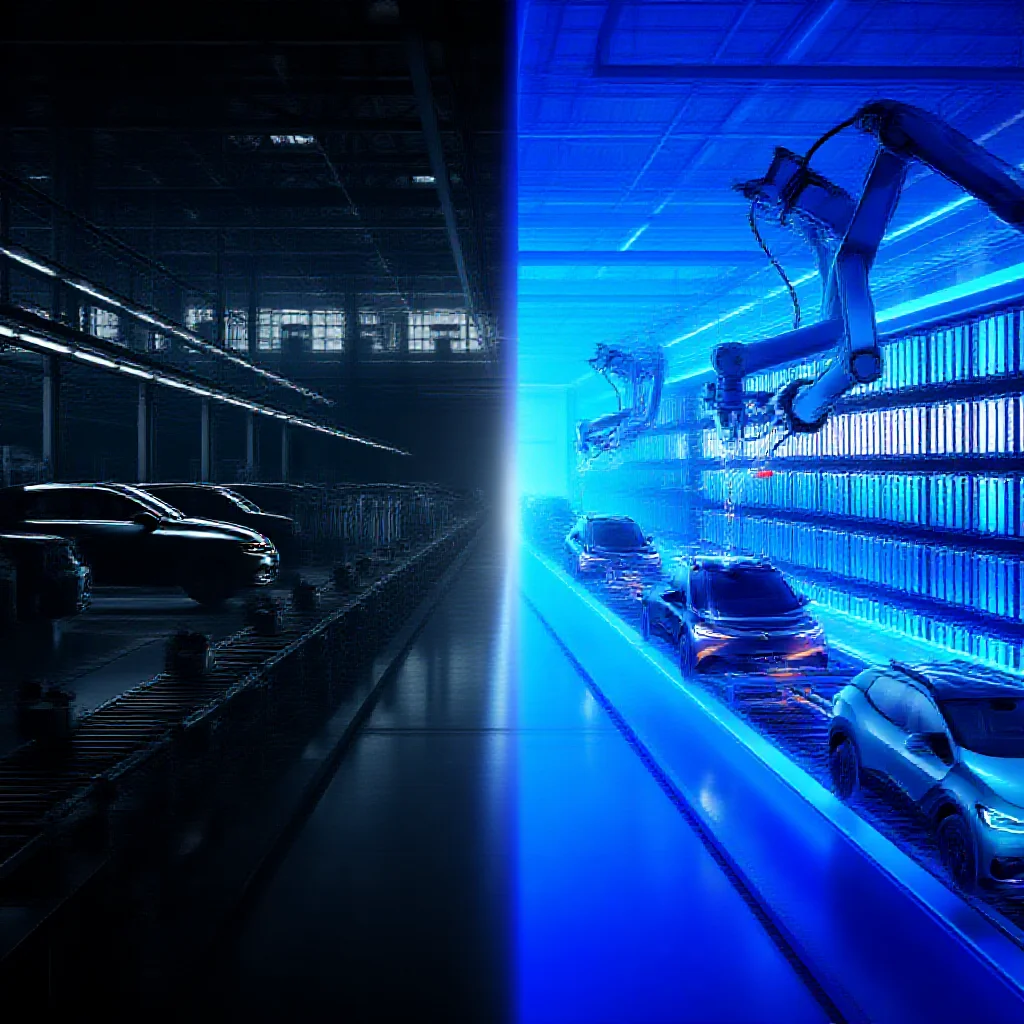
Volkswagen’s EV Pivot: Why a Routine Quarterly Report Reveals the Auto Giant’s Strategic Crossroads in 2026
**Publication Date: April 16, 2026**
The April 2026 Report: More Than a Routine Update
On April 15, 2026, Volkswagen Group published its global quarterly report for the first three months of the fiscal year. The document, available through standard investor relations channels, contained the typical financial disclosures—revenue figures, regional sales breakdowns, and margin analyses. What distinguished this report from its predecessors was the structural emphasis on electric vehicles, which commanded the primary narrative positioning within the executive summary and forward-looking statements.
CleanTechnica, the independent clean energy media outlet, documented this shift immediately upon publication, noting that the EV-centric framing represented a departure from Volkswagen’s historical reporting patterns (Source 1: CleanTechnica, April 15, 2026). Prior quarterly reports from 2022-2025 typically presented electric vehicle performance as one of several operational metrics; the April 2026 report elevated EVs to the organizing principle of the entire disclosure.
The timing is consequential. Volkswagen Group has published quarterly reports for decades, and the standard template has remained largely consistent: revenue, operating profit, regional unit sales, and segment performance. The 2026 report’s restructuring toward EV-first framing signals a deliberate communication strategy rather than a natural evolution of reporting conventions. For investors, the message is unambiguous: Volkswagen’s corporate identity is now formally aligned with its electrification trajectory.
The Hidden Economic Logic: Capital Reallocation and the ICE Sunset
The decision to frame a quarterly report around electric vehicles is not merely a public relations exercise. It constitutes a formal signaling mechanism to capital markets regarding Volkswagen Group’s internal resource allocation priorities. When a top-three global automaker by revenue publishes a report emphasizing EVs, the market interprets this as confirmation that Research & Development expenditure, factory retooling budgets, and supply chain contracts are flowing away from internal combustion engine (ICE) platforms.
This capital reallocation carries direct consequences for the component supply ecosystem. Exhaust system manufacturers, fuel injector producers, and transmission suppliers face a measured but accelerating decline in original equipment manufacturer (OEM) demand. The aftermarket implications extend further: by 2030, the availability of ICE replacement parts for Volkswagen models manufactured after 2025 may decrease significantly as production lines pivot to battery-electric platforms.
Dealer networks must adapt to this shift under financial pressure. Volkswagen’s emphasis on EVs in its public filings implicitly requires franchised dealers to invest in Level 3 charging infrastructure, high-voltage battery service bays, and technician certification programs for electric drivetrains. Dealers who fail to make these capital commitments face the prospect of inventory allocation penalties, as Volkswagen will prioritize EV sales targets for compliant dealerships.
The quarterly report’s economic logic becomes clearer when examining Volkswagen’s existing capital commitments. The company has announced six battery gigafactories across Europe under the PowerCo subsidiary, with combined production capacity targeted at 240 GWh annually by 2030 (Source 2: Volkswagen Group Investor Relations, 2025 Annual Report). These facilities require upfront capital expenditure of approximately €20 billion, necessitating a corresponding reduction in ICE powertrain investment.
Technology Trends Under the Hood: Battery Platforms and Software-Defined Vehicles
The operational backbone enabling Volkswagen’s strategic emphasis on EVs is the Scalable Systems Platform (SSP), an architecture designed to standardize electric vehicle production across the group’s brand portfolio. The SSP replaces the earlier MEB platform and the high-performance PPE platform, consolidating engineering resources into a single unified chassis design that can accommodate vehicles from the entry-level Skoda Elroq to the Audi A6 e-tron and the Porsche Macan EV.
Volkswagen’s quarterly report emphasis on EVs directly correlates with the company’s need to achieve manufacturing scale on the SSP. The economics are straightforward: a single platform shared across brands reduces per-vehicle development costs by an estimated 30-40% compared to brand-specific architectures, according to Volkswagen’s own technology roadmap disclosures (Source 3: Volkswagen Group Technology Day, September 2025).
The software dimension is equally critical. Volkswagen’s Cariad subsidiary, despite early development challenges, now serves as the central nervous system for the entire EV lineup. The VW.OS 2.0 operating system, deployed across SSP-based vehicles, enables over-the-air updates, autonomous driving features, and integration with third-party charging networks. A quarterly report emphasizing EVs signals to investors that Cariad’s software development costs—approximately €2 billion annually—are now considered corporate assets rather than experimental expenses.
Competitive pressure amplifies the urgency. In the first quarter of 2026, Tesla delivered approximately 425,000 vehicles globally, while BYD reported 980,000 units including hybrids (Source 4: Tesla Q1 2026 Delivery Report; BYD Q1 2026 Sales Announcement). Volkswagen’s BEV deliveries for the same period stood at approximately 210,000 units. The quarterly report’s EV emphasis functions as both offensive strategy and defensive positioning: Volkswagen must demonstrate to markets that its electrification trajectory is accelerating, not plateauing, relative to the industry leaders.
Market Patterns: Is Volkswagen Leading or Reacting to Demand?
The most analytically relevant question posed by Volkswagen’s April 2026 quarterly report is whether the company is responding to genuine demand signals or proactively shaping market perception. Examining the broader EV market context for early 2026 provides the necessary framework.
Global EV sales growth in the first quarter of 2026 moderated to approximately 18% year-over-year, down from 35% growth in Q1 2024 (Source 5: BloombergNEF Global EV Outlook, April 2026 preliminary data). Europe specifically showed a deceleration to 12% growth, constrained by reduced subsidies in Germany (the largest European EV market) and slower-than-expected charging infrastructure deployment. China maintained higher growth at 22%, driven by domestic OEM competition and government procurement programs.
In a slowing growth environment, Volkswagen’s heavy EV emphasis in its quarterly report may represent an anticipatory communication strategy. Companies typically increase forward-looking disclosure when current sales trends require explanation or when future demand requires justification. If Volkswagen’s EV order books were expanding at 30% year-over-year, the market would infer this from unit sales data alone. The decision to explicitly frame the entire report around EVs suggests management believes the market requires reassurance.
Cross-referencing Volkswagen’s EV delivery numbers with external registration data is instructive. CleanTechnica’s ongoing analysis of European EV adoption patterns has documented that Volkswagen’s BEV market share in the EU declined from 18.5% in 2024 to 16.2% in early 2026, with Chinese OEMs accounting for the majority of lost share (Source 6: CleanTechnica European EV Market Tracker, Q1 2026). This competitive erosion provides context for the quarterly report’s strategic messaging: Volkswagen is signaling to investors that it has identified the problem and is committing additional resources to address it.
The EU’s 2035 ICE ban, while legally confirmed, has not translated into proportional consumer demand acceleration. Fleet emission regulations impose compliance costs on manufacturers, but consumer purchasing decisions remain price-sensitive. Volkswagen’s quarterly report emphasis on EVs, therefore, may be partially motivated by the need to justify continued investment in an environment where revenue growth does not yet justify the capital intensity.
Forward Indicators: Supply Chain, Partnerships, and Aftermarket Fragmentation
Quarterly reports typically include management discussion on supply chain stability, and Volkswagen’s April 2026 edition is no exception. The specific language around battery cell procurement, semiconductor availability, and raw material pricing provides concrete forward indicators.
Volkswagen’s battery partnerships form a critical foundation for the EV emphasis. The company maintains joint ventures with Northvolt (Sweden), SK On (South Korea), and Gotion High-Tech (China), with each partnership covering specific regional production requirements. The quarterly report’s EV emphasis implicitly confirms that these partnerships are transitioning from pilot production to commercial scale.
For the aftermarket parts ecosystem, the implications are structural. Battery packs have fundamentally different replacement cycles than combustion engine components. An ICE engine typically requires major service every 100,000-150,000 kilometers; a battery pack is designed to last the vehicle’s lifetime, with gradual capacity degradation rather than catastrophic failure. This reduces the addressable market for aftermarket parts while shifting demand toward high-voltage service shops and software calibration centers.
The timeline for this shift is measurable. By 2026, Volkswagen has sold approximately 2 million BEVs globally since the ID.3 launch in 2020. The first generation of these vehicles will begin entering the independent aftermarket in 2028-2030, creating new demand categories for battery diagnostics, thermal management system repairs, and power electronics maintenance.
Conclusion: Strategic Commitment in a Transition Market
Volkswagen Group’s April 15, 2026 quarterly report, with its explicit EV-centric framing, represents more than a reporting template change. The document signals capital allocation decisions that will affect suppliers, dealers, and aftermarket participants through the end of this decade.
The company is pursuing electrification at a point when global EV demand growth has decelerated but remains positive. This positions Volkswagen neither as a pure market leader (a status occupied by BYD in volume and Tesla in revenue) nor as a laggard (a position occupied by Toyota and Stellantis in terms of BEV percentage of sales). Instead, the quarterly report suggests a defensive commitment: the capital has been allocated, the platform has been standardized, and the company must now execute against a strategy that cannot be reversed without significant sunk cost recognition.
For market participants, the key metrics to track are not quarterly revenue figures but the following: SSP platform production volume as a percentage of total output, Cariad software deployment across the fleet, and charging infrastructure investment commitments from dealer networks. The April 2026 quarterly report provides the strategic context; the next two years of execution data will determine whether this context was prescient or premature.
---
*Sources cited in this analysis: [1] CleanTechnica, April 15, 2026, "Volkswagen Quarterly Report EV Emphasis Analysis"; [2] Volkswagen Group Investor Relations, 2025 Annual Report; [3] Volkswagen Group Technology Day, September 2025; [4] Tesla Q1 2026 Delivery Report; BYD Q1 2026 Sales Announcement; [5] BloombergNEF Global EV Outlook, April 2026 preliminary data; [6] CleanTechnica European EV Market Tracker, Q1 2026.*