ev supply chain

Articles tagged “ev supply chain

7 articles found

Making E-Mobility a Global Market: What LMICs Reveal About EV Growth, Policy, and Supply Chains
E Mobility

Making E-Mobility a Global Market: What LMICs Reveal About EV Growth, Policy, and Supply Chains

This article frames e-mobility in low- and middle-income countries as a market-building story, not just a technology adoption story. Drawing on a 2023 perspective article and the report "Mapping the e-Mobility Transition: Opportunities and Enablers," it examines how policy frameworks, infrastructure, and workforce development shape EV growth across six markets: Michigan, California, India, China, South Africa, and Brazil. The piece will connect near-term business opportunities in light-duty vehicles and adjacent electrifying segments to deeper questions about industrial policy, local value creation, and how LMICs can influence global EV supply chains over the next five to ten years.
Electric Vehicle Market Forecast 2026-2033: BEVs, Asia Pacific Dominance, and the Supply Chain Shifts Driving Growth
E Mobility

Electric Vehicle Market Forecast 2026-2033: BEVs, Asia Pacific Dominance, and the Supply Chain Shifts Driving Growth

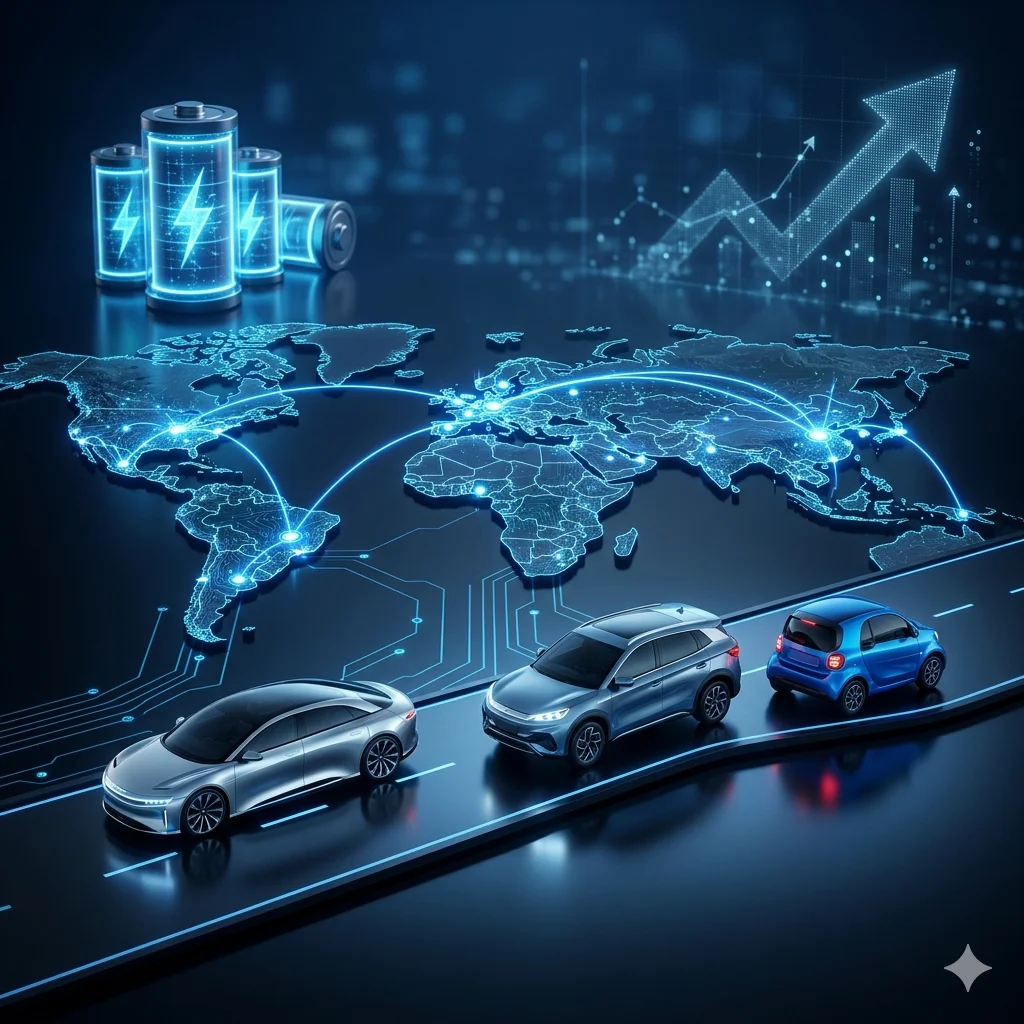
The global electric vehicle (EV) market is set to expand from USD 495.30 billion in 2026 to USD 837.93 billion by 2033 at a CAGR of 7.8%. Battery electric vehicles (BEVs) will capture 68.8% of the market, while passenger vehicles dominate with 73.4% share. Asia Pacific leads with 65% market share, yet Latin America emerges as the fastest-growing region at 4.8%. Key events—Foxtron’s debut EV, Maruti Suzuki’s e-VITARA launch, Tata Motors’ five-new-EV plan, and Renault’s Brazil expansion—signal deep shifts in OEM strategies and supply chains. This article dissects the numbers behind the headlines, explores the implications for battery production and charging infrastructure, and reveals the underlying economic logic driving global electric mobility trends.

Electric Mobility Trends 2025: The Hidden Supply Chain Revolution Behind EV Adoption
E Mobility

Electric Mobility Trends 2025: The Hidden Supply Chain Revolution Behind EV Adoption

This article takes a deep, slow-analysis approach to electric mobility trends, moving beyond headline EV sales figures to uncover the underlying economic logic and supply chain pressures. We examine how rising battery demand is reshaping global mining, refining, and manufacturing—from lithium and cobalt bottlenecks to gigafactory capacity wars. By integrating findings from the IEA's Global EV Outlook, BloombergNEF's battery price surveys, and trade reports from key mineral producers, we reveal a market that is less about consumer enthusiasm and more about raw-material geopolitics and cost parity thresholds. The article also explores the lesser-known role of recycling infrastructure and solid-state battery timelines, offering investors and policymakers a grounded view of where the industry truly stands.

Volkswagen’s EV Pivot: Why a Routine Quarterly Report Reveals the Auto Giant’s Strategic Crossroads in 2026
The Insight

Volkswagen’s EV Pivot: Why a Routine Quarterly Report Reveals the Auto Giant’s Strategic Crossroads in 2026

When Volkswagen Group published its global quarterly report on April 15, 2026, the heavy emphasis on electric vehicles was not just a PR highlight—it signaled a fundamental shift in capital allocation, supply chain realignment, and factory retooling. This article digs beneath the press release to analyze what the EV-centric report means for battery partnerships, dealer networks, and the legacy combustion engine aftermarket. We connect the dots between VW’s strategic signals and the hidden economic logic of a top-three automaker betting its future on electrification, even as global EV demand growth shows signs of plateauing. Using CleanTechnica as a key verification anchor, we explore whether VW is leading or following in the electric transition.

Ascend Elements'' Setback: A Stress Test for America''s Battery Recycling Ambitions
Esg Assets

Ascend Elements'' Setback: A Stress Test for America''s Battery Recycling Ambitions

The reported setback at battery recycling startup Ascend Elements is more than a single company's challenge; it's a critical stress test for the entire U.S. strategy to secure a domestic battery supply chain. This analysis moves beyond the immediate news to examine the deeper structural vulnerabilities it exposes. We explore the high-stakes race between scaling novel recycling technologies and the relentless pace of EV adoption, questioning whether policy and investment are aligned with the physical and economic realities of building a circular economy from scratch. The incident serves as a lens to scrutinize the viability of current business models, the readiness of infrastructure, and the long-term implications for national energy security and critical mineral independence.

Australia''s Record Plugin Vehicle Sales: A Market Transformed by Fuel Prices & Supply Constraints
The Insight

Australia''s Record Plugin Vehicle Sales: A Market Transformed by Fuel Prices & Supply Constraints

March 2026 saw record-breaking new plugin vehicle sales in Australia, a surge directly linked to rising petrol and diesel costs. However, this headline figure reveals only half the story. The deeper, more transformative trend is occurring in the second-hand market, where unprecedented demand has led to a complete sell-out of available EVs and significant price inflation. This article moves beyond the sales data to analyze the underlying economic logic: how a supply-constrained new market is creating a hyper-competitive, premium-priced secondary market, reshaping consumer behavior and posing critical questions about equitable access to the EV transition. We examine the long-term implications for Australia''s automotive supply chain and the potential for a two-tiered ownership model to emerge.

Beyond the 71,482 Number: The Hidden Economics and Future of America''s EV Fast Charging Network
The Insight

Beyond the 71,482 Number: The Hidden Economics and Future of America''s EV Fast Charging Network

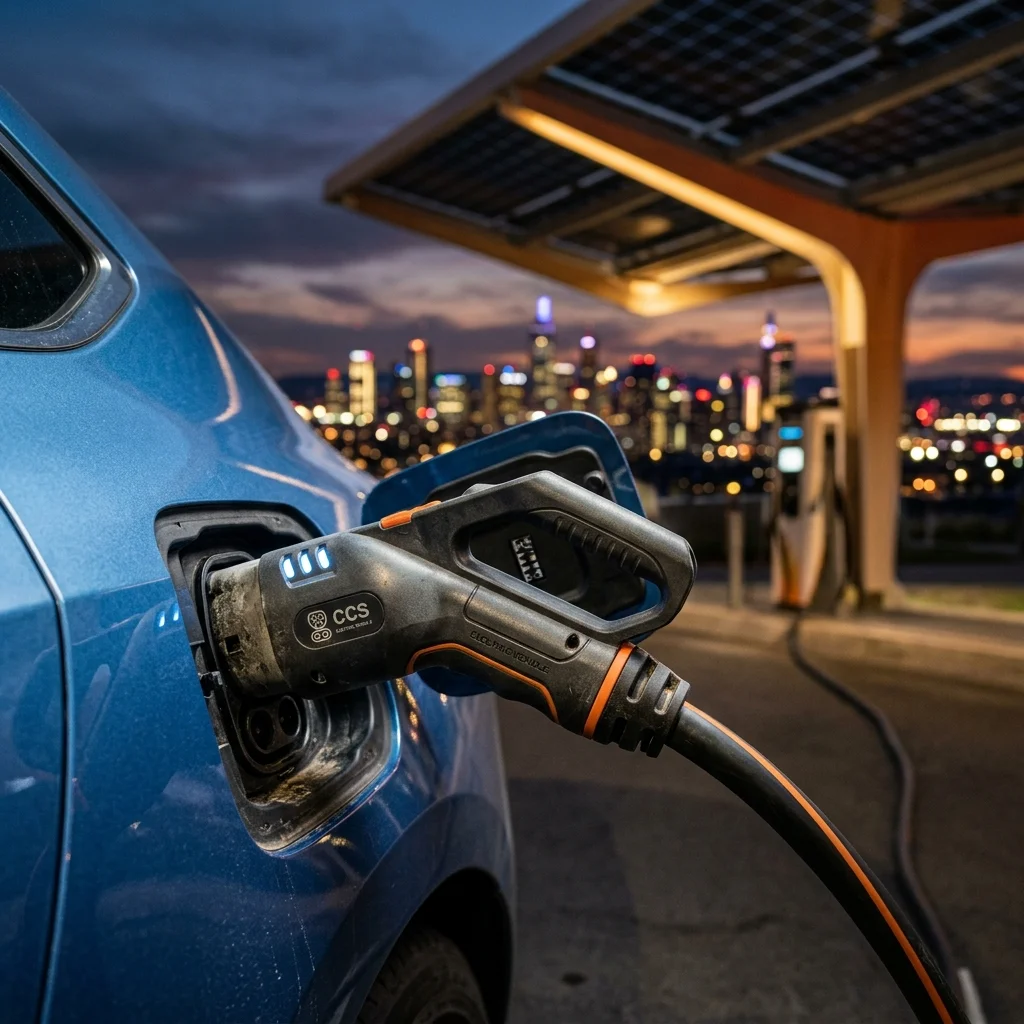
The US Department of Energy reports 71,482 operational EV fast chargers as of April 2026. This article moves beyond the headline figure to analyze the underlying economic logic and strategic implications of this infrastructure milestone. We examine the pace of deployment against EV adoption curves, the shift from urban convenience to interstate necessity, and the emerging supply chain and business model challenges. By dissecting what this number truly represents—and what it hides—we forecast the critical next phase for America's charging network, exploring the long-term impact on utilities, real estate, and the viability of mass EV ownership.