electric mobility trends

Articles tagged “electric mobility trends

14 articles found

Electric Mobility Market Size, Share, Trends, and Forecast 2025–2034: Asia Pacific Leads, Lithium-Ion Dominates, and EV Demand Accelerates
E Mobility

Electric Mobility Market Size, Share, Trends, and Forecast 2025–2034: Asia Pacific Leads, Lithium-Ion Dominates, and EV Demand Accelerates

The global electric mobility market is entering a high-growth phase, rising from USD 744.20 billion in 2025 to USD 4,719.79 billion by 2034 at a CAGR of 22.96%. This article will explain the economic logic behind the surge: why Asia Pacific leads revenue, why electric cars and lithium-ion batteries dominate, and how segment shifts in commercial use, drive systems, and regional competition will reshape supply chains. It will also verify the latest market figures and situate them alongside broader electric mobility trends, including battery material dependence, platform standardization, and the emerging North America growth story.


Electric Vehicle Market Forecast 2026-2033: BEVs, Asia Pacific Dominance, and the Supply Chain Shifts Driving Growth
E Mobility

Electric Vehicle Market Forecast 2026-2033: BEVs, Asia Pacific Dominance, and the Supply Chain Shifts Driving Growth

The global electric vehicle (EV) market is set to expand from USD 495.30 billion in 2026 to USD 837.93 billion by 2033 at a CAGR of 7.8%. Battery electric vehicles (BEVs) will capture 68.8% of the market, while passenger vehicles dominate with 73.4% share. Asia Pacific leads with 65% market share, yet Latin America emerges as the fastest-growing region at 4.8%. Key events—Foxtron’s debut EV, Maruti Suzuki’s e-VITARA launch, Tata Motors’ five-new-EV plan, and Renault’s Brazil expansion—signal deep shifts in OEM strategies and supply chains. This article dissects the numbers behind the headlines, explores the implications for battery production and charging infrastructure, and reveals the underlying economic logic driving global electric mobility trends.

Electric Vehicle Shared Services: A Decade of Innovation, Challenges, and Transformative Impact on Sustainable Urban Mobility — A Systematic Review
E Mobility

Electric Vehicle Shared Services: A Decade of Innovation, Challenges, and Transformative Impact on Sustainable Urban Mobility — A Systematic Review

This article synthesizes a systematic literature review of 52 studies from 2014 to 2023, published in May 2025, that examines Electric Vehicle Shared Services (EVSS). The review reveals that EVSS can cut greenhouse gas emissions by 14–65% compared to traditional vehicles, but faces persistent barriers such as limited charging infrastructure, high upfront costs, and range anxiety. With over 11,800 downloads in six months, the research underscores a growing appetite for evidence-based insights. We analyze the underlying economic and technology patterns, propose a deep audit of the chicken-and-egg dilemma between infrastructure and adoption, and outline pathways for policymakers and investors to accelerate EVSS as a cornerstone of sustainable urban mobility.

Global EV Sales Hit 20 Million in 2025: IEA Outlook Reveals Shifting Dynamics and What It Means for the Future of Mobility
E Mobility

Global EV Sales Hit 20 Million in 2025: IEA Outlook Reveals Shifting Dynamics and What It Means for the Future of Mobility

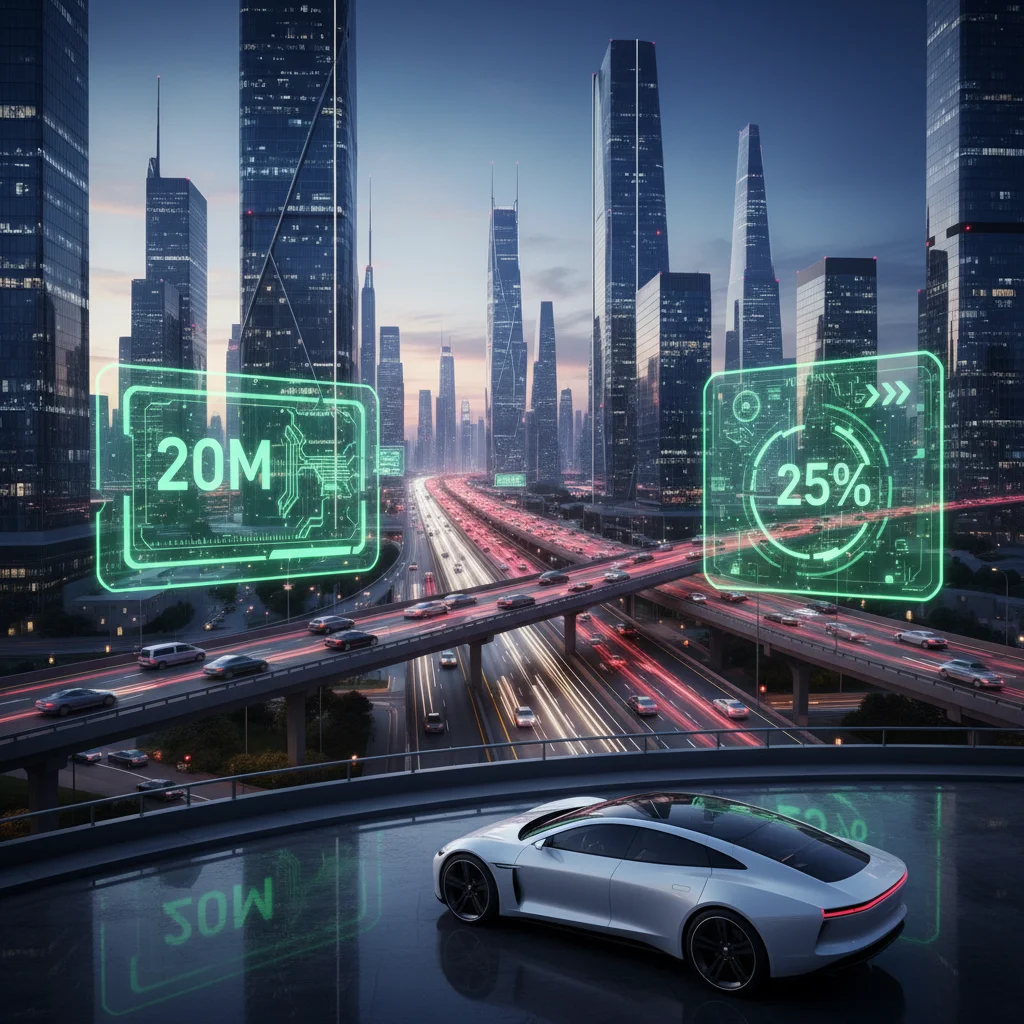
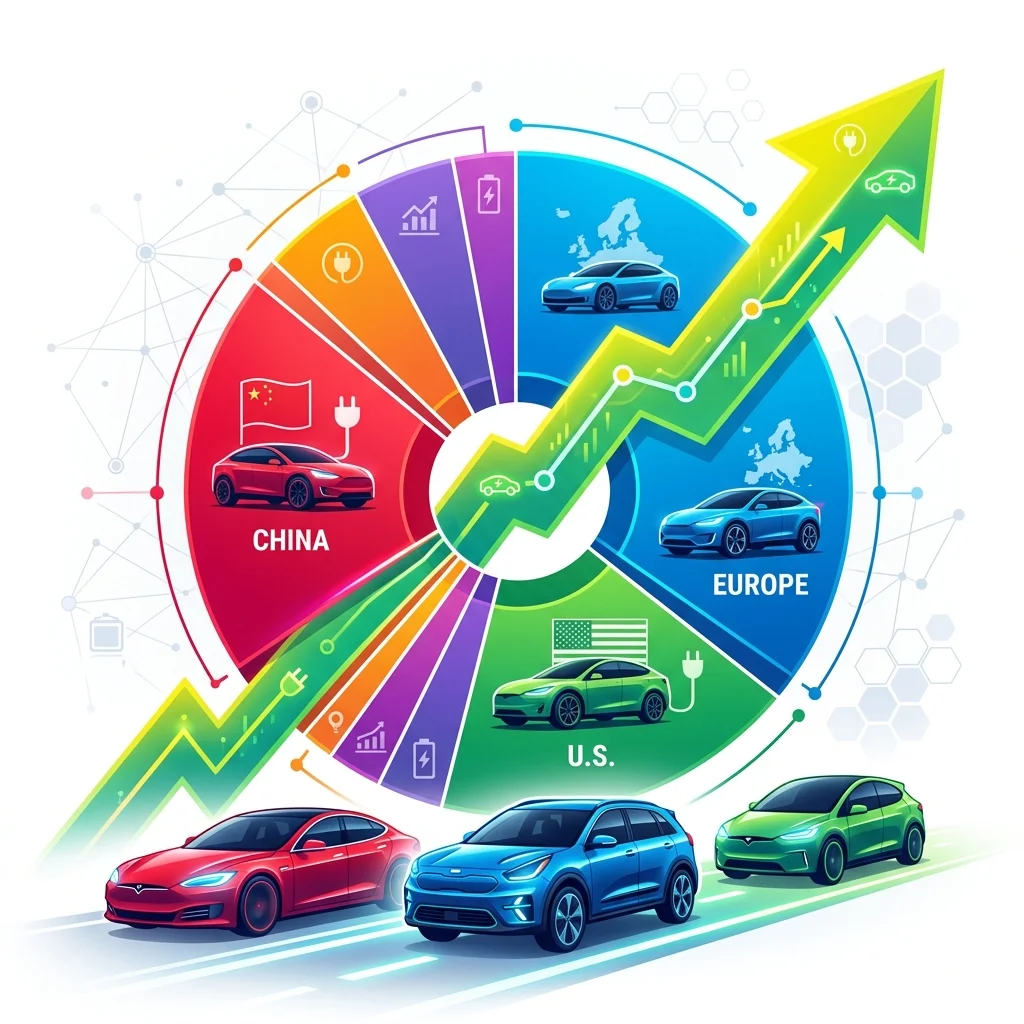
Based on the IEA Global EV Outlook 2026, global electric car sales exceeded 20 million in 2025, capturing 25% of new car sales. Battery electric vehicles (BEVs) regained share after a two-year decline, while China remained the dominant market despite slowing growth. Europe rebounded sharply, but the U.S. stagnated below 10%. This article goes beyond the headlines to uncover the hidden economic logic: the recalibration of supply chains, policy-driven demand shocks, and the emergence of ‘third-market’ accelerators. It explores what these trends mean for battery mineral demand, manufacturing overcapacity, and the pace of electrification in emerging economies.

Electric Mobility Market 2025–2034: Solid-State Batteries, Policy Drivers, and the Reshaping of Global Supply Chains
E Mobility

Electric Mobility Market 2025–2034: Solid-State Batteries, Policy Drivers, and the Reshaping of Global Supply Chains

The global electric mobility market is projected to surge from $768.56 billion in 2025 to $5.73 trillion by 2034, driven by a 24.68% CAGR. Asia Pacific leads with a 61.58% share, while solid-state batteries promise a step-change in performance—Toyota targets 2026 and BMW partners with Solid Power. This article explores the hidden economic logic behind market growth: how falling lithium-ion costs and stricter emission norms are accelerating adoption, but also how solid-state technology threatens to upend incumbent battery supply chains. We analyze regional dominance, the post-pandemic recovery, and what Ford’s 2021 fossil-fuel phase-out signals for legacy automakers. Deep industry insights reveal that the real battle will be over raw material access, manufacturing capacity, and the ability to scale next-generation batteries without disrupting current production lines.

Electric Mobility Trends: How Infrastructure, Policy, and Shared Mobility Are Driving EV Adoption in 2024
E Mobility

Electric Mobility Trends: How Infrastructure, Policy, and Shared Mobility Are Driving EV Adoption in 2024

Electric vehicle sales surged in 2023, fueled by battery improvements, expanding model availability, and growing interest in shared mobility and electric buses. However, uneven charging infrastructure and slower charging speeds remain bottlenecks. This article examines the interplay between technology advancements, government incentives, and public-private partnerships that are shaping the next wave of electric mobility. It also explores how mobility-as-a-service trends could fundamentally alter vehicle ownership and battery supply chains, offering a deeper look at the market patterns often overlooked in mainstream reports.

EV Sales Statistics 2026: Global Growth, Market Shifts, and Used Car Trends
E Mobility

EV Sales Statistics 2026: Global Growth, Market Shifts, and Used Car Trends

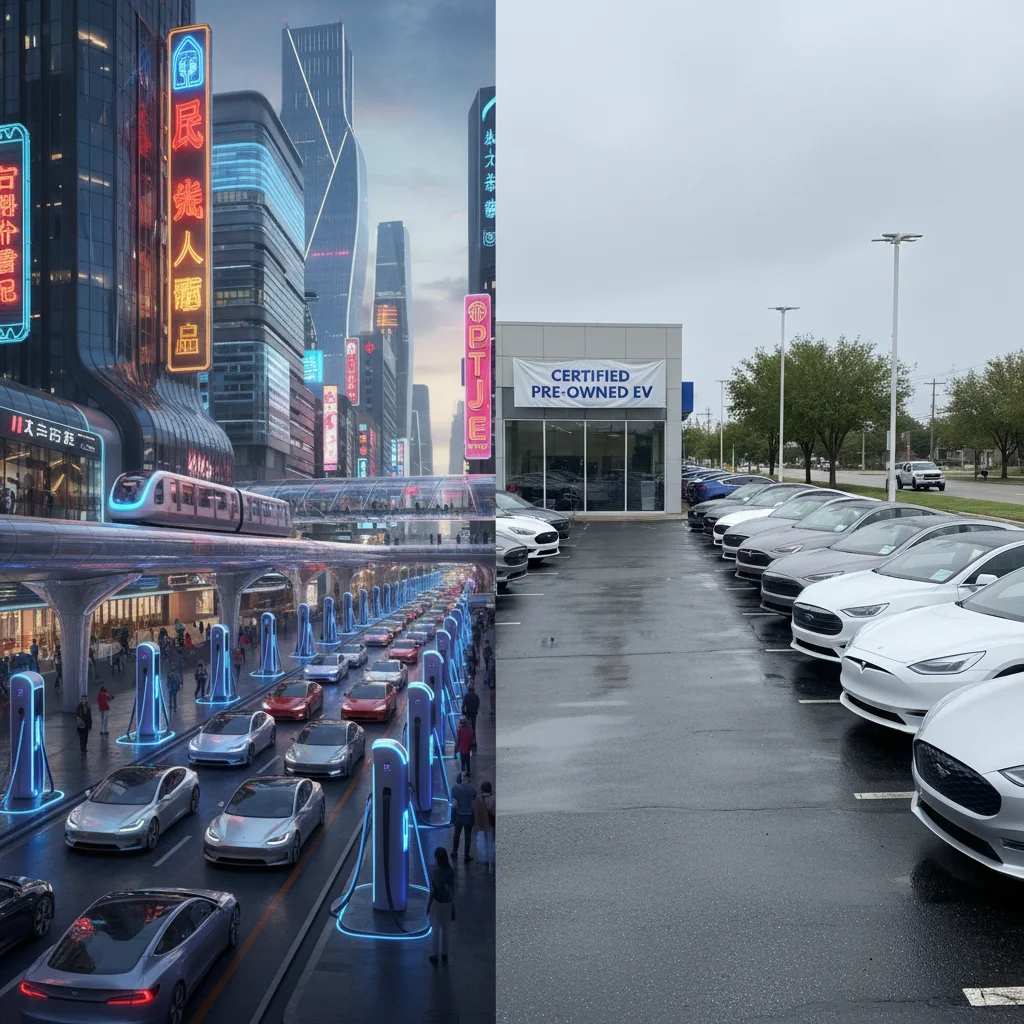
Global EV sales reached approximately 20.7 million in 2025, a 20% increase from 2024, as electric vehicles crossed 20% of worldwide light-vehicle sales. While China and Europe continue to lead in adoption, the U.S. market saw its share hover near 9-10% with a late-2025 pullback after incentive changes. A major competitive shift saw BYD surpass Tesla in annual global deliveries, while Tesla’s U.S. market share declined to the mid-40% range. Meanwhile, the used EV market is expanding rapidly as three- to five-year-old vehicles enter inventory at discounted prices, reshaping affordability and residual values. This article analyzes the underlying trends, regional dynamics, and long-term implications for supply chains and industry strategy.

Global EV Sales Surge to 20 Million in 2025: China Leads, U.S. Lags, and BYD Overtakes Tesla
E Mobility

Global EV Sales Surge to 20 Million in 2025: China Leads, U.S. Lags, and BYD Overtakes Tesla

Global electric vehicle sales reached approximately 20.7 million units in 2025, a 20% increase from 2024, with EVs now accounting for over 20% of all light-vehicle sales worldwide. China continues to dominate, with over 50% of new car sales being electric, while Europe climbs to 28–30% and the U.S. remains stuck at 9–10%. BYD surpassed Tesla as the global EV volume leader, selling well over 2 million units, while Tesla's U.S. market share dropped to the mid-40% range. The record December 2025 sales of 2.1 million units underscore a robust but uneven market. This article dives into the regional dynamics, competitive shifts, and what the 2026 outlook means for automakers, policymakers, and supply chains.

The Electric Vehicle Market in 2025–2026: Global Surge, U.S. Hesitation, and the Dawn of the Used EV Era
E Mobility

The Electric Vehicle Market in 2025–2026: Global Surge, U.S. Hesitation, and the Dawn of the Used EV Era

Global EV sales hit 20.7 million units in 2025, a 20% year-over-year increase, with China crossing the 50% adoption threshold. The U.S., meanwhile, lagged at 9–10% share, even as its year-over-year volume grew at low teens. The deeper story is a market shift from early adoption to a second phase defined by slowing brand dominance (Tesla’s share fell to mid-40%), price compression, and a rapidly maturing used EV market. This article explores the structural divergence between markets, the rise of BYD, and how the flood of three- to five-year-old EVs is reshaping supply chains, residual values, and consumer confidence.

The Great Decoupling: How 2026 EV Sales Data Reveals a Market Shifting from Hype to Hard Economics
E Mobility

The Great Decoupling: How 2026 EV Sales Data Reveals a Market Shifting from Hype to Hard Economics

Global EV sales hit 20.7 million units in 2025, a ~20% year-over-year increase, with China solidifying its 50% market share dominance. Yet beneath this headline growth, a hidden decoupling is reshaping the industry: US growth has slowed to low-teens percentages and experienced a Q4 2025 pullback, while BYD’s displacement of Tesla marks the end of the ‘first-mover premium.’ This article moves beyond unit counts to expose the three structural shifts—incentive fatigue, second-phase adoption unevenness, and the used-EV flood—that will define the actual 2026 battlefield. We examine why volume alone is a misleading metric and what the data actually signals for automakers, suppliers, and buyers navigating a market that is growing, but in fundamentally different ways than before.

Beyond Electric Vehicles: The Nine Megatrends Reshaping Sustainable Mobility
E Mobility

Beyond Electric Vehicles: The Nine Megatrends Reshaping Sustainable Mobility

The sustainable mobility landscape is fragmenting under the pressure of urbanization, regulatory pushes, and tech breakthroughs. While electric vehicles capture headlines, a deeper shift is underway: nine interconnected megatrends—from space-based technologies to AI disruption—are redefining how cities compete for space and how infrastructure is funded. This article explores the hidden economic logic behind these trends, reveals why European Union Recovery Fund investments are just one piece of a larger puzzle, and outlines actionable investment opportunities for stakeholders navigating the multi-modal, data-driven future of transport.

CES 2026: The AI-Native Car Is Here – How Software-Defined EVs Are Rewriting the Rules of Mobility
E Mobility

CES 2026: The AI-Native Car Is Here – How Software-Defined EVs Are Rewriting the Rules of Mobility

CES 2026 marked a definitive shift: electric vehicles are no longer just faster, quieter cars. They have become AI-native platforms—continuously learning, cloud-connected, and shared. This article unpacks the hidden economic logic behind the transition from hardware acceleration to software-defined mobility. We analyze how Physical AI, robotaxi subscription models, and on-device generative AI are collapsing the boundaries between automotive, robotics, and cybersecurity. Beyond the flashy demos, we reveal the supply chain disruptions and long-term market patterns that will define the next decade of electric mobility.

2025 Electric Vehicle Sales Surge: Global Shifts, Regional Divergence, and the New Industrial Logic
E Mobility

2025 Electric Vehicle Sales Surge: Global Shifts, Regional Divergence, and the New Industrial Logic

Based on the IEA Global Energy Review 2026, global electric car sales surged by over 20% in 2025, reaching 21 million units. This analysis unpacks the hidden logic behind the numbers: China crossing the 50% sales share threshold, Europe becoming the fastest-growing major market despite subsidies, and the unexpected 80% growth in emerging economies. It reveals a bifurcating world where policy, infrastructure, and industrial strategy create distinct winners. We go beyond the topline to explore the supply chain implications of trucking electrification tripling, the fragility of the US market, and what the ''Global South'' boom means for manufacturing hubs.

Beyond the 17 Million Mark: How China’s Policy Shift and Europe’s Subsidy Stagnation Are Redefining Electric Mobility in 2025
E Mobility

Beyond the 17 Million Mark: How China’s Policy Shift and Europe’s Subsidy Stagnation Are Redefining Electric Mobility in 2025

The global electric car market crossed a historic threshold in 2024, with sales exceeding 17 million units and over 20% of new cars sold being electric. However, beneath the headline growth lies a complex split: China surged to almost 50% market share driven by aggressive trade-in subsidies, while Europe stagnated due to subsidy withdrawals in Germany and France. This article unpacks the hidden supply chain implications, the surprising rise of Plug-in Hybrids (PHEVs) and Extended-Range EVs (EREVs), and what the 1 million barrels per day oil displacement means for energy security. Based on the IEA’s Global EV Outlook 2025, we analyze how policy divergence is reshaping the race for electric mobility.