Beyond the 71,482 Number: The Hidden Economics and Future of America''s EV Fast Charging Network
The US Department of Energy reports 71,482 operational EV fast chargers as of April 2026. This article moves beyond the headline figure to analyze the underlying economic logic and strategic implications of this infrastructure milestone. We examine the pace of deployment against EV adoption curves, the shift from urban convenience to interstate necessity, and the emerging supply chain and business model challenges. By dissecting what this number truly represents—and what it hides—we forecast the critical next phase for America's charging network, exploring the long-term impact on utilities, real estate, and the viability of mass EV ownership.
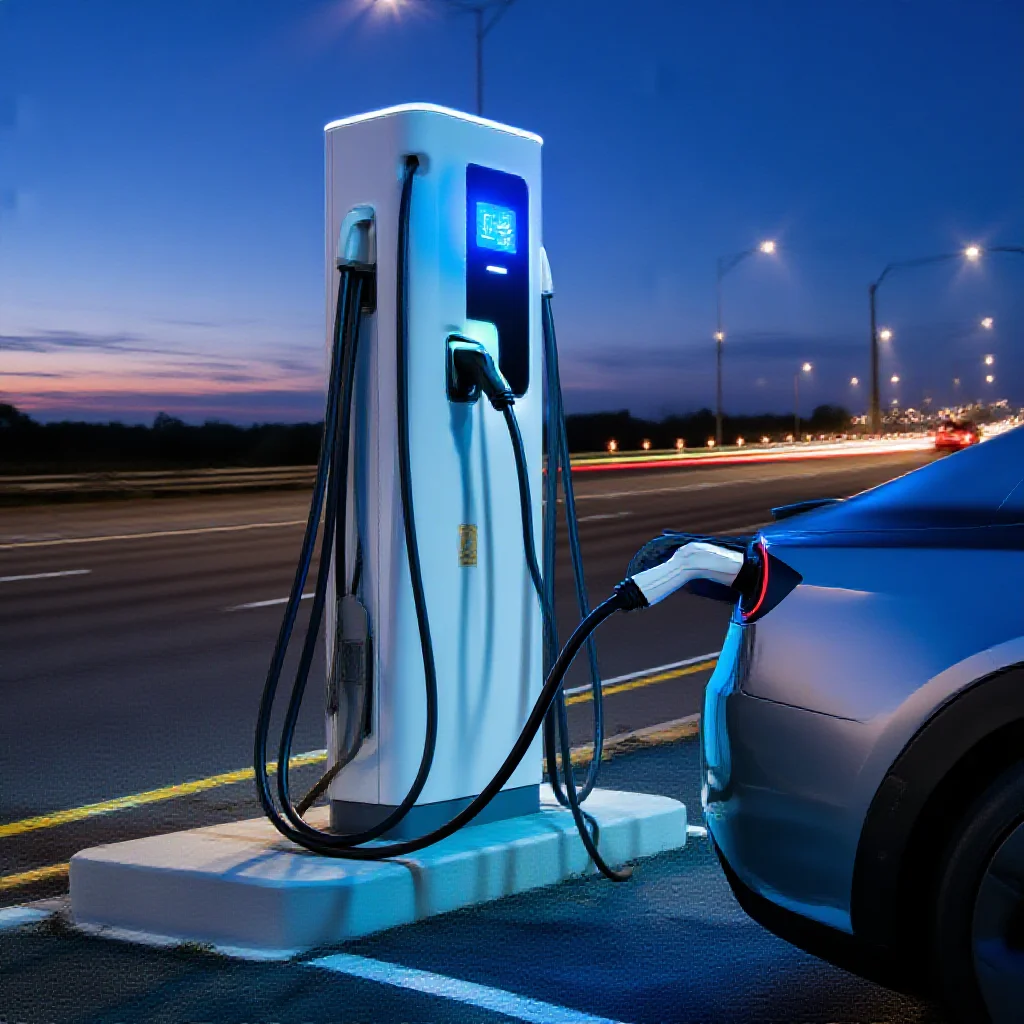
Beyond the 71,482 Number: The Hidden Economics and Future of America's EV Fast Charging Network
The 71,482 Benchmark: More Than Just a Number
The United States electric vehicle charging infrastructure has reached a quantifiable milestone. As of April 9, 2026, there are 71,482 operational electric vehicle fast chargers in the country (Source 1: [Primary Data from US Department of Energy's Alternative Fuels Data Center]). This figure serves as the definitive baseline for the nation's public direct current fast charging capacity. The numerical growth represents a significant capital and engineering deployment. The critical analytical question is whether this deployment velocity aligns with the adoption curve of electric vehicles themselves. Historical installation rates must be compared against EV sales figures and future federal and state targets to determine if infrastructure is leading, matching, or lagging behind vehicle penetration.
The term "operational" requires specific examination. Within industry and regulatory frameworks, an operational charger is one that is installed, connected to the electrical grid, and available for public use. This status does not inherently guarantee reliability, average power output, or uptime percentage. The distinction between an installed unit and a reliably functional one is a central factor in user experience and network credibility. The 71,482 count is a necessary but insufficient metric for assessing the network's readiness for mass adoption.
![An infographic map of the United States with dots representing charger locations, highlighting concentration vs. scarcity areas.]
The Hidden Economic Logic: From Convenience to Critical Utility
The deployment strategy for these 71,482 chargers reveals an evolving economic logic. Initial investments were often characterized as loss-leading amenities for retail establishments or brand-specific customer retention tools. The current phase indicates a shift toward treating fast charging as a core utility and a standalone revenue-generating asset. This transition is altering investment calculations, favoring sites with higher projected utilization rates and longer dwell-time monetization potential beyond the electricity sale.
Geographic distribution of the infrastructure follows a distinct economic rationale. Dense urban clusters serve local residents without home charging and ride-hailing fleets, prioritizing convenience. Conversely, placements along interstate corridors are a necessity-driven investment, often less profitable per unit but essential for enabling long-distance travel and alleviating range anxiety. The economic unattractiveness of low-traffic routes creates the persistent "charging desert" dilemma, where market forces alone are insufficient to build a nationally equitable network. Furthermore, the scale of deployment is applying sustained pressure on the underlying supply chain, including electrical switchgear, copper cabling, and power electronics, accelerating a race for scalable domestic manufacturing to ensure resilience and meet future demand.
![A conceptual illustration showing money flow from EVs to the grid, to charger manufacturers, and to utility companies.]
The Credibility Anchor: Why the DOE's Data is the Gold Standard
The authority of the 71,482 figure stems from its source. The US Department of Energy's Alternative Fuels Data Center (AFDC) operates as the authoritative, non-commercial aggregator for this data (Source 1: [Primary Data]). This function provides a singular source of truth in a market populated by multiple network operators with varying reporting standards. The AFDC's role in preventing market confusion and guiding coherent public and private investment decisions is a foundational element of infrastructure planning. Its data acts as a verification tool against corporate claims and a baseline for policy assessment.
However, the current public data picture has identifiable limitations. The operational count is a foundational metric, but it lacks accompanying granular data critical for a full systems analysis. Metrics such as average charger uptime (reliability), utilization rates (economic efficiency), distribution of power output capabilities (150kW vs. 350kW), and average cost per kilowatt-hour are not systematically reported in a unified format. The inclusion of these performance and economic indicators would provide a substantially more complete understanding of network maturity and market dynamics.
![A clean, professional screenshot or stylized representation of the Alternative Fuels Data Center dashboard or report interface.]
The Slow Analysis: Forecasting the Next Inflection Point
The next phase of infrastructure development will be defined by challenges beyond the mere counting of physical plugs. The coming logistical bottleneck is grid capacity. Widespread deployment of 350kW and higher-powered chargers, particularly at highway sites, requires unprecedented local grid upgrades and substation investments. The simultaneous demand from multiple vehicles at a single site can approach the power draw of a small town, presenting a complex challenge for utility planning and interconnection timelines.
Concurrently, the business model for charging networks is poised for evolution. The revenue stream will likely expand beyond simple per-kWh sales. Integrated energy services represent the next frontier, including vehicle-to-grid (V2G) applications, onsite battery storage to mitigate demand charges and integrate intermittent renewables, and dynamic load management. These services could transform charging stations into decentralized grid assets.
Projecting a 2030 scenario necessitates modeling based on anticipated EV fleet size. The required charger count and, more critically, the total power delivery capacity of the network must be forecast. This projection highlights the gap between current deployment rates and future needs. Bridging this gap will likely require sustained policy interventions focused on streamlining permitting, incentivizing grid modernization, and ensuring equitable access to capital for deployment in underserved economic areas.
![A split-image graphic: one side shows a detailed electrical diagram of a charging station connected to the grid, the other shows a futuristic highway with multiple charging plazas integrated with solar canopies.]