Electric Mobility Trends 2025: The Hidden Supply Chain Revolution Behind EV Adoption
This article takes a deep, slow-analysis approach to electric mobility trends, moving beyond headline EV sales figures to uncover the underlying economic logic and supply chain pressures. We examine how rising battery demand is reshaping global mining, refining, and manufacturing—from lithium and cobalt bottlenecks to gigafactory capacity wars. By integrating findings from the IEA's Global EV Outlook, BloombergNEF's battery price surveys, and trade reports from key mineral producers, we reveal a market that is less about consumer enthusiasm and more about raw-material geopolitics and cost parity thresholds. The article also explores the lesser-known role of recycling infrastructure and solid-state battery timelines, offering investors and policymakers a grounded view of where the industry truly stands.
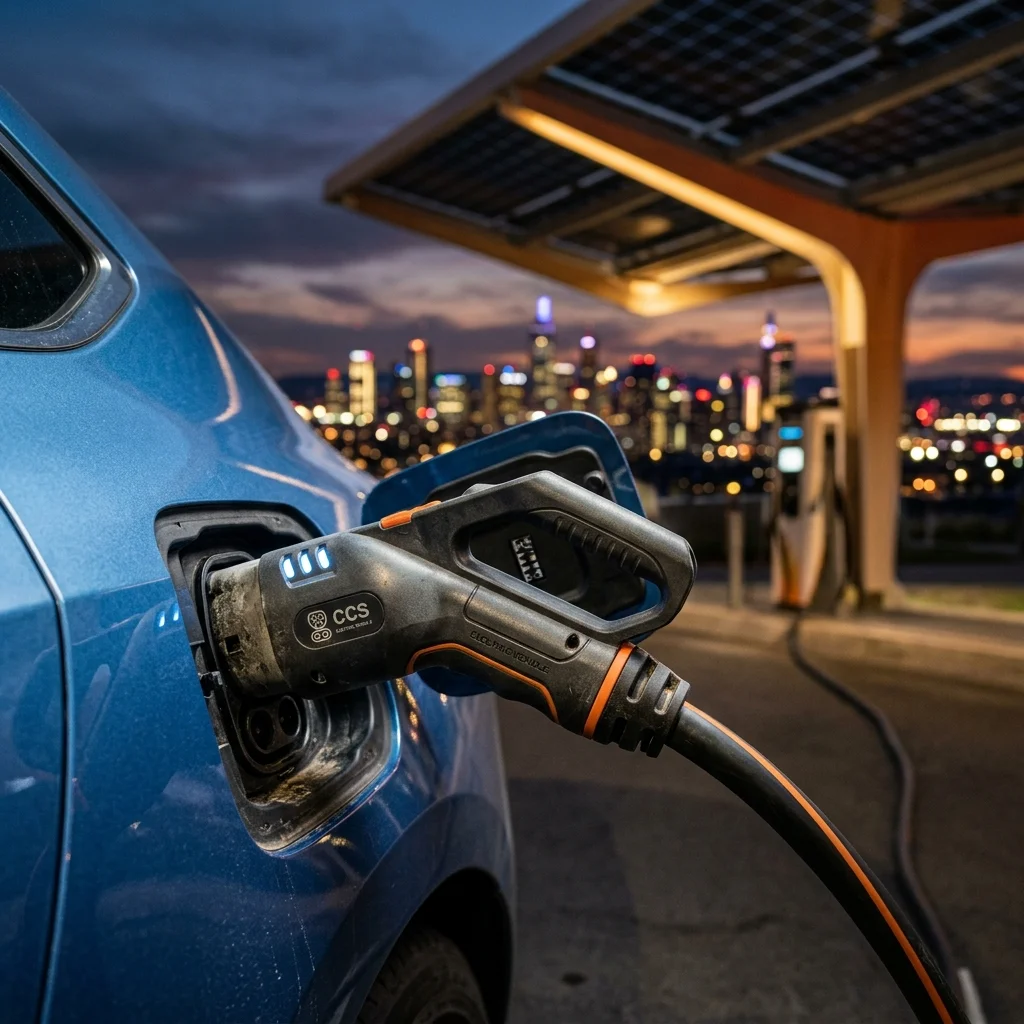
Electric Mobility Trends 2025: The Hidden Supply Chain Revolution Behind EV Adoption
1. EV Sales Growth Masks a Deeper Supply Chain Reality
Global electric vehicle registrations hit a record 14.2 million in 2024, up 35% year-over-year according to the IEA’s Global EV Outlook 2024. At first glance, these numbers paint a picture of unstoppable consumer momentum. But beneath the surface, a different story is unfolding—one defined not by showroom footfall but by geological constraints and multi-year mining project lead times.
The core tension in electric mobility today is between the economic logic of scale manufacturing and the stubborn reality of mineral extraction. While automakers ramp up production lines in quarters, a lithium mine takes 6 to 10 years from discovery to first output. The result: a growing gap between battery demand projections and raw material availability. The IEA estimates that by 2030, lithium demand could outpace supply by 20–30% under a net-zero scenario, even assuming aggressive recycling scale-up.
Cobalt and nickel face similar pressures. The Democratic Republic of Congo supplies over 70% of the world’s cobalt, but political instability and artisanal mining abuses have pushed automakers to shift toward lower-cobalt chemistries. Nickel, critical for high-energy-density batteries, suffers from a split market: Class 1 nickel suitable for batteries is far scarcer than Class 2 nickel used in stainless steel. Indonesia has become the world’s largest nickel producer, but its reliance on coal-powered processing plants raises carbon footprint questions that undermine the very premise of green mobility.
[IMAGE: Line chart comparing global EV sales growth (2019-2024) vs. lithium mine output growth, with annotations showing the widening gap and key mine project timelines from S&P Global data.]
The slow-analysis takeaway here is that EV adoption is not simply a consumer demand story. It is a raw-material geopolitics story. Until mining investment catches up—or battery chemistry fundamentally changes—the supply chain will remain the invisible hand that either accelerates or stalls the transition.
2. The Battery Cost Curve Is Bending—But Not Where You Think
Battery pack prices have fallen dramatically over the past decade, from over $1,100/kWh in 2010 to around $130/kWh in 2024, according to BloombergNEF’s latest battery price survey. The milestone of $100/kWh—widely considered the threshold for EV cost parity with internal combustion vehicles—has been achieved for lithium iron phosphate (LFP) chemistries, which now dominate the Chinese market.
Yet the cost curve is far from uniform. High-nickel chemistries like NMC 811 and NCA remain stuck at $120–$140/kWh due to persistent volatility in cobalt and nickel prices. Cobalt prices swung from $35/kg in 2020 to over $80/kg in 2022 and back to $25/kg in 2024, creating havoc for procurement teams. Nickel suffered its own drama: the London Metal Exchange suspended nickel trading in March 2022 after a short squeeze that exposed the market’s fragility.
A deeper, often-overlooked cost driver is gigafactory scrap rates. In a typical battery cell production line, 5–10% of the output ends up as scrap due to coating defects, electrolyte contamination, or formation failures. For a 20 GWh factory, that scrap represents $200–$400 million in lost value annually. Benchmark Mineral Intelligence estimates that global gigafactory scrap could reach 200 GWh by 2027—equivalent to the entire battery demand of Europe in 2023. Recycling that scrap is technically possible, but the economics are challenging because the material must be reprocessed into precursor chemicals, not directly back into cells.
[IMAGE: Infographic showing cost breakdown of a typical NMC battery pack (raw materials 50%, manufacturing 25%, R&D 10%, other 15%), with a callout box on scrap rate impact from Benchmark Mineral Intelligence data.]
The result is a bifurcated market: LFP batteries drive low-cost EVs and stationary storage, while high-nickel batteries serve premium vehicles where range is paramount. But the cost parity narrative for high-nickel chemistries remains elusive, and the supply chain must absorb the inefficiency of scrap before true economies of scale are achieved.
3. Geopolitics of Electric Mobility: The New Lithium OPEC
The global lithium supply chain is alarmingly concentrated. According to the USGS Mineral Commodity Summaries 2024, Australia produced 47% of the world’s lithium in 2023, followed by Chile (30%), China (14%), and Argentina (5%). But refining is even more concentrated: China controls approximately 60% of global lithium chemical processing, converting spodumene concentrate from Australia and brine from South America into battery-grade lithium carbonate and hydroxide.
This concentration has fueled fears of a “lithium OPEC” scenario, where a handful of nations control supply and prices. Chile’s recent proposal to nationalize its lithium industry, coupled with export controls on lithium carbonate from China in late 2022, sent shockwaves through the market. Argentina, meanwhile, has seen provincial governments impose export taxes as high as 12% on lithium chemicals, while Bolivia’s vast salt flats remain largely undeveloped due to political instability and technical challenges.
The trade flows are complex. Australia ships spodumene to China for processing; China exports lithium hydroxide globally; Chile and Argentina export brine-based lithium carbonate mainly to Asia. Any disruption—a trade war, a mining moratorium, a shipping route blockage—can cascade through the entire EV supply chain within weeks. The IEA’s Global EV Outlook notes that a 10% shortfall in lithium supply would reduce global EV production by 2–3 million units annually under current battery chemistry mix.
[IMAGE: World map with bubble sizes indicating lithium reserves (Chile, Australia, Argentina, China, Bolivia) and refining capacity (China dominated), with arrows showing trade flows from mines to refineries to battery factories.]
Beyond lithium, cobalt’s geographic risk is even more extreme. The DRC’s production is heavily dependent on Chinese-owned refineries, and the country’s governance challenges have prompted the European Union and United States to fund alternative mining projects in Australia and Canada. These “friend-shoring” efforts are accelerating, but new mines take years to come online. The geopolitics of electric mobility will define the pace of adoption far more than consumer incentives or charging infrastructure over the next five years.
4. Charging Infrastructure: The Silent Bottleneck
While much attention is paid to battery technology, the physical infrastructure of charging is emerging as a quieter but equally critical constraint. The deployment of 350 kW ultra-fast chargers has grown rapidly, with Tesla’s Supercharger network and the IONITY consortium in Europe leading the way. But these chargers are only as effective as the grid behind them.
A single 350 kW charger demands as much power as 100 average households. When six such chargers are installed at a highway rest stop, the peak demand can exceed 2 MW—enough to require a dedicated substation and transformer upgrades that can take 18–24 months for utility approval. The EIA estimates that U.S. grid upgrade costs for widespread EV adoption could reach $50–$100 billion by 2030, with transformer lead times stretching to 60 weeks in some regions.
The economics of charging stations are even more challenging. McKinsey’s EV infrastructure profitability study found that most public fast-charging stations operate at a loss without subsidies. Utilization rates average just 15–20% in the U.S., and even in Europe’s most mature markets like Norway, stations rarely exceed 30% utilization. At a capital cost of $100,000–$200,000 per 150 kW charger, the payback period can exceed 10 years—far beyond what most private investors will accept.
[IMAGE: Photo of a busy highway charging station with a long queue of EVs waiting, overlaid with a diagram showing peak demand (2 MW) vs. typical transformer capacity (500 kVA), and a callout box on EIA grid upgrade cost estimates.]
The bottleneck is not just about hardware. Software interoperability, payment systems, and maintenance reliability all factor into the user experience. A broken charger at a highway rest stop can create a 30-minute detour for a driver on a long trip. Until utilization rates rise and grid upgrades are synchronized with charger deployment, the charging experience will remain a drag on adoption—especially for apartment dwellers and long-haul drivers.
5. Recycled Lithium vs. Mined Lithium: The Circular Economy Mirage
The promise of a circular battery economy is seductive: mine once, recycle forever. Yet the reality is sobering. Current recycling rates for lithium-ion batteries from EVs are below 5% globally, excluding the well-established lead-acid battery recycling stream. The International Energy Agency projects that by 2030, recycled battery materials could meet only 10–15% of total demand.
Why is scaling so hard? Three reasons dominate. First, collection logistics: EV batteries last 8–15 years in vehicles, so the first wave of retired batteries from early Tesla Model S and Nissan Leaf cars is only now beginning to trickle in. Second, recycling processes vary widely—pyrometallurgical smelting recovers cobalt and nickel but loses lithium to slag, while hydrometallurgical methods achieve higher recovery rates but require expensive chemical processes and generate wastewater. Third, and most critically, the economics of recycling depend on commodity prices. When lithium prices fell from $80,000/ton in late 2022 to $15,000/ton in early 2024, many recycling startups found their business models broken.
China, however, has taken a lead in battery recycling, driven by government mandates that require automakers to take back end-of-life batteries. The country processes over 100,000 tons of EV battery waste annually, far more than any other region. Europe is catching up under the new Battery Regulation, which mandates minimum recycled content in new batteries (6% lithium, 6% nickel, 16% cobalt by 2031). The U.S. Inflation Reduction Act provides tax credits for recycled battery materials, but domestic processing capacity remains minimal.
[IMAGE: Diagram showing the closed-loop battery lifecycle: mining → refining → cell production → EV use → recycling → precursor chemicals, with callout boxes on current recovery rates (<5%) and projected 2030 rates (10-15%), sourced from IEA and Benchmark Mineral Intelligence.]
The slow-analysis perspective is that recycling will not solve the lithium shortage in the near term—it is a 2035+ solution. For the next decade, mined lithium will dominate, and the industry must navigate the geopolitical and environmental trade-offs involved. Meanwhile, solid-state batteries, often hailed as the next breakthrough, face their own timelines: Toyota and Samsung SDI target commercial production around 2027–2028, but scaling from pilot lines to 100 GWh factories will take another 5–8 years. The hidden supply chain revolution is less about flashy technology and more about the gritty, unglamorous work of building mines, upgrading grids, and optimizing recycling at scale.
---
*This article integrates data from the IEA Global EV Outlook 2024, BloombergNEF’s Battery Price Survey (2024), USGS Mineral Commodity Summaries (2024), Benchmark Mineral Intelligence, McKinsey’s EV infrastructure profitability study, and the EIA’s grid upgrade cost estimates. All figures are as of Q4 2024.*