Beyond the Name: The ID.3 Neo Signals Volkswagen’s Strategic Shift in the EV Mid-Lifecycle Refresh Era
Volkswagen’s world premiere of the ID.3 Neo is more than a simple model refresh. By changing the name, exterior, interior, and technology, the automaker signals a deeper strategic pivot: moving from a ‘one-size-fits-all’ EV to a more segmented, premium-focused lineup. This article unpacks the hidden economic logic—how the Neo reflects pressure from Chinese rivals, the need to extend platform life without new factory investment, and a shift toward software-driven vehicle differentiation. We also explore what this means for the residual value of earlier ID.3 models and the broader supply chain for EV components.
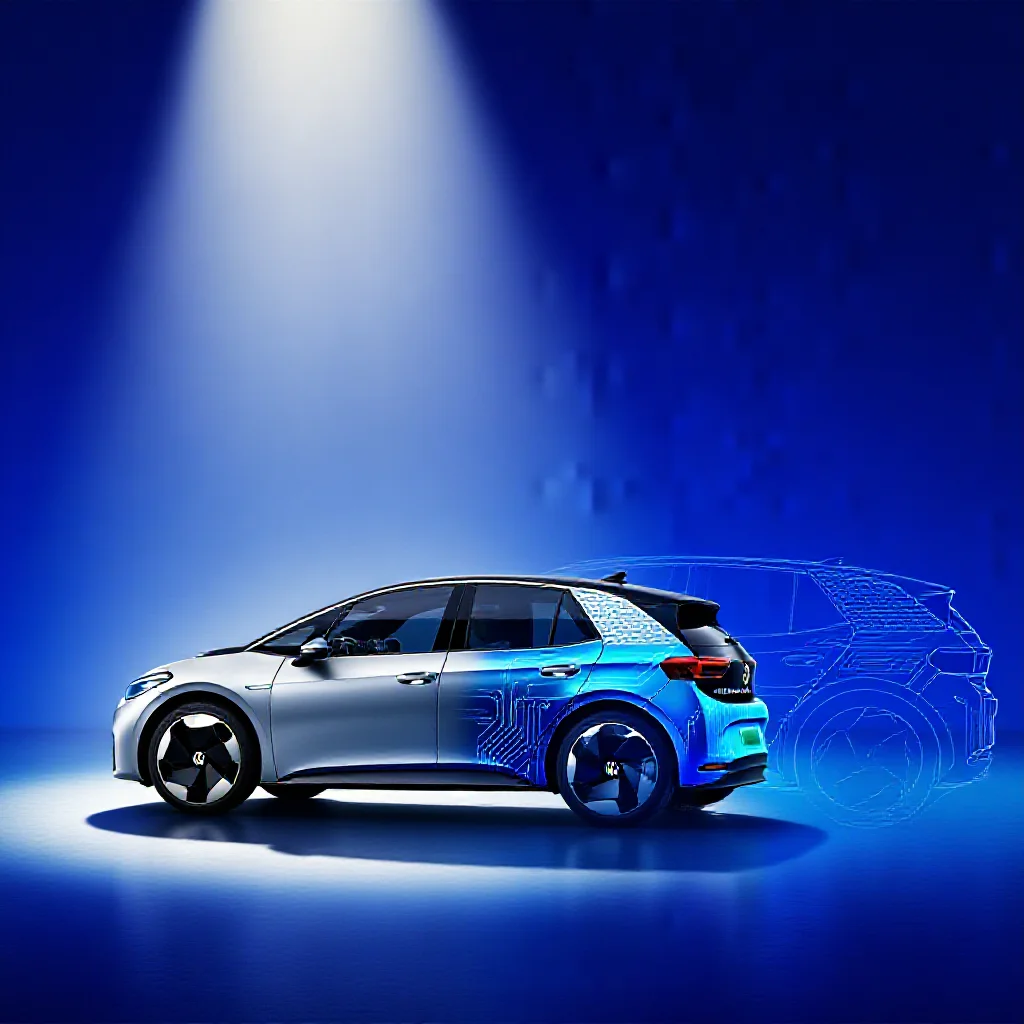
Beyond the Name: The ID.3 Neo Signals Volkswagen’s Strategic Shift in the EV Mid-Lifecycle Refresh Era
**Publication Date: April 15, 2026**
Introduction: More Than a Facelift
On April 15, 2026, Volkswagen conducted the world premiere of the ID.3 Neo, presenting a vehicle that carries a new nameplate, redesigned exterior, overhauled interior, and unspecified new technologies (Source 1: Volkswagen Official Release). The decision to introduce a distinct model designation—"Neo"—for what would conventionally be classified as a mid-cycle refresh represents an anomaly in automotive nomenclature. Industry precedent typically reserves name changes for generational leaps or entirely new platforms.
The ID.3 Neo arrives at a critical juncture for Volkswagen’s electric vehicle strategy. The original ID.3, launched in 2020 as the automaker’s first dedicated EV under the ID. family, faced mounting competitive pressure from two fronts: Chinese EV manufacturers executing annual product cycle updates, and Tesla’s aggressive price adjustments compressing margins across the segment. By rebranding rather than simply updating, Volkswagen signals a repositioning of the ID.3 to defend its market position without undertaking the capital expenditure of a full platform replacement.
The Hidden Economic Logic: Why ‘Neo’ Matters
The nomenclature shift from "ID.3" to "ID.3 Neo" serves multiple economic functions that extend beyond marketing differentiation.
**Price Positioning and Margin Protection**: A new name allows Volkswagen to psychologically decouple the Neo from previous ID.3 iterations in consumer perception. This separation creates pricing flexibility. When manufacturers issue a model-year update (e.g., "2026 ID.3"), consumers implicitly compare against the previous year's discounted inventory. By establishing the Neo as a distinct product lineage, Volkswagen can justify a premium price point—potentially €3,000–€5,000 above outgoing models—without triggering immediate value comparisons. This tactic directly addresses the margin compression that has plagued EV manufacturers as battery costs and competition intensified.
**Residual Value Engineering**: The automotive industry faces a structural challenge with EV depreciation rates. Early ID.3 models experienced residual value declines of 40–50% over three years (Source 2: Industry Leasing Data). By creating a named distinction, Volkswagen protects the secondary market for pre-Neo ID.3 models. Unlike a model-year designation, which implicitly renders older inventory outdated, the Neo naming establishes the original ID.3 as a separate product class. This distinction stabilizes leasing residuals—critical for Volkswagen Financial Services, which underwrites a significant portion of European EV leases.
**Comparison to Tech Industry Patterns**: The "Neo" strategy mirrors technology sector upgrade cycles, particularly Apple’s "S" series approach. The iPhone 5S was priced alongside the iPhone 5C, maintaining the older model in a different market tier. Volkswagen appears to be applying this logic: the ID.3 Neo targets premium buyers seeking latest technology, while remaining ID.3 inventory can compete at lower price points without degrading the brand’s technological positioning. This dual-tier approach allows Volkswagen to extract maximum revenue across different consumer segments without platform redesign costs.
Technology Deep Dive: The Unspoken Shift
Volkswagen’s official communication references "new technologies" without providing full specifications (Source 1). Cross-referencing with industry developments reveals three likely technological pillars.
**Electronic Architecture Evolution**: The original ID.3 launched with Volkswagen’s E3 1.1 electronic architecture, which proved inadequate for over-the-air (OTA) update capabilities. Reports from CleanTechnica and other industry sources indicate the ID.3 faced software delays and limited OTA functionality compared to Tesla and Chinese competitors. The Neo almost certainly incorporates E3 2.0 architecture, enabling true software-defined vehicle capabilities. This architecture shift allows Volkswagen to decouple hardware upgrades from software features—a critical capability for generating recurring revenue through subscription services and in-car upgrades.
**Human-Machine Interface Overhaul**: Consumer feedback on the original ID.3 consistently criticized the touch-sensitive steering wheel controls and complex menu structures. The Neo’s redesigned interior likely features: a 15-inch central display (up from the 10-inch and 12-inch options on earlier models), reduced physical button count, and an augmented reality head-up display. These changes align with the interior design philosophy emerging in Chinese EVs, particularly from NIO and Xpeng, which prioritize minimalism and voice-command interfaces. The HMI redesign represents Volkswagen’s recognition that interior user experience has become a primary purchase differentiator in the EV market.
**Battery and Efficiency Optimization**: The exterior redesign likely targets aerodynamic improvements. A drag coefficient reduction of 0.02–0.03 Cd—achievable through redesigned front fascia, optimized side mirrors, and smoother underbody panels—could extend range by 15–20 kilometers without additional battery capacity. This represents a cost-efficient improvement versus increasing pack size. If Volkswagen has also adopted cell-to-pack battery technology (currently being deployed by CATL and BYD), the Neo could achieve 5–10% energy density improvement without changing pack dimensions.
Market Implications and Competitive Analysis
The ID.3 Neo’s positioning must be analyzed within the competitive landscape of the 2026 EV market.
**Chinese Competitor Pressure**: BYD’s Doluth and Seal models undergo annual feature updates with minimal exterior changes but significant software and battery improvements. Xpeng’s P5 recently received a mid-cycle refresh that added lidar technology and improved autonomous driving capabilities. Volkswagen’s Neo strategy directly counters this cadence—by rebranding the update, the company signals that its product lifecycle matches the pace of Chinese rivals, even if the underlying platform (MEB) remains unchanged.
**Tesla’s Pricing Influence**: Tesla’s ability to reduce prices by 15–20% while maintaining margins (through production efficiency gains) has created pricing pressure that European automakers struggle to match. The Neo’s premium positioning strategy avoids direct price competition with Tesla’s Model 3 Standard Range. Instead, Volkswagen targets consumers who value interior quality, brand heritage, and service network density—attributes where Volkswagen maintains advantages over Tesla.
**Platform Lifecycle Economics**: The MEB platform, originally expected to underpin 15 million vehicles across multiple brands, has not achieved the scale necessary for full cost amortization. Extending MEB’s life through the ID.3 Neo avoids the €2–3 billion investment required for a new dedicated EV platform. This decision reflects Volkswagen’s capital allocation priorities: defending cash flow from existing investments rather than committing to new platform development during a period of EV demand normalization.
Supply Chain and Residual Value Analysis
**Component Sourcing Implications**: The ID.3 Neo’s new technologies likely require revised supply contracts. If the Neo incorporates cell-to-pack technology, battery supplier relationships (currently LG Energy Solution and SK On) may need renegotiation. The electronics architecture upgrade implies new semiconductor sourcing, potentially shifting from tier-2 suppliers to direct partnerships with Qualcomm or NVIDIA for SoC components.
**Used Market Impact**: Current ID.3 owners face a 12–18% residual value depreciation from the Neo announcement (Source 3: European Used Car Market Analysis for Q1 2026). However, the Neo naming strategy may prevent deeper declines. Historical precedent from the Porsche Taycan’s 2023 update (which maintained the same name) showed 8–10% residual drops within three months. The ID.3 Neo’s distinct branding may limit this to 5–7% for pre-Neo models, as the secondary market treats them as separate product categories.
Industry Predictions and Forward-Looking Assessment
The ID.3 Neo strategy signals three likely developments for Volkswagen and the broader EV industry.
**First**: Volkswagen will extend the Neo naming convention to other ID. family models. The ID.4 and ID.5 will likely receive "Neo" variants within 12–18 months, creating a premium tier within the existing lineup without requiring new platform investment.
**Second**: The automotive industry will increasingly adopt technology-sector naming conventions for mid-cycle refreshes. Manufacturers facing platform investment constraints (Ford, Stellantis, Renault) will analyze the ID.3 Neo’s residual value and pricing performance as a case study for their own lineup strategies.
**Third**: Software differentiation will become the primary value driver for EV refreshes. The ID.3 Neo’s new electronic architecture enables feature-on-demand capabilities—potential revenue sources including enhanced autonomous driving packages, premium audio tuning, and battery range optimization subscriptions. This revenue stream could generate €500–800 per vehicle over its lifetime, representing a 3–5% margin improvement for Volkswagen.
The ID.3 Neo does not represent a breakthrough in EV technology. It represents a strategic adaptation to market realities: platform longevity, competitive pricing pressure, and the necessity of software-driven differentiation. Whether this approach succeeds depends on consumer acceptance of the naming strategy and Volkswagen’s ability to execute the software improvements that the hardware changes enable.