Beyond the Frontline: How Ukraine''s Zero-Emission Drone Race is Redefining Aerial Logistics
While Ukraine''s defense industry garners headlines, a parallel, strategic innovation race is underway in zero-emission drone technology. Companies like AeroDrone, Hydroplane, and Kray Technologies are pioneering hydrogen fuel cell and advanced battery-electric systems, not merely for environmental benefits but to solve the critical operational constraint of flight endurance. This development reveals a deeper economic logic: Ukraine is leveraging wartime pressure to build a post-war competitive advantage in the global commercial drone market for logistics, agriculture, and inspection. This article analyzes the distinct technological pathways, the underlying supply chain implications, and how this niche focus could position Ukraine as an unexpected leader in sustainable aviation technology.
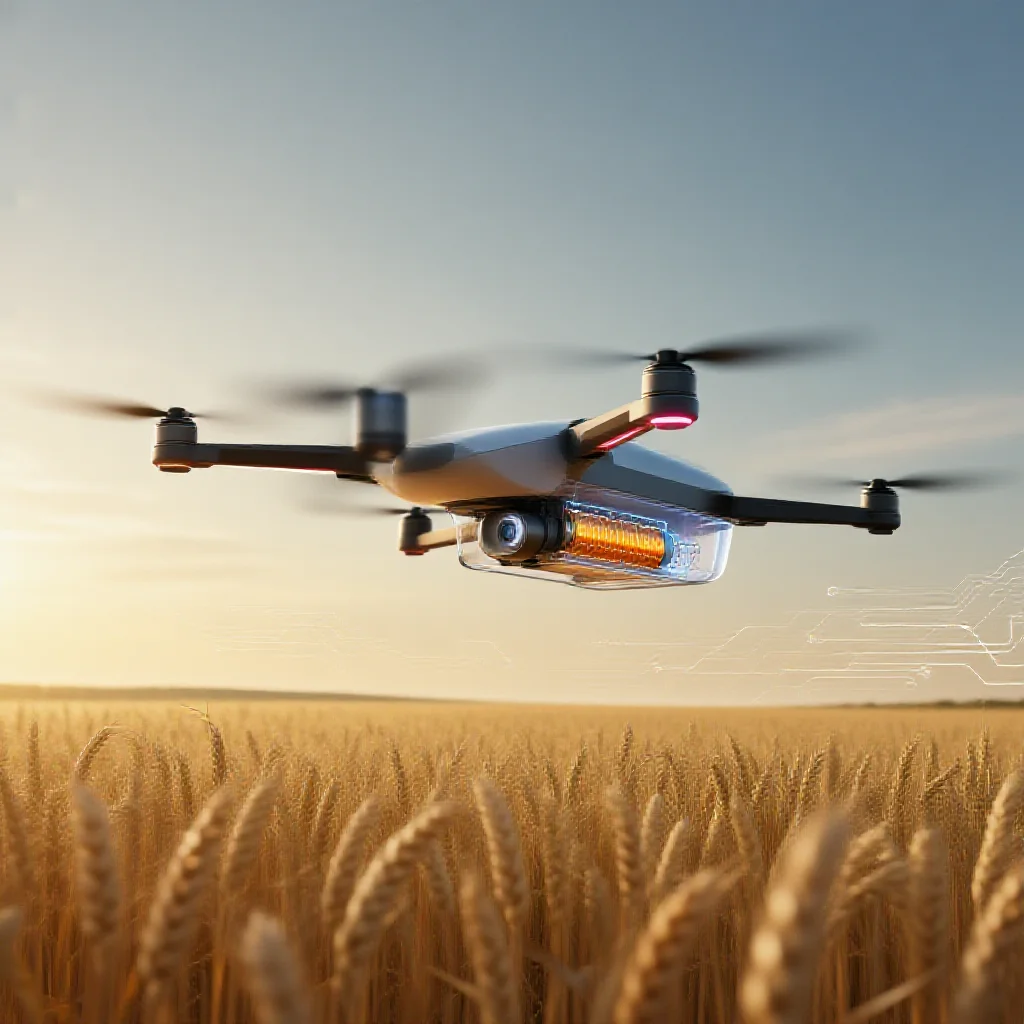
Beyond the Frontline: How Ukraine's Zero-Emission Drone Race is Redefining Aerial Logistics
Introduction: The Silent Innovation Front While global attention focuses on Ukraine's defense industry, a parallel and strategic innovation race is advancing in zero-emission drone technology. This development extends beyond immediate tactical needs. Companies including AeroDrone, Hydroplane, and Kray Technologies are pioneering hydrogen fuel cell and advanced battery-electric unmanned aerial systems. The primary operational objective is to solve the critical constraint of flight endurance. The underlying economic thesis posits that Ukraine is leveraging wartime pressure to build a post-war competitive advantage in the global commercial drone market for logistics, agriculture, and industrial inspection. This technological focus could position the country as an unexpected leader in a niche segment of sustainable aviation.

Decoding the Technology Duel: Hydrogen vs. Battery-Electric The technological pathways diverge, defining distinct operational niches based on the trade-off between flight endurance and payload capacity.
AeroDrone's 'Valkyrie' utilizes a hydrogen fuel cell system, achieving a flight time of up to 3 hours with a payload capacity of up to 5 kg (Source 1: [Primary Data]). This endurance is suited for extended intelligence, surveillance, reconnaissance (ISR) missions and light logistics.
Hydroplane is developing a drone powered by a hydrogen fuel cell with a proton exchange membrane (PEM). Its specifications indicate a flight time of 2 hours with a 2 kg payload (Source 1: [Primary Data]). This represents a pursuit of advanced, efficient hydrogen technology with a focus on system optimization.
In contrast, Kray Technologies employs a battery-electric system for its 'Kray Z' drone. It offers a flight time of 55 minutes but with a significantly higher payload capacity of 35 kg (Source 1: [Primary Data]). This configuration addresses missions requiring heavy-lift capability over shorter durations, such as transporting substantial cargo or specialized equipment.
| **Drone Model** | **Power Source** | **Max Flight Time** | **Payload Capacity** | **Primary Niche** | | :--- | :--- | :--- | :--- | :--- | | **AeroDrone Valkyrie** | Hydrogen Fuel Cell | 3 hours | 5 kg | Long-endurance ISR, light logistics | | **Hydroplane Drone** | Hydrogen PEM Fuel Cell | 2 hours | 2 kg | Efficient mid-range missions | | **Kray Z** | Advanced Battery-Electric | 55 minutes | 35 kg | Heavy-lift, short-to-mid range |

The Hidden Economic Logic: Building a Post-War Export Industry Wartime conditions function as a brutal accelerator for research, development, and operational testing. Platforms proven in demanding environments gain a reputation for reliability, a significant commercial asset. The strategic pivot potential for these technologies is high. Drones developed for current needs map directly onto growing global commercial demands: agricultural spraying and monitoring, linear infrastructure inspection, and medical supply delivery.
The zero-emission characteristic is not merely an environmental feature but a future commercial safeguard. As global markets, particularly the European Union, implement stricter emissions regulations, platforms with zero operational emissions possess an inherent regulatory advantage. This positions Ukrainian companies in a niche that aligns with long-term global sustainability trends, as validated by market growth reports forecasting expansion in commercial UAV applications under tightening environmental frameworks.

Deep Dive: The Supply Chain Gambit and Future Challenges The development of these technologies entails significant supply chain implications and strategic choices. For hydrogen-powered systems, the critical, unspoken challenge is the creation of a scalable hydrogen production, distribution, and refueling infrastructure within Ukraine. This presents a more complex hurdle than charging battery-electric systems.
This creates a strategic dichotomy. Battery-electric solutions rely on a globalized battery supply chain, subject to its own volatilities. In contrast, building a domestic capacity for green hydrogen production for drones could serve as a "deep entry point" for a broader national hydrogen economy, influencing energy policy and industrial strategy beyond the aerospace sector. The choice between these pathways involves a calculation of long-term strategic autonomy versus short- to medium-term technical feasibility, referencing well-documented global challenges in hydrogen logistics and storage.
Conclusion: Neutral Market and Industry Predictions The trajectory of Ukraine's zero-emission drone sector will be determined by post-conflict economic conditions and global market adoption rates. The technological foundations being laid are credible and address genuine market gaps. Commercial success will depend less on the technology's wartime origins and more on standard economic factors: cost-competitiveness, manufacturing scale, after-sales support, and the ability to navigate international certification and export controls.
Market analysis suggests the high-endurance, low-payload hydrogen segment and the heavy-lift battery-electric segment will likely find sustainable commercial niches. The former may see adoption in specialized monitoring and light-cargo delivery networks, while the latter is suited for agriculture and construction. The development indicates that Ukraine has the potential to become a recognized specialist supplier within the global sustainable aviation technology ecosystem, provided it can transition its innovation velocity from a wartime to a peacetime economic footing.