Beyond the Showroom: Decoding XPENG''s ''Physical AI'' Strategy Through a Journalist''s Journey
CleanTechnica journalist Larry Evans's upcoming trip to Guangzhou to witness XPENG's latest technology—including the ARIDGE flying car, IRON humanoid robot, and VLA 2.0 intelligent driving system—is more than a product tour. It signals a pivotal moment in China's strategic push into 'Physical AI,' where intelligent software converges with hardware to dominate next-generation mobility. This analysis moves beyond the specs to explore the underlying economic logic of XPENG's integrated ecosystem, questioning whether this approach represents a sustainable competitive moat or a capital-intensive gamble in the global race for autonomous transportation. We examine the potential supply chain implications, market positioning against Tesla and domestic rivals, and what 'Physical AI' truly means for the future of urban transit and manufacturing.
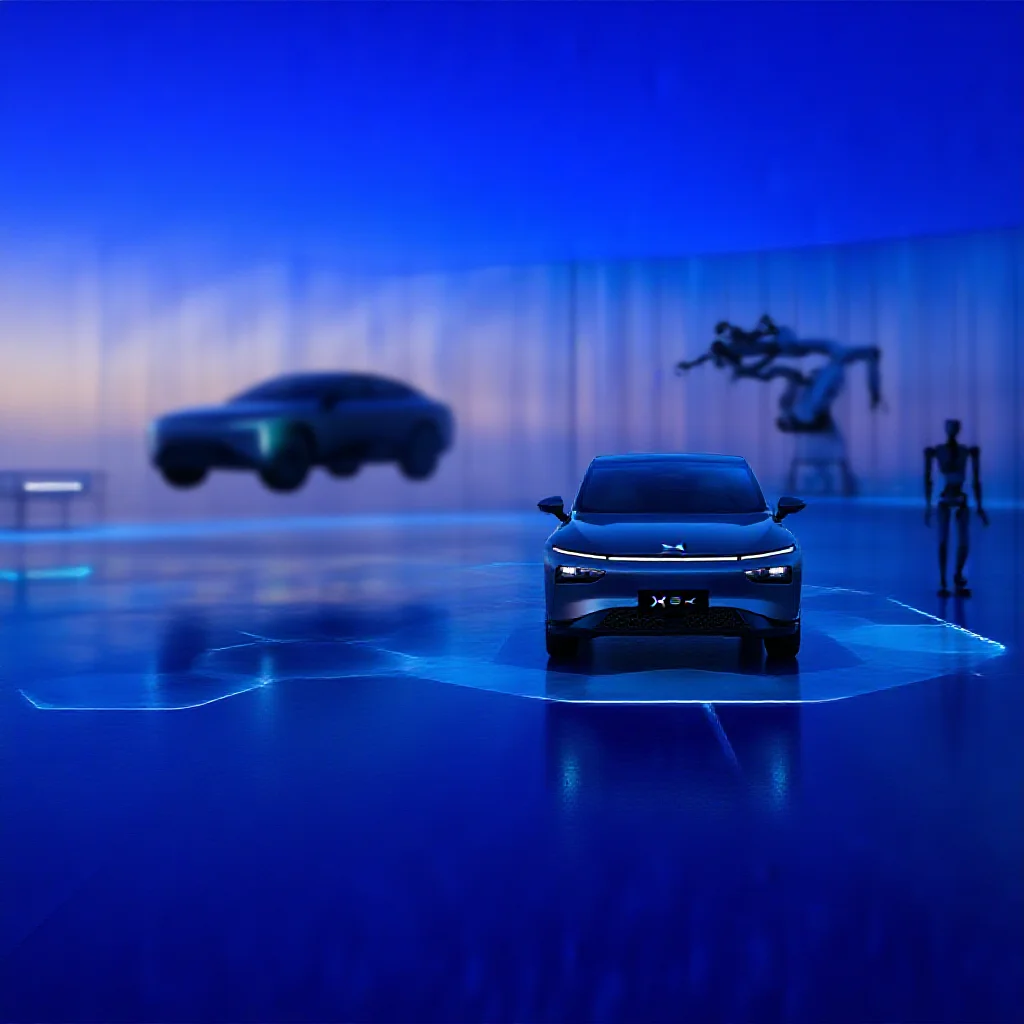
Beyond the Showroom: Decoding XPENG's 'Physical AI' Strategy Through a Journalist's Journey
**Published:** April 20, 2026 | **Source:** CleanTechnica
The Mission: More Than a Press Trip
On April 20, 2026, CleanTechnica journalist Larry Evans embarked on a flight to Guangzhou, China. (Source 1: [Primary Data]) His stated objective is to witness a suite of technologies from electric vehicle manufacturer XPENG, including the ARIDGE flying car, the IRON humanoid robot, and the VLA 2.0 intelligent driving system. (Source 1: [Primary Data]) This journey, framed as a preview, is not a routine product launch coverage. The timing—2026—and the location—XPENG’s headquarters—suggest a strategic unveiling of matured technologies positioned for international evaluation. The trip serves as a direct observational lens into a broader industrial paradigm: China’s accelerating push to integrate artificial intelligence with physical machinery, creating a new category of intelligent mobility and manufacturing.
Deconstructing 'Physical AI': XPENG's Ecosystem Play
The term "Physical AI," as deployed by XPENG, moves beyond marketing to describe a tangible operational strategy. It is defined by the seamless integration of AI decision-making cores into diverse hardware platforms—cars, aircraft, and robots—enabling them to perceive, reason, and act within the physical world. Evans’s itinerary outlines the three observable pillars of this strategy:
1. **ARIDGE Flying Car:** Representing the extension of mobility into three dimensions, or aerial robotics. 2. **IRON Humanoid Robot:** Targeting the automation of manufacturing, logistics, and potentially service domains. 3. **VLA 2.0 Intelligent Driving System:** Constituting the neural network for terrestrial autonomous vehicles, including new EV models like the GX. (Source 1: [Primary Data])
The critical analysis is that these are not isolated product lines. The strategic intent appears to be the creation of a synergistic, data-generating ecosystem. Sensor data from flying vehicles could map urban air corridors, while humanoid robots in factories generate precise manipulation data; both streams could theoretically refine the perception and control models for ground-based VLA 2.0 systems. This closed-loop intelligence, where each platform informs and strengthens the others, is posited as a core competitive advantage.
The Hidden Economic Logic: Vertical Integration as a Moat
XPENG’s approach presents a distinct economic model. It contrasts with automotive original equipment manufacturers (OEMs) that rely on partnerships for advanced technology and with Tesla’s more focused, albeit vertically integrated, trajectory in automotive and robotics. XPENG’s model is capital-intensive, aiming to control the stack from advanced battery systems and proprietary chips for cars and flying vehicles to the actuators and AI models for humanoid robots.
The potential supply chain implications are significant. Controlling such a broad spectrum of frontier hardware could provide leverage in securing key components like high-energy-density batteries and specialized semiconductors, while also internalizing the value of proprietary data. However, this integrated model carries substantial risk. The R&D burn rate required to advance multiple frontier technologies—aerial mobility, advanced humanoid robotics, and Level 4+ autonomous driving—simultaneously is immense. The principal challenge is achieving viable commercial scale and profitability across these diverse domains before capital reserves are depleted. This is a high-stakes gamble on ecosystem synergy outweighing the costs of extreme diversification.
Verification & Credibility: Reading Between the Lines
The provenance of this information is a preview article from CleanTechnica, a publication specializing in clean technology and electric vehicles, published on April 20, 2026. (Source 1: [Primary Data]) This establishes a baseline of journalistic context and timeliness. The article’s nature as a preview, detailing planned observations rather than completed ones, necessitates a framework of critical analysis. The technologies—ARIDGE, IRON, VLA 2.0—are presented as claims awaiting on-the-ground verification by Evans. The credibility of the "Physical AI" thesis will depend on demonstrable interoperability and technological readiness observed during the Guangzhou visit, moving beyond controlled demonstrations to evidence of scalable integration.
The Global Race: Positioning Against Tesla and Domestic Rivals
In the global landscape, XPENG’s "Physical AI" ecosystem positions it on a collision course with Tesla’s Optimus robot and its full self-driving (FSD) ambitions, while also competing with domestic Chinese rivals like BYD, NIO, and Geely, each pursuing their own variants of integrated mobility. XPENG’s differentiation lies in the explicit, concurrent development of aerial, robotic, and terrestrial platforms under a unified AI architecture. The market positioning is not merely as a car company, but as a comprehensive "mobility and robotics solutions" provider. The success of this positioning hinges on proving that its integrated approach yields faster AI learning curves and superior system robustness compared to more specialized or partnership-driven models.
Conclusion: The Future of Urban Transit and Manufacturing
The outcome of strategies like XPENG’s will shape the next decade of urban transit and manufacturing. If successful, the "Physical AI" model could lead to deeply interconnected urban systems where data flows seamlessly between autonomous ground fleets, aerial taxis, and factory robots, optimizing logistics, energy use, and spatial management in real-time. If the capital or execution challenges prove too great, it may illustrate the perils of over-extension in a hyper-competitive technological race. Larry Evans’s journey to Guangzhou is therefore a mission to gather early evidence points. His subsequent observations will provide critical data for assessing whether "Physical AI" represents a sustainable architectural advantage or a visionary but untenable consolidation of technological frontiers. The industry will be watching for evidence of not just advanced hardware, but of the tangible, data-driven connections between them that define a true ecosystem.