Waymo''s Nashville Launch: The Strategic Playbook Behind Autonomous Ride-Hailing''s Next Frontier
Waymo's commercial launch in Nashville on April 7, 2026, marks more than a simple geographic expansion. This analysis uncovers the strategic calculus behind choosing a mid-sized, logistics-heavy city over a coastal megacity. We explore how Nashville serves as a critical testbed for refining autonomous vehicle (AV) technology in complex, non-grid urban environments and mixed traffic flows. The move signals a shift in the AV industry's commercialization playbook, focusing on operational efficiency, partnership-driven growth with select local entities, and de-risking scale-up by proving viability in diverse, second-tier markets. This launch is a pivotal step in transitioning from controlled testing to sustainable, profitable service models.
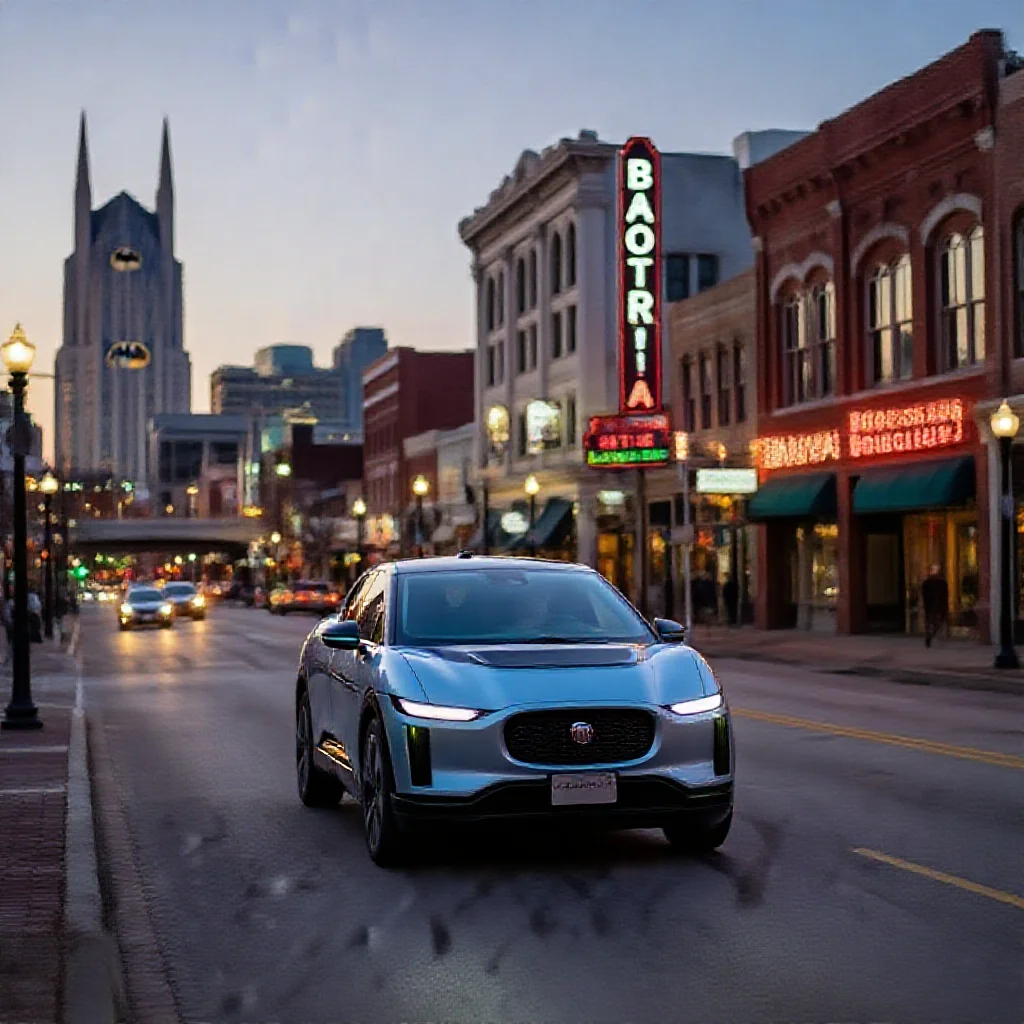
Waymo's Nashville Launch: The Strategic Playbook Behind Autonomous Ride-Hailing's Next Frontier
**Date:** April 8, 2026
On April 7, 2026, Waymo initiated its commercial autonomous ride-hailing service in Nashville, making the city its fourth major operational market (Source 1: [Primary Data]). The service is available to the general public and to a curated list of select partners (Source 1: [Primary Data]). This launch followed a documented period of testing and mapping within the city's boundaries (Source 1: [Primary Data]). This expansion represents a calculated deviation from the industry's established geographic playbook, signaling a new phase in the commercialization of autonomous vehicle (AV) technology focused on operational sustainability and replicable scale.
Beyond the Headline: Decoding Waymo's Nashville Gambit
The Nashville launch contrasts sharply with Waymo's prior expansions. Initial deployments in Phoenix and San Francisco targeted environments representing two extremes: low-density, sprawling sunbelt grids and dense, chaotic coastal megacities. Nashville, a mid-sized hub for music, tourism, and logistics, represents a distinct third category. The choice indicates a strategic pivot from proving technological capability in extreme conditions to validating economic viability in complex, yet representative, urban landscapes.
The selection of Nashville functions as a deliberate, integrated stress-test. The city combines non-grid street layouts, significant freight and logistics traffic, seasonal weather variations, and intense, event-driven tourism surges. Success here is less a statement of conquest and more a demonstration of a refined, adaptable operational template. The core thesis of this launch is the perfection of a replicable model for nationwide rollout, where operational efficiency and unit economics are prioritized alongside technological prowess.
The "Nashville Model": A Blueprint for Second-Tier City Domination
Waymo's approach in Nashville can be deconstructed into a multi-phase "model." The initial, non-commercial phase involved extensive testing and mapping to train AI systems on the city's unique topography, mixed traffic flows, and regional driving behaviors (Source 1: [Primary Data]). This foundational work is more intensive than a simple map import, requiring the AI to navigate organic street networks and high volumes of commercial vehicles.
The commercial launch employs a dual-track strategy: public access alongside access for select partners (Source 1: [Primary Data]). This serves two concurrent objectives. The public service generates continuous, real-world data and revenue. Simultaneously, securing anchor B2B clients—such as logistics firms for middle-mile transport, airport shuttles, or hotel partnerships—creates a baseline of stable, predictable demand. This B2B layer de-risks the operation, ensuring vehicle utilization during off-peak hours and providing a faster path to positive unit economics.
The economic logic of the Nashville model is clear. Compared to primary tech hubs, it offers lower regulatory friction, reduced operational costs related to congestion and real estate, and a high density of tourism-related trip demand. The city operates as a controlled yet complex environment to refine the business model before attempting scaling in more contentious or expensive metropolitan areas.
The Ripple Effect: Supply Chain, Labor, and Urban Redesign
The sustained deployment of a commercial AV fleet in a logistics-centric city like Nashville will exert pressure on adjacent supply chains. Consistent AV use for freight movement will necessitate adaptations in warehousing location strategies, last-mile delivery handoff protocols, and the automotive service network, which must evolve to maintain specialized, sensor-laden vehicles.
Labor market dynamics will undergo a silent shift. While discussions often focus on driver displacement, the Nashville launch will concurrently create new demand for localized, high-skill roles in fleet maintenance, remote assistance command centers, and data analysis. Establishing these roles in a non-traditional tech city redistributes tech employment geographically and tests the scalability of a distributed support workforce.
Furthermore, Waymo's aggregated, anonymized data on traffic flow, congestion points, and trip origins and destinations becomes a powerful tool for urban planning. Municipal authorities in Nashville and observing peer cities may utilize these insights to inform future infrastructure investments, such as the designation of dedicated commercial mobility lanes, strategic placement of charging networks, and zoning adjustments. The launch seeds the data-driven redesign of urban mobility for midsize cities.
Verification and Context: Placing the Launch in the AV Timeline
The April 7, 2026 launch date is a verified milestone in Waymo's commercial timeline (Source 1: [Primary Data]). It follows the company's established pattern of prolonged testing before commercial debut, a pattern observed in its earlier markets. This consistency underscores a methodology that prioritizes systematic validation over rapid, unchecked expansion.
Contextual analysis places this event as a pivotal step in the broader AV industry's maturation. The industry is transitioning from a capital-intensive, technology-proving phase to a focus on sustainable commercialization. Waymo's Nashville model—emphasizing partnership-driven demand, operational efficiency in a complex but manageable environment, and economic sustainability—is likely to become a benchmark. Competitors will be forced to evaluate similar second-tier city strategies, shifting the competitive landscape from a race for flagship city dominance to a contest over scalable, profitable operational excellence.
The neutral prediction, based on this strategic analysis, is an accelerated but selective rollout to cities with profiles similar to Nashville's: strong anchor industries, manageable scale, and clear partnership opportunities. The success metric will increasingly shift from miles driven without a safety driver to cost per mile, fleet utilization rates, and contribution margin. Waymo's Nashville launch is not merely a new city on a map; it is the first major field test of autonomous ride-hailing's business model for the mainstream.