Beyond the Switch: The Scalability Challenge of Indonesia''s Diesel Generator Retirement
Indonesia's vast archipelago relies heavily on thousands of diesel generators for power, presenting a unique energy transition challenge. While retiring these units for renewables is a clear goal, the path to a scalable, nationwide program is fraught with complexity. This analysis moves beyond the simple 'swap' narrative to examine the hidden economic logic of stranded assets, the critical role of distributed energy resource management systems (DERMS), and the market patterns that will determine whether this transition empowers local communities or creates new dependencies. We explore the untold story of how this shift could fundamentally reshape Indonesia's underlying energy supply chain and rural economic development.
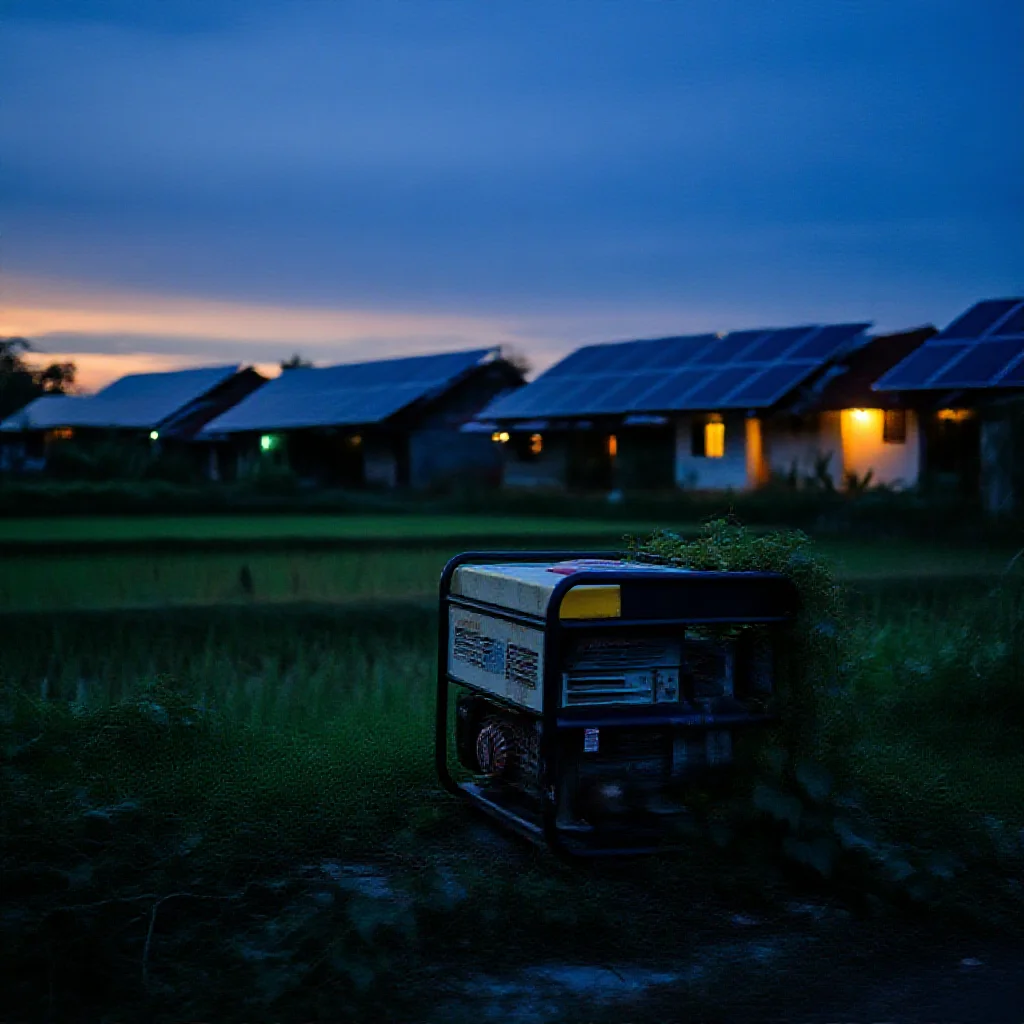
Beyond the Switch: The Scalability Challenge of Indonesia's Diesel Generator Retirement
**Article Date:** April 14, 2026
The Diesel Dilemma: Mapping Indonesia's Dispersed Power Backbone
The Indonesian archipelago’s electrification backbone extends beyond its centralized grid. It is underpinned by an estimated tens of thousands of diesel generators, a dispersed fleet providing critical power to remote islands, mining outposts, and areas with weak grid infrastructure. (Source 1: [IEA Indonesia 2023 Energy Access Report]) This dependency creates a dual economic burden. The state carries the cost of fuel subsidies and logistical supply chains, while end-users receive power that is often unreliable and expensive per kilowatt-hour. This reality establishes the foundational challenge: scalability in retirement is not a simple matter of equipment substitution. A uniform, nationwide swap model is structurally incompatible with the geographic, economic, and load-profile diversity present across more than 17,000 islands. The initial task is one of systemic categorization, not blanket replacement.
The Scalability Trilemma: Economics, Technology, and Social Equity
The transition’s scalability hinges on resolving an interconnected trilemma of economics, technology, and social equity.
First, the economic framework must evolve. Retiring a diesel generator is not merely an environmental cost but a strategic asset conversion. The capital expenditure for renewable systems and grid upgrades must be analyzed against the net present value of avoided future fuel subsidies, maintenance, and carbon liabilities. This reframes the program from an expense to a long-term grid modernization and fiscal resilience investment.
Second, the enabling technology is not solely generation hardware. The core technical challenge of scaling renewable integration is management. A distributed network of solar, battery storage, and potential micro-hydro requires a Distributed Energy Resource Management System (DERMS). (Source 2: [Siemens Grid Software White Paper on Islanded Microgrids]) This software platform is essential for orchestrating diverse assets, maintaining grid stability, and optimizing energy flows, transforming a collection of independent systems into a reliable, virtual power plant.
Third, the social dimension dictates long-term viability. A scalable program must architect local ownership and technical capacity. A model that installs systems without embedding operational knowledge and economic benefit mechanisms risks creating a new dependency—a neo-colonial cycle of external maintenance and control. The program’s design must integrate community energy planning and create clear value streams, such as reduced tariffs or local enterprise opportunities, to ensure endogenous sustainability.
Blueprint for a Phased and Adaptive Retirement Program
A scalable national program necessitates a phased, adaptive protocol rather than a monolithic rollout.
**Phase 1: Triage and Taxonomy.** Each diesel generator site requires assessment against a multi-axis matrix: geographic isolation, criticality of served load (e.g., hospital vs. general village supply), current fuel consumption, and renewable resource potential. This creates a prioritized retirement taxonomy, identifying "low-hanging fruit" for immediate intervention and sites requiring longer-term, grid-strengthening solutions.
**Phase 2: Hybridization as a Bridge.** Immediate, full decommissioning is often technically and financially impractical. A scalable intermediate step is systematic hybridization. Integrating solar photovoltaic arrays and battery storage with existing diesel gensets can reduce fuel consumption by 40-70% immediately, according to pilot project data. (Source 3: [Case Study Analysis, Sumba Iconic Island Initiative]) This builds operational trust in renewable technology, reduces costs, and provides a stable platform for incremental expansion.
**Phase 3: Full Decommissioning & Circular Economy.** The final phase requires standardized protocols for diesel generator retirement. This includes environmental safeguards for fluid disposal and, critically, the development of circular economy pathways. Components can be repurposed for industrial use, recycled, or the sites themselves converted into community energy hubs. This phase closes the loop, turning stranded assets into material or social capital.
Verification and Evidence: Anchoring the Analysis in Reality
The scale of the challenge is documented in national planning documents. Indonesia’s state electricity company, Perusahaan Listrik Negara (PLN), outlines in its 2021-2030 Electricity Supply Business Plan (RUPTL) a strategic shift towards renewables and a reduction in diesel-based generation, implicitly acknowledging the existing fleet’s footprint. (Source 4: [PLN RUPTL 2021-2030 Executive Summary])
Technological feasibility is evidenced beyond theory. Deployments of advanced microgrid controllers and DERMS by firms such as Schneider Electric in similar archipelagic contexts demonstrate the operational capability to manage high-penetration renewable microgrids, validating the technical pillar of the scalability argument. (Source 5: [Schneider Electric Microgrid Deployment Case Studies, Asia-Pacific])
Neutral Market and Industry Trajectory Projection
The logical progression of this trilemma analysis points to specific market trajectories. The demand for specialized DERMS and microgrid control software tailored for diverse, low-inertia grids will see significant growth. A secondary market will emerge for diesel generator retrofit and hybridization services, extending the lifespan of certain ancillary equipment while phasing out the prime mover. Financially, successful scalability will depend on the aggregation of retired diesel sites into standardized, bankable project portfolios to attract large-scale institutional investment, moving beyond pilot-stage grant funding. The ultimate indicator of scalability will be the emergence of a competitive ecosystem of Indonesian energy service companies (ESCOs) capable of operating and maintaining these distributed systems, shifting the industry’s center of gravity from centralized fuel logistics to decentralized digital and technical management.