Beyond 2030: Decoding the EU''s Strategic Pivot from Climate Targets to Industrial Sovereignty
In April 2026, the European Commission launched a pivotal consultation for its post-2030 climate and energy framework, signaling a profound strategic shift. This article analyzes how the EU is moving beyond mere emissions reduction to integrate climate action directly with industrial competitiveness and energy security. We explore the unspoken economic logic behind this fusion, examining how it aims to shield European industries from global green tech competition while securing critical raw material supply chains. The framework represents a long-term blueprint for 'climate-industrial policy,' where environmental goals are recast as drivers for technological leadership and economic resilience in a fragmented world.
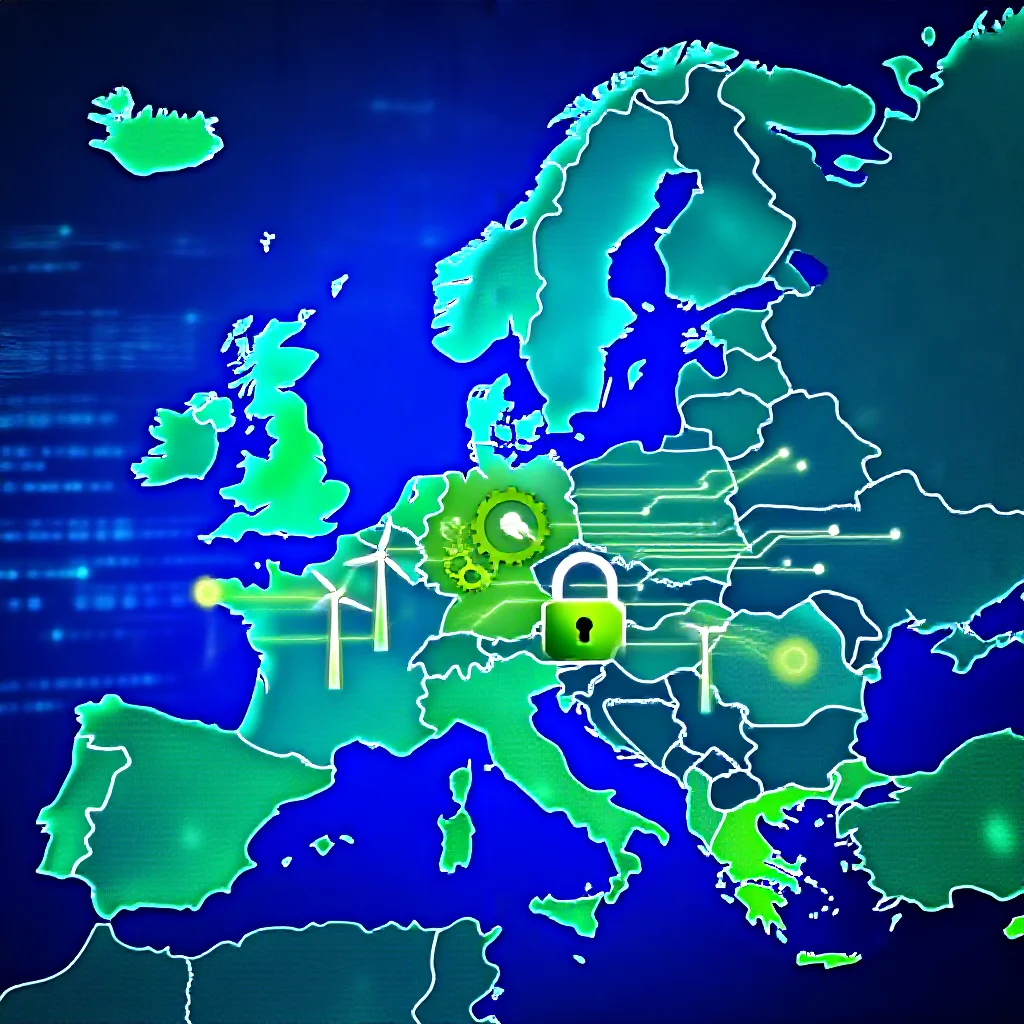
Beyond 2030: Decoding the EU's Strategic Pivot from Climate Targets to Industrial Sovereignty
Introduction: The 2026 Consultation as a Strategic Inflection Point
In April 2026, the European Commission initiated a public consultation on the European Union’s post-2030 climate and energy policy framework. (Source 1: [Primary Data]) This procedural step constitutes a strategic inflection point. The consultation transcends a routine policy review, signaling a foundational shift in the EU’s strategic posture. The explicit objective to align climate action with industrial competitiveness and energy security marks a transition from a predominantly "climate-first" regulatory model to an integrated "climate-industrial" paradigm. This fusion represents a fundamental recalibration of the European Green Deal’s implementation, positioning environmental goals as central pillars for economic resilience and technological leadership in a geopolitically contested landscape.
The Unspoken Economic Logic: Climate Policy as an Instrument of Sovereignty
The framework’s architecture is driven by an unspoken economic logic: the utilization of climate policy as a primary instrument for building strategic autonomy. This logic is a direct response to external competitive pressures, including the United States’ Inflation Reduction Act and established dominance in global clean technology supply chains. The policy functions as a de facto "European industrial deal," designed to shield and propel EU industries in sectors like battery manufacturing, electrolyzers, and solar photovoltaic technology.
Concurrently, the definition of energy security has expanded. It is no longer confined to the diversification of fossil fuel supplies but encompasses the secure procurement of critical raw materials and the development of a resilient, high-capacity electricity grid powered by renewable sources. This grid is increasingly framed as essential infrastructure for industrial operation, not merely household consumption. The framework implicitly treats climate mandates as a mechanism to justify and accelerate investments in these dual pillars of industrial sovereignty: technology leadership and resource security.
From Targets to Systems: The Inevitable Fusion of Climate, Industry, and Energy
The post-2030 framework acknowledges the insufficiency of siloed emissions reduction targets for the systemic transformation required beyond 2030. The prior model of distinct targets for renewables, efficiency, and emissions is evolving into a mechanism for co-evolving regulation, physical infrastructure, and industrial investment. The framework is designed to manage the interdependencies between a decarbonizing power sector, nascent infrastructure for hydrogen and carbon capture, and the capital-intensive retrofit of foundational industries like steel and chemicals.
A tangible manifestation of this fusion is the potential linkage between carbon pricing revenues and direct funding for industrial decarbonization. Revenues from the EU Emissions Trading System (ETS) and the Carbon Border Adjustment Mechanism (CBAM) are likely to be increasingly earmarked for innovation funds and strategic projects that enhance the green competitiveness of European industry. This creates a closed financial loop where the cost of carbon is recycled to mitigate industrial displacement, ensuring climate policy and industrial policy are mutually reinforcing rather than antagonistic.
Deep Audit: Long-Term Implications for Supply Chains and Global Competition
Analyses from institutions like the European Climate Neutrality Observatory and Bruegel highlight the significant capital expenditure required for industrial decarbonization. (Source 2: [Analytical Reports]) The post-2030 framework can be interpreted as a long-term blueprint to de-risk these investments through predictable policy and targeted financial support. This strategic direction suggests an evolution of instruments like the CBAM from a carbon leakage prevention tool into a broader "green competitiveness" instrument, potentially incorporating standards for embedded emissions or recycling revenues into export credits for green goods.
This trajectory carries inherent risks, notably of perceived "green protectionism." The consolidation of "closed-loop" strategic value chains—from raw material processing to final assembly within the EU or allied nations—could complicate trade relations with developing economies aspiring to move up the green technology value chain. The framework’s success in enhancing EU competitiveness may inversely correlate with its acceptance as a global standard, potentially accelerating the fragmentation of global trade into competing regulatory blocs centered on climate-industrial policy.
Conclusion: A Blueprint for Geoeconomic Resilience
The post-2030 climate and energy framework is, in essence, a blueprint for geoeconomic resilience. It represents the EU’s institutional acknowledgment that leadership in the net-zero transition is inseparable from leadership in the industries that will define it. The framework moves beyond setting environmental constraints to actively shaping the economic and technological landscape within those constraints.
Market and industry predictions based on this strategic pivot indicate a likely increase in mergers and acquisitions within the European clean tech sector, driven by the need for scale. Capital flows are expected to further favor projects that demonstrably contribute to dual climate and sovereignty objectives, such as green steel plants or rare earth magnet production. The ultimate test of this integrated paradigm will be its ability to deliver decarbonization at a competitive cost, ensuring that the pursuit of industrial sovereignty does not culminate in strategic autonomy for a declining, high-cost industrial base. The April 2026 consultation is the opening gambit in this complex, long-term strategic game.