Beyond the Grid: How Solar-Powered EVs Are Redefining the Economics of Personal Transportation
While solar charging for electric vehicles is often framed as a green novelty, its true disruptive power lies in decoupling personal mobility from centralized energy markets. This article moves beyond surface-level cost savings to analyze the deeper economic logic: solar EVs represent a shift towards ''energy autonomy,'' transforming vehicles from mere assets into decentralized power generation nodes. We examine the implications for household economics, the strain on traditional utility models, and the potential for a new, resilient energy infrastructure built on millions of mobile solar collectors. The analysis reveals that the most significant benefit may not be the fuel saved, but the foundational change in how we produce, consume, and value energy for transportation.
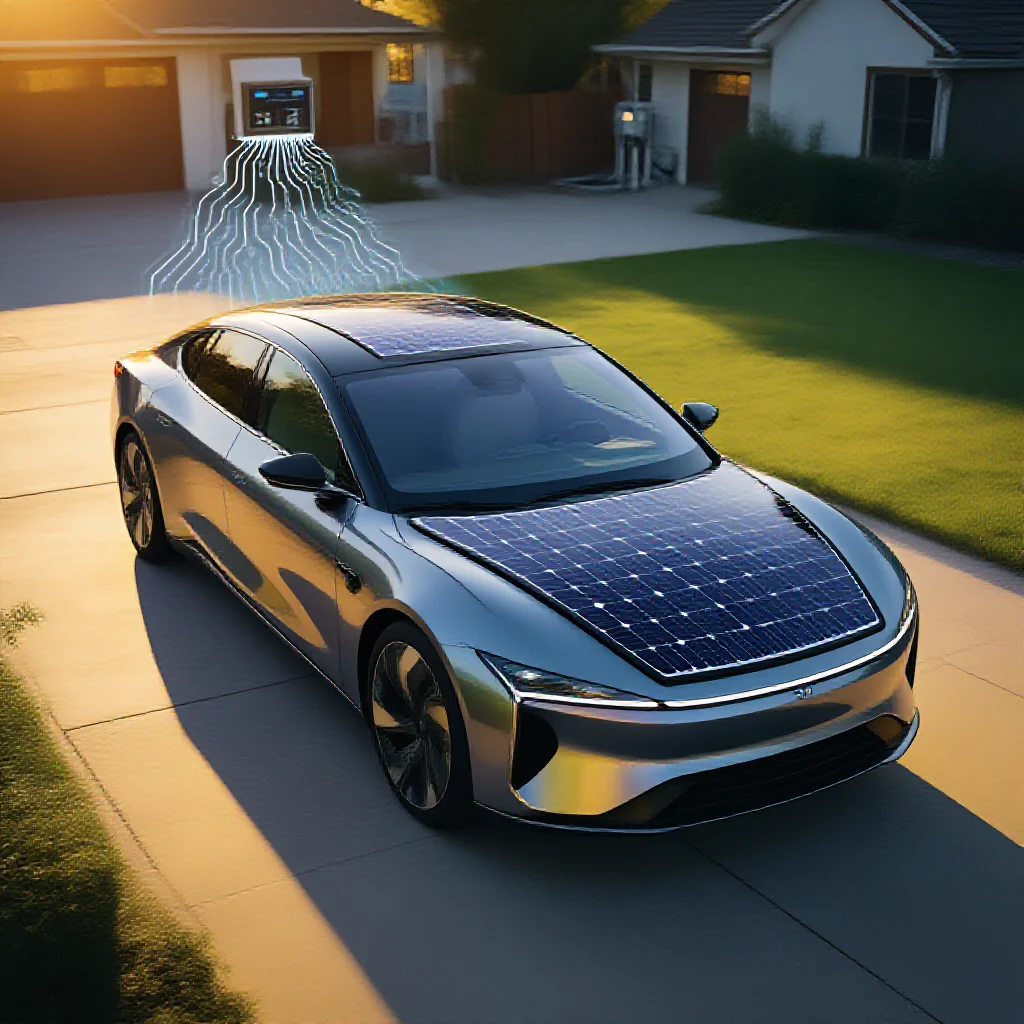
Beyond the Grid: How Solar-Powered EVs Are Redefining the Economics of Personal Transportation
Introduction: The Hidden Economic Engine of Solar EVs The narrative surrounding solar integration with electric vehicles has predominantly emphasized environmental sustainability. A more consequential analysis, however, reveals a foundational shift in economic logic. The core proposition transcends "green" credentials, advancing toward individual energy sovereignty. This paradigm redefines the electric vehicle from a singular transportation asset into a dual-purpose instrument for mobility and decentralized power generation. The most significant economic impact of this convergence is systemic, challenging centralized energy markets and reconfiguring the value proposition of the automobile itself.
Decoding the True Cost-Benefit: More Than Just Free Miles A superficial assessment of solar-powered EVs focuses on the displacement of grid-purchased kilowatt-hours. A rigorous economic analysis must account for more complex variables: avoided grid demand charges, arbitrage against time-of-use electricity rates, and the hedging value against volatile energy markets. The metric of value evolves from a simple "cost per mile" to an "asset utilization rate," which seeks to maximize the productive hours of both the vehicle's battery and its integrated photovoltaic array.
The financial advantage is best understood through the lens of the levelized cost of energy (LCOE). When applied to a mobile, integrated solar system, the LCOE for generated electricity can fall significantly below retail utility rates, especially in regions with high insolation and expensive grid power. More critically, this on-board generation mitigates the need for costly upgrades to residential electrical service to support Level 2 charging, representing a direct avoidance of capital expenditure for the homeowner. Analysis from energy research firms indicates that the combined value streams of fuel displacement, demand charge management, and resilience can accelerate the payback period for the solar premium (Source 1: [Energy Research Firm Analysis on LCOE for Distributed Generation]).
Technology Deep Dive: From Novelty to Necessity Specific vehicle models, such as the Lightyear 0 and the Sono Sion, are not mere curiosities but pioneers of a new design and economic paradigm. These vehicles, along with production models featuring solar roofs like the Hyundai Sonata Hybrid, demonstrate the practical integration of photovoltaics into vehicle surfaces. The central technological and economic trade-off lies in efficiency versus available surface area. This constraint drives innovation in flexible, high-efficiency photovoltaic cells and necessitates vehicle design optimization for solar exposure, including parking behavior and body panel utilization.
Current technological trajectories suggest incremental but steady improvements in photovoltaic conversion efficiency for automotive-grade panels. Reports from photovoltaic research institutes indicate that while integrated solar cannot fully replace plug-in charging, it can contribute a meaningful range extension—typically 10 to 40 miles per day under optimal conditions—which covers a significant portion of average daily commutes (Source 2: [Photovoltaic Research Institute Efficiency Reports]). This capability directly reduces the required frequency of grid charging and can permit the use of a smaller, less expensive battery pack without incurring range anxiety, altering the vehicle's fundamental cost structure.
The Ripple Effect: Disrupting Energy and Automotive Ecosystems The widespread adoption of vehicles with integrated solar generation presents a disruptive force to established ecosystems. For utility companies, the model challenges traditional centralized grid planning and demand forecasts. A fleet of mobile, distributed generation assets reduces net load during peak daylight hours and can, when coupled with vehicle-to-grid (V2G) technology, provide grid stabilization services. This necessitates a transition from a pure volumetric sales model to a service-based model focused on grid management and reliability.
For the automotive industry, the implications are equally profound. The potential to reduce battery size—the most costly component of an EV—without sacrificing perceived utility alters manufacturing economics. It further accelerates the industry's shift from selling a durable good to managing a connected energy asset. The vehicle's value chain expands to include software for managing bidirectional energy flows and participation in energy markets.