The Weight of Change: How France''s Tax and Tesla''s Dominance Signal Europe''s Electric Tipping Point
In 2024, France introduced a punitive weight-based tax on heavy vehicles, a policy seemingly at odds with the growing popularity of often-heavier electric cars. Yet, by early 2026, the data reveals a paradox: EVs, led by Tesla, are dominating European sales charts. This article explores the hidden logic behind this apparent contradiction. It argues that France''s tax is not anti-EV but pro-efficiency, targeting wasteful design in *all* vehicle types, while market signals show consumers are decisively choosing electrification. Together, these forces—government nudges towards smarter engineering and market pull for clean technology—are creating a powerful, self-reinforcing cycle accelerating Europe''s automotive transformation beyond mere adoption into a phase of optimization and mass-market consolidation.
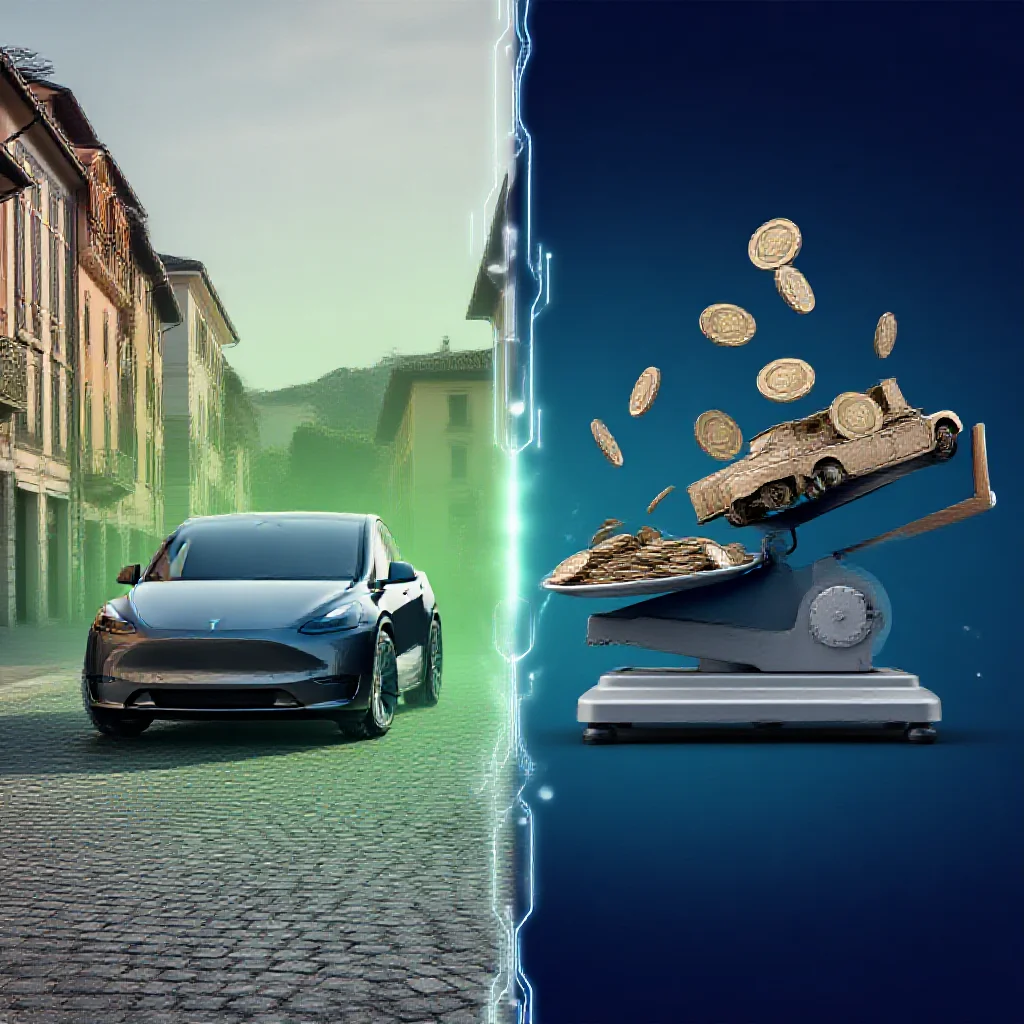
The Weight of Change: How France's Tax and Tesla's Dominance Signal Europe's Electric Tipping Point
Introduction: The Paradox of Punishing Weight in an Age of Heavy Batteries
In 2024, the French government instituted a fiscal policy that appeared to challenge a fundamental trend in automotive technology. A weight-based tax was levied on heavy passenger vehicles, imposing a direct cost on mass at a time when the proliferation of electric vehicles (EVs)—inherently heavier due to their battery packs—was accelerating. Early 2026 market data presents a seemingly contradictory picture: electric models, led by Tesla, are achieving unprecedented sales dominance across Europe. This juxtaposition raises a critical analytical question. Are regulatory frameworks and consumer behavior operating in opposition, or does a deeper, unifying logic explain this convergence?
Decoding France's Weight Tax: A Policy for Efficiency, Not Against Electrification
The mechanics of the French tax are explicitly graduated. For vehicles exceeding 1,600 kg, a levy of €10 per additional kilogram is applied. The penalty increases to €15 per kilogram for mass over 2,000 kg (Source 1: [Primary Data]). Superficially, this could be interpreted as a disincentive for battery-electric vehicles. A deeper analysis reveals its primary target: inefficiency irrespective of powertrain.
The policy is technologically agnostic. Its foundational insight is that vehicle mass serves as a direct proxy for resource consumption, energy use (both fossil and electrical), tire particulate emissions, and infrastructure wear. The regulation predominantly impacts large, inefficient internal combustion engine (ICE) vehicles and SUVs, which represent the peak of wasteful automotive design. The tax functions as a "design-for-efficiency" mandate. By penalizing mass, it creates a financial imperative for all automakers—including EV manufacturers—to pursue lightweighting strategies through material science and structural innovation. The long-term objective is not to hinder electrification but to ensure its evolution is sustainable and resource-conscious, ultimately leading to more affordable and energy-efficient electric cars.
The Market Responds: Q1 2026 Data and the Undeniable Electric Ascent
Concurrent with this regulatory push, quantitative market evidence from the European Union demonstrates a decisive shift in consumer adoption. In the first quarter of 2026, battery-electric vehicles (BEVs) constituted 18% of new car registrations, with plug-in hybrid electric vehicles (PHEVs) adding a further 8%. The combined share of 26% for electrified powertrains represents a critical market penetration threshold (Source 1: [Primary Data]).
The momentum is crystallized in model-specific performance. In March 2026, the Tesla Model Y was the best-selling car model across Europe. The Tesla Model 3 ranked third. Significantly, five of the top ten best-selling models for the month were electric (Source 1: [Primary Data]). This transition from niche to mainstream preference indicates that consumer demand for electrification is robust enough to absorb potential fiscal penalties associated with vehicle weight, provided the total value proposition—encompassing performance, running costs, and technology—is compelling.
The Hidden Convergence: How Policy and Market Create a Self-Reinforcing Cycle
The apparent tension between France's weight tax and Tesla's sales dominance is resolved through analysis of their synergistic effect. These are not conflicting signals but dual, complementary drivers instigating a more profound phase of automotive transformation.
A self-reinforcing cycle is established. First, the weight tax disincentivizes vehicular bloat, creating a regulatory pull for efficient design across all powertrains. Second, the commercial success of manufacturers like Tesla, whose vehicles are engineered with a high priority on efficiency (range per kilowatt-hour), validates substantial consumer demand for intelligent electrification. Third, this combination forces legacy automakers to compete on a dual frontier: they must accelerate their electrification portfolios while simultaneously optimizing vehicle architecture to reduce mass and avoid fiscal penalties. This convergence elevates the market transition beyond simple adoption of electric powertrains into a phase of holistic optimization and mass-market consolidation.
Conclusion: Beyond Adoption to Optimization
The European automotive landscape in 2026 is defined by the interplay of deliberate policy and market validation. France's weight-based tax and the sales supremacy of efficient electric vehicles together mark a tipping point. The initial phase of EV introduction, characterized by compliance and early adopter appeal, is concluding. The emerging phase is one of mass-market refinement, where success will be determined by a vehicle's overall efficiency, sustainability of design, and total cost of ownership. Regulatory frameworks targeting inefficiency and market rewards for compelling electrification are now aligned. This alignment predicts an accelerated trajectory toward a lighter, more electric, and fundamentally more efficient European vehicle fleet. The competition will no longer be solely about who can build an electric car, but who can build the best one within the new paradigm of constrained resources and intelligent design.