California''s Solar Crossroads: How the CPUC''s 2026 Decision Fails to Bridge the Equity Gap
On April 7, 2026, the California Public Utilities Commission (CPUC) issued a decision for a new community solar program. This analysis argues that the decision represents a critical failure to learn from past mistakes, where previous programs were criticized for harming lower-income Californians. Rather than addressing the core economic and structural shortcomings, the CPUC's latest move perpetuates a pattern that prioritizes program rollout over genuine energy equity. We examine the hidden logic behind this regulatory inertia, its implications for California's clean energy transition and social contract, and why this 'slow-moving crisis' in energy policy demands a deeper audit of institutional priorities versus public need.
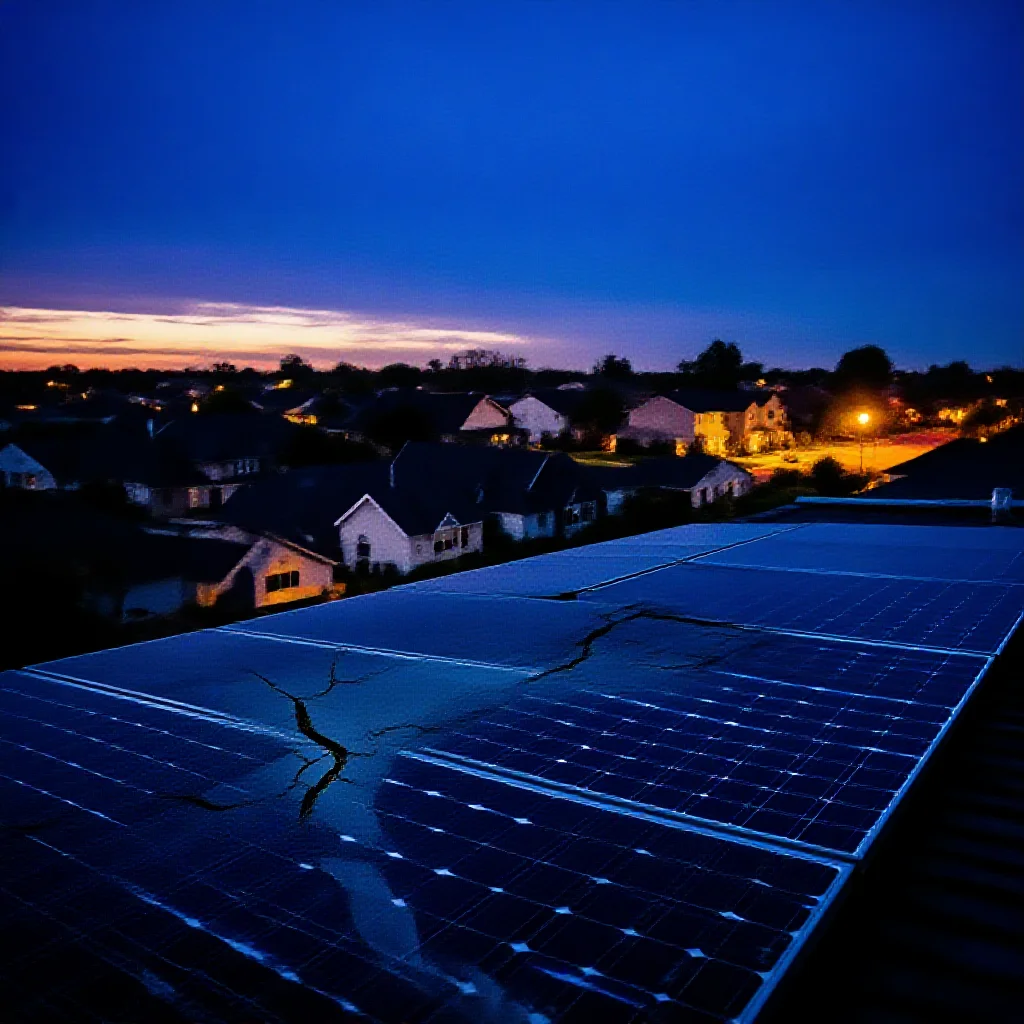
California's Solar Crossroads: How the CPUC's 2026 Decision Fails to Bridge the Equity Gap
**Date:** April 2026
The 2026 Decision: A Milestone or a Missed Opportunity?
On April 7, 2026, the California Public Utilities Commission (CPUC) issued a decision to establish a new community solar program. This action occurs within a regulatory history marked by persistent criticism. Previous iterations of community solar policy in the state have been documented as harming Californians with lower incomes (Source 1: CPUC Proceeding Records). The immediate analytical response to the 2026 decision indicates a pattern of repetition rather than reformation. The core technical accusation is that the program's architecture does not incorporate mechanisms to actively remedy documented historical harms. It functions as a new iteration, not a corrective one. The announcement of a "new" program is thus juxtaposed against a continuity of structural shortcomings.
![A timeline graphic showing key CPUC decisions on community solar, with annotations highlighting criticized shortcomings.]
Decoding the Regulatory Inertia: The Hidden Economic and Political Logic
This analysis operates on a "slow analysis" axis, where the timeliness of the 2026 decision is secondary to the examination of a persistent structural flaw. The deep entry point is an audit of institutional constraints. For a regulatory body like the CPUC, measures that would constitute transformative equity—such as fundamentally recalibrating ratepayer cost allocation or mandating specific low-income subscriber thresholds—conflict with established economic and political logics. These logics include maintaining utility financial stability, avoiding rate shocks for non-participants, and adhering to procedural precedent.
The pattern evident here is that regulatory bodies systematically opt for incremental, politically safer program tweaks over foundational redesign. This occurs even when audit evidence of prior harm exists. The stakeholder map exerts unstated pressure: utility interests prioritize predictable grid integration and cost recovery, developers require bankable project economics, and ratepayer advocates guard against broad cost shifts. The resultant decision matrix consistently weights these factors more heavily than the objective of universal energy access, leading to designs where equity is an optional feature rather than a foundational constraint.
![An illustrated diagram of a scale, with icons representing 'Utility Interests', 'Political Feasibility', and 'Regulatory Precedent' on one side, and 'Energy Equity', 'Low-Income Access', and 'System Redesign' on the lighter side.]
Beyond Bill Credits: The Unaddressed Flaws in California's Solar Model
The 2026 decision perpetuates several unaddressed technical and economic flaws. The primary issue is the "value of solar" problem. Compensation rates for generated electricity, often set below retail rates, undermine project economics in disadvantaged communities where soft costs and development risks are higher. This creates a financial disincentive for developers to site projects in these areas.
Furthermore, program design maintains significant access barriers. Subscriber agreements often involve credit checks and complex contracts, inherently excluding households with poor credit or limited legal resources. This contradicts the stated goal of serving disadvantaged communities. Third, a grid integration blind spot persists. Programs are typically transactional, focusing on bill credits, rather than transformational, leveraging community solar for localized grid resilience, demand reduction, and capacity deferral. Analyses from the California Energy Commission and environmental justice groups have highlighted this oversight, noting that a resilience-based valuation could improve economics and equity simultaneously (Source 2: California Energy Commission Equity Assessments).
![A split-image showing a complex legal/contract document on one side and a simple, clear infographic on the other, symbolizing the accessibility gap.]
The Long-Term Ripple Effect: Supply Chain, Workforce, and Social Contract
The decision's long-term implications extend beyond subscriber bills. By failing to create a robust, equitable market signal, the CPUC stifles market certainty for solar developers and manufacturers. This uncertainty dampens investment in supply chains and workforce development programs tailored to low-income community installation and maintenance—a missed opportunity for economic multiplier effects.
The most significant ripple effect is on the social contract of the energy transition. When regulatory decisions consistently replicate access disparities, they erode public trust in the governance of climate policy. It reinforces a narrative that the benefits of technological advancement are allocated according to existing socioeconomic status. This creates a systemic risk to the political sustainability of the clean energy transition itself, as it becomes associated with inequity rather than its remedy.
Conclusion: Neutral Market and Regulatory Predictions
Based on the structural analysis of the 2026 decision and its precedents, several predictions can be logically deduced. In the near term, the community solar market in California will experience moderate growth, primarily in geographic and demographic segments already favorable to solar adoption. Projects in disadvantaged communities will continue to rely on patchwork supplemental grants rather than a self-sustaining business model enabled by regulation.
Regulatorily, pressure will likely shift to legislative action. The CPUC's operational constraints, as evidenced in this decision cycle, suggest that mandates with stricter equity requirements and revised value-stacking mechanisms may need to originate from the state legislature to break the inertial pattern. The market will respond to clarity and constraint; the 2026 decision provides insufficient amounts of either to catalyze an equitable transformation. The outcome is a continued, slow-moving bifurcation in California's energy landscape, where the form of solar adoption widens rather than bridges the existing equity gap.