Beyond the Bubble Car: How a Philippine Coach Builder''s EV Gamble Reveals Southeast Asia''s Emerging Micro-Mobility Revolution
A Philippine coach builder's development of an Isetta-like electric micro-vehicle is not merely a quirky automotive project. It signals a strategic pivot in Southeast Asia's manufacturing landscape, leveraging low-volume, flexible production to address urban congestion and affordability. This analysis explores how this move challenges the dominance of Chinese imports, tests the viability of hyper-localized EV ecosystems, and could redefine 'last-mile' logistics and personal transport in dense megacities. The venture serves as a case study in leapfrogging traditional automotive development cycles through niche adaptation and regional supply chain utilization.
Beyond the Bubble Car: How a Philippine Coach Builder's EV Gamble Reveals Southeast Asia's Emerging Micro-Mobility Revolution
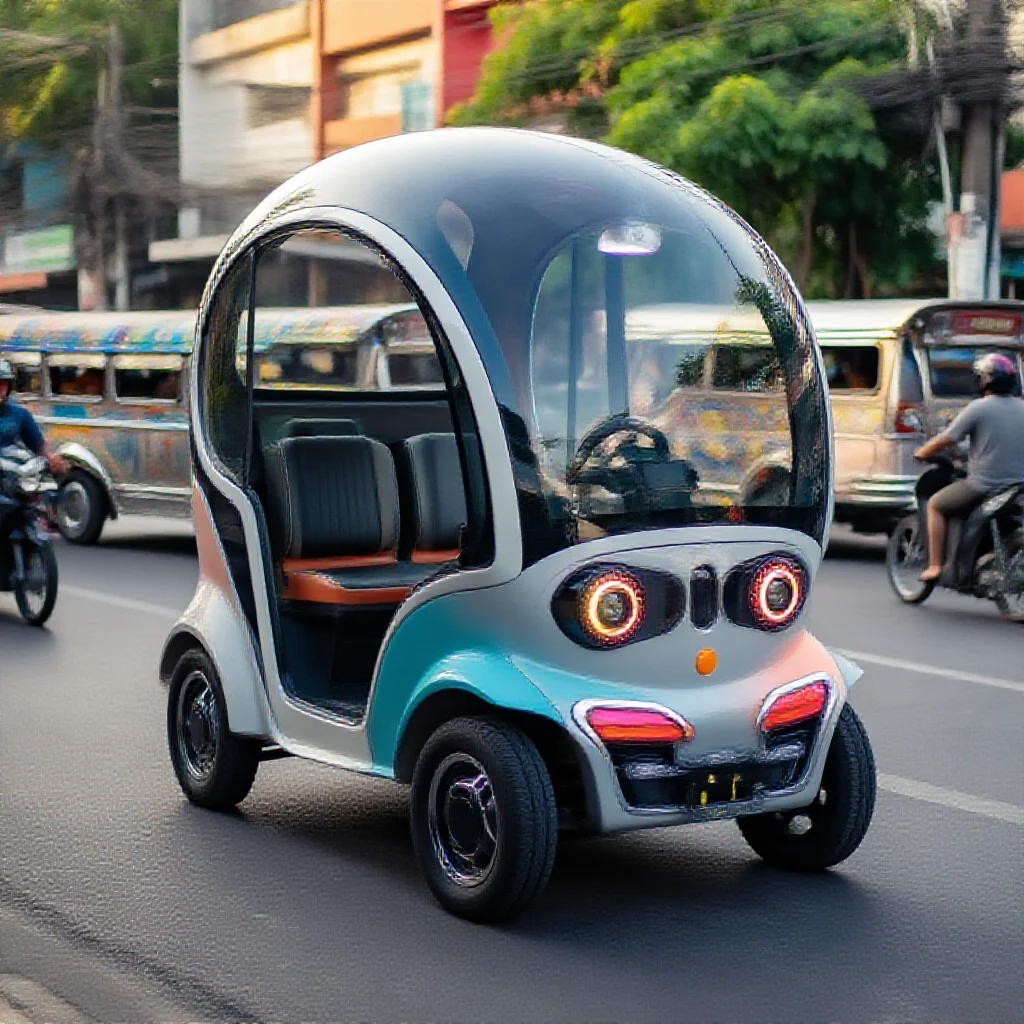
*Cover Image Description: A sleek, modern, single-door electric micro-car with a retro-futuristic design reminiscent of a bubble car, parked on a bustling street in Manila with jeepneys and motorcycles in the soft-focus background. The vehicle is small, colorful, and looks both utilitarian and stylish. The scene is during golden hour, highlighting a blend of traditional and modern urban transport.*
Introduction: More Than a Nostalgic Replica – A Strategic Signal
A coach builder in the Philippines has developed a small electric vehicle (EV) with a design reminiscent of the mid-20th century Isetta microcar. The company has announced a goal to scale its production. This initiative is not a singular automotive curiosity. It functions as a diagnostic signal of broader shifts in Southeast Asia's mobility and manufacturing landscape. The venture tests a specific hypothesis: that low-volume, flexible, and locally-tailored EV production can establish a viable economic logic distinct from the economies of scale driving global automotive giants. This analysis positions the project as a case study in decentralized, agile manufacturing within emerging markets, probing its potential to address urban congestion, affordability, and import dependency through niche adaptation.

Deconstructing the Business Model: Coach Building in the EV Age
The entity leading this initiative is identified as a coach builder, a classification carrying significant strategic implications. Coach builders traditionally specialize in low-volume, high-flexibility production, often involving customization on existing platforms or bespoke body construction. This operational model contrasts with the capital-intensive, high-throughput assembly lines of mainstream automakers. Its advantages include lower fixed overhead, adaptability to market feedback, and an inherent capacity for customization. The target market for such a vehicle logically segments into urban professionals seeking affordable, efficient primary transport, households considering a secondary vehicle for short trips, and commercial fleets for controlled environments like university campuses, tourism resorts, or gated communities.
The primary challenge resides in scaling. Transitioning from prototype development to volume production requires establishing a supply chain, quality control processes, and after-sales service infrastructure—tasks typically managed by legacy automakers with established ecosystems. The viability of this scaling attempt hinges on capital efficiency. Data indicates that micro-EV segments are experiencing growth in Asian markets, particularly for low-speed models. The coach-building approach, leveraging existing fabrication skills and avoiding the sunk costs of a greenfield automotive plant, presents a potentially capital-efficient entry point into this niche (Source 1: [Industry Analysis on Asian Micro-EV Growth]).
The Deep Entry Point: Bypassing China's EV Dominance Through Hyper-Localization
A central competitive question is whether a locally-developed, niche vehicle can contend with inexpensive, mass-produced micro-EVs imported from China, which currently dominate the affordable EV segment in many markets. The Philippine venture’s strategic response appears to be hyper-localization. This involves two key components: supply chain regionalization and product "right-sizing."
Supply chain archaeology becomes critical. Sourcing core components like battery packs, electric motors, and power electronics from within the Association of Southeast Asian Nations (ASEAN) region could mitigate import costs and currency exposure, potentially offsetting some of the cost advantages of Chinese imports. This aligns with regional industrial policies aimed at developing integrated EV supply chains. Furthermore, the Philippine government imposes tariffs on imported fully-built vehicles, which provides a relative cost advantage to locally assembled units (Source 2: [Philippine Tariff Commission Data]).
The "right-sizing" hypothesis argues that for hyper-dense Southeast Asian cities like Metro Manila, Jakarta, or Bangkok, an ultra-compact form factor is a more optimal solution than merely downsized conventional cars. Such vehicles address critical pain points: extreme traffic congestion and severe parking scarcity. A vehicle with the footprint of an Isetta-like EV maximizes utility per unit of road and parking space, a metric of increasing importance in megacities.
The Ripple Effects: Implications for Urban Planning and Logistics
The proliferation of such micro-EVs could generate secondary effects on urban systems. In terms of traffic, a higher adoption rate of smaller vehicles could theoretically increase lane capacity, though net congestion impact depends on modal shift from motorcycles or public transport versus addition of new vehicle trips. The more immediate benefit is in parking efficiency, allowing for higher density of parking spaces.
Commercial applications may present a stronger initial use case. The vehicle’s low operating cost makes it a candidate for transforming "last-mile" delivery and service fleets. Logistics companies could deploy small EV fleets for inner-city parcel delivery, reducing fuel costs and emissions. This model has precedent in European cities, where micro-vehicles are increasingly used for urban logistics (Source 3: [European Urban Logistics Case Studies]).
Synergy with digital platforms is another plausible development path. The vehicle could be integrated into ride-hailing or short-term rental applications, creating a new, ultra-efficient layer for mobility-as-a-service offerings tailored for short-distance urban trips.
Verification and Credibility: Separating Ambition from Execution
The current announcement remains in the ambition phase. Credibility assessment requires tracking several verification milestones: the securing of production funding, the formalization of supply chain partnerships for key components like lithium-ion batteries, and the receipt of type approval from relevant transport authorities. The coach builder’s historical expertise lies in fabrication and customization, not in high-volume manufacturing, quality assurance systems, or nationwide dealership and service network management. Success depends on bridging this capability gap, likely through strategic partnerships.
The venture’s ultimate market test will be its ability to achieve a price point competitive with both imported micro-EVs and high-quality internal combustion engine motorcycles, while offering superior utility. Its value proposition rests on a triad: ultra-low operating costs, minimal spatial footprint, and local manufacturing appeal.
Conclusion: A Litmus Test for Distributed Automotive Development
The Philippine coach builder’s electric micro-vehicle project is a litmus test for a specific development model. It challenges the notion that automotive manufacturing is the exclusive domain of highly integrated, mass-production-oriented corporations. By leveraging regional supply chains, targeting a hyper-specific urban mobility niche, and utilizing a flexible production model, the venture attempts to leapfrog traditional automotive development cycles.
Its outcome will provide data on the viability of distributed, small-scale EV manufacturing in emerging economies. A successful scale-up could encourage similar niche-focused ventures across Southeast Asia, accelerating the region's micro-mobility revolution and offering a counterpoint to import-dominated electrification strategies. Conversely, failure would underscore the persistent barriers of scale, supply chain depth, and consumer acceptance in the automotive sector. The project, therefore, transcends the fate of a single vehicle; it serves as a real-world experiment in the reconfiguration of automotive value chains for the electric age in emerging markets.