Beyond 10,000 Units: What Toyota''s Early 2026 bZ Sales Reveal About Its EV Strategy and Market Position
Toyota's report of over 10,000 bZ model sales in the first part of 2026 is more than a simple milestone. This analysis moves beyond the headline figure to examine what this performance signals about Toyota's evolving electric vehicle strategy in key markets like North America. We explore whether this pace indicates a successful scaling of its 'multi-pathway' approach, the competitive pressure it faces from pure-EV brands, and the critical supply chain and production ramp-up challenges that underpin these numbers. The article assesses if this early-2026 data point marks a turning point for the automotive giant's electrification ambitions or merely a cautious step in a longer, more complex transition.
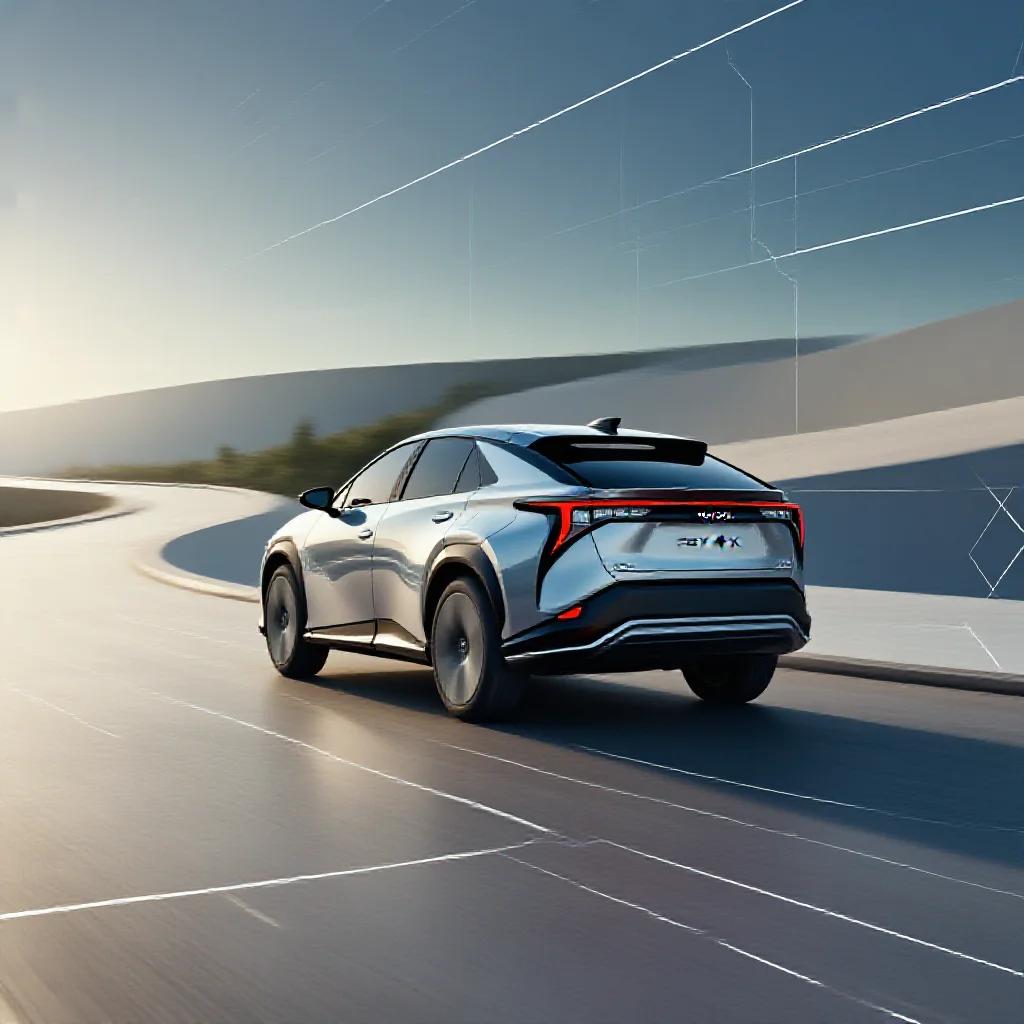
Beyond 10,000 Units: What Toyota's Early 2026 bZ Sales Reveal About Its EV Strategy and Market Position
Toyota Motor North America reported that sales of its bZ series battery-electric vehicles surpassed 10,000 units in the first part of 2026 (Source 1: [Primary Data]). This figure provides a concrete, early data point for assessing the automotive giant's progress in a critical market during a pivotal phase of industry transition.
The 10,000-Unit Milestone: Surface Achievement or Strategic Signal?
The significance of 10,000+ bZ model sales in a single quarter is not self-evident. For a corporation of Toyota's scale, which sells millions of vehicles globally annually, this volume is modest in isolation. The strategic weight of the figure derives from its origin and timing. The data was released by Toyota Motor North America, indicating a focus on performance in a key, challenging market where consumer adoption of electric vehicles is uneven and truck-centric preferences dominate.
This early-2026 result establishes a measurable baseline. Analysis must project whether this pace, if sustained, would meet Toyota's internal full-year electrification targets for the region. The performance must also be contextualized against the company's 2025 bZ sales in North America to determine if it represents acceleration, stagnation, or a planned step in a gradual ramp-up. The figure suggests market entry and presence but does not, by itself, indicate market leadership or robust consumer demand.
Decoding the 'Multi-Pathway' Strategy in Action
Toyota's stated strategy avoids a singular focus on battery-electric vehicles (BEVs), advocating instead for a "multi-pathway" approach encompassing hybrids, plug-in hybrids, fuel cell vehicles, and BEVs. The bZ series' role within this portfolio is critical to interpret. The early-2026 sales volume raises a central question: is the bZ line acting as a competitive flagship, or is it fulfilling a compliance and portfolio-balancing role?
The sales figure does not distinguish between consumer-driven demand and corporate allocation. A volume of 10,000+ units could result from strong pull in specific segments or from a carefully managed supply to dealerships, intended to seed the market without oversupply. This performance must be cross-referenced with Toyota's global electrification blueprints and executive commentary on BEV adoption curves. If this sales pace aligns with conservative, phased projections, it signals strategy adherence. If it lags behind more aggressive industry-wide BEV growth rates, it may indicate the "multi-pathway" approach is yielding cautious BEV outcomes.
The Unseen Battleground: Supply Chain and Production Ramp-Up
The reported sales figure is an output metric; its true explanatory factors lie upstream in production and supply chain logistics. Achieving this sales volume reflects operational success in several complex domains. It implies a certain level of battery cell sourcing and semiconductor procurement stability for the dedicated e-TNGA platform. The number serves as a proxy for the scalability of Toyota's BEV-specific manufacturing processes.
A key analytical point is whether 10,000 units represent the full current production capacity or a throttled output. Given historical industry-wide constraints, this volume may reflect a supply-limited scenario rather than a demand ceiling. The long-term implication is significant. The efficiency and scalability demonstrated in achieving this early-2026 result directly influence the risk calculus and investment timing for future bZ model launches and potential dedicated BEV factory investments in North America.
Competitive Crossroads: Pressure from Both Sides
The bZ series competes in a bifurcated competitive landscape. Benchmarking this sales velocity against equivalent BEVs from Tesla, Hyundai/Kia, or Ford in the same period is essential. A comparative deficit would highlight competitive intensity and potential gaps in product appeal or brand perception in the electric segment. Conversely, parity or advantage would signal a successful incursion by a legacy manufacturer.
Internally, competition exists. Toyota's dominant hybrid business presents a paradox: do strong hybrid sales cannibalize potential bZ demand, or do they cultivate a technologically-engaged customer base that may later upgrade to a BEV? The North American sales focus is particularly telling. Success in this truck-heavy market would suggest the bZ models are overcoming niche status. However, the volume reported, while substantive, does not yet indicate a fundamental shift in mainstream consumer preference within Toyota's core North American buyer cohort.
Conclusion: A Measured Step in a Protracted Transition
The sale of over 10,000 bZ models in early 2026 confirms Toyota's operational capability to produce, distribute, and sell battery-electric vehicles at a meaningful scale in North America. The data point is consistent with a deliberate, risk-managed expansion rather than a disruptive market assault. The performance likely keeps Toyota on track with its internal, phased electrification goals while not immediately threatening the volume leadership of dedicated BEV manufacturers.
Future trends will be determined by the rate of acceleration from this baseline. The critical factors to observe will be the quarter-over-quarter sales growth rate for the bZ series, the expansion of the bZ model lineup, and any announced increments in BEV-specific manufacturing capacity. This early-2026 result is less a turning point and more a calibrated step, revealing a strategy that prioritizes long-term stability and portfolio diversity over rapid, singular-technology dominance. The coming quarters will test whether this pace is sufficient to maintain competitive relevance in an accelerating electric vehicle market.