Beyond the Numbers: How India''s Solar Surge in FY26 Redefines the Global Clean Power Race
While headlines focus on China''s clean power dominance, India''s staggering addition of 44.6 GW of solar capacity in FY2026, reaching over 150 GW total, reveals a deeper market shift. This analysis moves beyond simple capacity rankings to examine the underlying drivers: a strategic pivot towards energy security and domestic manufacturing that is reshaping global supply chains. We explore how India''s targeted growth, supported by reports from JMK Research, contrasts with the broader but potentially less focused expansions elsewhere, signaling a new phase in the energy transition where geopolitical strategy is as critical as gigawatt counts. The data suggests a future where clean power leadership is defined not just by scale, but by strategic autonomy and market influence.
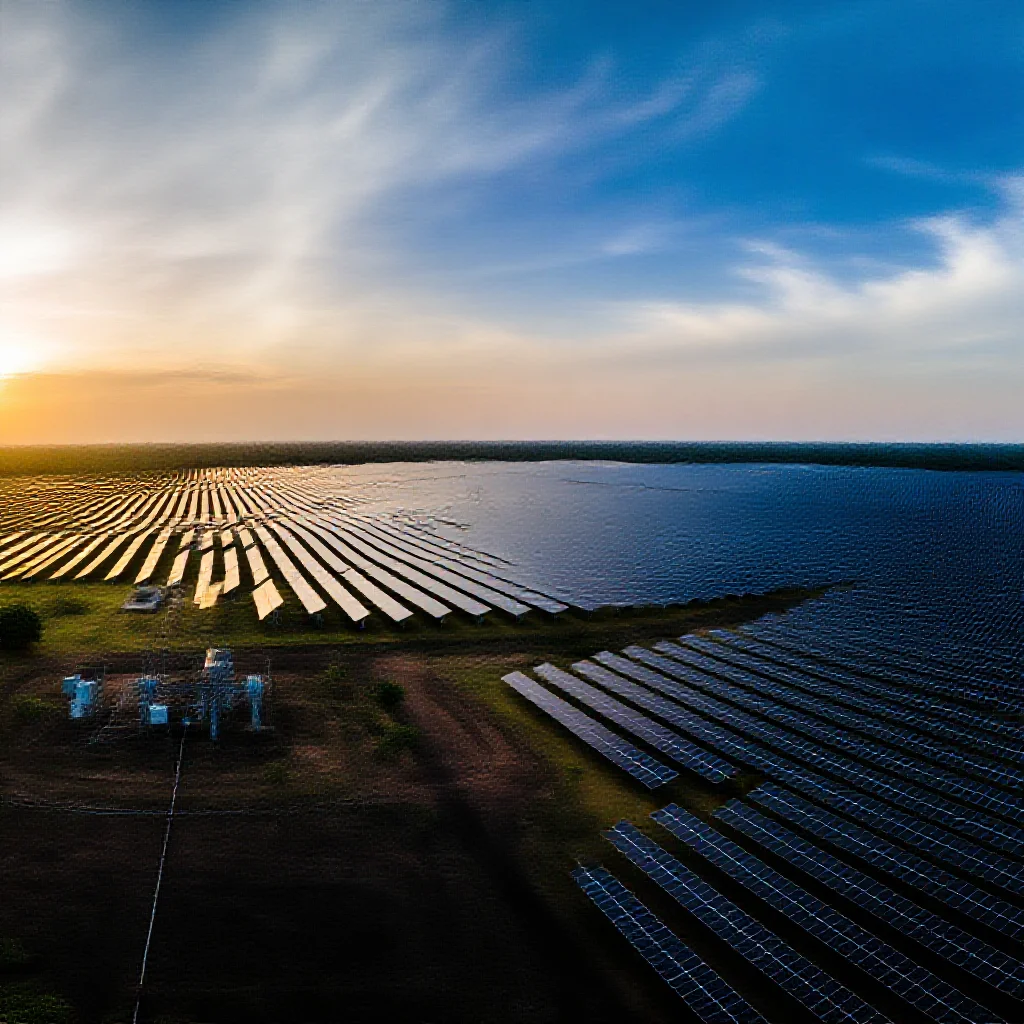
Beyond the Numbers: How India's Solar Surge in FY26 Redefines the Global Clean Power Race
The Headline Data: A Snapshot of FY2026's Clean Power Landscape
Global clean power capacity additions for the fiscal year ending March 31, 2026, present a multi-polar landscape. While aggregate data indicates China maintained its position in adding the most new clean power capacity, a granular analysis reveals a more significant structural shift. The standout development is India's addition of 44.6 gigawatts (GW) of solar capacity within that single fiscal year (Source 1: [Primary Data]). This surge propelled India's cumulative installed solar capacity to 150.26 GW by the period's end (Source 1: [Primary Data]). This milestone represents a critical acceleration toward national renewable energy targets and reconfigures the hierarchy of annual solar deployment. The data, originating from an analysis by JMK Research, provides a quantifiable benchmark for evaluating the velocity and strategic direction of national energy transitions beyond aggregate global rankings.
Decoding the Strategy: India's Solar Surge as a Geopolitical Maneuver
The scale of India's FY26 solar expansion is not a market anomaly but the output of a deliberate, long-term strategy. The primary driver extends beyond climate commitments to encompass energy security and industrial policy. A strategic pivot toward energy independence aims to reduce the economic and logistical vulnerabilities associated with fossil fuel imports. This objective differentiates India's growth model from regions with more diversified or slower-paced clean power strategies.
The deployment velocity is underpinned by a parallel build-out of domestic manufacturing capacity. Initiatives like the Production Linked Incentive (PLI) scheme for high-efficiency solar modules are designed to control a greater share of the solar value chain within national borders. Consequently, the 44.6 GW figure reflects a dual-track policy: rapid deployment to meet immediate demand and capacity creation to secure future supply. This transforms solar growth from a purely environmental or economic agenda into a comprehensive geopolitical maneuver aimed at strategic autonomy.
The Ripple Effect: Supply Chain and Global Market Implications
India's scaled and sustained demand, coupled with its manufacturing ambitions, will exert measurable pressure on global solar supply chains. The immediate effect is increased competition for upstream materials like polysilicon and specialized components, potentially tightening global markets. In the medium term, the growth of domestic Indian manufacturers, fostered by protective policies, will challenge the incumbent dominance of Chinese module and inverter suppliers in the world's second-largest market.
A probable long-term outcome is a gradual bifurcation of supply chains. One chain may continue to serve global markets with established cost leaders, while an increasingly self-sufficient Indian chain serves its massive domestic demand and potentially neighboring regions. This bifurcation could influence global technology and pricing trends. India's specific conditions—high irradiance, cost sensitivity, and domestic content requirements—may drive preferences for certain module technologies and balance-of-system innovations, creating a distinct technological pathway alongside those developed in other major markets.
Verification and Context: Placing the JMK Research Data in the Broader Narrative
The JMK Research report serves as a primary-source anchor for this analysis. Its role is to provide verified, periodic data points that allow for the audit of India's energy transition trajectory. Reliance on such granular, national-level data is essential for "slow analysis" that moves beyond quarterly earnings cycles or press-release announcements to track foundational shifts in infrastructure.
When contextualized within global data, where China leads in total clean power additions and the United States added less capacity than either China or India in FY26, India's solar-specific achievement gains sharper focus. It indicates a concentrated, technology-specific strategy rather than a broad-based clean power approach. This focus allows for disproportionate gains in a single technology stack, enabling rapid scale and potential cost reductions that a more diversified portfolio might not achieve as quickly. The data, therefore, audits not just capacity but strategic effectiveness.
The New Race: Strategic Autonomy as the Future Metric
The FY26 data suggests an evolution in the metrics defining clean power leadership. The initial phase of the energy transition prioritized aggregate capacity and levelized cost of energy. The emerging phase introduces strategic autonomy as a critical, parallel metric. A nation's position is increasingly defined by its control over the manufacturing supply chain, the security of its energy inputs, and the resilience of its deployment model to global trade disruptions.
India's 44.6 GW solar addition is a leading indicator of this new race. Its model, emphasizing domestic capacity and energy security, presents a contrast to models reliant on open global markets for technology procurement. The future clean power landscape will likely be characterized by multiple, sometimes competing, centers of manufacturing and innovation. Leadership will be measured not solely in gigawatts deployed but in gigawatts manufactured, value captured, and strategic dependencies reduced. India's performance in FY26 demonstrates a committed entry into this more complex and geopolitically charged arena of the energy transition.