Tesla FSD''s European Debut: A Strategic Test Beyond Technology
The rollout of Tesla's Full Self-Driving (FSD) version 12.5.4.1 in Europe, specifically in Germany, marks a critical strategic expansion beyond its North American origins. This article analyzes the initial performance, where the software successfully handled complex maneuvers like roundabouts but faltered at nuanced local rules like bus lanes. We argue this deployment is less about a finished product and more a high-stakes, real-world data collection campaign. The core challenge isn't just technological refinement, but navigating a fragmented regulatory landscape and adapting to deeply ingrained European driving norms. This move pressures European regulators and competitors, setting the stage for a new phase in the global autonomous vehicle race where software adaptability and regulatory diplomacy are as crucial as sensor technology.
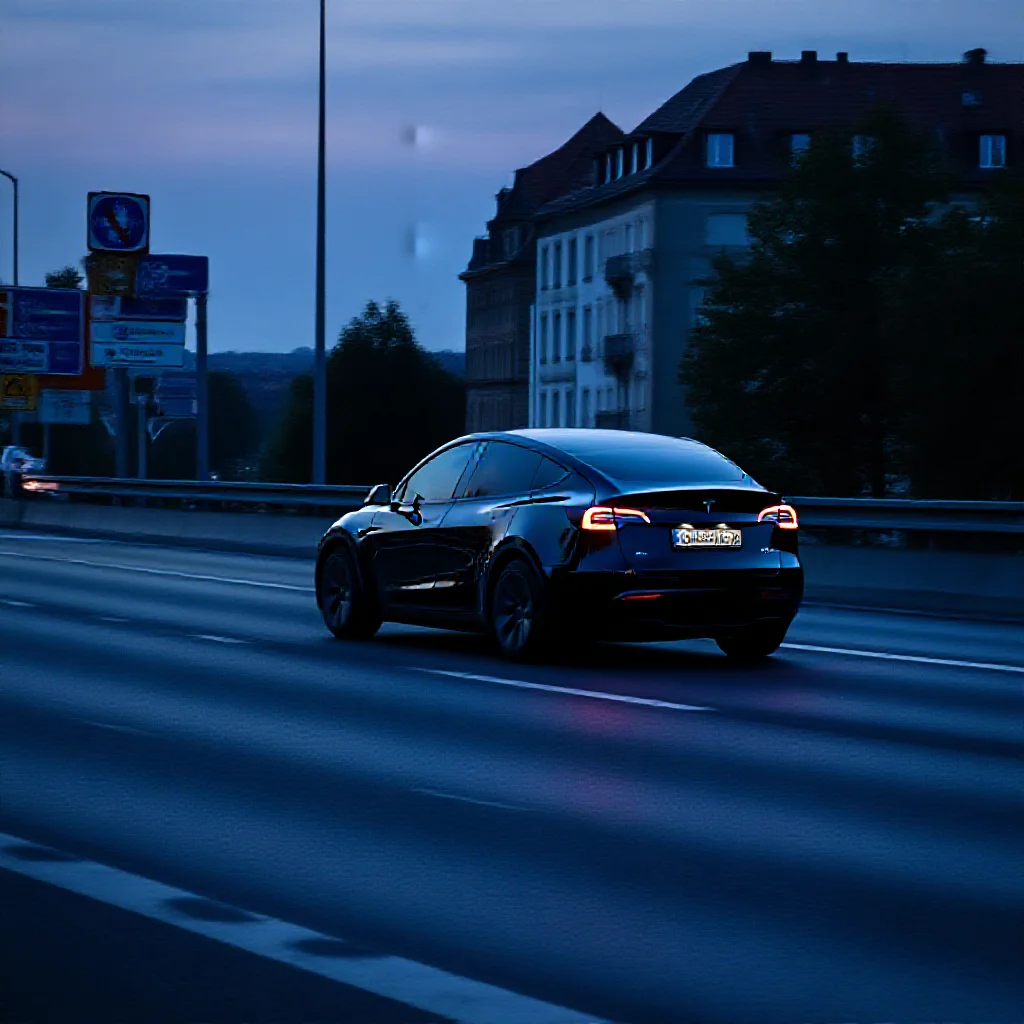
Tesla FSD's European Debut: A Strategic Test Beyond Technology
**Article Summary:** The rollout of Tesla's Full Self-Driving (FSD) version 12.5.4.1 in Europe, specifically in Germany, marks a critical strategic expansion beyond its North American origins. This article analyzes the initial performance, where the software successfully handled complex maneuvers like roundabouts but faltered at nuanced local rules like bus lanes. We argue this deployment is less about a finished product and more a high-stakes, real-world data collection campaign. The core challenge isn't just technological refinement, but navigating a fragmented regulatory landscape and adapting to deeply ingrained European driving norms. This move pressures European regulators and competitors, setting the stage for a new phase in the global autonomous vehicle race where software adaptability and regulatory diplomacy are as crucial as sensor technology.
---
Beyond the Beta: FSD's European Rollout as a Strategic Data Gambit
The deployment of Tesla's Full Self-Driving (FSD) software version 12.5.4.1 in Europe (Source 1: [Primary Data]) represents a pivotal inflection point, transcending a mere geographic market expansion. This move constitutes Tesla's most critical real-world validation laboratory to date. The economic logic is clear: by introducing the supervised beta to European drivers, Tesla effectively mobilizes a new, continent-wide test fleet. This fleet is tasked with generating priceless data on driving cultures, infrastructure nuances, and traffic behaviors that are fundamentally distinct from North American patterns.
This strategy inherently creates tension between Silicon Valley's iterative development ethos and Europe's entrenched precautionary regulatory principle. The "move fast and break things" approach, moderated by driver supervision, is now being stress-tested against a regulatory environment historically inclined toward pre-market validation and stringent consumer protection. The European deployment, therefore, is a calculated gambit where the primary return on investment is not immediate revenue from the FSD subscription, but the acquisition of a unique and complex dataset necessary for global system robustness.
Decoding the German Test Drive: Capabilities, Limits, and the 'Bus Lane' Problem
Initial performance data from Germany provides a microcosm of FSD's current state. The software demonstrated competent execution of dynamic tasks such as lane changes and, significantly, the navigation of roundabouts (Source 1: [Primary Data]). These successes indicate core advancements in the vehicle's AI-driven control and path planning in complex, multi-directional traffic flows.
Conversely, the reported requirement for a driver intervention when the system attempted to turn into a bus lane is a failure laden with symbolic weight (Source 1: [Primary Data]). This incident is not a failure of basic vehicular control, but a failure of contextual understanding and legal compliance at a hyper-local level. Bus lane rules, which vary by time of day, signage, and municipality, represent the "long tail" of driving norms—a vast set of edge cases that are geographically fragmented and deeply ingrained. This "bus lane problem" underscores that the primary barrier to full autonomy in Europe is no longer fundamental operation, but the mastery of a dense, layered matrix of regional and local regulations.
The Regulatory Chessboard: How FSD Tests Europe's Governance Frameworks
Tesla's European foray directly pressures the continent's fragmented regulatory landscape. Unlike the United States, where federal guidelines provide a relatively unified baseline, the European Union's regulatory framework for automated vehicles is a patchwork of national interpretations and approvals within a broader EU directive structure. Germany's approval for supervised FSD beta testing does not guarantee access in France, Italy, or Spain.
This deployment forces a consequential dilemma upon regulators. They must now actively define rules and liability frameworks for a technology that is evolving in real-time on public roads. Tesla's strategy may involve elements of regulatory arbitrage, seeking approval in key, technologically permissive member states with the objective of setting a precedent that other nations will feel compelled to follow. The ensuing dialogue between a agile technology provider and deliberate, safety-focused institutions will shape the pace and nature of autonomous vehicle adoption across the continent.
The Unseen Impact: Ripples Through the European Auto Ecosystem
The arrival of a mature, continuously updating ADAS/AV system from a non-traiginal equipment manufacturer (OEM) competitor sends immediate ripples through the European automotive ecosystem. For incumbent European OEMs, it applies acute competitive pressure to accelerate their own autonomous driving roadmaps, whether through in-house development, accelerated partnerships, or acquisitions. The timeline for delivering comparable consumer-facing features has been materially shortened.
Furthermore, this development stimulates adjacent sectors. Demand will increase for Europe-specific services: high-definition mapping with local rule integration, sophisticated simulation environments modeling European scenarios, and independent validation and certification services. In the long-term view, Tesla's entry could act as a catalyst for the development of a more harmonized, pan-European standard for autonomous vehicle testing and certification, a outcome that has eluded the industry thus far but would benefit all stakeholders by reducing complexity and cost.
Conclusion: The New Race Defined by Data and Diplomacy
The initial European chapter of FSD version 12.5.4.1 confirms that the global autonomous vehicle race has entered a new phase. While core sensor and AI technology remain foundational, the differentiators are shifting toward software adaptability and regulatory diplomacy. Success will be determined by a system's ability to ingest and learn from the heterogeneous data of European roads and by a company's capacity to navigate a complex political and legal landscape. Tesla's supervised beta is the opening move in this high-stakes game. Its performance will be measured not only in miles between interventions but in the terabytes of region-specific data collected and the subsequent regulatory pathways it manages to unlock or forge. The ultimate test is whether a globally trained neural network can achieve the hyper-local awareness required for true autonomy.