Enervex''s AquaCore: How a Smart Heat Pump Water Heater Startup Challenges the $2,500 Price Barrier
Startup Enervex is entering the US water heater market with the AquaCore Smart Water Heater, a compact, Wi-Fi-enabled heat pump unit priced under $2,500 and slated for a 2026 launch. This analysis explores how its use of propane (R-290) refrigerant, direct-to-consumer model, and aggressive efficiency claims position it not just as another appliance, but as a strategic challenger aiming to disrupt the adoption economics of residential heat pump technology. We examine the underlying market logic, the critical role of refrigerant choice in the industry's sustainability pivot, and the potential long-term implications for traditional manufacturers and the electrification supply chain.
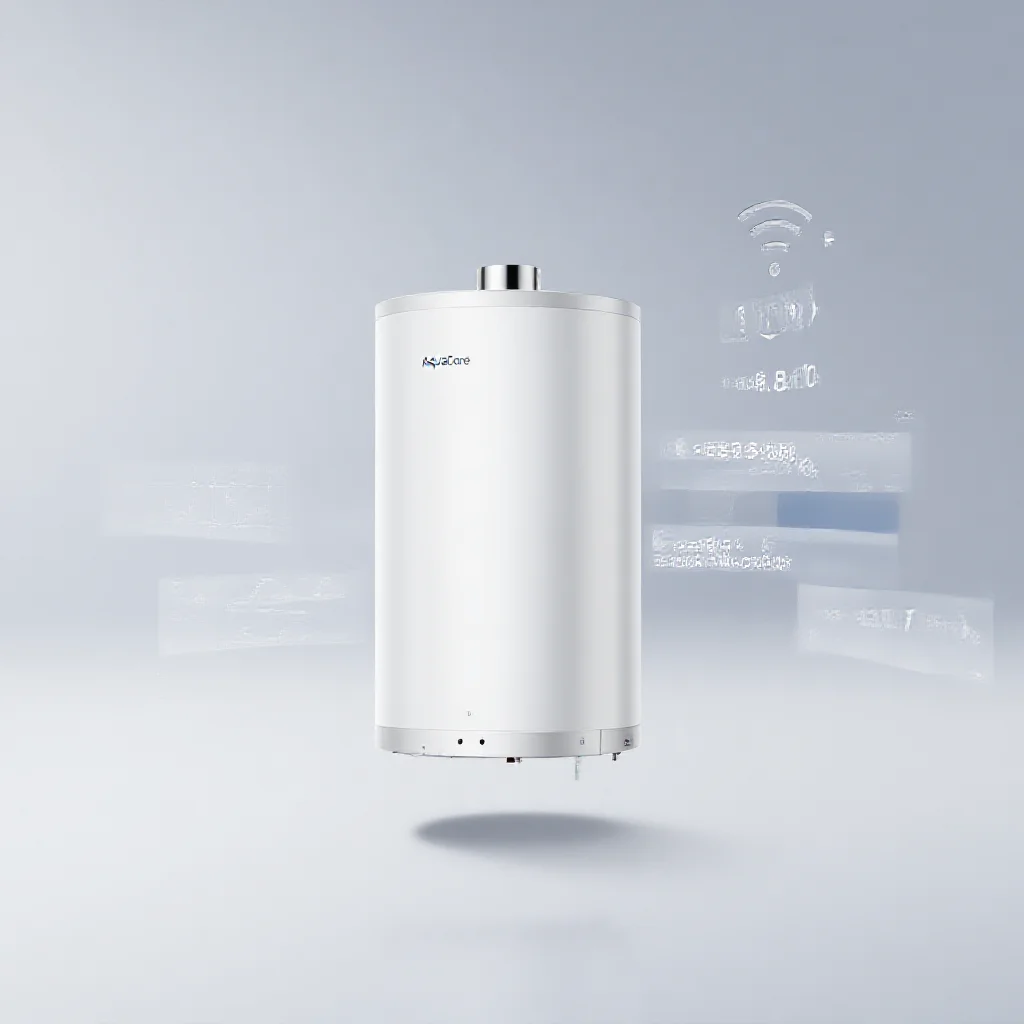
Enervex's AquaCore: How a Smart Heat Pump Water Heater Startup Challenges the $2,500 Price Barrier
**Summary:** Startup Enervex is entering the US water heater market with the AquaCore Smart Water Heater, a compact, Wi-Fi-enabled heat pump unit priced under $2,500 and slated for a 2026 launch. This analysis explores how its use of propane (R-290) refrigerant, direct-to-consumer model, and aggressive efficiency claims position it not just as another appliance, but as a strategic challenger aiming to disrupt the adoption economics of residential heat pump technology.
Beyond the Product: Enervex's Entry as a Market Signal
The announcement of the AquaCore Smart Water Heater represents a market signal beyond the introduction of a single appliance. The launch strategy tests a critical price and convenience threshold considered essential for accelerating mass adoption of residential heat pump technology.
The sub-$2,500 target price is a primary strategic lever. This figure operates as both an economic and psychological battleground. Current market averages for heat pump water heater units, excluding installation, often range from $1,200 to $2,500, with installed costs frequently exceeding $3,000. By targeting a retail price point under $2,500 (Source: [Primary Data]), Enervex aims to compress the total cost of ownership equation, directly addressing a principal consumer barrier. The company’s planned direct-to-consumer sales model further challenges established industry dynamics. This approach bypasses traditional HVAC distribution channels and installer networks, which can add significant markup and complexity. The success or failure of this model for a major, federally-regulated appliance will provide critical data on evolving consumer purchase behaviors in the home electrification sector.
The Compact Core: Engineering Choices with Strategic Implications
Enervex’s technical specifications reveal calculated engineering decisions with broad strategic implications. The claim that the AquaCore is "30% more compact than standard 50-gallon electric water heaters" (Source: [Primary Data]) is not merely a design achievement. It is a direct response to a major retrofit barrier in existing homes, where utility closets and basement footprints are constrained. A smaller form factor expands the addressable market by fitting into spaces where current heat pump water heaters cannot.
The selection of R-290 (propane) as the refrigerant is a more profound strategic bet. R-290 has an ultra-low global warming potential (GWP), aligning with impending regulatory shifts away from high-GWP hydrofluorocarbons. More critically, it offers thermodynamic properties that can lead to higher system efficiency, particularly in a wider range of ambient temperatures, which supports the company’s energy savings claims. This choice signals a bet on the scaling of a natural refrigerant supply chain and the industry’s readiness to handle its flammability classifications. Furthermore, the integration of Wi-Fi connectivity and an energy-monitoring mobile app (Source: [Primary Data]) represents an attempt to shift the value proposition. It moves the discourse from a simple payback period calculation toward user engagement, behavioral savings, and future grid-interactive capabilities, potentially justifying a price premium through enhanced functionality.
The 75% Savings Claim: Verification and Market Context
The core performance claim that the AquaCore can "reduce water heating energy costs by up to 75% compared to standard electric resistance models" (Source: [Primary Data]) requires contextual verification against established benchmarks. The U.S. Department of Energy (DOE) labels for heat pump water heaters already indicate they can be two to three times more energy efficient than conventional electric resistance water heaters, which correlates with potential energy cost savings of 50% to 70% under optimal conditions. A 75% claim sits at the upper bound of this range.
Independent studies, including those from the DOE’s Building America program, confirm high performance but note that real-world savings are variable. Factors such as inlet water temperature, ambient air temperature and volume, hot water usage patterns, and local electricity rates significantly influence outcomes. The claim’s validity will hinge on the unit’s rated Uniform Energy Factor (UEF) under the DOE test procedure and its performance in colder climates. The long-term financial model for such a product, however, extends beyond static efficiency. By the 2026 launch window, projected increases in utility rates and potential regional carbon pricing mechanisms could amplify the relative value of high-efficiency appliances, improving the economic calculus even if the peak savings percentage moderates in field conditions.
The 2026 Horizon: Timing, Competition, and Supply Chain Ripples
The Q3 2026 launch timeline (Source: [Primary Data]) is a signal of the product’s current development stage. The lead time accounts for the rigorous certification processes required for a pressure vessel using a flammable refrigerant (UL, DOE, AHRI), manufacturing line setup, and supply chain build-out for key components like R-290-specific compressors.
This horizon provides established manufacturers a clear timeframe to formulate a response. Incumbents like Rheem, A. O. Smith, and Bradford White are likely to react through a combination of accelerated innovation—potentially adopting R-290 in their own lines—price competition on existing models, or strategic partnerships. The direct-to-consumer model may face pushback from entrenched installer networks that are critical for sales and fulfillment of complex appliances. Over the long term, Enervex’s strategy, if successful, could create ripples beyond the water heater category. It represents a deep entry point into the home’s mechanical systems, positioning the company as a potential platform for broader home energy management. This could attract attention from HVAC conglomerates, utilities seeking demand-side management assets, or technology firms focused on the smart home ecosystem, making market consolidation a plausible future outcome. The AquaCore’s market entry will thus serve as a live test of price elasticity, channel disruption, and consumer readiness for a new generation of electrified appliances.