Sustainability Assessment and Biofuels: Unpacking the Hidden Trade-offs of Corn Ethanol Policy
This article explores how a comprehensive sustainability assessment framework can reveal the hidden economic and environmental trade-offs of biofuel policies. Using the U.S. corn ethanol boom as a case study, we examine the disconnect between policy goals—such as the 2007 Energy Independence and Security Act—and real-world impacts like land-use change carbon debt, water quality degradation, and supply chain pressures. By integrating facts on tax credits, production volumes, and lifecycle emissions, the analysis shows why sustainability management must move beyond simple greenhouse gas accounting to address systemic risks.
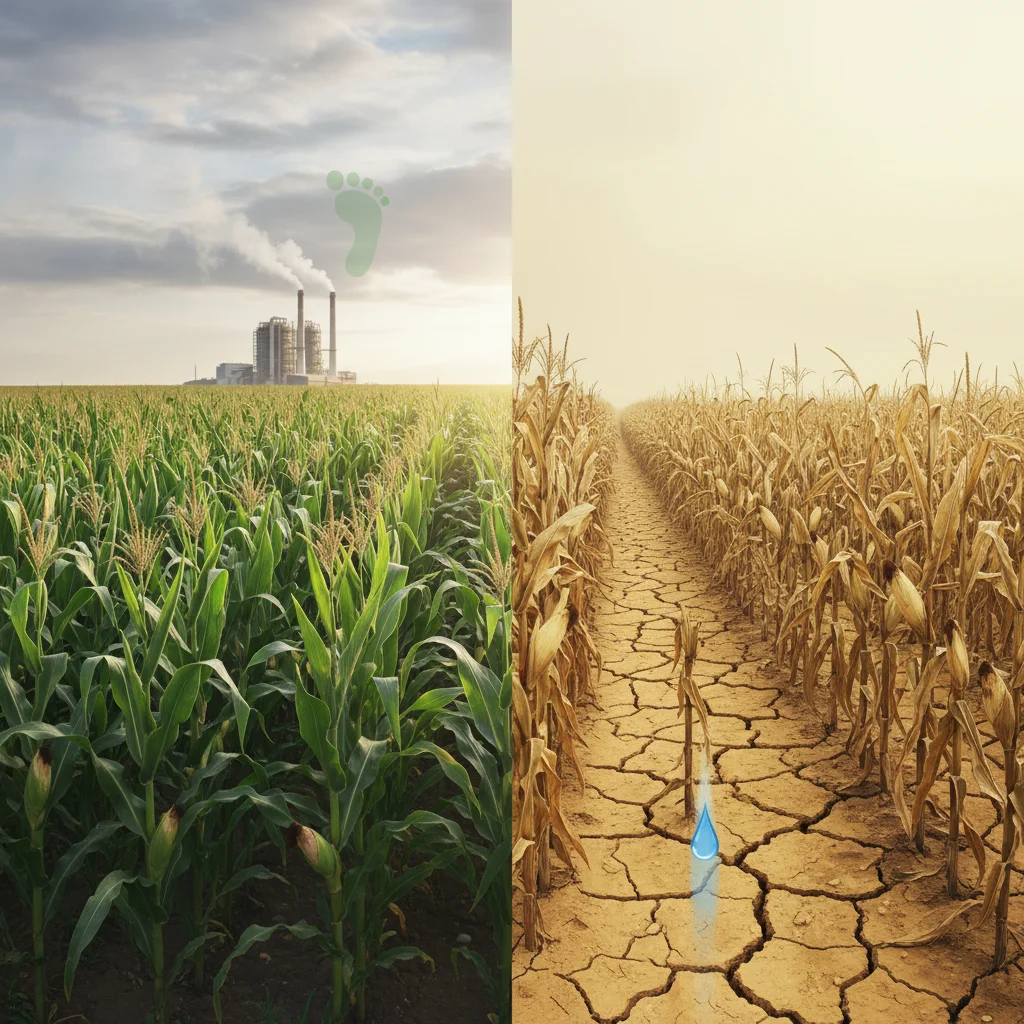
Sustainability Assessment and Biofuels: Unpacking the Hidden Trade-offs of Corn Ethanol Policy
**Summary:** Using U.S. corn ethanol policy as a case study, this article explores how a comprehensive sustainability assessment framework can reveal the hidden economic and environmental trade-offs of biofuel policies. By examining the disconnect between policy goals—such as the 2007 Energy Independence and Security Act—and real-world impacts (land-use change carbon debt, water quality degradation, supply chain pressures), the article argues that sustainability management must move beyond simple greenhouse gas accounting to address systemic risks.
---
1. Introduction: The Promise and Peril of Biofuels
In 2007, the U.S. Congress passed the Energy Independence and Security Act (EISA), setting an ambitious target of producing 36 billion gallons of biofuels annually by 2022. The policy was driven by a dual promise: reducing dependence on foreign oil while lowering greenhouse gas emissions from the transportation sector. Against the backdrop of high oil prices and growing climate concerns at the time, corn ethanol was hailed as a symbol of "green" fuel and received generous tax credits and blending mandates.
Yet the reality more than a decade later has proven far more complex. Although U.S. ethanol production reached 13.23 billion gallons in 2010 (RFA, 2011), and 38% of the corn harvest was used for ethanol production (USDA, 2011), the debate over its sustainability has never subsided. To systematically assess whether such policies are truly "sustainable" requires a structured analytical framework. This article adopts the five-step process of Sustainability Assessment and Management (SAM): Screening, Problem Definition, Analytic Tools, Decision Integration, and Follow-up — to examine the economic and environmental trade-offs of corn ethanol policy.
**Core argument:** While corn ethanol may reduce some greenhouse gas emissions on a life-cycle basis, ignoring land-use change and water resource impacts generates hidden costs that ultimately undermine the long-term sustainability of the policy. Assessment methods that rely solely on carbon accounting risk overlooking systemic risks to land, water, and ecosystems.
[IMAGE: Infographic showing the five-step SAM process: Screening → Problem Definition → Analytic Tools → Decision Integration → Follow-up, with arrows forming a continuous loop.]
---
2. Biofuel Mandates: Policy Mechanisms and Economic Incentives
2.1 Policy Framework and Reporting Requirements
EISA 2007 explicitly required the U.S. Environmental Protection Agency (EPA) to submit a report to Congress every three years assessing the impacts of biofuel production on air quality, water resources, soil health, and biodiversity. While this requirement appears comprehensive, in practice the EPA's assessments have focused heavily on "life-cycle emissions" calculations for greenhouse gas reductions, while monitoring of land and water impacts has suffered from insufficient data and a lack of quantified standards.
2.2 Structural Biases in Tax Incentives
Economic incentives are key to understanding corn ethanol policy. The federal government provided two types of tax credits: $0.45 per gallon for corn ethanol and $1.01 per gallon for cellulosic ethanol. On the surface, the higher subsidy for cellulosic ethanol seemed aimed at encouraging more advanced biofuels. However, because cellulosic ethanol had not yet reached commercial production in the early 2010s, it received very little actual subsidy. Corn ethanol, benefiting from existing industrial infrastructure and agricultural lobbying power, became the policy's biggest beneficiary.
This subsidy structure created classic path dependency: the low-cost production of corn ethanol (thanks to a mature corn farming system and low-cost subsidies) further depressed its market price, making it even harder for cellulosic ethanol to compete on cost. By 2010, 37.95% of U.S. corn production (4.725 billion bushels) was flowing to ethanol plants (USDA, 2011). Corn prices rose as a result, indirectly pushing up feed costs and food prices.
2.3 Supply Chain Pressures and Resource Competition
The diversion of large amounts of corn to ethanol production directly affected raw material supply for livestock and food processing industries. Land-use intensity increased in major corn-producing regions (such as the Midwest), with farmers converting land previously used for crop rotation or fallow periods into continuous corn production, leading to soil nutrient depletion and increased pest and disease risks. In the sustainability assessment framework, these supply chain pressures are a classic example of the "problem definition" stage — a clear disconnect between initial policy goals and systemic feedback.
[IMAGE: Bar chart comparing U.S. corn ethanol production (billion gallons) and ethanol's share of total corn harvest from 2007 to 2010. X-axis: year, left Y-axis: production, right Y-axis: percentage.]
---
3. Hidden Environmental Trade-offs: Carbon Debt and Water Stress
3.1 The Shallow Truth of Life-Cycle Carbon Emissions
A common argument in favor of corn ethanol is that its life-cycle greenhouse gas emissions are 20-30% lower than gasoline (depending on model assumptions). However, this figure relies primarily on "direct emissions" calculations — the carbon footprint from planting, transport, and fuel combustion. It excludes the critical variable of **indirect land-use change (ILUC)** .
In 2008, Fargione et al. published a landmark study in *Science* showing that converting natural land (such as grasslands, forests, or wetlands) into agricultural land for biofuel crops releases large amounts of carbon stored in soil and vegetation, creating what is known as a "carbon debt." For example, converting U.S. grassland to cornfields would require 40 to 120 years of corn ethanol carbon savings to repay that debt; in tropical regions (such as Brazil or Southeast Asia), where rainforest clearing is involved, the carbon payback period can stretch to hundreds of years.
This means that if U.S. ethanol policy causes global corn demand to spill over to other countries (through price transmission and land competition), corn ethanol that appears "low-carbon" on the surface could actually result in a net *increase* in global carbon emissions. This finding fundamentally challenged policymakers' traditional understanding of biofuels.
3.2 Water Resources: The Underestimated Cost
Beyond carbon debt, water resources represent another hidden cost of corn ethanol policy. A report by the National Research Council (NRC, 2008a) clearly identified the dual threat of large-scale corn ethanol production to local water supply and water quality. First, corn cultivation requires substantial irrigation, especially in arid regions of the western U.S. and the High Plains, where groundwater extraction rates far exceed recharge rates. Second, over-application of nitrogen and phosphorus fertilizers on cornfields has caused severe nutrient pollution in Midwestern rivers and the Gulf of Mexico, triggering massive algal blooms and "dead zones."
Iowa provides a telling example: more than half of the state's corn goes to ethanol production, yet Iowa is also one of the leading contributors to nitrate pollution in the Mississippi River basin. The costs of remediating these water quality problems — drinking water treatment, fisheries losses, ecosystem restoration — are not included in the "green price" of ethanol. From a sustainability assessment perspective, this is a classic case of market failure: policy incentives (tax credits) direct short-term economic gains, while long-term environmental costs are externalized, never transmitted to consumers or producers via price signals.
3.3 Limitations of Analytical Tools and Failure of Decision Integration
Returning to the third step of the sustainability assessment framework — **Analytic Tools**. Standard life-cycle assessment (LCA) methods have been widely adopted in biofuel policy, but they typically assume a fixed land-use baseline, ignoring complex economic feedback loops and international trade transmission. When LCA excludes indirect land-use change, the "carbon reduction" numbers it generates become incomplete guidance. If policymakers then use this incomplete information directly for **Decision Integration** (the fourth step), systemic policy bias is the likely result.
In fact, the EPA's 2010 triennial report under the Energy Independence and Security Act acknowledged the importance of indirect land-use change but failed to incorporate it into formal regulatory calculations. This disconnect between "analytic tools" and "decision integration" remains the single largest structural flaw in the sustainability assessment of corn ethanol policy.
[IMAGE: Side-by-side maps: left shows a heat map of corn acreage expansion in the U.S. from 2005 to 2010 (darker color = faster growth); right shows water stress index (irrigation withdrawals as a percentage of renewable water supply) for the same region, with high-stress areas overlapping heavily with corn expansion zones.]
---
4. Conclusion: Beyond Carbon Accounting — Systemic Sustainability Management
The case of corn ethanol policy offers a profound lesson for global biofuel sustainability assessment. It shows that a wide gulf can exist between a policy's stated intentions (reducing oil dependence, lowering carbon emissions) and its actual environmental consequences. **Sustainability policy analysis** cannot stop at a single indicator (such as greenhouse gases); it must employ a systemic assessment framework that simultaneously considers the interactions among carbon debt, land-use change, water degradation, and supply chain risks.
Returning to the five-step SAM process, corn ethanol policy omitted key dimensions at the **Screening** stage (when initial goals were being set) — policymakers assumed corn ethanol was naturally "green" without adequately questioning baseline conditions for land, water, and ecosystems. At the **Problem Definition** stage, pressure signals from the agricultural supply chain (rising corn prices, soil degradation) were treated as short-term market fluctuations rather than structural risks. At the **Analytic Tools** stage, early LCA models excluded ILUC, giving policymakers optimistic estimates of "warming reduction." Finally, at the **Decision Integration** stage, tax credits and blending mandates were locked in over the long term, and even when subsequent research exposed carbon debt and water pollution problems, policy adjustments remained extremely slow.
For future sustainability management, this article recommends:
- **Expand life-cycle boundaries**: Incorporate indirect land-use change and global trade feedback into emissions accounting for all biofuels.
- **Strengthen water quality regulation**: Implement nitrogen and phosphorus loss monitoring and total load controls in major ethanol-producing regions, and incorporate water remediation costs into fuel pricing.
- **Establish adaptive policy mechanisms**: Set sustainability "red lines" — for example, when negative effects on a given indicator exceed a preset threshold, automatically trigger subsidy adjustments or production capacity limits.
The corn ethanol story is not a wholesale rejection of biofuels, but rather a warning: any large-scale energy transition policy that lacks a comprehensive sustainability assessment may create new environmental liabilities in the name of being "green." True energy independence should not come at the cost of sacrificing land, water, and climate systems. Only when assessment frameworks cover the full landscape from carbon debt to water debt can biofuels be rescued from the "sustainability paradox."
---
**References** (key sources embedded in text) - Fargione, J., et al. (2008). Land Clearing and the Biofuel Carbon Debt. *Science*, 319(5867), 1235-1238. - NRC (2008a). Water Implications of Biofuels Production in the United States. National Academies Press. - RFA (2011). 2011 Ethanol Industry Outlook. Renewable Fuels Association. - USDA (2011). Corn Production and Use Data. U.S. Department of Agriculture. - EPA (2010). Renewable Fuel Standard Program (RFS2) Regulatory Impact Analysis. U.S. Environmental Protection Agency.