The Insight

Hyundai''s IONIQ China Gambit: A Strategic Pivot or a Late Entry in the EV Arena?

Hyundai Motor Company''s launch of the IONIQ brand in China, featuring the IONIQ 7 SUV and IONIQ 8 sedan concepts, is more than a simple product debut. This analysis positions the move as a critical strategic pivot for Hyundai, aimed at reclaiming relevance in the world''s largest EV market. We examine the underlying logic: a shift from competing on volume to targeting premium niches, the geopolitical and supply chain calculus of localizing a high-end brand, and the immense challenge of challenging entrenched domestic champions like BYD and NIO. The success of IONIQ in China will serve as a key indicator of Hyundai''s global EV ambitions and its ability to navigate one of the most competitive automotive landscapes.
4 min read
Hyundai''s IONIQ China Gambit: A Strategic Pivot or a Late Entry in the EV Arena?

Hyundai's IONIQ China Gambit: A Strategic Pivot or a Late Entry in the EV Arena?

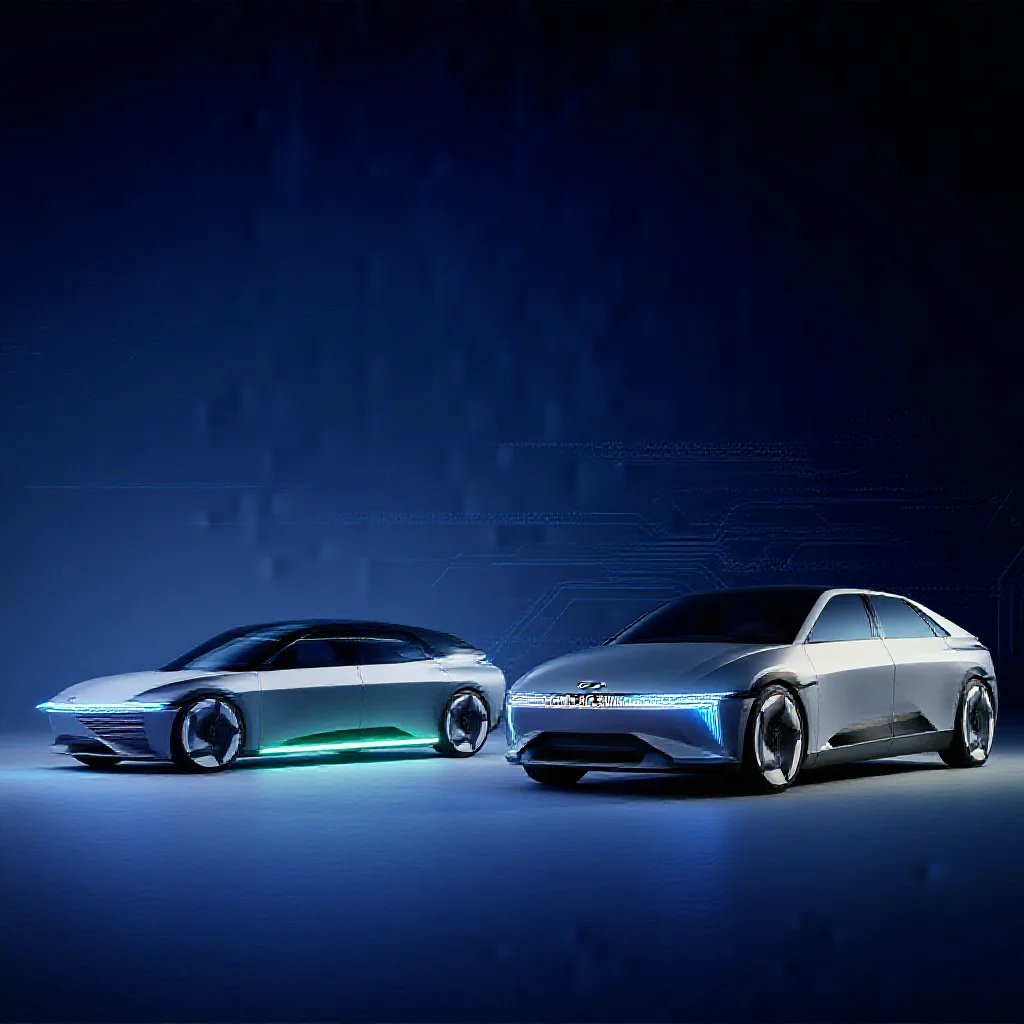
**Opening Summary** On April 10, 2026, Hyundai Motor Company launched its IONIQ lineup as a standalone brand in the Chinese market, premiering two concept vehicles: the IONIQ 7, a large SUV, and the IONIQ 8, a sedan (Source 1: [Primary Data]). This move is formally positioned as a strategy to expand Hyundai's electric vehicle (EV) presence in China. The launch event itself, however, represents a deeper strategic imperative for an automaker seeking to reclaim relevance in the world's largest and most competitive EV market.

Beyond the Launch: Decoding Hyundai's Strategic Imperative in China The introduction of the IONIQ brand in China cannot be divorced from Hyundai's recent market performance there. The company's market share has contracted significantly over the past decade, even as it has achieved notable EV success in regions like North America and Europe. This divergence creates a strategic paradox: global EV ambition is unsustainable without a credible presence in China, yet the Chinese market has become a fortress dominated by domestic champions. The IONIQ launch, therefore, functions as a strategic reset. It signals a shift from competing as a volume player in the internal combustion engine segment to positioning as a premium challenger in the electric segment. Choosing China for this standalone brand debut is a calculated signal to global markets and investors, demonstrating a high-stakes commitment to the market deemed most critical for long-term EV viability.

Product Portfolio as a Statement: The IONIQ 7 & 8's Hidden Market Logic The choice of initial concepts reveals a targeted market logic. The IONIQ 7 large SUV directly targets China's booming premium family and lifestyle EV segment, a space with high margins and growth potential. The IONIQ 8 sedan is a play for the executive sedan market, aiming to compete with established models like the Tesla Model S and high-end offerings from Chinese brands. Notably absent are smaller, mass-market vehicles. This portfolio construction is a deliberate strategy to avoid the most brutal, subsidy-driven segments of the Chinese EV market. Instead, Hyundai is attempting to first build brand equity and technological credibility in premium niches, where purchase decisions are less sensitive to price alone and more attuned to design, technology, and brand perception.

The Uphill Battle: Assessing the Chinese EV Ecosystem's Fortress The strategic logic faces immediate and severe tests within the Chinese EV ecosystem. The competitive moat built by local players is formidable. It is defined by BYD's unparalleled vertical integration and cost control, NIO's deeply integrated user ecosystem and battery-swapping network, and the seamless tech integration demonstrated by entrants like Xiaomi. Consumer expectations for in-car technology—particularly infotainment interfaces, connectivity, and advanced driver-assistance systems—are set by these local leaders. For IONIQ, matching these standards is the minimum requirement; exceeding them is necessary for consideration. Furthermore, building a premium retail, service, and charging network from a position of weakened market presence represents a significant capital and operational challenge, one that goes far beyond product launch.

The Deep Audit: Supply Chain, Politics, and Long-Term Viability The operational execution of this strategy hinges on deep localization. Hyundai will likely leverage its existing manufacturing footprint in Beijing and Chongqing, potentially establishing dedicated production lines for IONIQ models (Source 1: [Primary Data]). A critical component will be sourcing batteries from leading Chinese suppliers like CATL or BYD to qualify for relevant incentives and manage costs. This move also places Hyundai on a geopolitical tightrope, deepening its industrial roots in China while navigating ongoing US-China tensions and related trade policies. The long-term viability of the IONIQ brand in China, and its impact on Hyundai globally, rests on this supply chain calculus. A successful, localized IONIQ operation could eventually reshape Hyundai's global EV supply chain and influence its R&D focus, making it more responsive to the innovation pace set in China.

Conclusion: IONIQ's China Test – A Bellwether for Hyundai's Electric Future The IONIQ brand launch in China is more than a market entry; it is a litmus test for Hyundai's adaptive capacity in the electric era. Key metrics for success will include sustained premium pricing power, the development of a distinct brand identity separate from Hyundai's mainstream image, and the achievement of critical sales volume to justify the extensive investment in localization. Failure would confirm the impenetrability of China's EV market for late-arriving foreign brands and constrain Hyundai's global EV narrative. Success, however unlikely it may seem against current odds, would demonstrate a rare and valuable capability to compete at the highest level of the new automotive landscape. The performance of IONIQ in China will serve as a definitive bellwether for the scale and scope of Hyundai's broader electric future.