Toyota''s Dual-Market EV Push: A Strategic Shift or a Cautious Catch-Up?
Toyota''s simultaneous announcement of new electric vehicle models for the US and China markets signals a pivotal strategic shift for the world''s largest automaker. This analysis moves beyond the surface-level product launch to examine the underlying economic logic: a defensive play to protect market share in its two most critical regions against the rise of Tesla and aggressive Chinese EV makers like BYD. We explore whether this represents a genuine commitment to electrification or a calculated, incremental move to balance its legacy hybrid dominance with new regulatory and competitive pressures. The article delves into the implications for Toyota''s global supply chain, battery sourcing strategy, and the potential long-term reconfiguration of the automotive industry''s competitive landscape.
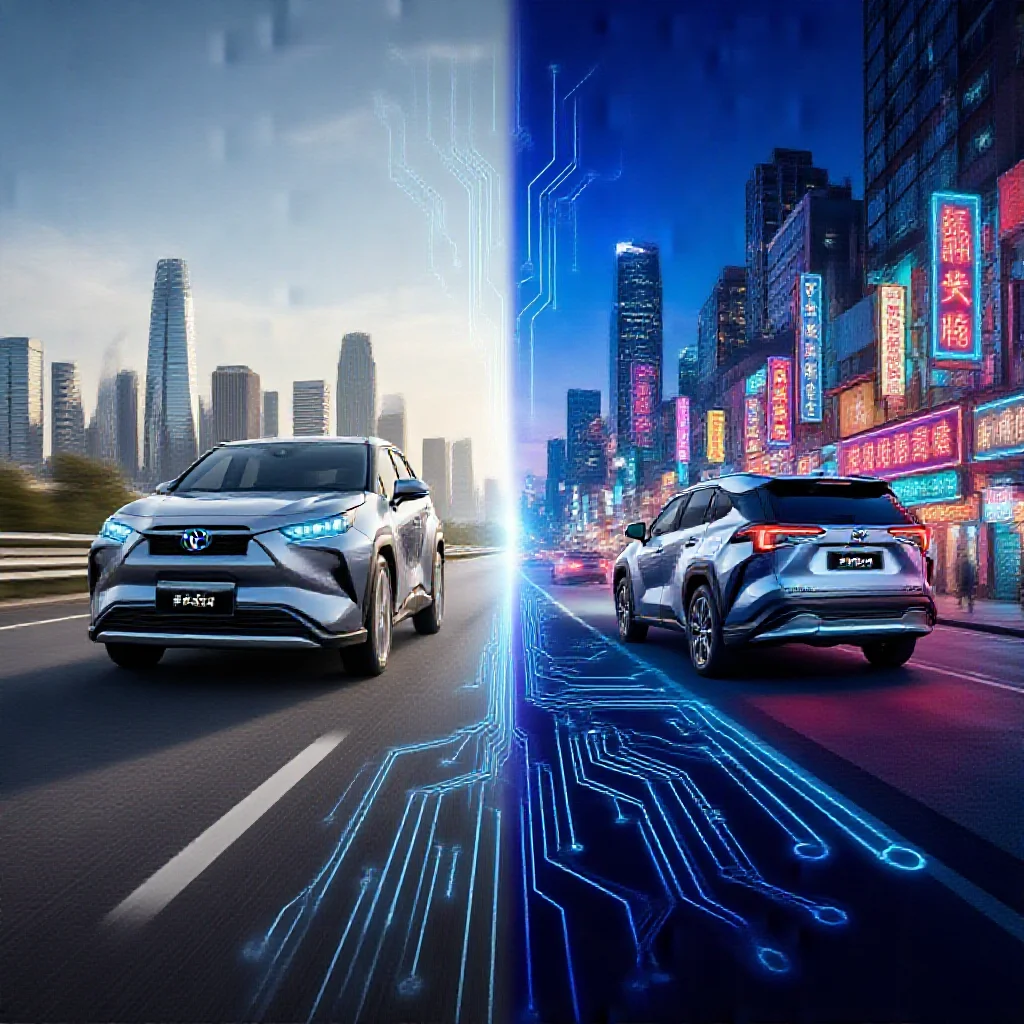
Toyota's Dual-Market EV Push: A Strategic Shift or a Cautious Catch-Up?
Toyota Motor Corporation has announced the introduction of new electric vehicle (EV) models for both the United States and Chinese markets. This synchronized move represents a significant operational development for the world's largest automaker by volume. The announcement frames the action as an expansion of its EV lineup within these critical regions. This analysis examines the strategic and economic logic underpinning this dual-market initiative, moving beyond the product launch narrative to assess its implications for Toyota's competitive posture, supply chain, and the broader automotive industry transition.
Beyond the Headline: Decoding Toyota's Dual-Front Strategy
The simplicity of the product launch announcement contrasts with the complex and divergent market realities in the United States and China. In the U.S., regulatory pressure is mounting through the Inflation Reduction Act (IRA), which ties consumer tax credits to stringent North American assembly and battery mineral sourcing requirements. Simultaneously, competitive pressure is largely defined by Tesla's dominant market share and brand recognition in the EV segment. In China, the world's largest EV market, regulatory mandates for New Energy Vehicles (NEV) are aggressive, and the competitive landscape is characterized by a plethora of domestic manufacturers, led by BYD, offering high-value, technology-rich products at rapid development cycles.
The core axis of this strategy is not primarily innovation but market-share defense. The simultaneous rollout indicates a calculated effort to protect volume and relevance in its two most significant markets, which together accounted for approximately 40% of Toyota's global sales volume in the 2023 fiscal year (Source 1: Toyota Annual Report). The hidden driver is the alignment with non-negotiable regulatory compliance timelines in both jurisdictions. Failure to secure a meaningful EV presence risks future penalties and loss of market access.
Fast Analysis: Timeliness and Competitive Context
The announcement's timeliness is a direct response to accumulating competitive and financial pressures. In the first quarter of 2024, Toyota's global battery EV sales remained a fractional part of its total volume, while competitors solidified their leads. In the U.S., Tesla maintained a dominant share of the pure EV market, and in China, BYD continued to expand its volume lead, with its Q1 2024 NEV sales exceeding 300,000 units (Source 2: China Association of Automobile Manufacturers).
Positioning against these rivals will be critical. The promised specifications, pricing, and software capabilities of Toyota's new models will be measured against benchmarks like the Tesla Model Y in the U.S. and models like the BYD Seal or Atto 3 in China. Early data suggests that to be competitive, Toyota must achieve parity on range and charging infrastructure while leveraging its brand reputation for reliability. The commercial success of these models will depend on their ability to attract customers away from established EV brands, not merely from Toyota's own internal combustion engine (ICE) lineup.
Slow Analysis: The Deep Audit of Supply Chain and Technology
A deeper audit reveals the unspoken challenge: establishing a resilient, cost-competitive battery supply chain for two massive, geopolitically distinct markets. The U.S. strategy will necessitate compliance with IRA sourcing rules, likely accelerating partnerships with North American lithium producers and battery cell manufacturers like Panasonic. For China, reliance on established local giants like Contemporary Amperex Technology Co. Limited (CATL) is the probable path to achieve scale and cost targets.
This bifurcated supply chain approach underscores a long-term strategic question. Will Toyota's much-publicized investment in solid-state battery technology serve as a future differentiator to leapfrog current lithium-ion standards, or will it remain a longer-term hedge while the company adapts existing industry benchmarks? The current EV platform underpinning these new models appears designed for manufacturing efficiency and reliability rather than technological disruption. The strategic depth of this push will be measured by the scale of capital allocation toward proprietary, next-generation battery production and gigacasting-type manufacturing innovations, areas where competitors have already established substantial leads.
The Cautious Giant's Dilemma: Protecting the ICE Kingdom
The core tension within Toyota's strategy is the balance between defending its profitable ICE and hybrid kingdom and funding the necessary EV transition. The company's hybrid business, exemplified by the Prius and RAV4 Hybrid, remains a high-margin cash engine. Executive statements have historically reflected caution toward a rapid, full electrification. Former CEO Akio Toyoda frequently expressed skepticism about an exclusively EV future, advocating for a "multi-pathway" approach including hybrids and hydrogen.
This context suggests the EV push may be calibrated to be just large enough to satisfy regulatory thresholds and capture early-adopting mainstream buyers, but deliberately paced to avoid cannibalizing high-margin hybrid and ICE sales in the short to medium term. Financial statements reveal that Toyota's R&D and capital expenditure, while substantial, are spread across multiple powertrain technologies, unlike the focused EV investment of a pure-play competitor (Source 3: Toyota Financial Statements). The strategic dilemma is clear: moving too slowly risks ceding the future EV market; moving too aggressively jeopardizes the profitability that funds the transition.
Conclusion: A Calculated Gambit in a Transitional Era
Toyota's dual-market EV announcement is a calculated gambit, not a revolutionary pivot. It represents a pragmatic, region-specific response to immediate regulatory and competitive threats. The strategy is defensive in nature, aimed at preserving market share and optionality during a period of profound industry uncertainty.
Neutral market prediction indicates that Toyota will likely secure a measurable EV market share in both regions due to its brand strength, manufacturing prowess, and dealer networks. However, achieving leadership in the pure EV segment appears secondary to the overarching goal of managing a controlled transition. The long-term reconfiguration of the automotive landscape will depend on whether Toyota's incremental, multi-pathway approach proves more resilient than the focused, capital-intensive strategies of its EV-first competitors. The success of this specific launch will provide critical data on consumer willingness to choose a Toyota EV over a Tesla or BYD, ultimately testing whether the cautious giant's balancing act can be sustained.