Tesla''s ''Redwood'': Decoding the Strategy Behind the Compact Crossover and Its 2025 Supply Chain Gamble
Tesla's reported development of the 'Redwood,' a compact crossover targeting 10,000 units weekly production from June 2025, is more than just a new model. This analysis delves into the strategic pivot behind this move, examining it as a calculated response to market saturation in the premium segment and a direct assault on the heart of the global mass market. We explore the profound implications of its aggressive production timeline on Tesla's supply chain architecture, questioning whether this represents a masterstroke in cost innovation or a high-risk bet on unproven manufacturing and supplier scalability. The article situates 'Redwood' within the broader context of automotive industry trends and Tesla's evolving market position.
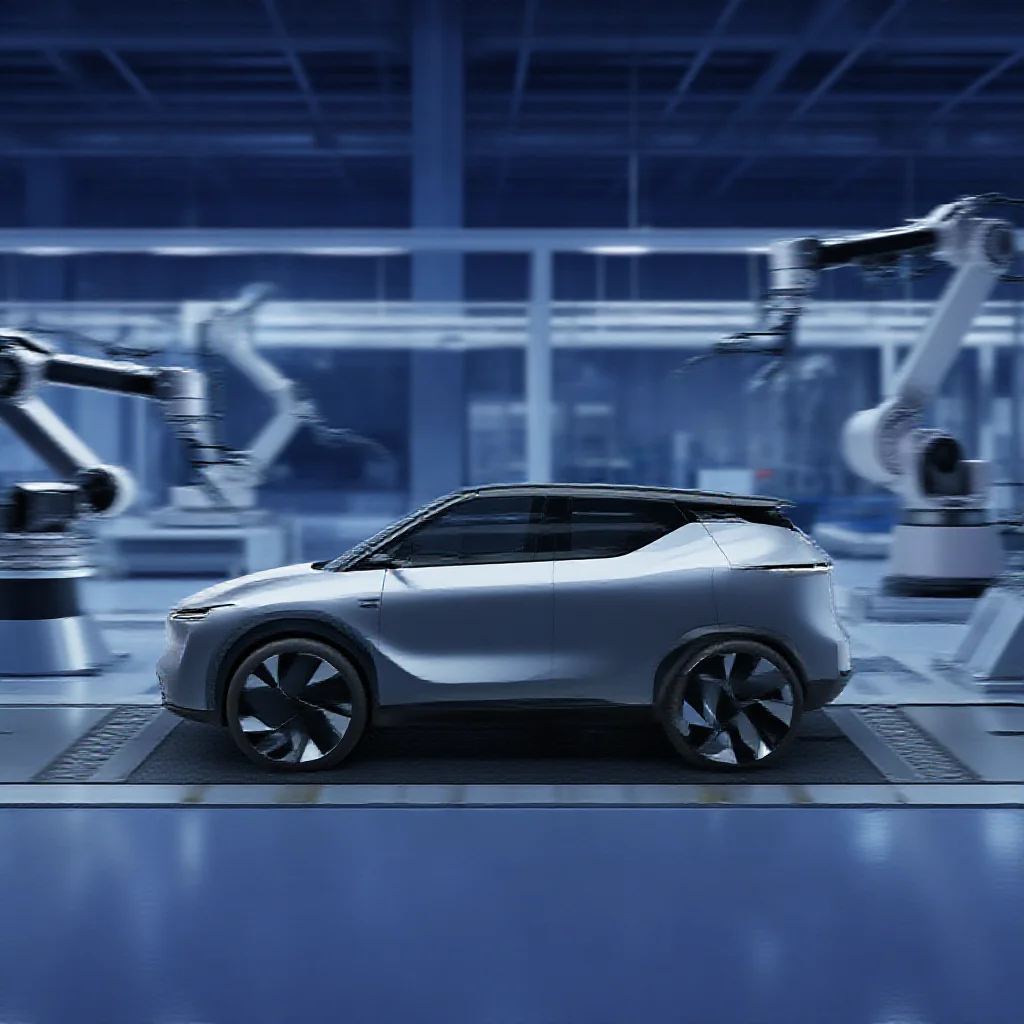
Tesla's 'Redwood': Decoding the Strategy Behind the Compact Crossover and Its 2025 Supply Chain Gamble
Beyond the Headlines: 'Redwood' as Tesla's Strategic Inflection Point
Tesla is reportedly developing a new, smaller electric vehicle, internally codenamed "Redwood," described as a compact crossover (Source 1: [Primary Data]). This initiative represents more than a simple model line extension. It constitutes a necessary strategic evolution for Tesla, signaling a pivot from a premium-focused automaker to a volume-driven player. The economic logic is clear: to combat potential growth plateaus in higher-margin segments and to access the significantly larger, trillion-dollar global mass market.
The choice of a compact crossover is a calculated alignment with dominant global automotive trends. This segment consistently ranks among the world's best-selling vehicle categories, encompassing models like the Toyota RAV4 and Honda CR-V. A compact electric crossover directly targets urban and suburban mobility needs, offering a practical form factor that balances passenger space, efficiency, and drivability. For Tesla, success in this segment is critical for achieving its stated goal of exponentially increasing vehicle deliveries.
![A comparative silhouette graphic showing Tesla's 'Redwood' (estimated) alongside a Model Y and a Toyota RAV4, highlighting size and segment positioning.]
The 2025 Clock: A Supply Chain Revolution, Not Just a Launch Date
The reported timeline for "Redwood" imposes a radical discipline on its development and supply chain architecture. According to available data, Tesla sent requests for quotes (RFQs) to suppliers for the model in mid-2025, with a reported planned start of production in June 2025 (Source 1: [Primary Data]). This compressed schedule, effectively linking supplier engagement to production start within approximately a year, is unprecedented in the automotive industry.
Traditional automotive development cycles typically span three to five years from concept to production, with supplier contracts solidified years in advance. The "Redwood" timeline implies a fundamentally different approach: a pre-engineered, highly integrated supply chain model. This pace demands unprecedented levels of lock-in and scale commitments from suppliers from the outset. It represents a disruptive pressure tactic, forcing the supply base to align with Tesla's velocity and cost targets or risk exclusion from a high-volume program.
![An illustrative timeline graphic comparing a traditional auto development cycle with Tesla's reported 'Redwood' schedule, emphasizing the compressed supplier engagement phase.]
The 10,000-Unit Weekly Ambition: Cost Innovation or Manufacturing Mirage?
Central to the "Redwood" strategy is its aggressive volume target. Tesla has forecasted a weekly production volume of 10,000 vehicles for the model (Source 1: [Primary Data]). This translates to an annualized production rate of approximately 500,000 units, a figure that would materially impact Tesla's total delivery volume and global electric vehicle market share.
The primary challenge lies in achieving this volume profitably within the lower-margin compact segment. It necessitates a quantum leap in manufacturing efficiency and cost reduction beyond Tesla's current achievements. This target strongly suggests the deployment of next-generation manufacturing techniques, such as the "unboxed" vehicle assembly process the company has previously alluded to, which aims to reduce factory footprint and assembly time significantly. The volume ambition also informs likely technical specifications: a heavy reliance on cost-effective Lithium Iron Phosphate (LFP) battery chemistry, a simplified vehicle platform, and an aggressive expansion of gigacasting to reduce part count and assembly complexity.
![A data visualization chart projecting Tesla's potential global sales volume with the addition of 500,000 'Redwood' units, compared to current sales and key competitors.]
The Ripple Effect: Reshaping the EV Competitive and Supplier Landscape
The introduction of "Redwood" will exert direct pressure on the core business of established global automakers. It represents a frontal assault on the most lucrative segments for companies like Volkswagen, Toyota, Hyundai, and Kia, as well as on the volume-driven strategy of Chinese leader BYD. A competitively priced, high-volume Tesla in the compact crossover space would disrupt pricing power and force accelerated electrification and cost-optimization efforts across the industry.
Simultaneously, the RFQ process for this volume target will reshape supplier power dynamics. Tesla's approach functions as a tool to drive down component costs globally, creating a bifurcated supplier landscape. Winners will be those capable of scaling rapidly to meet unprecedented demand at low cost points, likely through deep vertical integration or novel partnerships. Losers will be suppliers reliant on traditional, slower automotive procurement cycles or those unable to meet Tesla's stringent cost and scalability demands. This dynamic could accelerate consolidation within the automotive supply chain.
Conclusion: A High-Stakes Bet on Velocity and Scale
The "Redwood" project is a high-stakes strategic gamble. Its success hinges on the simultaneous execution of a disruptive product launch timeline and a radical, pre-scaled supply chain model. If successful, it would validate Tesla's thesis that extreme vertical integration and manufacturing innovation can conquer the mass market, potentially yielding margins that competitors cannot match. It would cement Tesla's transition from a niche premium brand to a dominant global volume manufacturer.
The primary risk is executional. The compressed timeline leaves minimal margin for error in design, supplier ramp-up, or manufacturing process debugging. Any significant delay or cost overrun would erode the vehicle's competitive price point and cede ground to rivals. Furthermore, the strategy assumes sustained, massive demand for a compact Tesla at its target price, which remains untested. The market will render its verdict in 2025, but the "Redwood" project has already redefined the parameters of competition in the electric vehicle industry.