The AI Boom''s Hidden Bottleneck: How Grid Constraints Are Stalling Data Center Development
The rapid expansion of artificial intelligence is hitting an unexpected wall: the electrical grid. While demand for AI compute soars, multiple data center projects are being delayed or put on hold due to insufficient grid capacity and power supply constraints. This article explores the deeper implications of this bottleneck, moving beyond surface-level reporting to examine the systemic clash between exponential AI growth and linear infrastructure development. We analyze how this is not merely a temporary setback but a fundamental market signal, revealing a critical vulnerability in the AI supply chain that could reshape industry priorities, investment flows, and even the geographic landscape of tech development for years to come.
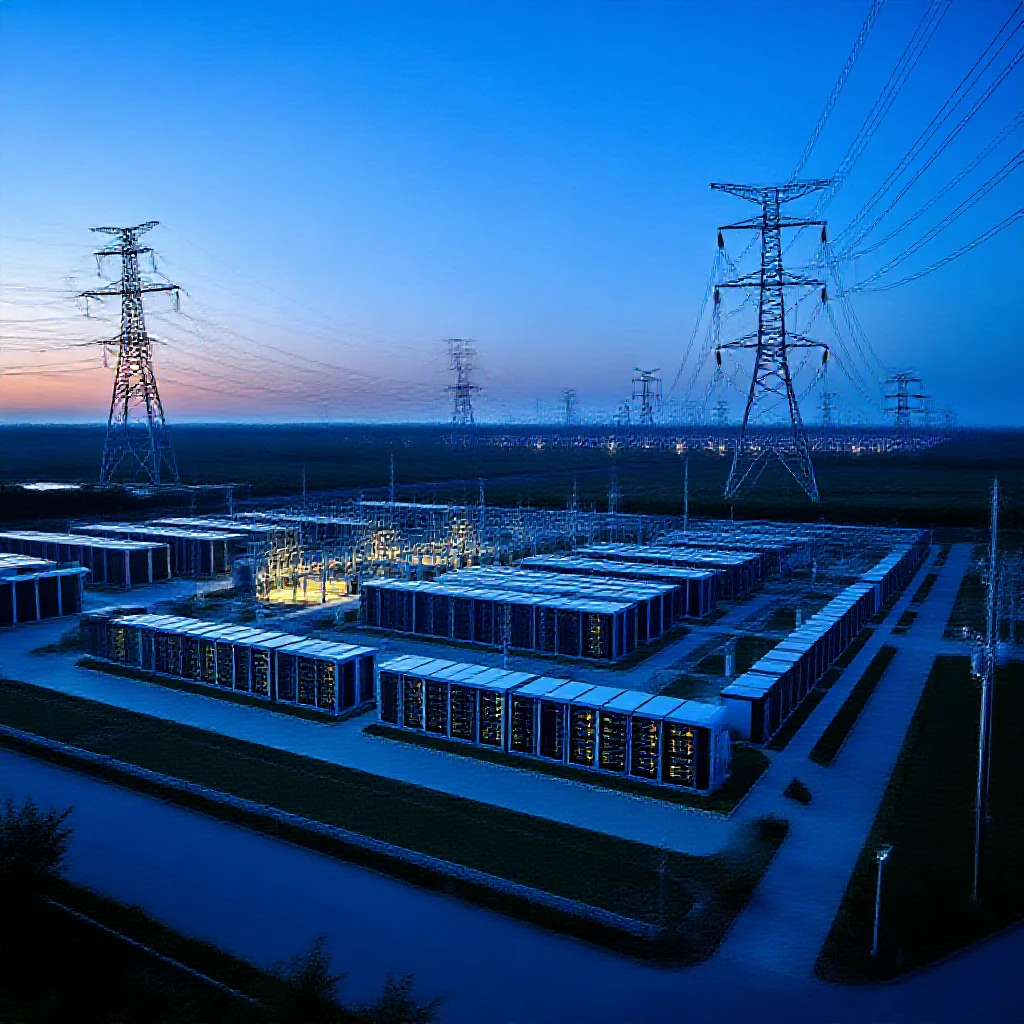
The AI Boom's Hidden Bottleneck: How Grid Constraints Are Stalling Data Center Development
Introduction: The AI Gold Rush Meets a Brick Wall
The dominant narrative of artificial intelligence is one of exponential, unimpeded growth. This narrative is colliding with a physical reality: the electrical grid. Across multiple jurisdictions, AI data center projects are being delayed or shelved, not due to a lack of chips or capital, but due to an inability to secure sufficient and reliable power. This is not a temporary logistical hiccup but a systemic clash between the nonlinear demands of AI compute and the linear, capital-intensive development of power infrastructure. The grid connection crisis represents a fundamental vulnerability in the AI supply chain, one that will reshape investment priorities, technological roadmaps, and the geographic distribution of computational capacity.
Beyond the Headlines: Decoding the 'Grid Connection' Crisis
The term "grid connection issues" obscures a complex triad of constraints: capacity, transmission, and regulatory latency. At its core, the issue is one of sheer magnitude and speed. AI training clusters demand power densities that can exceed 50 kilowatts per rack, an order of magnitude greater than traditional enterprise data centers. This creates concentrated, gargantuan loads that local substations and transmission lines were not designed to support.
Evidence of the scale is documented by grid operators themselves. In the United States, PJM Interconnection, the nation's largest regional transmission organization, reported in 2023 that over 90% of the 260 GW of generation and storage projects in its interconnection queue were facing study delays, with data centers being a primary driver of new demand. (Source 1: PJM Interconnection Queue Report). Similarly, ERCOT in Texas has seen interconnection requests surge, with wait times for studies extending multiple years. The problem is regulatory and procedural as much as physical; the queue-based system for evaluating new large-load connections is overwhelmed by the volume and urgency of AI-driven demand.
The Hidden Economic Logic: A Signal in the Noise
Project delays function as a brutal market correction mechanism. They separate projects with secured power purchase agreements (PPAs) and deep utility partnerships from speculative ventures. This bottleneck is triggering a capital reallocation effect. Investment is logically shifting from the front-end—procuring servers and GPUs—to the back-end: securing energy.
This manifests in two primary ways. First, there is a growing impetus for on-site or proximate power generation, including natural gas peaker plants and, prospectively, small modular reactors (SMRs). Second, significant capital is flowing into energy storage solutions to smooth demand and provide grid services. The long-term supply chain impact is clear: a sustained boom for power engineering firms, transformer manufacturers, and advanced cooling technologies, concurrent with a potential cooling in certain segments of the server hardware market as deployment timelines stretch.
Geopolitics of Power: The New Map of AI Readiness
The constraint is redrawing the global map of AI readiness. Regions with stable, surplus, or competitively priced green energy are accruing a decisive strategic advantage. Locations like Quebec, with abundant hydroelectric power, the Nordic countries, and specific zones in the U.S. Midwest with robust wind capacity, are becoming increasingly attractive for new development.
Conversely, major established tech hubs face the risk of becoming "AI deserts." Northern Virginia, the world's largest data center market, is experiencing well-publicized grid capacity challenges. In 2023, Dominion Energy paused new data center interconnections in parts of Loudoun County due to transformer and transmission limitations. (Source 2: Dominion Energy Regulatory Filings). This geographic recalibration forces a reevaluation of what constitutes critical digital infrastructure, placing power generation and transmission on equal footing with fiber optic cables.
The Innovation Imperative: Rethinking the Data Center Blueprint
The response extends beyond negotiating for more power. It necessitates a fundamental re-architecting of the data center itself. The innovation imperative has shifted from incremental efficiency gains to radical redesign.
This includes the adoption of extreme-density cooling solutions like direct-to-chip and immersion cooling to manage thermal loads within power-constrained footprints. More significantly, it promotes the concept of the "prosumer" data center—a facility that actively generates, stores, and manages its own energy within a microgrid. Research institutions like the National Renewable Energy Laboratory (NREL) are piloting projects that integrate data centers directly with renewable sources and grid-balancing storage, treating the computational load as a flexible asset rather than a static burden. (Source 3: NREL Research Publications on Integrated Energy Systems).
Conclusion: From Compute-Centric to Energy-Aware
The current grid bottleneck is a definitive market signal. It marks a transition from a purely compute-centric view of AI advancement to an energy-aware paradigm. The rate of progress in artificial intelligence is now inextricably linked to the pace of power infrastructure modernization and energy innovation. Companies that succeed will be those that treat energy procurement and management as a core engineering discipline, on par with algorithm development. The geographic and technological landscape of AI is being permanently altered, not by the limitations of silicon, but by the availability of electrons. The next phase of the AI boom will be defined not only by faster processors but by smarter, more resilient, and more autonomous energy systems.