Beyond KOKO''s Collapse: Why Infrastructure Integrity, Not Discounted Credits, Will Define Africa''s Carbon Market Future
The collapse of carbon project developer KOKO is not just a corporate failure but a symptom of deeper systemic vulnerabilities in Africa's nascent carbon market infrastructure. This analysis argues that the continent's future in the global voluntary carbon market hinges not on competing with discounted credits, but on building unparalleled integrity, transparency, and trust from the ground up. We examine how the KOKO case exposes critical gaps in verification, financial flows, and community benefit structures, and propose that Africa's strategic advantage lies in becoming the global benchmark for high-integrity carbon projects, transforming a perceived weakness into its core strength.
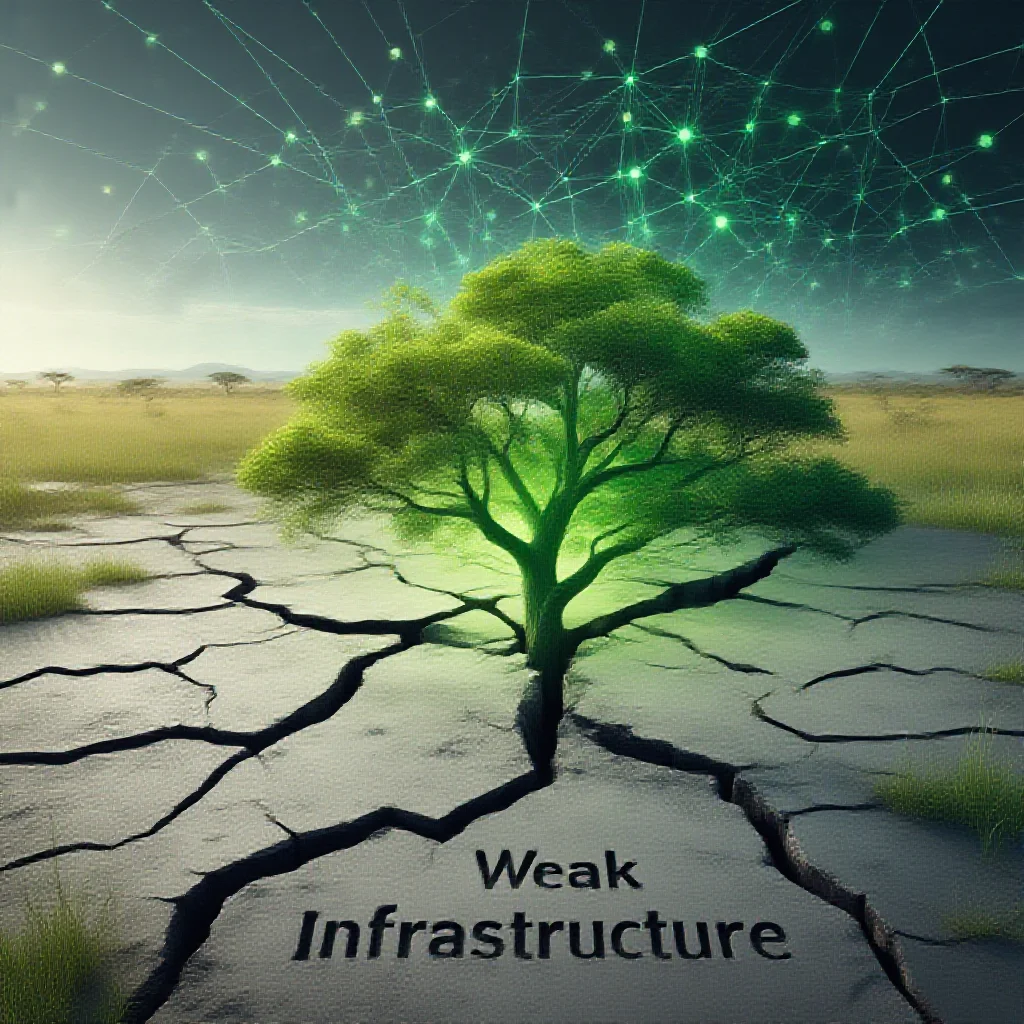
Beyond KOKO's Collapse: Why Infrastructure Integrity, Not Discounted Credits, Will Define Africa's Carbon Market Future

Introduction: KOKO's Failure as a Canary in the Coal Mine
The operational collapse of carbon project developer KOKO represents a significant operational event within the African climate finance sector. This event functions not as an isolated corporate failure but as a critical stress test for the underlying framework of Africa's nascent voluntary carbon market (VCM). The incident exposes foundational vulnerabilities that extend beyond a single entity's business strategy. The central thesis of this analysis is that the continent's long-term viability and competitiveness in the global VCM hinge on the non-negotiable construction of robust, transparent, and trustworthy infrastructure. Prioritizing this integrity over the short-term tactic of offering discounted credits will determine the market's ultimate trajectory.

Deconstructing the Collapse: A Failure of Systems, Not Just Strategy
The KOKO case illuminates potential systemic vulnerabilities common to emerging carbon markets. Analysis suggests these likely span multiple critical nodes: project verification protocols, revenue distribution mechanisms, and Monitoring, Reporting, and Verification (MRV) systems. A corporate collapse can disrupt the financial flows intended for community benefit-sharing, eroding the social license upon which many nature-based projects depend. This event contrasts two distinct market models: the "discounted credit" approach, which competes on price, and the "integrity premium" model, which competes on verified quality. The pursuit of low price points, without corresponding investment in foundational systems, constitutes a strategic race to the bottom, increasing exposure to reputational risk and buyer skepticism. Furthermore, the fragility is often compounded by a reliance on international standards without parallel development of strong local regulatory and oversight capacity, creating governance gaps.

The Integrity Imperative: Africa's Unfair Advantage in a Skeptical Market
Global VCM dynamics shifted significantly following credibility concerns in 2023, leading to heightened buyer scrutiny regarding credit quality. This environment creates a strategic opportunity for jurisdictions that can demonstrably guarantee integrity. For Africa, this transcends a mere marketing claim and requires operationalization. Integrity must be defined comprehensively: beyond additionality and leakage calculations, it must encompass verifiable community ownership models, transparent and auditable benefit-sharing agreements, quantifiable biodiversity co-benefits, and ironclad, tamper-evident data provenance. In a market hungry for certainty, trust becomes a directly marketable asset. Precedents exist in other regions where projects commanding premium prices have done so based on unparalleled transparency and community integration, setting a tangible benchmark for what is achievable.

Blueprint for Resilience: Building the Next-Generation Carbon Infrastructure
Constructing a resilient carbon market requires a deliberate investment in a next-generation technological and governance stack. The technological foundation includes distributed ledger technology (e.g., blockchain) for immutable transaction and benefit-sharing records; Internet of Things (IoT) sensors and remote sensing for real-time, low-cost MRV; and AI analytics for detecting anomalies and predicting project performance. This must be paired with secure digital registries that interoperate with global standards. The governance model requires hybrid structures featuring strong local oversight bodies, capable of ground-truthing international validators, coupled with respected international accreditation. Financing this infrastructure presents an upfront cost, but economic logic indicates it is a more cost-effective investment than the systemic reputational damage and financial loss incurred through post-failure remediation and market retreat.

Conclusion: From Vulnerability to Leadership
The collapse of a single entity like KOKO serves as a diagnostic tool, revealing points of failure within a larger system. The analysis concludes that Africa's carbon market pathway must consciously avoid the trap of competing solely on cost. The strategic pivot must be towards building unparalleled integrity from the ground up. By treating transparency, community equity, and data veracity as core infrastructural components—not as secondary features—the continent can transform a current perceived weakness into its definitive competitive strength. This approach positions Africa not merely as a source of credits, but as the emerging global benchmark for high-integrity carbon projects, thereby securing sustainable climate finance and ensuring long-term market leadership.