The BMW iX3''s Pricing Strategy: A Calculated Gamble in the Luxury EV Price War
The 2026 BMW iX3 enters the US market with a surprisingly competitive starting price of $62,595, undercutting key rivals while offering a 307-mile range. This analysis moves beyond simple spec sheets to explore the strategic calculus behind BMW''s positioning. We examine how the iX3''s value-focused standard features, like the heat pump and panoramic sunroof, signal a shift in luxury EV expectations. By comparing its single-motor, high-efficiency approach against the industry''s multi-motor horsepower race, we uncover a potential new battleground: sustainable profitability and supply chain simplicity in the electric era. The article investigates whether this launch represents a tactical move to capture volume or a long-term vision for accessible luxury EVs.
The BMW iX3's Pricing Strategy: A Calculated Gamble in the Luxury EV Price War
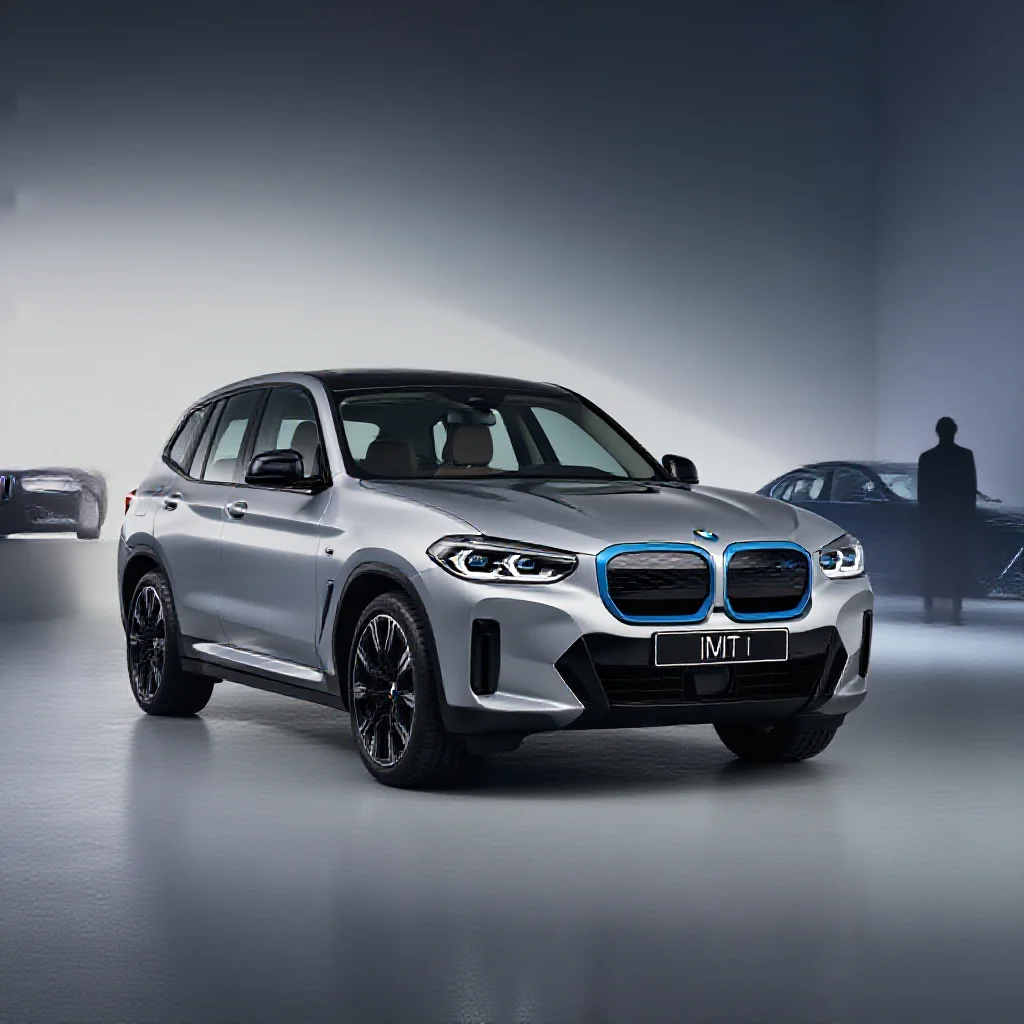
The 2026 BMW iX3 will enter the United States market with a Manufacturer's Suggested Retail Price (MSRP) of $62,595 (Source 1: [Primary Data]). This price point positions the electric Sports Activity Vehicle below key established rivals. The vehicle is powered by a single rear-mounted motor producing 286 horsepower and is equipped with an 80.7 kWh battery, delivering an EPA-estimated range of 307 miles (Source 1: [Primary Data]). Standard equipment includes a heat pump, heated front seats and steering wheel, and a panoramic sunroof (Source 1: [Primary Data]). Orders will commence on March 11, 2026, with initial customer deliveries scheduled for the second quarter of the same year (Source 1: [Primary Data]).
Beyond the Sticker: Decoding the iX3's Market-Disrupting Price Point
The announced starting price of $62,595 functions as a strategic wedge in the luxury midsize EV segment. It undercuts the Mercedes-Benz EQE SUV and Audi Q8 e-tron while presenting a premium alternative to the Tesla Model Y Performance. The pricing is not an isolated figure but is integrated with a redefined standard specification. The inclusion of a heat pump—a critical component for preserving range in cold climates—alongside a panoramic sunroof and heated comfort features, represents a deliberate move to elevate the base model's value proposition. This bundling challenges the industry norm of stripping essential features to achieve a low headline price, subsequently recouping margin through options packages. The central analytical question is whether this pricing reflects a temporary margin sacrifice to capture volume and market share, or if it signals a structural breakthrough in BMW's electric vehicle manufacturing or battery procurement costs that enables sustainable profitability at this level.
Efficiency Over Excess: The Single-Motor Strategy in a Multi-Motor World
BMW's specification for the iX3 presents a clear philosophical divergence from the prevailing industry trend. In a segment increasingly defined by multi-motor, high-horsepower powertrains, the iX3 employs a single 286 hp motor. This engineering priority favors mechanical simplicity, cost efficiency, and maximizing range from the 80.7 kWh battery pack. The resulting 307-mile EPA estimate targets real-world usability and efficiency over headline-grabbing acceleration metrics. This configuration identifies a specific customer archetype: the pragmatic luxury buyer whose primary requirements are premium refinement, brand cachet, and dependable daily range, rather than ultimate performance. The strategy risks ceding the "performance EV" sub-segment but potentially accesses a broader, commercially significant demographic currently underserved by offerings that conflate electric propulsion with extreme power.
The Calendar as a Strategy: Timing the 2026 Launch for Maximum Impact
The disclosed timeline is a non-technical component of the product strategy. A Q2 2026 delivery target positions the iX3 after the initial marketing wave and customer deliveries of next-year's models from various competitors, yet likely before major mid-cycle refreshes or next-generation launches from direct rivals. The "available to order" phase beginning March 11, 2026, serves a dual function. Primarily, it opens the sales channel, but secondarily, it acts as a real-time demand sensing tool. The several-week gap between order opening and the start of deliveries provides BMW with critical data on configuration popularity and market interest, allowing for fine-tuning of production and supply chain logistics. This phased approach mitigates the risk of building excessive inventory of undesired specifications.
The Deep Calculus: Supply Chain and Profitability Implications
The technical and pricing decisions have profound upstream implications. A simplified, single-motor, large-battery architecture inherently reduces mechanical complexity. This translates to a less vulnerable and more manageable supply chain, with fewer unique parts compared to dual-motor or performance-drive variants. The competitive pricing raises legitimate questions about underlying cost structures. Potential enablers could include scaled in-house battery cell production, advantageous long-term contracts for critical minerals, or manufacturing efficiencies derived from the vehicle's integration with BMW's flexible CLAR platform. Furthermore, the iX3 can be analyzed as a gateway product. Its accessible price point and strong standard specification are designed to onboard new customers to BMW's electric ecosystem, with the intent of fostering brand loyalty for future, higher-margin electric model purchases.
Neutral Market and Industry Predictions
The 2026 BMW iX3 strategy will test two interrelated market hypotheses. First, that a significant segment of luxury consumers prioritizes rational efficiency and value-balanced pricing over superlative performance in electric vehicles. Second, that automotive profitability in the EV transition can be sustained through simplified, high-volume architectures rather than exclusively through premium pricing on complex, low-volume vehicles. If successful, this approach may compel competitors to reevaluate their own standard equipment lists and powertrain proliferation. The industry may see a bifurcation: one path pursuing extreme performance and technology as a luxury marker, and another, as demonstrated by the iX3, defining luxury through seamless ownership experience, refined efficiency, and strategic cost management. The iX3's market reception will provide definitive data on the viability of this calculated gamble.