Beyond the Patent: How CATL''s Solid-State Battery Design Targets the Core Bottleneck of EV Adoption
CATL's recently published patent (CN118039866A) for a solid-state battery design is more than a technical filing; it's a strategic move targeting the fundamental economic and safety constraints of electric vehicles. While most coverage focuses on the promise of higher energy density, this analysis reveals how CATL's specific solution—a porous buffer layer to manage material expansion—directly addresses the cycle life and manufacturing yield problems that have kept solid-state batteries commercially elusive. This patent signals CATL's intent to solve not just a chemistry problem, but the underlying cost-per-kilowatt-hour and durability challenges that will dictate the next phase of EV market penetration. We examine the design's implications for supply chains, production scalability, and the global battery arms race.
Beyond the Patent: How CATL's Solid-State Battery Design Targets the Core Bottleneck of EV Adoption
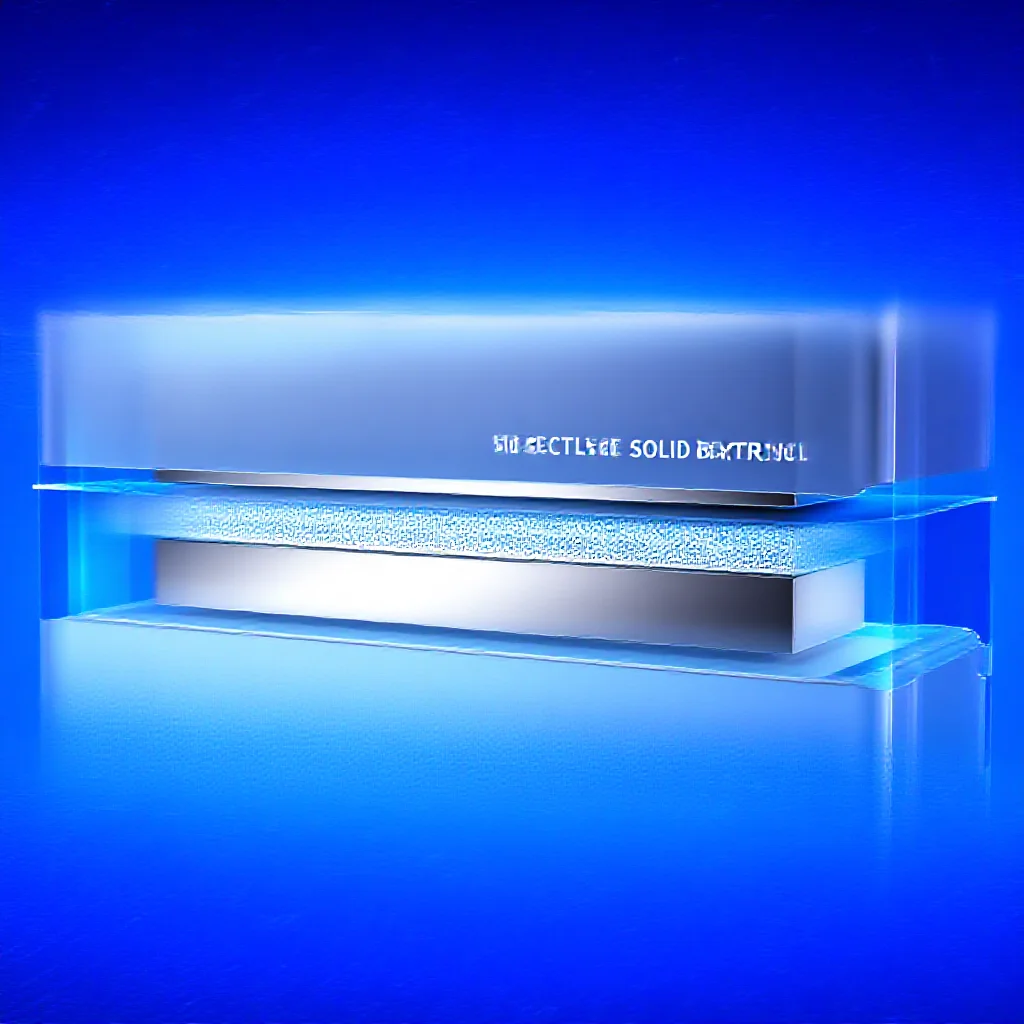
A patent publication by Contemporary Amperex Technology Co., Ltd. (CATL) provides a concrete blueprint for confronting the principal obstacle to next-generation electric vehicle batteries. The document, numbered CN118039866A and published on May 10, 2024, details a solid-state battery design incorporating a porous buffer layer between the solid electrolyte and an electrode (Source 1: [Primary Data]). While the industry narrative frequently centers on the theoretical energy density gains of solid-state chemistry, this patent filing reveals a more immediate engineering focus: managing the destructive physical expansion and contraction of battery materials during operation.
The Patent's Hidden Blueprint: Engineering for Economics, Not Just Energy
The core innovation disclosed in patent CN118039866A is not the solid-state concept itself, but a specific solution to interfacial degradation. The design describes a porous buffer layer inserted to accommodate the volume changes inherent in charge-discharge cycles (Source 1: [Primary Data]). This mechanical stress, if unmanaged, causes contact loss between the solid electrolyte and electrode, increasing resistance and accelerating failure.
This technical detail targets the fundamental economic barrier. Cycle life and manufacturing yield are direct determinants of cost-per-kilowatt-hour and, more critically, cost-per-cycle—the ultimate metric for total vehicle ownership economics. The porous buffer layer represents a calculated compromise, sacrificing a marginal amount of volumetric energy density to achieve the mechanical stability necessary for long-term durability. This trade-off indicates a production-oriented mindset, prioritizing scalable and reliable performance over laboratory-scale maximums.
Fast Analysis: Timing, Tactics, and the Competitive Signal
The May 2024 publication date follows a series of guarded statements from CATL executives regarding solid-state battery progress. This public disclosure functions as a strategic signal within the competitive landscape. It communicates a specific developmental milestone to global automaker clients and provides a tangible counterpoint to advancements announced by rivals, including Toyota, Samsung SDI, and QuantumScape.
The patent’s publication is a defensive maneuver within a crowded intellectual property arena, but its specificity elevates it beyond a mere placeholder. By detailing a manufacturable component—the porous buffer—CATL is signaling a path toward engineering resolution, not just theoretical chemistry. The implication is an acceleration in the race toward a commercially viable prototype, applying pressure across the industry’s research and development timelines.
The Deep Audit: Ripples Through the Battery Supply Chain
The adoption of a design centered on a porous buffer layer would trigger a multi-tiered transformation of the existing battery supply chain. The most direct disruption would be the reduced demand for liquid electrolytes and polyolefin separators, cornerstone materials of contemporary lithium-ion cells.
New material frontiers would emerge. The composition and production of the porous buffer layer itself would create demand for specialized ceramics, polymers, or composite materials with precise porosity and ionic conductivity. This shift would advantage chemical and advanced materials suppliers with relevant expertise, while potentially sidelining incumbent electrolyte formulators.
At the manufacturing level, the transition implies metamorphosis. Existing gigafactories optimized for wet slurry coating, electrolyte filling, and formation cycling would face obsolescence. The capital expenditure required for new dry-process or solid-state production lines would erect a significant barrier to entry, potentially consolidating market power among the few players capable of funding the transition.
The Long Game: Safety as the Ultimate Market Catalyst
The technical solution for material expansion carries profound implications for safety and market perception. The primary failure mode mitigated by the buffer layer—interfacial contact loss—is a precursor to increased resistance and localized heat generation, a common initiator of thermal runaway.
By engineering a solution to this mechanical degradation, the design indirectly targets a root cause of battery fires. A demonstrable reduction in thermal runaway risk could alter long-term consumer acceptance of EVs and influence evolving insurance and regulatory models. Regulatory bodies worldwide are moving toward stricter battery safety and durability standards; a proven design that inherently addresses a key failure mechanism provides a significant future-proofing advantage for its developer.
Conclusion: A Pragmatic Step in a Long Evolution
CATL’s patent CN118039866A represents a pragmatic iteration in the solid-state battery evolution. It acknowledges that the transition from liquid to solid electrolytes is not merely a substitution of materials, but a fundamental re-engineering of the cell’s mechanical architecture. The focus on managing volume change through a buffer layer is a direct assault on the cycle life and yield problems that have historically rendered solid-state batteries commercially elusive.
The market implication is a potential bifurcation in development paths: one pursuing maximum energy density at any cost, and another, exemplified by this patent, optimizing for manufacturability, durability, and total cost of ownership. This approach does not promise an immediate revolution in EV range, but rather a deliberate progression toward solving the underlying economic and safety constraints that currently limit broader EV adoption. The next phase will be determined by the scalability of the buffer layer concept from patent documentation to high-volume, high-yield production.