Beyond the Discount: How EcoFlow''s Bundle Strategy Reveals the New Power Station Market Calculus
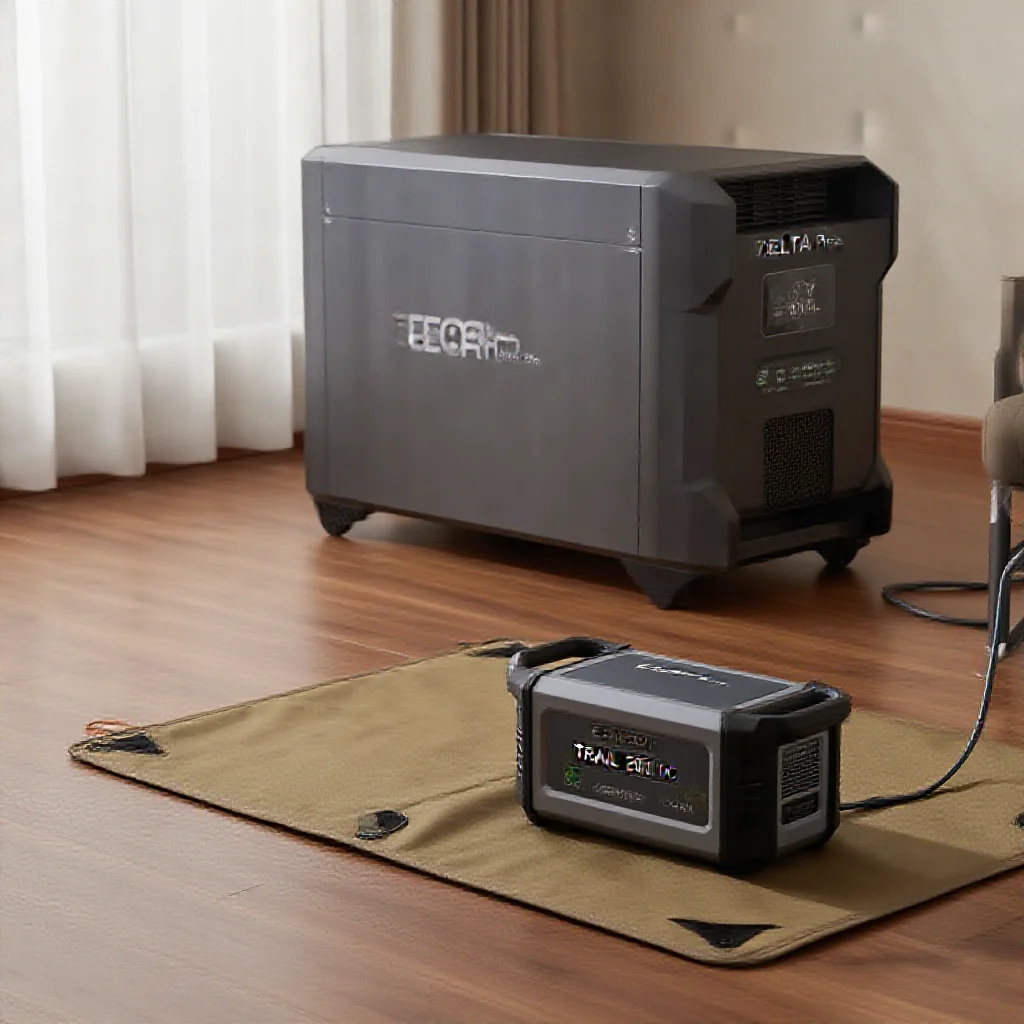
EcoFlow's promotion bundling the massive 12,288Wh DELTA Pro Ultra X with the portable 192Wh TRAIL 200 DC isn't just a simple sale. This analysis decodes the strategic move, revealing a calculated play to capture both the premium home backup and portable outdoor markets simultaneously. It highlights a broader industry trend where companies like EcoFlow and Anker are no longer just selling products but curated energy ecosystems. We examine the underlying market logic, the shift from single-unit to multi-scenario sales, and what this bundled approach signals about the future of consumer energy storage, competitive positioning, and the evolving definition of 'value' beyond raw capacity.
Beyond the Discount: How EcoFlow's Bundle Strategy Reveals the New Power Station Market Calculus
Deconstructing the Discount: More Than a Price Cut
On the surface, the promotional offer is straightforward. EcoFlow is bundling its flagship home backup unit, the 12,288Wh DELTA Pro Ultra X, with its compact portable model, the 192Wh TRAIL 200 DC, at a combined discount exceeding $1,439. (Source 1: [Primary Data - EcoFlow Promotion]). A simple price comparison against the manufacturer's suggested retail prices for each unit sold independently validates the immediate financial incentive.
The underlying proposition, however, is more complex. This pairing is not a random assortment of excess inventory. It represents a deliberate move to sell a complete, two-tiered energy ecosystem. The bundle addresses two distinct power paradigms simultaneously: the high-demand, whole-home backup scenario and the low-wattage, highly mobile outdoor use case. The value proposition shifts from offering a product with a specific capacity to providing a curated solution for multiple facets of a consumer's energy needs.
The Strategic Calculus: Why Bundle Polar Opposites?
The logic behind bundling two products at opposite ends of the capacity spectrum is a calculated market expansion tactic. The primary transaction targets the high-value customer investing in premium home backup. By including a portable unit, EcoFlow captures an additional, entry-level user within the same household or expands the use cases for the primary buyer, effectively securing two market segments with one sale.
This strategy also serves as a mechanism for brand lock-in. Introducing a user to the EcoFlow ecosystem through two different product interfaces and accessory ecosystems increases the likelihood of future loyalty for upgrades, expansions, or additional portable units. Competitively, it creates a value package that is difficult for rivals like Anker, with its SOLIX line, to counter with single-product promotions. It forces competition on the basis of integrated solutions rather than isolated specifications.
This bundling indicates a maturation of the portable power station category. The market is transitioning from selling niche tools to enthusiasts to offering mainstream consumer electronics. In established electronics markets, cross-selling and accessory bundling are standard strategies to increase average transaction value and deepen market penetration.
The Broader Trend: Anker, EcoFlow, and the Shift to 'Energy Solutions'
EcoFlow's move is not an isolated event but part of an industry-wide pivot. The presence of Anker's SOLIX series in the competitive landscape reinforces this shift. Companies are no longer marketing mere power banks or generators; they are promoting integrated energy systems. The narrative is evolving from raw capacity and portability to seamless ecosystem integration, smart management, and multi-scenario readiness.
Differing strategic approaches are emerging, akin to divergent philosophies in consumer tech. EcoFlow's aggressive hardware bundling represents one path, focusing on capturing the customer early with a comprehensive physical solution. Competitors may pursue alternative strategies, such as deeper software integration, modularity, or strategic partnerships with solar installers and outdoor retailers. Market analysis from firms like Grand View Research consistently projects robust growth for the portable power station sector, a trend that incentivizes these companies to develop more sophisticated customer acquisition and retention strategies beyond simple product features. (Source 2: [Secondary Data - Industry Analysis]).
Reading Between the Lines: Implications for Supply Chain and Consumers
From a supply chain perspective, strategic bundling can serve as a lever for inventory management. It allows a company to balance production cycles and stock levels across different product tiers—moving high-margin flagship units alongside volume-driven entry-level models—optimizing manufacturing and logistics pipelines.
For the consumer, the definition of "value" in this market is being rewritten. Value is increasingly decoupled from the watt-hour metric of a single unit and is instead associated with versatility, ecosystem cohesion, and total addressable use cases. The bundle explicitly teaches the consumer that a single power solution may be insufficient, normalizing the ownership of multiple, specialized storage devices. This shifts the competitive battlefield from a spec sheet comparison to a solution-based evaluation, potentially raising barriers to entry for new competitors who cannot immediately offer a broad product portfolio.
Conclusion: The Future is Curated, Not Just Sold
The EcoFlow DELTA Pro Ultra X and TRAIL 200 DC bundle is a clear signal of the portable power station market's evolution. The era of marketing standalone products is giving way to an era of selling curated energy portfolios. Success for companies like EcoFlow and Anker will depend less on winning a specifications arms race and more on their ability to define and own holistic energy usage scenarios for the modern consumer.
Future competitive dynamics will likely involve more sophisticated bundling, subscription services for software features, and deeper integration with smart home and renewable energy systems. The core transaction is shifting from the transfer of a battery in a box to the provision of a managed, multi-point energy security and mobility service. The companies that master this calculus will define the next phase of consumer energy storage.