Beyond the Pump: How Electric Vehicles Redefine Energy Independence During Oil Price Shocks
Recent oil price spikes have reignited the debate on U.S. energy security. While the transportation sector's 70% share of national oil consumption highlights a critical vulnerability, electric vehicles (EVs) offer more than just an alternative fuel source. This analysis moves beyond simple cost-per-mile comparisons to explore how EVs fundamentally decouple transportation energy costs from volatile global oil markets. By examining the underlying economic logic of shifting from a commodity-based to a domestically generated electricity model, we uncover the strategic, long-term implications for supply chain resilience and national energy policy that typical reports overlook.
Beyond the Pump: How Electric Vehicles Redefine Energy Independence During Oil Price Shocks
Recent oil price spikes have reignited the debate on U.S. energy security. While the transportation sector's 70% share of national oil consumption highlights a critical vulnerability, electric vehicles (EVs) offer more than just an alternative fuel source. This analysis moves beyond simple cost-per-mile comparisons to explore how EVs fundamentally decouple transportation energy costs from volatile global oil markets. By examining the underlying economic logic of shifting from a commodity-based to a domestically generated electricity model, we uncover the strategic, long-term implications for supply chain resilience and national energy policy that typical reports overlook.
The Anatomy of a Vulnerability: Why Oil Spikes Hit Transportation Hardest
The U.S. transportation sector's consumption of petroleum products represents approximately 70% of the nation's total oil use. (Source 1: [U.S. Department of Energy Primary Data]) This figure establishes a structural economic vulnerability distinct from other sectors. Industrial, residential, and power generation applications demonstrate greater fuel-switching capability or lower proportional dependence. Transportation demand, particularly for light-duty vehicles, exhibits high inelasticity; mobility needs are non-negotiable for a functioning economy, converting global oil price fluctuations directly into domestic economic stress. This dependency transforms geopolitical events and OPEC+ production decisions into immediate variables affecting household budgets and commercial logistics costs. The recent price spike is not an anomaly but a recurring symptom of this systemic flaw, where a single global commodity dictates a core cost for a majority of economic activity.
EVs as a Financial Shock Absorber: Decoding the Cost-Per-Mile Economics
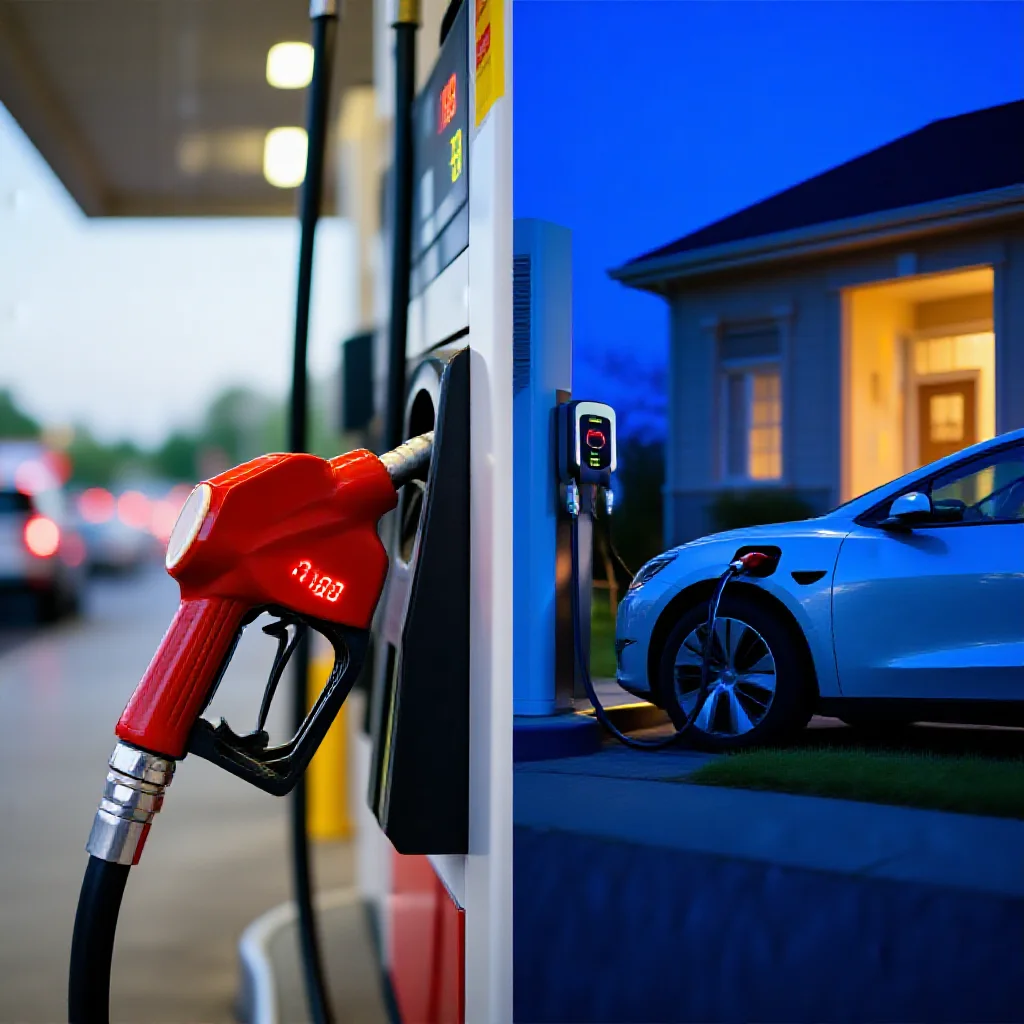
A direct cost analysis reveals the foundational economic buffer EVs provide. For a 100-mile trip, a typical gasoline vehicle averaging 25 miles per gallon would consume 4 gallons of fuel. At an average price of $4.50 per gallon, this trip costs $18.00. (Source 2: [Primary Data]) A typical EV requires approximately 30 kWh to travel the same distance. (Source 3: [Primary Data]) At the average U.S. residential electricity rate of $0.16 per kWh, the energy cost is $4.80. (Source 4: [Primary Data])
The more significant factor is price stability. Historical data from the U.S. Energy Information Administration (EIA) demonstrates that residential electricity prices exhibit markedly lower volatility than gasoline prices. Gasoline prices are tethered to the global crude oil market, subject to extraction costs, cartel policies, refining margins, and geopolitical instability. Electricity rates, while variable, are primarily determined by domestic infrastructure, generation mix, and regulatory frameworks. This structural difference means EV operating costs are insulated from the acute shocks that characterize the global oil market, providing predictable long-term energy expenses for transportation.
The Strategic Pivot: From Commodity Consumer to Energy Producer
The transition to electric vehicles represents a strategic pivot in the economic model of transportation energy. It shifts the foundational input from a purchased global commodity—crude oil—to a platform for utilizing domestically generated electricity. This decoupling is the core mechanism for redefining energy independence. The transportation sector ceases to be a passive end-user of an internationally traded fuel and becomes an integrated component of the national energy grid.
This integration enables and accelerates the adoption of renewable energy sources. An electrified vehicle fleet increases demand for electricity but does not prescribe its source. This creates a scalable, long-term demand signal for wind, solar, nuclear, and natural gas generation—all predominantly domestic resources. Consequently, the geopolitical leverage associated with global oil chokepoints and supply routes diminishes. Energy security for mobility becomes a function of national grid resilience and generation diversity, fostering a more decentralized and controllable infrastructure.
The Roadblocks to True Independence: A Realistic Audit
The pathway to energy independence via electrification is not without its own dependencies and challenges. The first constraint is the electric grid itself. The degree of energy security and environmental benefit achieved is contingent upon the grid's generation mix and transmission capacity. A transportation sector powered by a grid dependent on imported natural gas or coal merely shifts, rather than eliminates, supply chain vulnerabilities.
A second critical audit point involves the supply chain for EVs and their batteries. New dependencies emerge on critical minerals like lithium, cobalt, and nickel, whose extraction and processing are currently concentrated in a handful of countries. Achieving comprehensive supply chain resilience requires significant investment in mineral sourcing, recycling technologies, and battery innovation to reduce or eliminate these nascent strategic vulnerabilities. The transition substitutes a mature commodity risk for a set of emerging technological and material supply risks that must be managed.
Conclusion: A Calculated Transition
The economic logic of electric vehicles during oil price shocks extends beyond favorable cost-per-mile comparisons. The primary strategic value lies in altering the fundamental architecture of transportation energy from a volatile, globally sourced commodity to a more stable, domestically influenced utility. This transition mitigates a direct channel of economic shock and repositions a majority of national oil consumption as an addressable problem through grid management and generation investment.
Market and industry predictions indicate a continued, though complex, evolution along this path. Automotive manufacturer capital allocation is decisively shifting toward electrification. Concurrently, national infrastructure policy is increasingly focused on grid modernization and domestic battery supply chain development. The long-term trend suggests a gradual but structural reduction in the transportation sector's sensitivity to global oil prices, contingent upon parallel successes in grid decarbonization and mineral supply chain security. The redefinition of energy independence is therefore a multidimensional engineering and economic challenge, not merely a change of fuel.