Beyond the Hype: How Ion Storage''s UL-Certified Solid-State Battery Signals a Manufacturing Shift
While many solid-state battery startups tout lab breakthroughs, US-based Ion Storage Systems has achieved a critical, underreported milestone: UL 1973 certification for its ceramic electrolyte cells. This independent validation by Energy Assurance isn''t just a technical checkmark; it''s the key that unlocks scalable manufacturing and real-world deployment. This analysis moves past the typical energy density narrative to explore why the lack of a compression requirement is a silent game-changer for production economics. We examine how this milestone de-risks Ion Storage''s planned Beltsville, Maryland production line and what it signals about the evolving battleground in next-generation energy storage, where manufacturability is becoming as important as the chemistry itself.
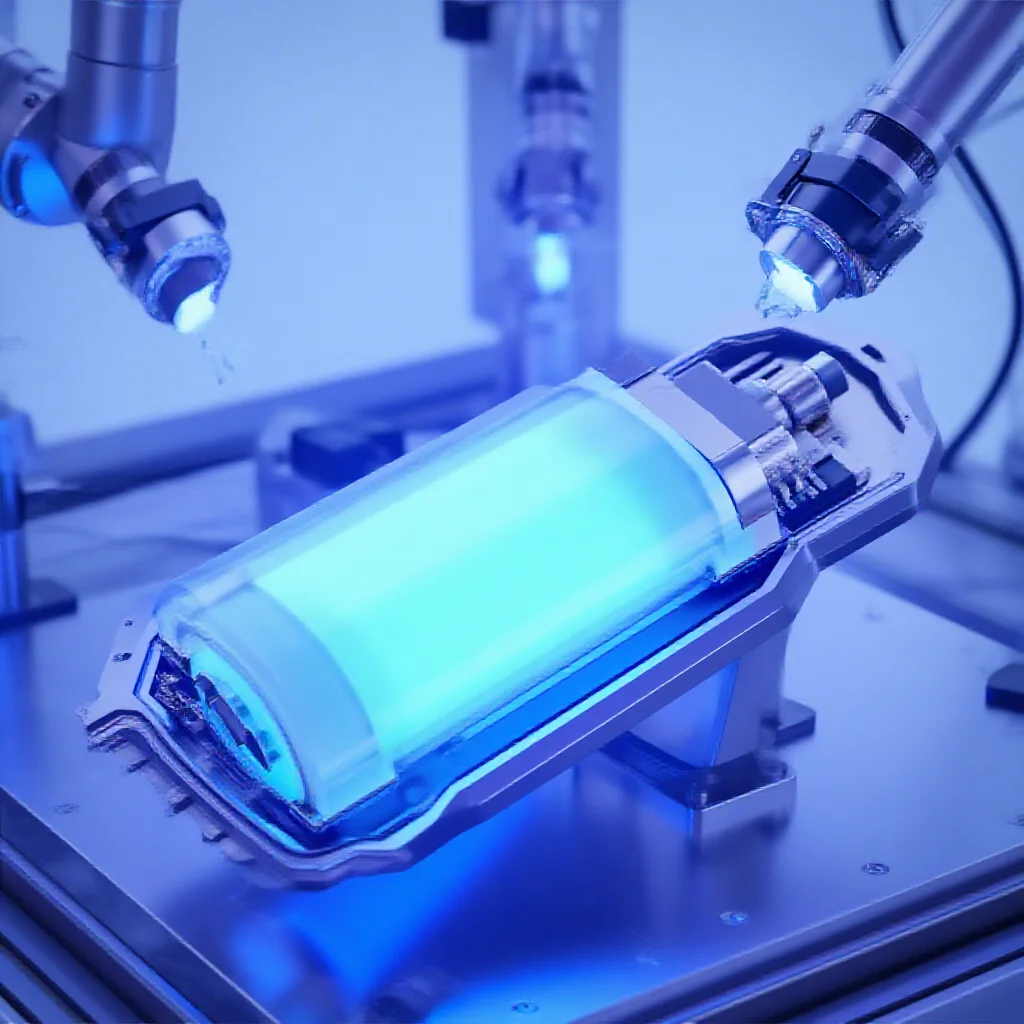
Beyond the Hype: How Ion Storage's UL-Certified Solid-State Battery Signals a Manufacturing Shift
**Article Summary:** While many solid-state battery startups tout lab breakthroughs, US-based Ion Storage Systems has achieved a critical, underreported milestone: UL 1973 certification for its ceramic electrolyte cells. This independent validation by Energy Assurance isn't just a technical checkmark; it's the key that unlocks scalable manufacturing and real-world deployment. This analysis moves past the typical energy density narrative to explore why the lack of a compression requirement is a silent game-changer for production economics. We examine how this milestone de-risks Ion Storage's planned Beltsville, Maryland production line and what it signals about the evolving battleground in next-generation energy storage, where manufacturability is becoming as important as the chemistry itself.
---
The Certification That Matters More Than Energy Density
The announcement that Ion Storage Systems' solid-state battery cells have passed the UL 1973 certification (Source 1: [Primary Data]) represents a transition from laboratory potential to industrial credibility. UL 1973, a standard for stationary and motive auxiliary power battery systems, is not a mere technicality. It is a comprehensive safety and performance gatekeeper, evaluating electrical, mechanical, and environmental hazards. For original equipment manufacturers (OEMs) in aerospace, defense, or automotive sectors, this independent verification by Energy Assurance (Source 2: [Primary Data]) provides a critical, third-party validation that mitigates integration risk.
This milestone shifts the competitive narrative. The solid-state battery sector is characterized by advanced metrics—energy density, cycle life—often demonstrated under controlled, small-scale conditions. The UL 1973 certification moves the benchmark from "lab potential" to "market-ready." It signifies that Ion Storage's ceramic electrolyte cells (Source 3: [Primary Data]) have met a defined set of requirements for safe operation, a non-negotiable prerequisite for commercial deployment. This differentiation is substantive in a field where scaling promises has proven more difficult than achieving initial lab results.
The Silent Game-Changer: Why 'No Compression' Redefines Manufacturing
The most consequential technical specification disclosed is the company's claim that its cells do not require compression to operate (Source 4: [Primary Data]). This addresses a fundamental manufacturing bottleneck plaguing many solid-state designs. Competing solid-state architectures, particularly those using thin, fragile solid electrolytes, often require the application of significant external pressure—often tens of atmospheres—during cell operation to maintain intimate interfacial contact between components. This necessitates complex, bulky cell housings and assembly processes, increasing cost, weight, and thermal management complexity.
Ion Storage's ceramic electrolyte is engineered to serve a structural role. By creating a self-supporting, dense ceramic membrane, the electrolyte itself becomes a mechanical component of the cell stack. This architectural simplification has direct implications for production economics. It enables the potential use of more conventional, high-speed assembly processes, such as roll-to-roll manufacturing, by removing the need for integrated pressure systems. For the planned Beltsville, Maryland production facility (Source 5: [Primary Data]), this translates into a reduced factory footprint, lower capital expenditure on specialized tooling, and higher potential throughput. The cost reduction pathway shifts from solely materials chemistry to assembly simplification.
Beltsville and Beyond: Mapping the Production Pathway and Supply Chain Ripples
The progression from UL-certified cells to a dedicated production line in Beltsville, Maryland, outlines a clear go-to-market strategy. Initial deployment will likely target high-value, performance-critical applications such as aerospace, defense, and premium electric vehicles, where the benefits of solid-state technology—enhanced safety, higher energy density, and wider operating temperature ranges—command a price premium. The Maryland facility will serve as a validation platform for volume manufacturing processes before any potential expansion.
Scaling a ceramic-based cell introduces distinct supply chain considerations. The raw material inputs—typically lithium, zirconium, and lanthanum oxides for a garnet-type ceramic—differ from those of liquid lithium-ion or polymer electrolyte supply chains. Scaling will require secure sources of high-purity powders and specialized sintering or densification processes. This contrasts with the established, albeit complex, supply chains for liquid electrolytes and separators. A successful US-based production model could influence battery geopolitics by providing a regionalized, next-generation battery supply option for OEMs seeking to diversify from dominant Asian supply chains.
The long-term competitive landscape will be determined by which technology achieves manufacturability at scale. Ion Storage's recent milestones indicate a strategic focus on production engineering from the outset. If the Beltsville production line demonstrates scalable output of UL-certified cells, it will signal a broader industry shift. The battleground for next-generation energy storage will be fought not only in material science laboratories but equally on the factory floor, where cost, yield, and integration simplicity are the ultimate metrics of success.
--- *Article Publication Date: 2026-03-10*