Kia''s 2026 Budget EV: A Strategic Gamble on Mass-Market Electrification
Kia's announcement of a new, low-cost electric vehicle for 2026, resembling a shrunken Seltos, is more than a product launch—it's a calculated move in the global EV price war. This analysis explores the strategic logic behind targeting the entry-level segment, examining the potential supply chain compromises, the challenge of balancing cost with brand value, and the vehicle's role in Kia's broader transition from ICE to EV dominance. We dissect how this model could reshape competition in emerging markets and pressure legacy automakers, while questioning if profitability is possible at this price point without significant technological or material trade-offs.
Kia's 2026 Budget EV: A Strategic Gamble on Mass-Market Electrification
Beyond the Teaser: Decoding Kia's Entry-Level EV Gambit
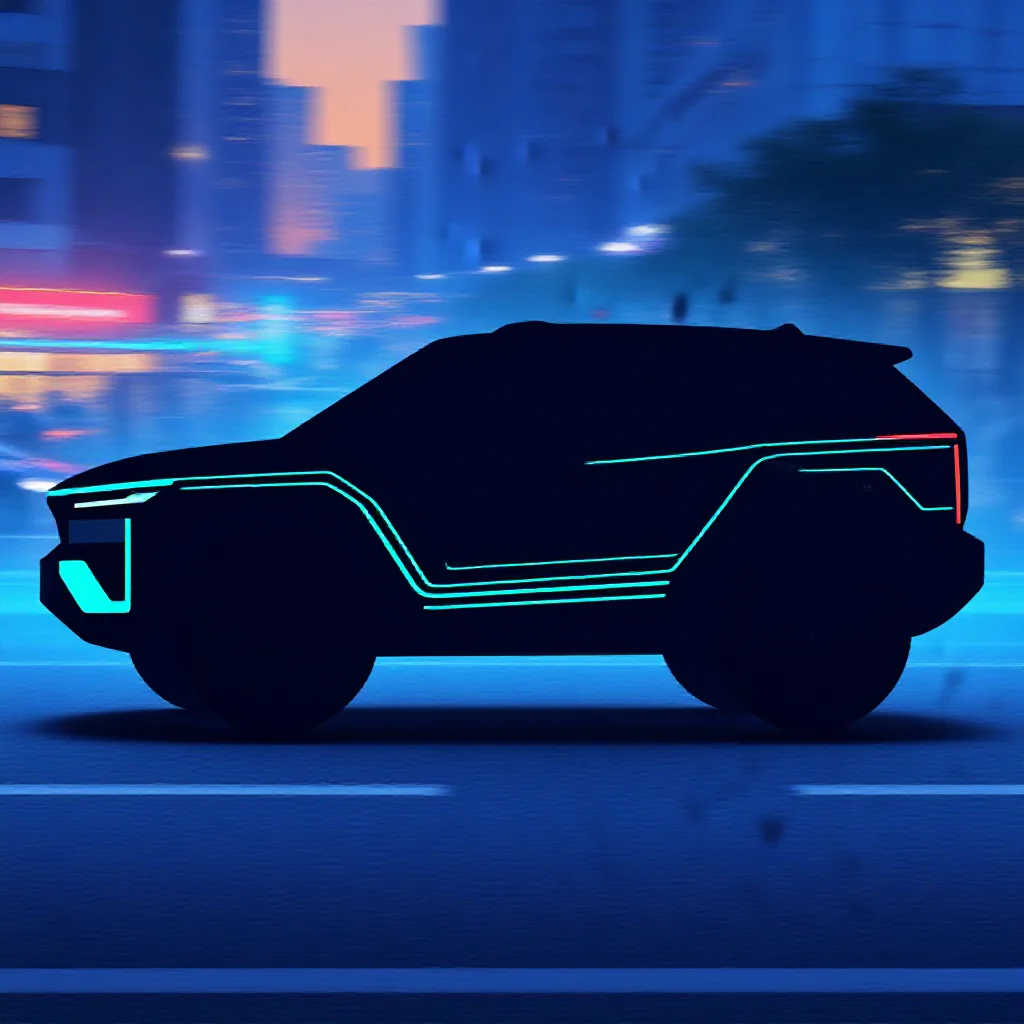
On March 11, 2026, Kia released a video presentation detailing its forthcoming entry-level electric vehicle, expected to launch later that year (Source 1: [Primary Data]). The model is positioned to become the brand's most affordable EV, with a design philosophy drawing from the established Kia Seltos crossover. This 2026 launch is a strategic marker, timed for the acceleration phase of global EV adoption beyond early adopters. The explicit "cheapest EV" positioning functions as a dual-purpose maneuver. It is a defensive barrier against the expanding influence of low-cost Chinese original equipment manufacturers (OEMs) in global markets and an offensive play to capture first-time EV buyers hesitant about premium pricing. Utilizing a "small Seltos" design language is a calculated risk, leveraging the familiarity of a successful internal combustion engine (ICE) product identity to lower psychological barriers for consumers transitioning to electric mobility.
The Economics of 'Affordable': Unpacking the Cost-Cutting Calculus
The central challenge for Kia is achieving profitability in the sub-$30,000 EV segment, which necessitates radical supply chain and platform engineering. The economic viability of this model hinges on a series of deliberate trade-offs. These likely include a shift to lithium iron phosphate (LFP) battery chemistry, which offers lower cost and longer cycle life at the expense of energy density compared to nickel-manganese-cobalt (NMC) packs. Further compromises may manifest in interior material quality, advanced driver-assistance system (ADAS) feature sets, and overall performance specifications. The strategic long-term play is not necessarily high margin per unit but high volume scale. Mass production of a single, high-volume platform drives down per-unit costs for batteries, electric motors, and other core components, creating cost benefits that can ripple across Kia's entire EV portfolio.
The Ripple Effect: Supply Chain and Competitive Implications
The introduction of a high-volume, low-cost EV from a major global automaker triggers significant ripple effects. It places immediate pressure on battery cell suppliers to deliver cost-effective, durable LFP cells at an unprecedented scale and consistency. Competitively, this model serves as a direct challenge on two fronts: to legacy automakers still reliant on protecting ICE vehicle profit centers, and to premium EV manufacturers attempting to expand their model lines downward into more affordable segments. The vehicle's strategic importance is particularly acute in emerging markets, including India, Southeast Asia, and Eastern Europe. In these regions, extreme price sensitivity has historically slowed EV adoption, making a credible, low-cost offering from an established brand a potential market catalyst.
Verification and Context: Sourcing the Strategy
The primary source for this analysis is Kia's corporate video presentation from March 11, 2026, which functions as an official strategic announcement (Source 1: [Primary Data]). Final specifications, confirmed pricing, and detailed performance data remain subject to later verification upon the vehicle's official launch. The 2026 release timeline is contextualized against announced ICE phase-out timelines in several key markets and competitor EV roadmaps, suggesting Kia aims to enter the mass-market segment at a critical inflection point. Historical precedent underscores the difficulty of this endeavor; vehicles like the first-generation Nissan Leaf and Chevrolet Bolt demonstrated the immense challenge of building profitable mass-market EVs, a hurdle that has only been overcome recently through technological evolution and scaled production.
The Unanswered Questions: Risks and Market Predictions
The strategy carries inherent risks. Significant cost-cutting may impact perceived quality, potentially straining Kia's hard-earned brand equity built on offering premium value. Furthermore, the profitability model is vulnerable to fluctuations in raw material costs, particularly for key battery components. The neutral market prediction is that Kia's 2026 entry will intensify the existing EV price war, forcing competitors to accelerate their own affordable EV programs or cede volume segments. Its success will be the definitive test of whether a legacy automaker can leverage global scale, vertical integration, and platform efficiency to deliver a compelling electric vehicle at a truly mass-market price point without relying on significant regulatory credits for profitability. The outcome will serve as a benchmark for the entire industry's transition to electrification.