MG''s Semi-Solid-State SUV: A Strategic Gambit or Just Platform Sharing?
MG's unveiling of its first electric SUV with a semi-solid-state battery, built on the IM Motors platform, is more than a product launch. This analysis delves into the strategic implications, questioning whether this signals a genuine technological leap or a clever repackaging of existing tech. We explore the significance of the semi-solid-state designation versus true solid-state, the economic logic behind platform sharing in the EV race, and what MG's move reveals about the evolving battery supply chain and competitive dynamics between legacy automakers and Chinese EV specialists. The piece examines the long-term impact on cost, range, and market positioning ahead of the anticipated 2026 release.
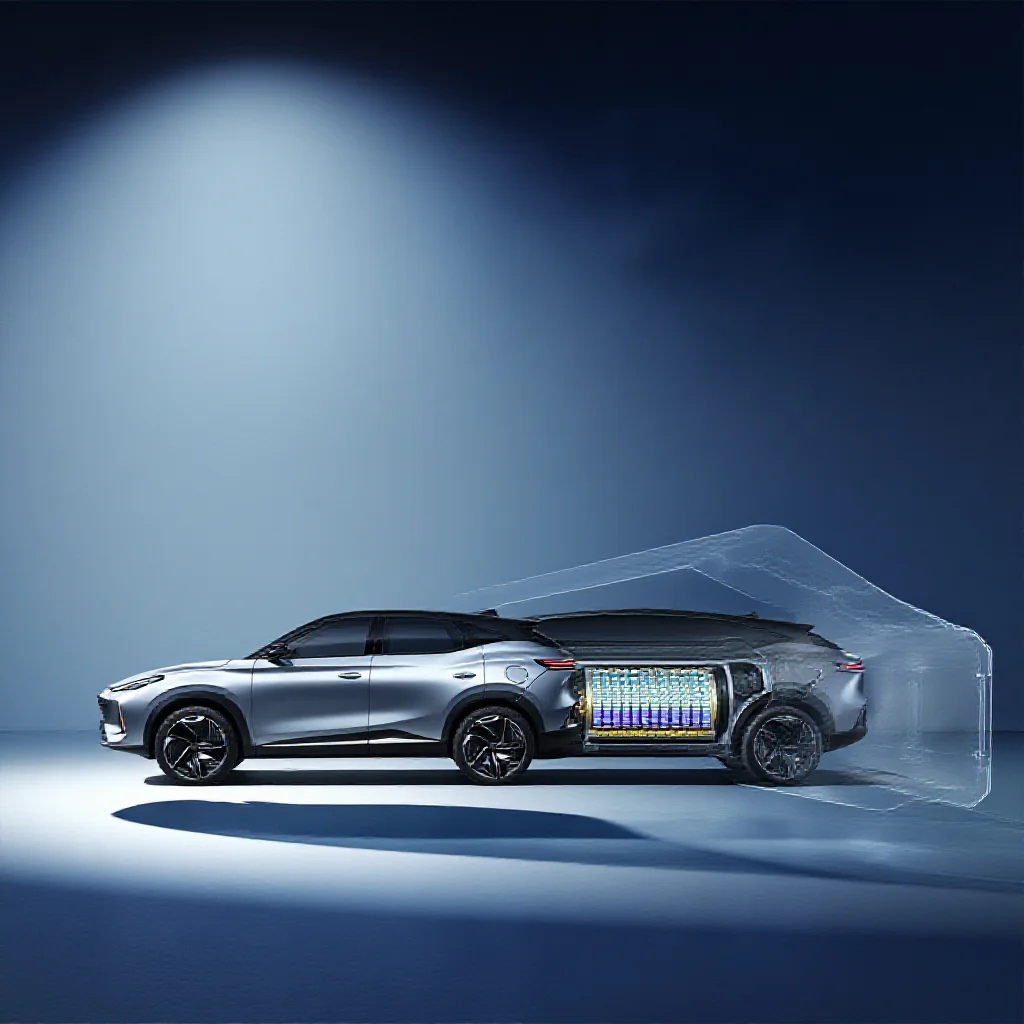
MG's Semi-Solid-State SUV: A Strategic Gambit or Just Platform Sharing?
**Subtitle:** An analysis of the industrial logic behind the 2026 launch reveals more about EV competition than battery breakthroughs.
On March 10, 2026, MG unveiled its first electric SUV equipped with what it terms a semi-solid-state battery. The vehicle will be built upon the existing platform architecture from IM Motors, another brand under the SAIC Motor conglomerate. (Source 1: [Primary Data]) This announcement presents a dual narrative: the introduction of next-generation battery chemistry and the strategic reuse of a mature electric vehicle (EV) platform. A technical audit of these claims indicates the latter may hold greater immediate significance for the competitive landscape than the former.
Beyond the Headline: Decoding MG's 'Semi-Solid-State' Announcement
The term "semi-solid-state" requires precise deconstruction. It positions the technology on a spectrum between conventional lithium-ion batteries, which use liquid electrolytes, and true all-solid-state batteries, which employ entirely solid electrolytes. A semi-solid-state design typically incorporates a gel-like, quasi-solid electrolyte or a hybrid solid-liquid system. This configuration aims to offer incremental improvements over liquid electrolytes, such as enhanced energy density, improved thermal stability, and potentially faster charging, while avoiding the profound manufacturing and interface stability challenges that have delayed commercialization of pure solid-state cells.
The announcement aligns with known industry timelines. Chinese battery cell developers, including Qingtao New Energy and WeLion, have been targeting the 2025-2027 window for scaled production of semi-solid-state cells. MG's 2026 launch date is consistent with these supply chain projections, suggesting the vehicle is a planned application for these emerging, but not revolutionary, cell types. The technological reality is one of evolution, not a discrete leap.
The Platform Play: IM Motors as SAIC's Secret Weapon
The strategic choice of the IM Motors platform is a critical component of this product launch. IM Motors is a premium EV brand jointly backed by SAIC Motor, Zhangjiang Hi-Tech, and Alibaba. Its platform, which underpins models like the IM L7 sedan, is a proven architecture designed for high-performance electric vehicles. By leveraging this existing platform, MG bypasses the multibillion-dollar cost and multi-year timeline required to develop a dedicated new EV skateboard.
The economic logic is unambiguous. In a hyper-competitive EV market where speed and cost efficiency are paramount, platform sharing allows SAIC to accelerate MG's time-to-market for a technologically updated model while drastically reducing per-unit R&D expenditure. This move transforms the IM Motors platform from a singular brand asset into a group-wide strategic tool, maximizing return on investment and enabling rapid portfolio diversification.
The Hidden Supply Chain Battle
MG's vehicle serves as a public-facing indicator of SAIC's deeper vertical integration strategy within the battery supply chain. The announcement is a proxy for SAIC's efforts to secure and validate supply from Chinese semi-solid-state cell innovators. The potential supply chain maps from specialized material suppliers and cell manufacturers like Qingtao or WeLion directly to SAIC's assembly lines, reducing dependency on dominant battery giants such as CATL and BYD for advanced cell designs.
This maneuver exerts pressure across the industry. For traditional battery behemoths, it signals that automakers are actively cultivating alternative, specialized suppliers for next-generation technology. For legacy global automakers, it demonstrates a pathway to deploying intermediate battery tech through partnerships and platform strategies, potentially shortening their own development cycles for comparable systems.
2026 Market Calculus: Positioning Before the Solid-State Revolution
The 2026 launch date is strategically timed. It positions MG's SUV in a market window anticipated after the widespread adoption of current lithium-ion variants (e.g., Tesla's 4680, BYD's Blade 2.0) but before the promised commercialization of true all-solid-state batteries, which most analysts project for the post-2030 period. The vehicle is designed as a bridge product.
The target customer is likely the pragmatic range-seeker or technology early adopter who values incremental gains in safety, charging speed, and energy density, but whose purchase decision does not hinge on a wait for a theoretical solid-state future. A competitive audit will ultimately depend on the final specifications, but the SUV's value proposition will be measured against contemporaneous "advanced lithium-ion" claims from competitors, with platform-sharing economics potentially allowing MG to compete aggressively on price.
Conclusion: A Canary in the Coal Mine for the EV Industry
The MG semi-solid-state SUV is less a story of a singular technological breakthrough and more a case study in the normalization and rapid industrialization of intermediate battery technology. The key insight is that the efficient execution of platform strategy and supply chain orchestration is now as critical as the underlying cell chemistry.
The vehicle functions as an industry canary, signaling the next phase of EV competition: one defined by the ability to integrate incremental technological advances from a diversifying supply base into market-ready products with ruthless speed and cost efficiency. The real gambit is not in the "semi-solid-state" label, but in SAIC's bet that industrial execution and strategic resource sharing will define winners in the evolving electric vehicle landscape.