Beyond Lithium: Why a Midwestern Sodium-Ion Pilot Signals a Strategic Shift in Grid Storage
A first-of-its-kind pilot project deploying sodium-ion batteries on the Midwestern U.S. grid is more than a simple technology test. This analysis reveals it as a strategic move to diversify energy storage away from volatile lithium supply chains. By collaborating with a manufacturer to test iron and manganese-based batteries, the utility is probing a future where grid resilience hinges on abundant, geopolitically stable materials. This article explores the pilot's hidden economic logic, its challenge to lithium's dominance, and the long-term implications for the global battery supply chain and domestic energy security.
Beyond Lithium: Why a Midwestern Sodium-Ion Pilot Signals a Strategic Shift in Grid Storage
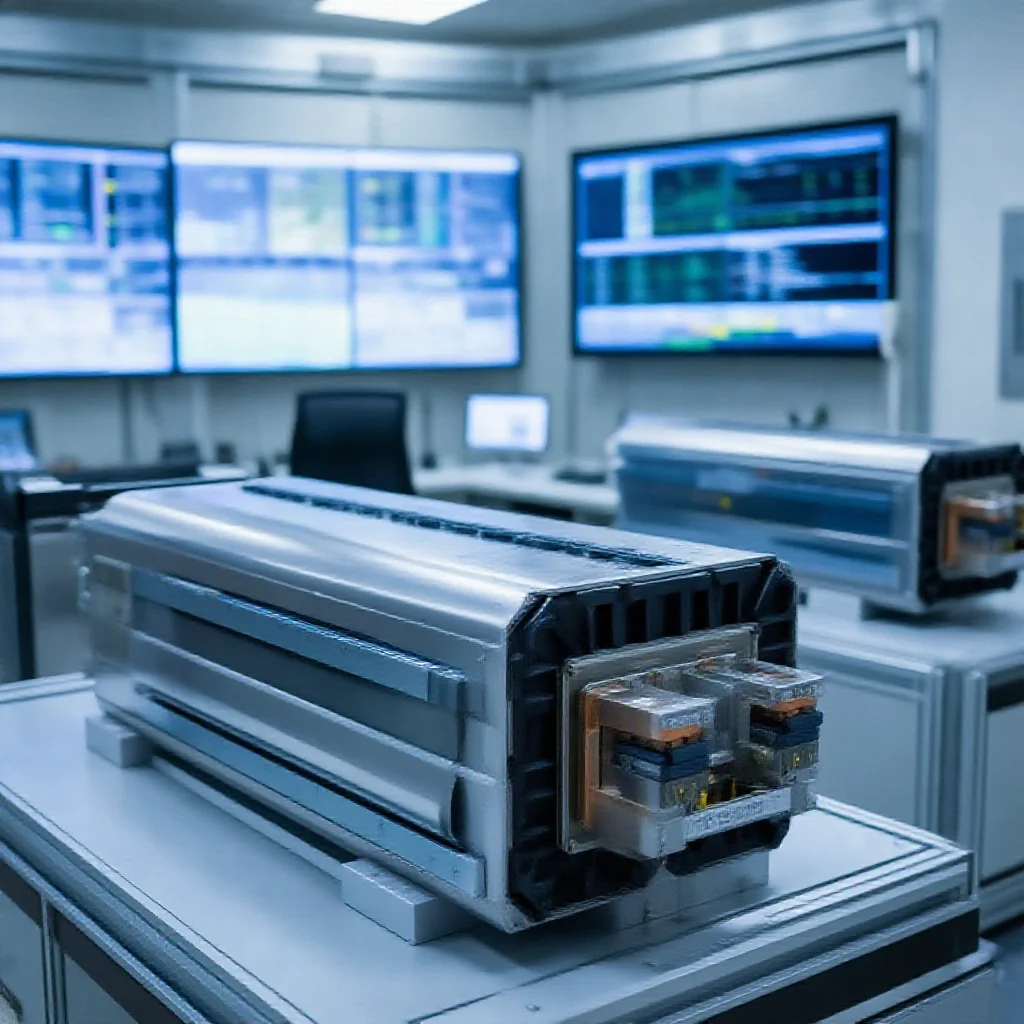
A utility in the Midwestern United States, in collaboration with a battery manufacturer, has initiated a pilot project to deploy sodium-ion battery technology for grid-scale storage. The project, described as a first-of-its-kind deployment on the U.S. grid, aims to validate the performance of these batteries in real-world applications. The pilot is scheduled for operation in March 2026. (Source 1: [Primary Data])
The Pilot's Surface: A First-of-its-Kind U.S. Grid Test
The core objective of the collaborative initiative is the technical validation of sodium-ion battery systems for grid services. This includes testing performance metrics such as charge-discharge efficiency, cycle life, response time, and degradation under the variable loads typical of a live electrical grid. The project's stated significance lies in its position as a U.S. first-mover, moving sodium-ion technology from laboratory and commercial demonstrations into a functional, utility-managed grid environment. This step is a necessary precursor to any broader commercialization within the domestic energy sector.
The Strategic Depth: Decoding the Economic and Supply Chain Logic
A superficial analysis views this pilot as a simple technology test. A deeper audit reveals a strategic maneuver rooted in supply chain economics. Sodium-ion batteries utilize a chemistry based on sodium, iron, and manganese. This contrasts sharply with the dominant lithium-ion chemistry, which relies on lithium, cobalt, and nickel.
The pilot functions as a risk mitigation strategy. Lithium and cobalt supply chains are geographically concentrated and subject to significant price volatility. The U.S. Department of Energy has repeatedly identified supply chain vulnerabilities for these critical minerals as a material risk to the nation's clean energy transition. (Source 2: [DOE Critical Minerals Assessment]) The utility's exploration of sodium-ion technology represents a "slow analysis" investment: a long-term bet on material abundance, cost predictability, and geopolitical stability. Iron and manganese are among the most common elements in the Earth's crust, offering a fundamentally different cost and security profile.
The Unseen Entry Point: Reshaping Utility Procurement and Energy Security
The pilot's primary utility is less about competing with lithium-ion on peak power performance and more about establishing a viable second source for bulk energy storage. The logical end-state of a successful sodium-ion adoption is a bifurcated storage procurement strategy. Utilities may procure lithium-ion batteries for applications requiring very high power density and rapid response, while turning to sodium-ion for longer-duration storage where lower cost per kilowatt-hour over the system's lifetime is the paramount concern.
This diversification has direct implications for domestic manufacturing and energy security. A mature sodium-ion supply chain, based on abundant and widely available materials, reduces reliance on imported critical minerals. It creates a pathway for a more resilient domestic storage manufacturing base, insulating grid infrastructure from global commodity shocks and trade disruptions.
Evidence and Verification: Placing the Pilot in Context
Laboratory and early commercial data indicate sodium-ion batteries offer competitive cycle life and inherent safety advantages due to their stable chemistry, making them suitable for large-scale, stationary storage. (Source 3: [Journal of The Electrochemical Society, 2025]) Globally, development is accelerating. China has commissioned multiple utility-scale sodium-ion storage projects since 2023, indicating the technology's transition from theory to practice. The 2026 timeline for this Midwestern pilot places the U.S. in a position of cautious, strategic observation and validation rather than technological leadership in deployment.
Conclusion: Beyond the Pilot – A Template for the Future Grid
The Midwestern pilot project is a template for future utility procurement logic. It demonstrates a shift from a singular focus on technical performance metrics to a holistic evaluation that includes total system cost, supply chain resilience, and long-term material security. The outcome of this specific test will provide valuable data. However, the more significant trend is the initiation of a deliberate diversification strategy within a critical infrastructure sector. The future grid's resilience may depend not on a single battery chemistry, but on a portfolio approach optimized for both performance and security, with sodium-ion positioned as a cornerstone for bulk energy storage.