Beyond the $5.2M Grant: How Nairobi''s Kamukunji Project is a Blueprint for Unlocking Billions in African Urban Climate Finance
The launch of a $5.2 million UN-backed low-carbon project in Nairobi''s Kamukunji area is more than a local pilot. This analysis reveals it as a strategic test case for a new financial model in African urban development. By examining the project''s aim to leverage $40 million in public investment, we uncover the core axis: transforming cities from climate liabilities into bankable assets. The initiative represents a shift from isolated infrastructure projects to integrated, finance-ready urban systems. This article explores the hidden economic logic of ''catalytic financing'', questions the scalability of its community-focused approach, and positions Nairobi as a potential template for unlocking the billions required for sustainable urbanization across the continent.
Beyond the $5.2M Grant: How Nairobi's Kamukunji Project is a Blueprint for Unlocking Billions in African Urban Climate Finance
The $5.2M Catalyst: Decoding the Financial Architecture Behind Nairobi's Pilot
The launch of a five-year, $5.2 million project in Nairobi’s Kamukunji area is a financial instrument, not merely a construction initiative. Funded by a grant from the Global Environment Facility (GEF), the capital is structured as catalytic finance, designed to de-risk subsequent, larger-scale public investment (Source 1: [Primary Data]). The explicit objective is to leverage this initial grant to attract up to $40 million in additional public funding, alongside $2 million in technical support (Source 1: [Primary Data]). This establishes a deliberate financial axis: the GEF capital serves as proof-of-concept risk capital, with the primary metric of success being its ability to mobilize capital from national treasuries and, eventually, institutional investors.
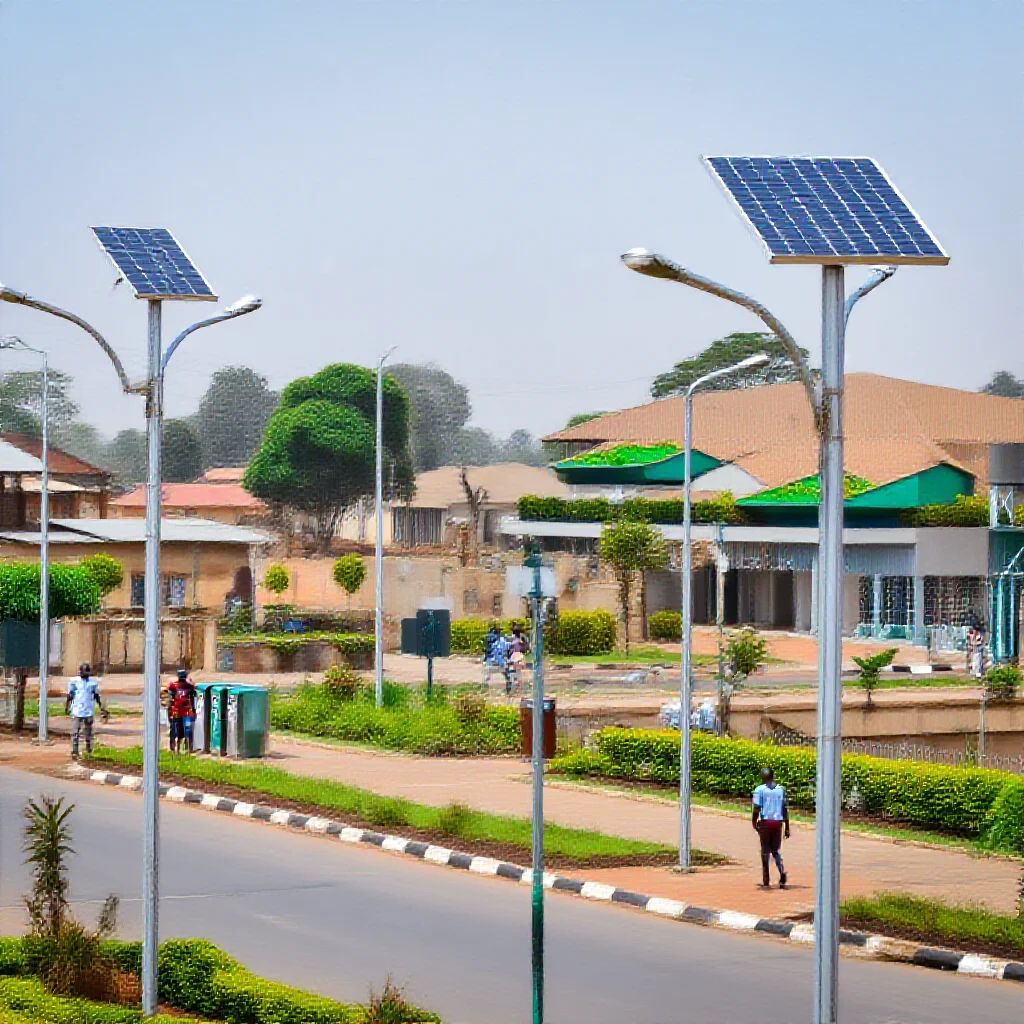
This model represents a departure from traditional, siloed urban funding for discrete sectors like water or energy. The integrated approach, combining climate-resilient infrastructure, renewable energy, waste management, and river restoration in one geographic zone, aims to create a finance-ready urban system (Source 1: [Primary Data]). As Claude Gascon of the GEF stated, the programme intends to unlock broader investment flows by combining "catalytic financing with integrated planning approaches" (Source 1: [Quotes]). The underlying economic logic is to transform a city district from a perceived climate liability into a bankable asset with demonstrable returns on investment in resilience and efficiency.
Kamukunji as a Living Laboratory: Testing Scalability in the Heart of Informal Urbanism
The selection of Kamukunji, a dense central neighborhood with an estimated 85,000 residents, is a strategic variable in the scalability equation (Source 1: [Primary Data]). Its characteristics—high density, mixed formal and informal development, and proximity to the Nairobi River—make it a representative test case for countless similar urban cores across Africa. The pilot functions as a living laboratory for integrated low-carbon development under real-world constraints of limited space, complex land tenure, and high demand for basic services.
The laboratory extends beyond physical infrastructure to governance. The project necessitates a functioning model of coordination between Nairobi City County, Kenya’s national housing and environment ministries, UNEP, and UN-Habitat (Source 1: [Entities]). The governance mechanism developed here will be as critical a deliverable as the infrastructure itself. Consequently, metrics for success will be dual-faceted: quantifiable reductions in greenhouse gas emissions in a sector responsible for nearly 70% of the global total, and measurable socio-economic co-benefits such as job creation and improved public health for the resident population (Source 1: [Primary Data]).
The Hidden Supply Chain Shift: From Concrete to Data and Governance
The long-term impact of this model may instigate a shift in the supply chain for urban development. Beyond the procurement of concrete and solar panels, the project necessitates the creation of a local ecosystem for "urban climate services." This includes specialized planning, integrated design, monitoring, reporting, and verification (MRV) capabilities. The demand for this expertise, if cultivated locally, could generate a knowledge-export economy for Kenyan engineering, consultancy, and data analytics firms, applicable to other cities in the broader global programme spanning over 50 cities (Source 1: [Primary Data]).
A critical variable is technological sourcing. The project's design will reveal whether its interventions rely on imported technology or actively foster local manufacturing and adaptation of solutions for solar power, waste management, and water systems. The choice influences not only project costs and sustainability but also the potential for industrial policy co-benefits. The risk of creating dependency on foreign technology and consultancy stands in contrast to the opportunity of building domestic capacity for a growing continental market in climate-resilient urban solutions.
Verification and Credibility: Embedding Evidence for Replication
The project’s ultimate value as a blueprint hinges on the credibility and transparency of its outcomes. Rigorous, independently verifiable data on emission reductions, cost savings, and social impact are the necessary currency to convince risk-averse finance ministers and international fund managers. As Anacláudia Rossbach noted, such projects must demonstrate how urban centres tangibly contribute to climate and sustainability goals (Source 1: [Quotes]). This evidentiary burden requires embedding robust data collection and analysis from the outset, not as an afterthought.
The verification process will test the integrated model's cost-effectiveness against traditional single-sector projects. If the Kamukunji pilot can demonstrate that coordinated interventions yield a higher aggregate return on investment—factoring in avoided future climate costs, health savings, and productivity gains—it will provide a compelling financial narrative. This narrative is essential for scaling the model. Success would position Nairobi not just as a beneficiary but as a template, providing a replicable playbook of financial structuring, community engagement, and technical integration for other African cities facing similar pressures.
Conclusion: A Template in the Making
The Kamukunji project is a strategic intervention in the financial landscape of African urban development. Its launch during a global GEF forum underscores its role as an international test case (Source 1: [Timeline]). The core analysis indicates a calculated move to use a modest grant to pivot urban financing toward integrated, system-level investments. The future trend suggested by this initiative is the gradual bundling of urban climate projects into standardized, bankable portfolios that can attract institutional capital.
The neutral prediction is that the project will generate two primary outputs: a set of physical interventions in Kamukunji and a more valuable package of financial data, governance protocols, and performance metrics. The scalability of the model across Africa's rapidly urbanizing landscape will be determined by the latter. If the $5.2 million successfully catalyzes the targeted $40 million and produces irrefutable evidence of compounded benefits, it will establish a credible pathway to unlocking the billions required for sustainable urbanization. If it fails to do so, it will remain a valuable but isolated pilot, highlighting the persistent barriers to financing integrated urban climate action at scale.