Rivian''s R2 Pricing Strategy: A Calculated Gamble on Mass-Market EV Adoption
Rivian's R2 lineup announcement, led by a $57,990 starting price with a future $45,000 RWD model, is more than a product launch—it's a strategic pivot. This analysis deciphers the underlying market logic, revealing a dual-track approach designed to generate immediate revenue from early adopters while planting a flag in the affordable EV segment. We explore how this staged pricing model navigates current production economics, manages consumer expectations, and positions Rivian against both legacy automakers and Tesla, signaling a critical phase in the company's journey from niche luxury to mainstream contender.
Rivian's R2 Pricing Strategy: A Calculated Gamble on Mass-Market EV Adoption
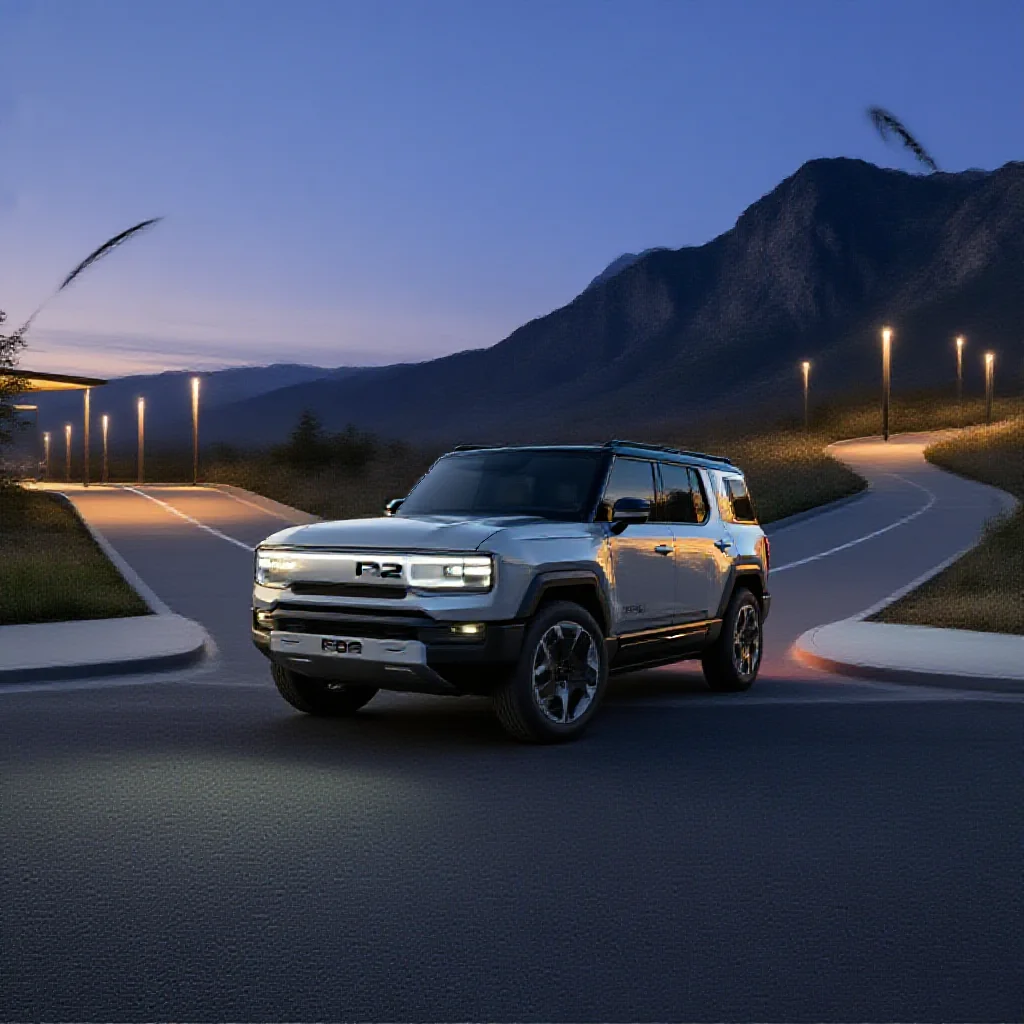
**Opening Summary** On March 12, 2026, Rivian Automotive, Inc. revealed pricing for its forthcoming R2 electric SUV lineup (Source 1: [Primary Data]). The announced structure presents two distinct price points: a starting price of $57,990 for initial models and a planned rear-wheel-drive variant at $45,000 scheduled for later release (Source 2: [Primary Data]). This pricing architecture is not merely a product catalog but a strategic framework designed to navigate immediate production economics while anchoring a future position in the affordable electric vehicle segment.
Beyond the Price Tag: Decoding Rivian's Two-Tier Launch Strategy The immediate market reality is defined by the $57,990 entry point. This price positions the initial R2 models directly within the premium compact SUV segment, targeting consumers transitioning from vehicles like the Tesla Model Y or Audi Q4 e-tron. The strategic function of this price is to ensure margin integrity for early production batches, where economies of scale are not yet realized and per-unit costs are highest. It serves as a revenue-generating launch pad, appealing to brand-loyal early adopters and those less sensitive to price elasticity.
Conversely, the announced $45,000 RWD model functions as a strategic market placeholder. Its "later release" designation is a critical component of the strategy, allowing Rivian to capture headlines and consumer interest in the affordable EV conversation without the immediate burden of delivering at that cost structure. The $13,000 differential between the two price points represents a buffer zone. This zone must be closed through scaling production, securing supply chain efficiencies, and anticipated reductions in battery cell costs over the coming years. The lower price defines Rivian's aspirational mass-market entry point, a benchmark against which future operational success will be measured.
The Strategic Analysis: Rivian's Pivot and the EV Market's Inflection Point The March 2026 announcement marks a definitive pivot in Rivian's corporate lifecycle, occurring well after the establishment of its R1S and R1T as niche, premium adventure vehicles. The R2 represents an imperative for volume growth, necessitating a design philosophy centered on manufacturability and cost efficiency from the ground up, rather than being a mere scaled-down version of its predecessors.
This staged pricing model exhibits a pattern recognizable in technology product launches, where premium configurations are released first to address the most profitable customer segment, followed by standard models to expand total addressable market share. Rivian's application of this tactic to the automotive sector allows for market segmentation over time. It enables the company to manage demand curves, align model introductions with production ramp-up phases, and mitigate the financial risk of launching a single, low-margin vehicle from inception.
The Unspoken Challenge: Supply Chain Economics as the True Gatekeeper The deferred timeline for the $45,000 RWD model is fundamentally a function of supply chain economics, not vehicle development. Achieving this price point profitably requires Rivian to attain critical scale in battery cell procurement, drive unit production, and overall manufacturing throughput. The company's vertical integration strategy, including its Enduro drive units and plans for lithium-iron-phosphate (LFP) batteries, will undergo a definitive stress test under the volume targets implied by the R2.
Success in scaling R2 production carries implications beyond Rivian. It could pressure upstream battery and component suppliers, potentially reshaping contract terms and cost structures for other mid-tier electric vehicle manufacturers. The realization of the $45,000 price is inextricably linked to capital-intensive milestones, most notably the expansion of production capacity at its Georgia manufacturing facility. The stated goals for this plant regarding capacity and cost reduction serve as the verification mechanism for the R2's long-term pricing strategy (Source 3: [Contextual Data]).
Neutral Market and Industry Predictions The effectiveness of Rivian's dual-track pricing will be determined by two concurrent timelines: the consumer adoption rate of the initial higher-priced models and the company's execution speed in reducing bill-of-materials costs. Market reception will provide immediate cash flow and manufacturing learnings essential for the subsequent lower-cost variant.
Industry analysis suggests this approach positions Rivian to compete on two fronts: against legacy automakers' electric offerings in the near-term premium space, and against market volume leaders like Tesla in the future mass-market arena. The primary risk lies in the temporal gap between promise and delivery; market expectations for the $45,000 model will solidify in 2026, but its arrival depends on successful navigation of production and supply chain hurdles that remain ahead. The R2 strategy, therefore, is a calculated gamble where Rivian's operational execution must now accelerate to match its product ambition.