Beyond the Discount: How Spring Flash Sales Reveal the Strategic Pivot of the EV and Outdoor Tech Industry
The current wave of spring flash sales from Segway, Velotric, EcoFlow, and others is more than just seasonal promotions. This analysis uncovers a strategic industry pivot, where manufacturers are using limited-time discounts to clear inventory for next-generation models, test price elasticity for premium features, and aggressively expand from niche hobbies into mainstream home and outdoor solutions. By examining the timing, product categories, and discount depths, we reveal a coordinated move to solidify market share in the evolving electric mobility and decentralized power ecosystem before a potential market consolidation.
Beyond the Discount: How Spring Flash Sales Reveal the Strategic Pivot of the EV and Outdoor Tech Industry

**Summary:** The current wave of spring flash sales from Segway, Velotric, EcoFlow, and others is more than just seasonal promotions. This analysis uncovers a strategic industry pivot, where manufacturers are using limited-time discounts to clear inventory for next-generation models, test price elasticity for premium features, and aggressively expand from niche hobbies into mainstream home and outdoor solutions. By examining the timing, product categories, and discount depths, we reveal a coordinated move to solidify market share in the evolving electric mobility and decentralized power ecosystem before a potential market consolidation.
---
Introduction: The Spring Sale Phenomenon – More Than Meets the Eye
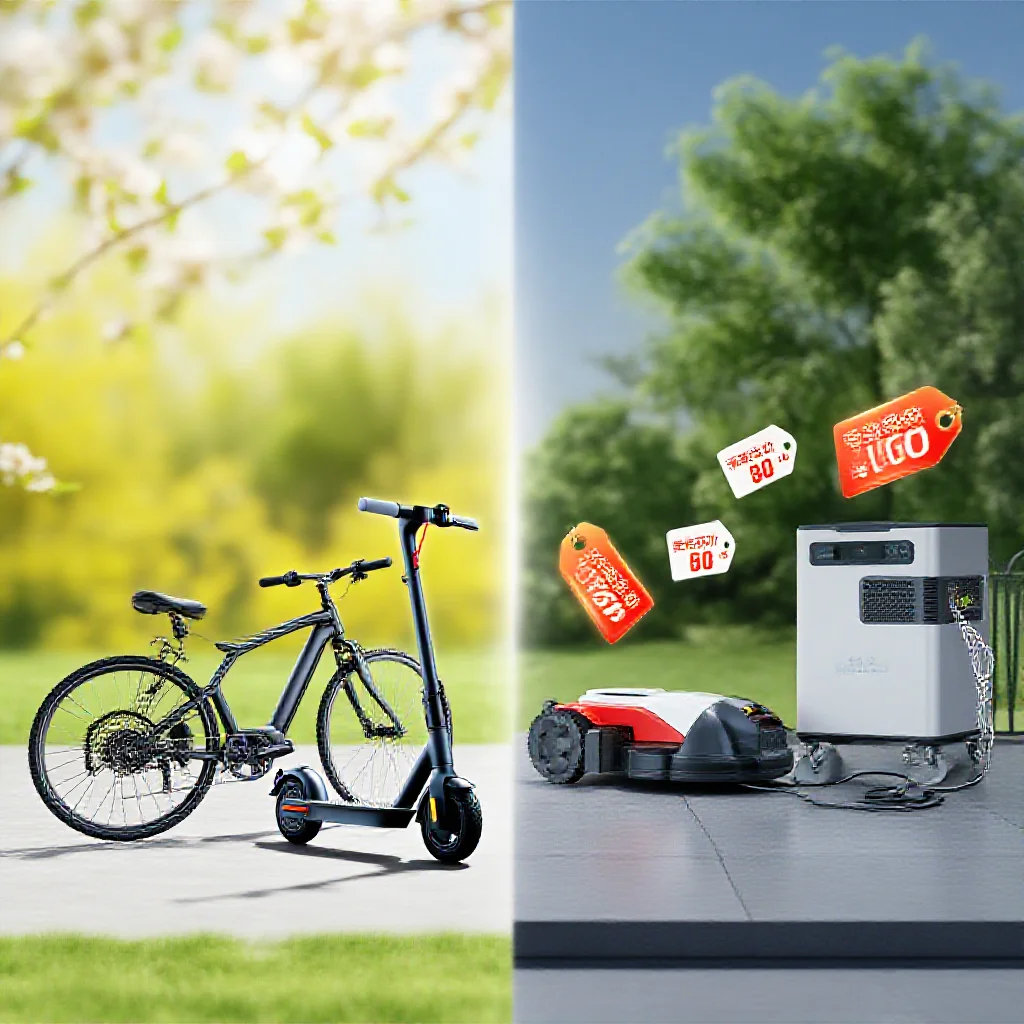
A concurrent series of limited-time promotions is currently active across the electric mobility and outdoor technology sector. Segway is running a Spring EV Sale encompassing e-scooters and its Navimow robot mower line. Velotric has initiated a St. Patrick’s Day flash sale on e-bikes. EcoFlow and Jackery are executing 48-hour and 72-hour flash sales, respectively, on portable power stations. Husqvarna has announced new low prices on its latest iQ series of advanced robot lawn mowers (Source 1: [Primary Data]).
The clustering of these events raises a fundamental question: are these isolated, seasonal marketing tactics, or do they represent a synchronized signal of a broader strategic shift within the industry? The evidence indicates the latter. These sales collectively mark a critical inflection point where the electric vehicle and outdoor tech sector is transitioning from servicing early adopters to executing mass-market scaling strategies.

Decoding the Discounts: A Timeline of Strategic Pressure
The temporal alignment of these sales is the first indicator of coordinated market pressure. Velotric’s flash sale concludes on the evening of March 17, 2026. Jackery’s promotion ends on the night of March 18, 2026. EcoFlow’s 48-hour sale is active within the same window (Source 1: [Primary Data]). This clustering of end dates within a 48-hour period is not coincidental but rather a deliberate market event designed to create collective urgency and flush out latent consumer demand simultaneously.
The strategic timing is further underscored by Husqvarna’s framing of “new low prices” on its latest iQ models. This language suggests a permanent or semi-permanent price adjustment rather than a temporary promotion, often a precursor to new model introductions or a strategic repositioning. The timing of these sales, following major industry events like CES and preceding the traditional summer product launch cycle, serves a clear purpose: to clear existing inventory and make logistical and retail channel space for impending next-generation products.

The Product Portfolio Puzzle: From Toys to Tools
The categories of products being discounted reveal a deliberate expansion of market positioning. The promotions target a specific portfolio: electric scooters for urban micro-mobility, electric bikes for recreation and commuting, robot lawn mowers for home automation, and high-capacity portable power stations for energy independence (Source 1: [Primary Data]).
This portfolio represents a calculated shift. Manufacturers are no longer marketing discrete, single-purpose gadgets often perceived as luxury “toys.” Instead, they are promoting an integrated ecosystem of essential “tools” for a modern, electrified lifestyle. The e-bike and scooter address transportation. The robot mower automates home maintenance. The power station provides decentralized energy for tools, appliances, and outdoor recreation, effectively creating a self-reliant home and leisure ecosystem. Historical analysis of these brands’ evolution, as documented in industry media, shows a consistent trajectory from niche novelty items toward mainstream utility solutions.

The Hidden Economic Logic: Price Anchoring and Market Tier Penetration
The depth of the discounts is economically significant and reveals a sophisticated market penetration strategy. Savings are not marginal; they are substantial reductions on premium products: up to $1,133 on Segway’s Navimow and over $1,939 on an EcoFlow power station bundle (Source 1: [Primary Data]).
This pricing tactic serves a dual purpose. First, it establishes a high Manufacturer's Suggested Retail Price (MSRP) as a value anchor in the consumer’s mind. Second, the flash sale temporarily lowers the barrier to entry, allowing the brand to penetrate a lower price-sensitive market tier. The objective is customer acquisition. Once a consumer invests in a core platform—such as an e-bike or a power ecosystem—future revenue is generated through proprietary accessories, battery expansions, software subscriptions, and brand-loyal upgrades. This model mirrors strategies seen in other tech hardware sectors.
The aggressive discounting exerts immediate pressure on component suppliers and smaller competitors. However, it also signals to the supply chain an anticipation of high volume, which can lead to economies of scale and lower component costs in the long term, potentially reshaping the entire industry’s cost structure.
Conclusion: A Pre-Consolidation Land Grab
The spring 2026 flash sales are a manifestation of an industry-wide strategic pivot. Manufacturers of electric mobility and outdoor technology are leveraging limited-time promotions to achieve multiple objectives: inventory management for new product cycles, real-world testing of price elasticity for advanced features, and, most critically, the rapid expansion of their customer base from early adopters to the mainstream.
The concurrent nature of these sales across complementary product categories suggests a race to establish dominant ecosystem platforms before an anticipated period of market consolidation. Companies are not merely selling products at a discount; they are executing a calculated land grab for market share in the emerging landscape of electrified suburban and outdoor living. The outcome of this coordinated push will likely define the competitive hierarchy for the remainder of the decade, separating integrated ecosystem players from niche product vendors.